Zeekr, BYD, and XPeng Are Making Bold Moves in the South Korean Market
 12/03 2025
 648
648
Introduction
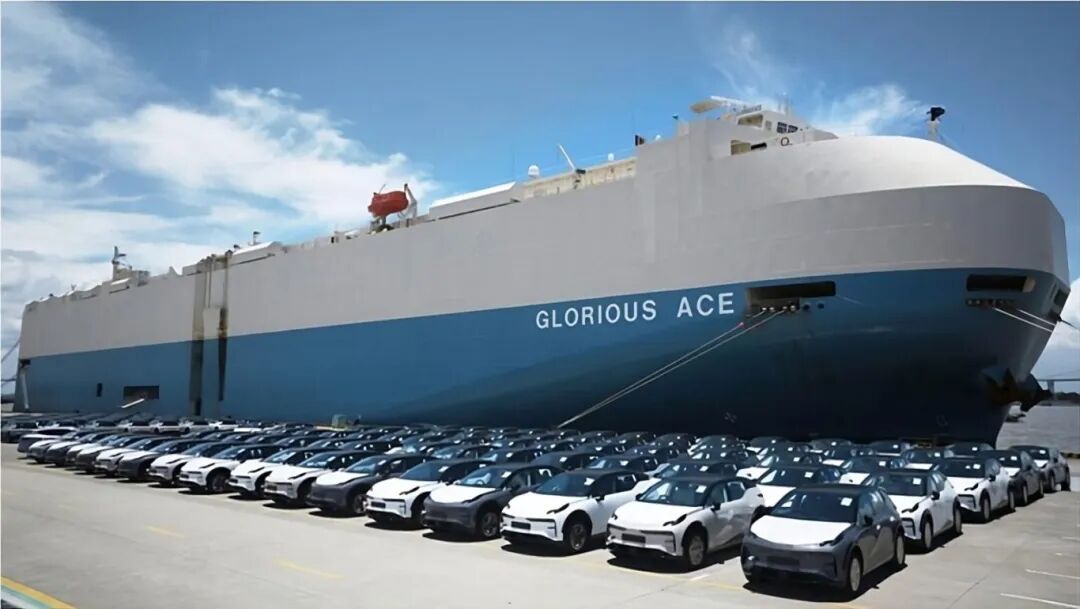
The once-invincible strongholds of Japan and South Korea are now being penetrated as Chinese new energy vehicles (NEVs) make their global debut.
It's well-known that Japan and South Korea boast highly closed automotive markets on a global scale, where consumers show a strong sense of national pride. Additionally, these countries have erected numerous tariff and non-tariff barriers to protect their domestic industries.
However, with China's ascent to become the world's largest automotive exporter, these previously impenetrable 'fortress markets' are now gradually being infiltrated by Chinese-branded vehicles.
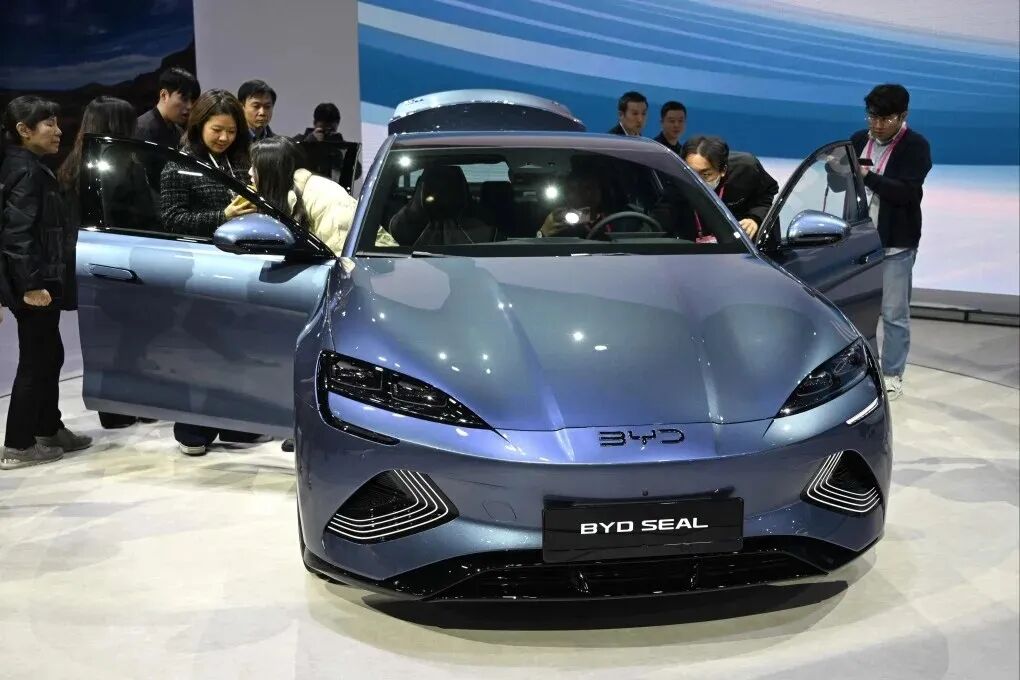
Following its entry into the Japanese passenger car market in July 2022, BYD unveiled its first model, the Atto 3 (equivalent to the domestic Yuan PLUS and bearing the same global model name in overseas markets such as ASEAN), in South Korea in January 2025.
The starting price of the BYD Atto 3 in South Korea, before subsidies, stands at 31.5 million won (approximately RMB 152,000), nearly 40% higher than its lowest domestic suggested retail price (MSRP) of RMB 115,800. After South Korean subsidies, the price can drop to the mid-20 million won range (approximately RMB 130,000).
The Korean version of the Atto 3 offers a range of 321 kilometers, with performance comparable to the Kia EV3 standard version, but at a price approximately 8 million won (approximately RMB 38,000) lower.
According to current market performance, data from the Korea Automobile Importers & Distributors Association reveals that BYD shipped 543 vehicles to South Korea in April this year, surpassing Tesla to become the top-selling imported electric vehicle brand for the month.
In the following months, BYD's monthly sales in South Korea hovered around 200 units, reaching a cumulative total of 1,578 units by August, ranking 14th among imported automotive brands.
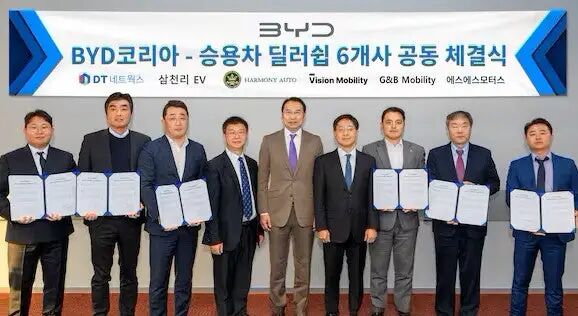
However, BYD's Seal model has already been launched in South Korea, while the Sealion 7 is positioned to compete with Tesla's Model Y. The number of BYD showrooms in South Korea has surged to over 30, with service centers expanding to 25 locations. For comparison, Mercedes-Benz operates 74 service centers in South Korea. Analysts believe that strengthening after-sales infrastructure will help solidify BYD's market positioning as a 'cost-effective challenger'.
Relevant institutions predict that BYD's annual sales in South Korea will approach 5,000 units.
Following BYD's lead, Zeekr is also setting its sights on the South Korean market. On November 28, Zeekr signed agreements with four South Korean distribution companies—H Mobility ZK, IronEV, KCC Mobility, and JK Mobility—to sell new energy vehicles in the South Korean market.
Compared to BYD's cost-effective positioning in the South Korean market, Zeekr is clearly targeting the premium segment. The parent companies of these four distribution partners have long represented global premium brands such as Audi, Mercedes-Benz, Peugeot, and Volvo.
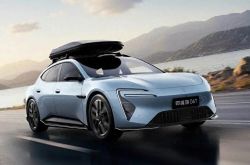
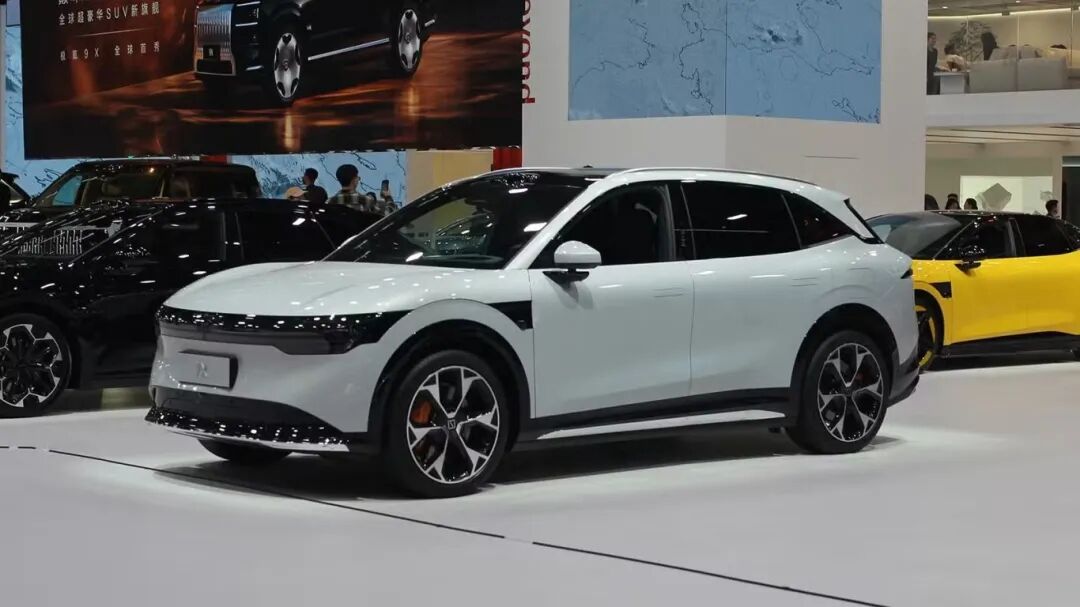
Zeekr's inaugural model to enter South Korea will be the mid-size electric SUV Zeekr 7X, which will go head-to-head with the Hyundai IONIQ 5 and Kia EV6. Targeting the family SUV market, it features a spacious body, high-end interior, and a high-performance battery system. Next on the list are the Zeekr 007 and Zeekr X.
Zeekr plans to establish its distribution network in South Korea as early as the first quarter of 2026, leveraging the networks of its partner distributors to open showrooms in Seoul and the broader capital region.
A South Korean automotive industry official remarked, 'Zeekr's entry into the South Korean market as a premium brand will be a critical test of whether Chinese electric vehicles can meet the expectations of South Korean consumers.'
XPeng is also gearing up to launch its mid-size SUV G6 in South Korea in 2026, aiming to replicate BYD's success in the market.
The South Korean automotive market is sizable, with cumulative sales of around 1.38 million units from January to October this year, surpassing any single ASEAN country (only Indonesia, Thailand, and Malaysia have the potential to exceed one million units).
Currently, the United States and Europe impose tariffs of 100% and 45.3%, respectively, on Chinese new energy vehicles, making it imperative for domestic automakers to seek alternative export markets.
For Chinese automakers accelerating their global expansion, although the South Korean market is relatively closed, succeeding there would serve as an excellent demonstration of their strength and capabilities.
Editor-in-Chief: Shi Jie Editor: He Zengrong
THE END
-
![]()
ByteDance, DJI, and Xiaohongshu Secure Top Three Positions Among China’s Fastest-Growing Unicorns
-
Tesla's in-car voice system in China is finally learning to 'understand human language'
-
![]()
Foreigners Are Amazed: Chinese Electric Vehicle Drive Systems Unveil Innovative 'Poses'
-
![]()
700,000 Brothers and the Future of Robots: Behind JD.com's 'Nirvana Plan'
-
![]()
Zhipu's Trillion-Dollar Valuation: A New Chapter for China's AI
-
![]()
Is Laifen, a 'Dyson Alternative' on the Rise, Now Ensnared by the 'Alternative Curse'?
-
![]()
Beyond Patents: Insta360 and DJI Compete in Retail
-
![]()
Piercing Through Industry Chaos: The Curtain Rises on Compliance for Autonomous Driving