Tearing off the Ultra-Luxury Label, Källenius Seizes the Final 'Opportunity'
 12/05 2025
 649
649
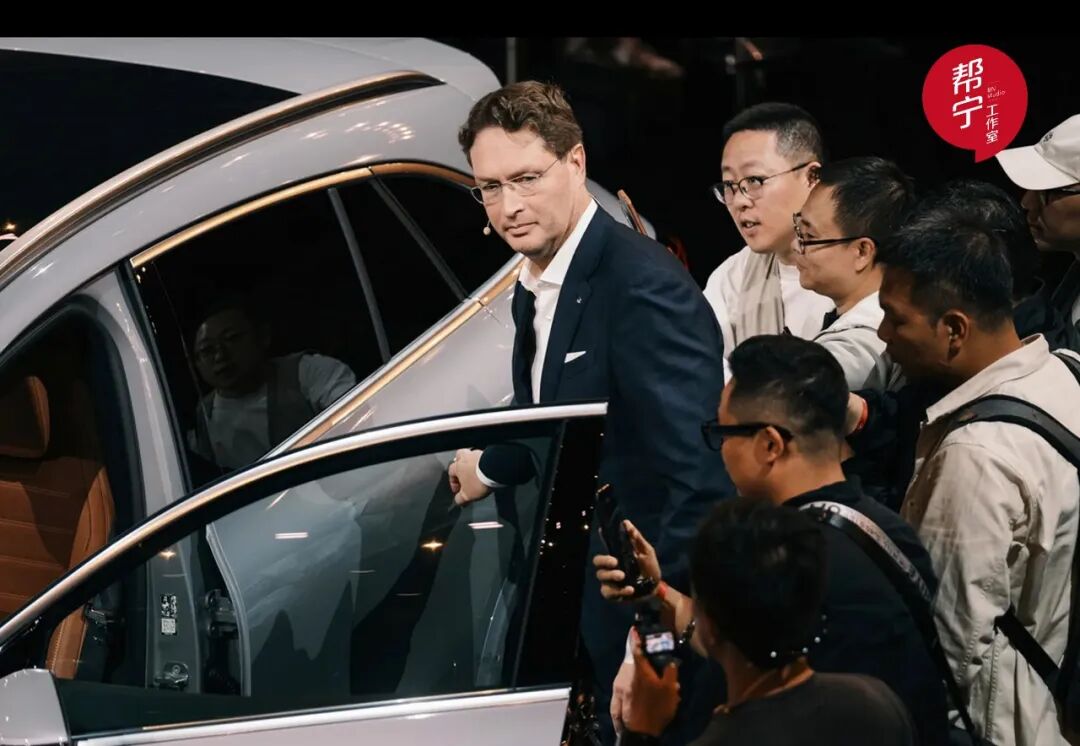
'Can Mercedes-Benz Get Back on Track?' Compiled by Yang Yuke | Edited by Li Guozheng | Produced by Bangning Studio (gbngzs)
Mercedes-Benz CEO Ola Källenius is having a tough time lately. Multiple investors have stated that he must fundamentally reverse the 'ultra-luxury' strategy, calling it the 'last chance' to steer Mercedes back on track.
Three years ago, Källenius proposed an 'ultra-luxury' strategy centered on the 'economy of desire.' This strategy de-emphasized compact A-Class and B-Class models, highlighting the importance of Maybach, AMG, and G-Class luxury SUVs.
Under this strategy, Mercedes aimed for an annual profit margin of 14%. However, the results were underwhelming. Mercedes' profit margin was 16.4% in 2022, slipped to 12.6% in 2023, dropped to 8.1% in 2024, and further fell to just 4.8% in the adjusted automotive sales return rate for the third quarter of this year.
As an investor, Ingo Speich, representative of Frankfurt-based Deka Investment, believes that 'the board reshuffle is a step forward but also represents Källenius' last chance to get Mercedes back on track.'
Mercedes' restructuring measures include selecting Jörg Burzer to replace Marcus Schäfer as Chief Technology Officer and appointing Michael Schiebe as Head of Production and Supply Chain Management. These moves indicate that Mercedes is taking cost issues seriously.
However, doubts have arisen from another angle—if these restructuring efforts still fail to yield rapid results, is Källenius' own CEO position secure? Källenius has led Mercedes since 2019.
'Currently, Källenius' position is not immediately in danger,' said Stefan Bratzel, director of the Germany-based Center for Automotive Management. However, he warned that while 'endangered' might be an exaggeration, Källenius must now prove that his strategy... will yield results in terms of profitability, with cost reduction being a crucial measure for future performance.
Analysts believe that the immediate priority is to rebuild Mercedes' entry-level market segment, including restoring iconic German taxi fleets, which is vital for maintaining long-term brand loyalty and sales volume.
Matthias Schmidt, an automotive industry analyst, describes the new strategy for the entry-level platform as 'Källenius' last gamble.'
Schmidt also suggests a potential way to lower prices for entry-level models—leveraging Mercedes' relationship with majority shareholder Geely Holding to produce small cars based on Geely's automotive architecture, similar to Volvo's all-electric EX30 approach. For instance, he proposes that the new CLA could use a gasoline engine developed by Mercedes and be produced by a joint venture between Mercedes and Geely in China.
Now, all eyes are on Källenius—can he seize this 'last chance' to lead Mercedes back to scale and higher profitability?
For the oldest luxury automaker, the coming months are undoubtedly decisive.
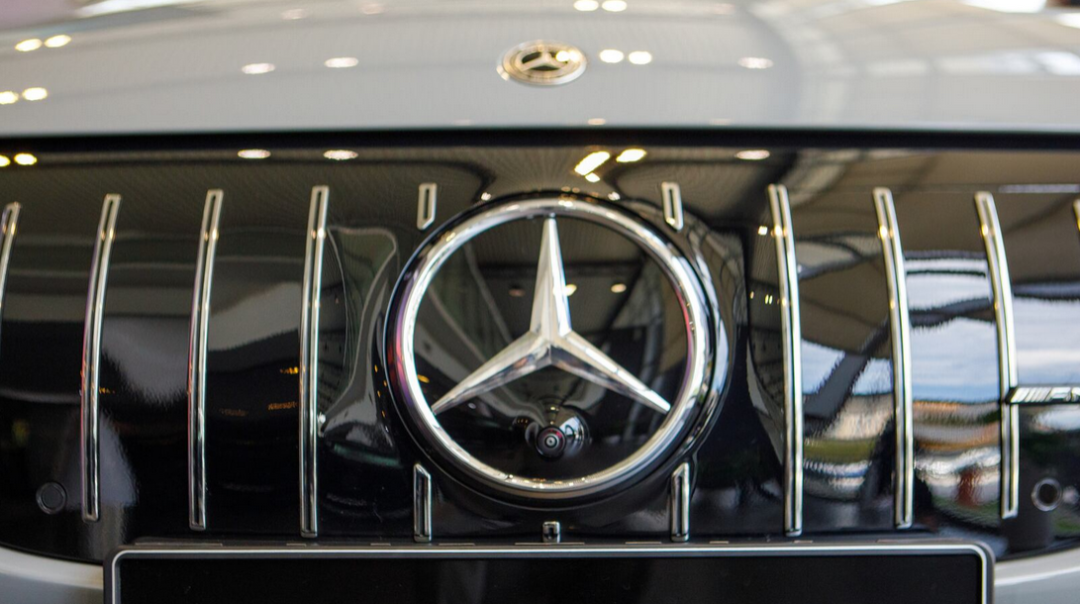
▍01 Ultra-Luxury Strategy May Become History
For decades, Mercedes-Benz has stood as a symbol of automotive prestige, crafting some of the most revered models on the road. However, as the market evolves, even this luxury 'king' is succumbing to pressure.
Like many automakers facing long-term economic headwinds and shifting consumer expectations, Mercedes is entering a period of uncertainty. This suggests it may need to shed its once-proud luxury label.
The message is becoming clearer. Källenius is quietly adjusting the company's trajectory.
According to a report by Handelsblatt, some within Mercedes have even started referring to the ultra-luxury strategy simply as 'L,' a clear indication that internal narratives may be undergoing a dramatic shift.
In an interview with German media, Källenius emphasized, 'Our goal is to always provide customers with the most desirable products in every market segment.' Although he has long favored profitability over production volume, slowing factory output seems to be altering this consideration.
Internal sources indicate that the company is now striving to realign prices and sales volumes. This may include increasing production. Ergun Lümali, chairman of the engineering committee and employee representative, argues that producing fewer than 2 million vehicles annually is simply untenable.
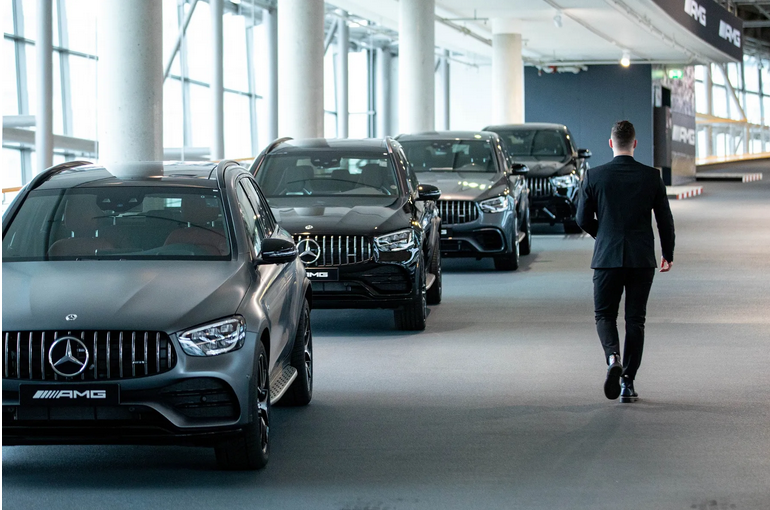
The company has invested significant time and resources into high-end Maybach and AMG models, which are priced well above €100,000 (approximately $116,000). While these models may showcase engineering and design prowess, they are insufficient to fully safeguard profit margins.
The term 'ultra-luxury' is gradually fading from official strategy. On the other hand, Mercedes has extended production of the A-Class compact hatchback by two years while simultaneously developing its successor. Analysts and investors believe that Mercedes' recognition of volume-oriented products indicates a subtle shift in direction for the automaker.
For Mercedes, this strategic shift is not merely about introducing cheaper, smaller models; it is about restoring foundational customer loyalty models—what analysts refer to as the 'consumer purchase funnel.'
Speich (Deka Investment) states that returning to lower-priced models has the potential to 'penetrate the powerful Mercedes brand into a broader market.'
Schmidt (automotive industry analyst) believes that the previous push toward ultra-luxury has jeopardized Mercedes' core principles. To regain long-term brand loyalty, Mercedes must attract entry-level buyers and retain them within the brand as it moves toward the high-end market in the future. 'Cutting off the bottom (entry-level models) entirely always risks losing the funnel principle,' he said.
Mercedes' declining profits and renewed focus on entry-level models have intensified investor scrutiny of Källenius.
In Speich's view, if Källenius introduces a new entry-level model, it could signal that 'the ultra-luxury strategy has definitely become history—that is, it has failed.' He attributes the weak performance of luxury electric vehicles and profitability pressures to 'Mercedes' own misjudgments and unforeseen market developments.'
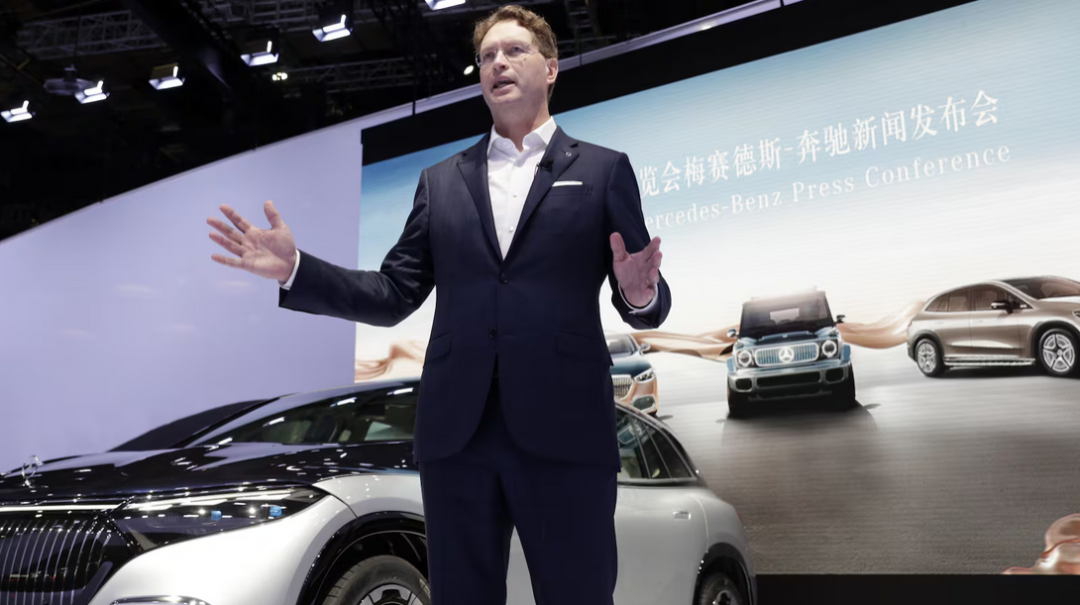
▍02 How the Shift Happened
Analysts generally agree that post-pandemic, the ultra-luxury strategy yielded strong results due to supply shortages and pent-up demand from affluent buyers.
However, this 'pure luxury' approach—aimed at raising transaction prices and focusing on high-end models—was a strategy tailored for a specific, temporary market. In today's normalized competitive environment, it has been severely shaken.
Bratzel (director of the Center for Automotive Management) believes that this rather extreme strategy did not work. Mercedes 'rightly corrected this' by returning to a broader lineup that 'includes income groups with slightly less money in their wallets.'
A Mercedes spokesperson told Automotive News that its strategy transcends the concept of an 'ultra-luxury strategy.' 'Our goal is to create the most desirable products for customers in every market segment. This strategy will be continuously adjusted and refined based on current market conditions and global developments,' the spokesperson said.
Analysts state that post-pandemic, Mercedes relied too heavily on its high-end product lineup. As it could no longer sustain high prices and faced increasing competition, its advantages began to erode.
Schmidt believes that the post-pandemic market boost, which prioritized 'value over volume,' has subsided. Once 'utilization rates at key production facilities dwindle,' plans to shift toward the high-end market stall, and slowing utilization at certain factories highlights the structural vulnerability of high-end models.
Subsequently, the competitive landscape—especially in China—changed dramatically.
Chinese manufacturers such as BYD and NIO are rapidly closing the technological gap in high-end electric vehicles, offering high-quality models at lower prices. Sales of luxury electric vehicles like the Mercedes EQS have failed to take off in China, while U.S. tariffs threaten profit margins in that market.
'An increasing number of Chinese competitors possess similar innovative capabilities, and in some areas, they are even more innovative,' Bratzel said.
As the technological gap narrows in China, the extremely high price premiums demanded by German brands can no longer be sustained, especially in Europe, where more competitive Chinese models equipped with sophisticated software are entering the market.
Bratzel predicts that over the next three to five years, Chinese high-end brands will intensify their push into Europe, placing greater pressure on Mercedes, BMW, and Audi.
Therefore, experts say that refocusing on sales volume is not just a market adjustment but a structural necessity for Mercedes' survival. Any automaker needs scale to effectively reduce costs, secure favorable prices from top suppliers, and manage the increasing complexity of developing region-specific models due to fragmented consumer tastes and regulatory requirements.
'Without such scale, costs soar, and pricing and profit margins cannot keep pace. This structural pressure forces automakers to maintain scale, even if small entry-level models are barely profitable on paper,' Schmidt said.
▍03 Sales Volume More Important Than Profit
The export-oriented German automotive industry is undergoing a difficult phase.
In addition to weak sales and increasing competition from Asia, its challenges are closely tied to the transition toward electric mobility. Furthermore, the European Union has set climate protection targets to reduce carbon dioxide emissions. The automotive industry is advocating for new incentives in Germany to purchase electric vehicles and, more broadly, for a more flexible approach to transitioning toward zero-emission drivetrains.
'The environment we are currently in is extremely complex,' Källenius stated in an interview, noting that the industry is simultaneously facing heavy rain, hail, storms, and snowfall. 'Automobile manufacturing is a tough industry, and it's tougher now than ever before.'
Källenius believes that the current predicament (difficulties) stem from three primary causes.
First, when the United States decided to redefine a decades-old world trade order, it inevitably impacted business development. During Donald Trump's presidency, the U.S. recently raised tariffs on imported goods from the European Union, including automobiles.
Second, in the Chinese market, over 100 automakers are competing against each other. Additionally, purchasing sentiment among higher-income groups has been very low in recent years. 'We are experiencing a Darwinian competition in China,' Källenius said.
Third, the transition toward electric vehicles is taking longer than expected. 'As a result, we are investing in multiple drivetrain technologies over the long term,' Källenius said.
Earlier this year, Mercedes announced a reduction in its electric vehicle investment. In addition to launching 17 new electric vehicles by 2027, it plans to introduce 19 new or significantly improved internal combustion engine vehicles in the coming years. In its pursuit of profitability, Mercedes seems to believe that sales volume is more critical than ever.
To enhance profitability, Mercedes' board of directors announced a cost-cutting plan in February, aiming to reduce production costs by 10% by 2027, lower fixed costs, and cut material expenses. Mercedes reached a package agreement with the General Works Council, including a severance plan for administrative staff.
In the third quarter, its adjusted earnings before interest and taxes (EBT) were €2 billion, down from €2.5 billion in the same period last year. Net profit fell nearly 31% year-on-year to €1.19 billion. Sales declined 6.9% to €32.14 billion.
Data shows that the group's earnings before interest and taxes were affected by special costs totaling €1.34 billion, with a significant portion (€876 million) attributed to employee reductions in Germany and overseas cost-cutting measures.
Weak performance in China and the United States once again led to a decline in sales volume. In China, for example, Mercedes' third-quarter sales fell approximately 27% to 125,000 units. Now, domestic manufacturers face fierce competition in this crucial market.
Källenius is pinning his hopes on new models—the all-new CLA and GLC, with the all-electric CLA belonging to the entry-level segment.
(This article partially synthesizes reports from Automotive News, Carscoops, Auto123, and Electrek, with some images sourced from the internet.)

-
![]()
ByteDance, DJI, and Xiaohongshu Secure Top Three Positions Among China’s Fastest-Growing Unicorns
-
Tesla's in-car voice system in China is finally learning to 'understand human language'
-
![]()
Foreigners Are Amazed: Chinese Electric Vehicle Drive Systems Unveil Innovative 'Poses'
-
![]()
700,000 Brothers and the Future of Robots: Behind JD.com's 'Nirvana Plan'
-
![]()
Zhipu's Trillion-Dollar Valuation: A New Chapter for China's AI
-
![]()
Is Laifen, a 'Dyson Alternative' on the Rise, Now Ensnared by the 'Alternative Curse'?
-
![]()
Beyond Patents: Insta360 and DJI Compete in Retail
-
![]()
Piercing Through Industry Chaos: The Curtain Rises on Compliance for Autonomous Driving