Why Do Huawei and XPENG, Both Striving for Excellence, Join Forces in Range-Extended Technology, Transcending the 'Five Brands and Three Realms'?
 12/05 2025
 519
519
Lead | Introduction
Why does XPENG Motors, renowned for its commitment to 'full-stack self-research,' engage in deep collaboration with Huawei on the core three-electric technologies of the XPENG X9 Super Range-Extender?
Article Details
Produced by | Heyan Yueche Studio
Written by | Li Suwan
Edited by | He Zi
Word count: 2616
Reading time: 4 minutes
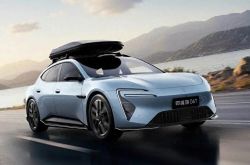
Two industry leaders, both vying for supremacy in the intelligent electric vehicle arena yet sharing mutual respect, converged at Huawei's Songshan Lake campus during the most picturesque season. On December 2, the XPENG X9 Super Range-Extender made its global debut, powered by Huawei's DriveONE next-generation range-extended generator.
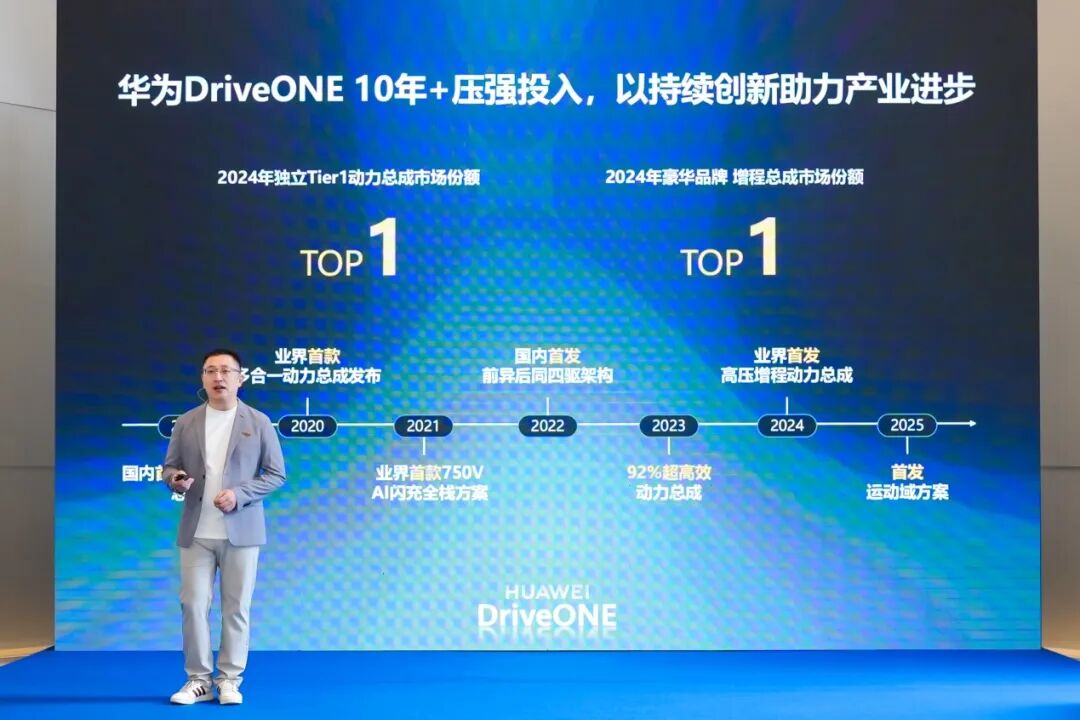
Wang Chao, President of Huawei's Intelligent Electric Product Line, reiterated Huawei's tradition of technological leadership confidence at the technology-sharing session, summarizing Huawei DriveONE with multiple TOP 1 accolades.
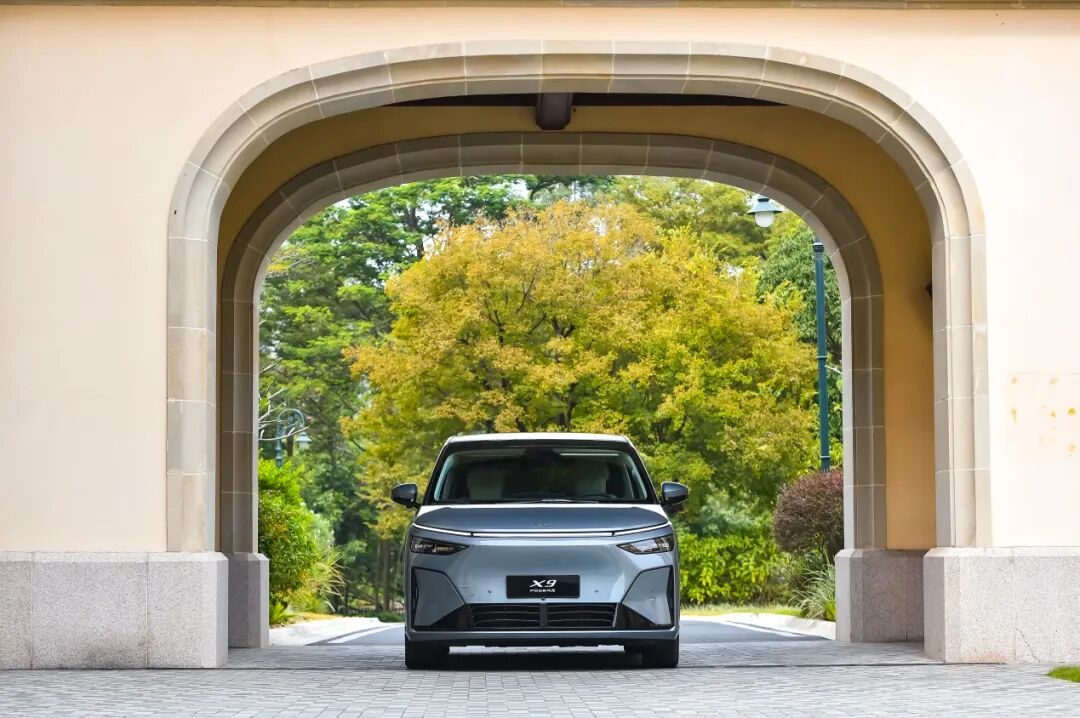
The XPENG X9 Super Range-Extender, also featuring Huawei's DriveONE next-generation range-extended generator globally, is a product that strives for excellence. At last month's XPENG X9 Super Range-Extender technology launch event, XPENG Motors Chairman He Xiaopeng introduced this new model with '14 globally leading features and 32 class-leading features.'
How can two companies, both eager to lead, come together? XPENG and Huawei forged a comprehensive range-extended cooperation in November 2024, marking a significant step forward a year later. Wang Chao described this partnership as 'a shared pursuit of leading experience and technology-driven innovation by XPENG & Huawei.' For Huawei, which often serves as a supplier in the automotive sector, collaborating with various OEMs is standard practice. However, why does XPENG Motors, known for its 'full-stack self-research,' collaborate deeply with Huawei on the core three-electric technologies of the XPENG X9 Super Range-Extender?
Why Does XPENG 'Leverage' Huawei?
Newcomers like Li Auto, AITO, Leapmotor, and others have already taken the lead in the range-extended vehicle race. As a latecomer, the XPENG X9 Super Range-Extender aims to turn the tables by setting extremely high standards for its power system. It requires 'long pure electric range, fast charging speed, sufficient power when the battery is depleted, low overall energy consumption, low range-extended noise, and high space integration.' This necessitates a dual-energy architecture design that does not compromise interior passenger space, compatibility with 5C ultra-fast charging high-voltage large batteries and large fuel tanks for range, class-leading power generation and battery preservation capabilities for a large seven-seater, and a critical requirement for noise reduction in traditional range-extended vehicles with NVH ≤ 0.5dB(A), truly achieving a seamless blend of the advantages of a pure electric experience and effortless range extension, creating a 'next-generation range-extended' experience for global users.
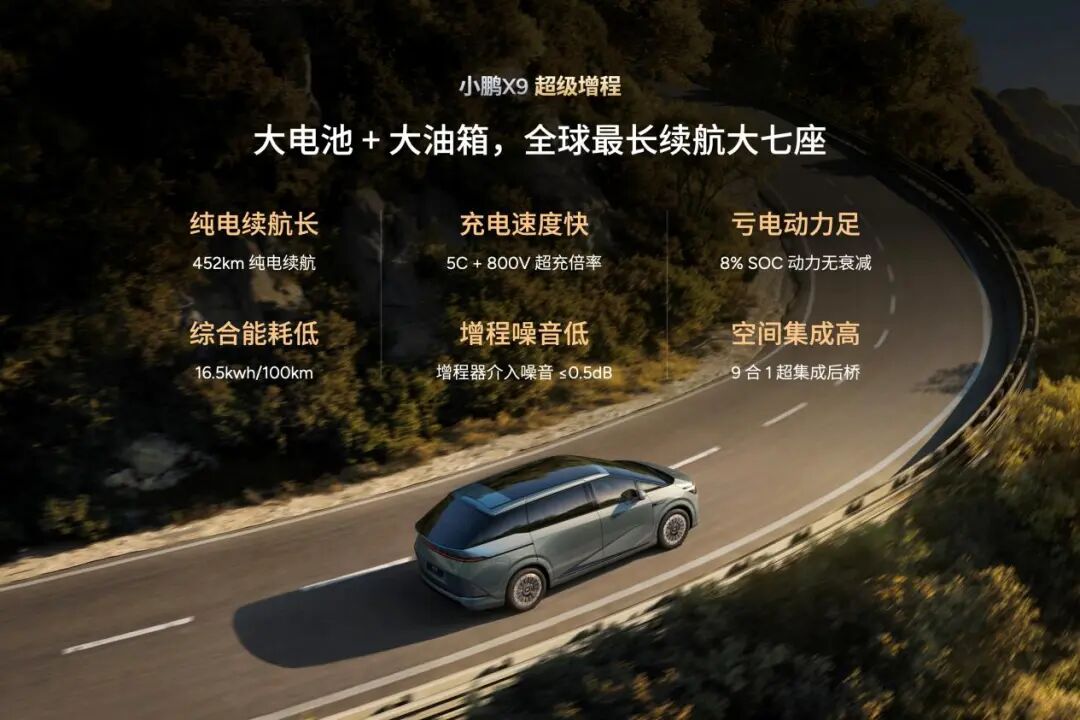
However, for XPENG, which has been competing in the pure electric arena, swiftly occupying a technological high ground in the range-extended field is challenging. Gu Jie, Vice President of XPENG Motors and Chairman of the Automotive Technology Committee, mentioned that traditional range-extended systems could not meet the performance requirements of the next-generation large seven-seater at the beginning of the XPENG X9 Super Range-Extender's development. Existing range-extended solutions in the industry generally suffer from limited energy replenishment efficiency, insufficient pure electric range, inadequate power generation, and NVH performance that cannot match that of pure electric vehicles. More importantly, no off-the-shelf generator on the market could simultaneously meet the stringent technical requirements for high-voltage platforms, ultra-high integration, extreme efficiency, and imperceptible quietness.
Faced with this common technological challenge, XPENG chose to collaborate with Huawei, a top partner in the intelligent three-electric field, for joint research and development. The XPENG X9 Super Range-Extender globally debuts the DriveONE full-stack highly integrated high-voltage oil-cooled generator. This jointly launched Huawei DriveONE full-stack highly integrated high-voltage oil-cooled generator by both parties can be considered the 'super heart' of the next-generation range-extended system. Its continuous power density of 1.88kW/kg represents a more than 40% improvement over the industry average. Coupled with a continuous power generation capacity of 75kW and a maximum power generation capacity of 85kW, it enables the XPENG X9 to achieve a hardcore performance of not depleting the battery during high-speed cruising at 150km/h and maintaining power without decay even at 8% battery charge.
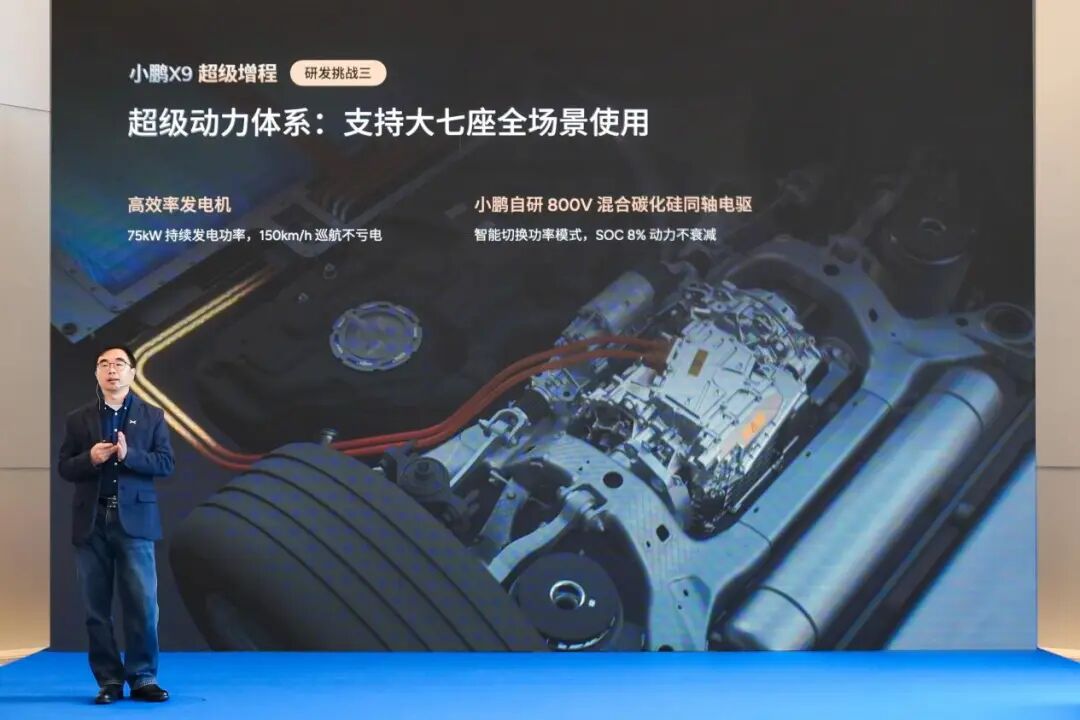
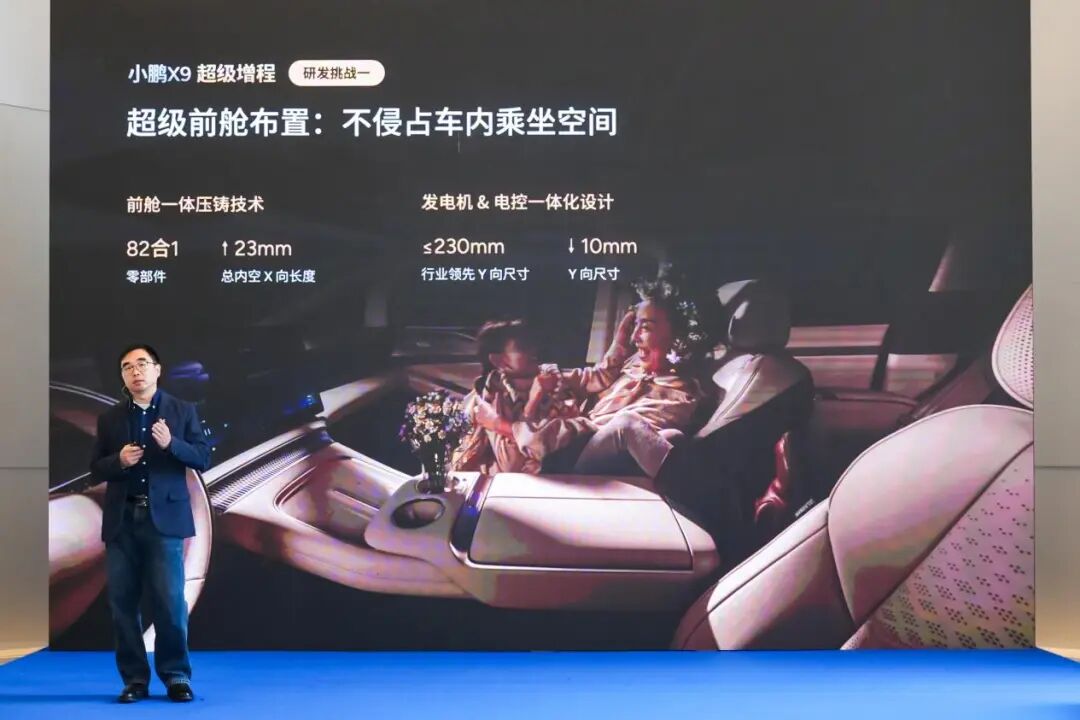
More critically, through multi-laminated tooth spray oil cooling technology and extreme integration design, the generator's Y-direction size is compressed to ≤230mm. Combined with XPENG's front compartment integrated die-casting 82-in-1 technology, it achieves a power generation efficiency of ≥92% under various operating conditions and a fuel-based power generation efficiency of 3.6kWh/L without encroaching on cabin space. The joint application of precise active cylinder deactivation technology and resolver-free control strategy reduces range-extended engine start-stop vibrations by 60% and controls intervention noise to an imperceptible level of ≤0.5dB(A), completely resolving the NVH pain points of traditional range-extended vehicles. This system, in synergy with XPENG's self-developed high-voltage pure electric architecture and super range-extended mode, ultimately achieves a dual breakthrough of 1602km combined range and the class-leading lowest fuel-electric conversion consumption of 2.53L/100km, marking the official transition of range-extended technology from 'solving availability' to 'competing on experience.'
What's the Story Behind 0.5dB?
The market is becoming increasingly competitive. According to He Xiaopeng's prediction, the automotive market in 2026 will be even more exciting, brutal, and bloody.
To boost sales and profits, XPENG Motors is set to carve out a path in the range-extended market while expanding its pure electric market presence. Leapmotor, currently leading in sales among new forces, adopts a dual-track approach of pure electric and range-extended vehicles.
Currently, the range-extended market is at a critical turning point, with overall growth slowing down, but technological iterations and market competition are reshaping its landscape. Since the second half of 2025, monthly sales of domestic range-extended models have hovered around 100,000 units, with growth rates slowing down or even declining. For instance, Li Auto, a representative brand in the range-extended field, has seen consecutive monthly sales declines since June, facing pressure to adjust its cumulative sales targets. This is mainly influenced by factors such as the intensifying price war of pure electric vehicles and the rapid expansion of charging infrastructure, leading some consumers to switch to pure electric models. However, despite the overall market pressure on range-extended vehicles, their 'fuel and electric' dual capability effectively alleviates range anxiety, supporting some rigid demand users, especially in third and fourth-tier cities and remote areas with imperfect charging infrastructure and high range demands, where range-extended vehicles remain irreplaceable.
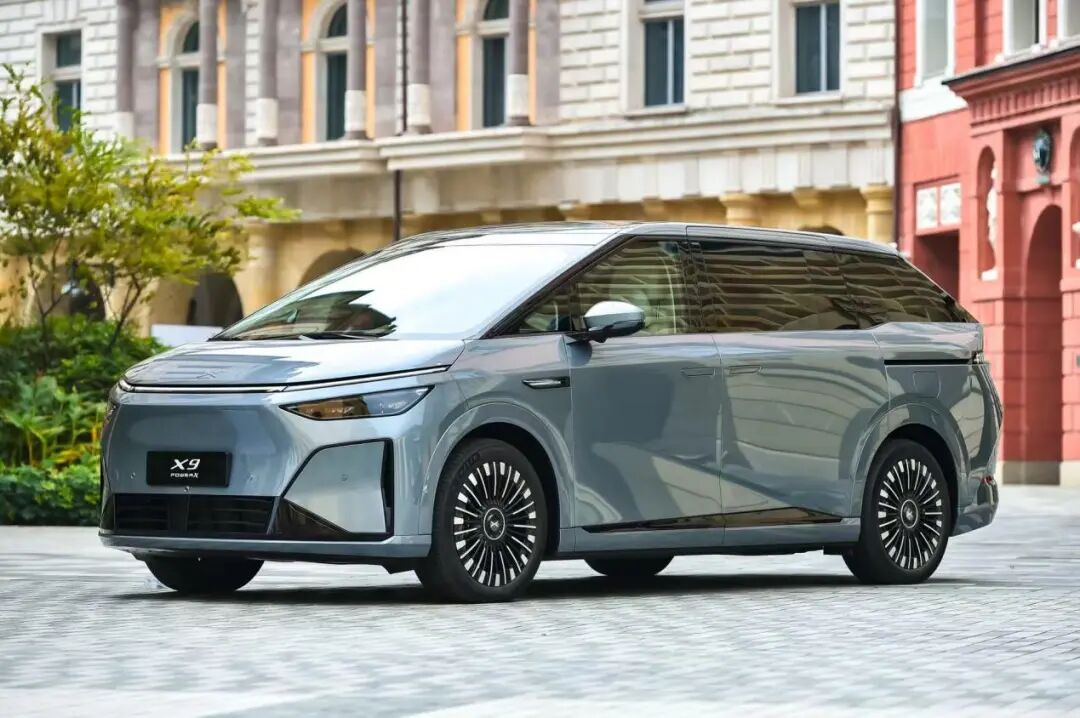
At this juncture, the window of opportunity for XPENG, a newcomer to the range-extended market, is very limited. As a latecomer, it can only seize the opportunity by making technological and experiential breakthroughs. Equipped with Huawei's DriveONE full-stack highly integrated high-voltage oil-cooled generator, the XPENG X9 Super Range-Extender possesses two core characteristics: 'power' and 'quietness,' providing a more stable efficiency and a quiet, imperceptible range-extended experience. While 'power' is a common pursuit among automakers, XPENG's relentless pursuit of 'quietness' may be unmatched by other automakers. XPENG's determination to resolve this pain point may stem from previous user complaints about low-frequency resonance causing ear pressure in pure electric models like the XPENG G6 and XPENG MONA M03. Having learned from past mistakes, XPENG has continuously strengthened the design and sound insulation aspects of its new models.
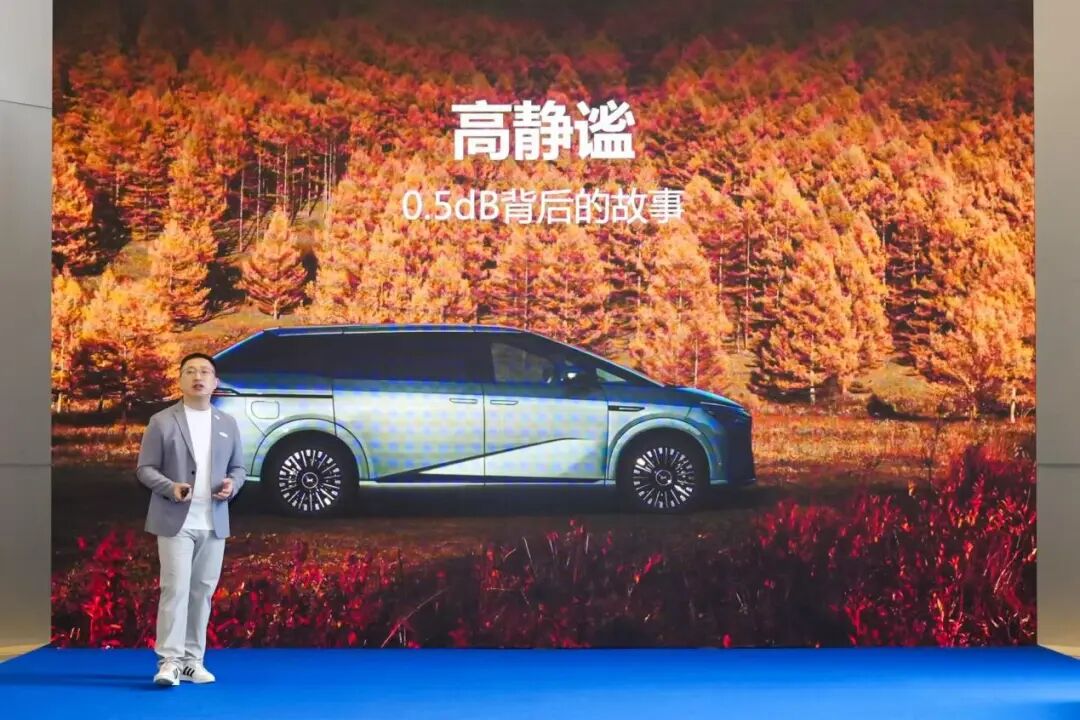
There's a story behind the 0.5dB. The XPENG X9 Super Range-Extender aims to achieve class-leading NVH performance and an imperceptible range-extended experience. To eliminate the interference of range-extended engine noise and vibrations on the riding experience, XPENG Motors has self-developed an active cylinder deactivation integrated matching technology, collaborating with Huawei to jointly tune the GCU control strategy. Through three months and over ten rounds of joint matching, tuning, and control strategy optimization, the total value of range-extended engine start-stop vibrations has been reduced by 60%. Additionally, with XPENG Motors' in-depth structural optimization of the ultra-quiet imperceptible range-extended engine and the introduction of ENC active noise reduction technology, the intervention noise of the range-extended engine has ultimately reached an industry-leading level of ≤0.5dB, achieving a pure electric-level quiet experience of 'imperceptible start-stop, imperceptible operation.'
Currently, Huawei's circle of friends continues to expand, with notable attention on the 'Five Brands and Three Realms.' AITO, Luxed, Enjoya, Zense, and Shangjie are led by Huawei's Terminal BG, which deeply participates in the entire product lifecycle management. On the other hand, Qijing, Yijing, and Huajing adopt Huawei's Qiankun intelligent technology solutions while retaining the automakers' brand sovereignty. As Huawei's ecosystem expands, how to avoid homogeneous competition will be a question that OEMs need to ponder. Unlike the 'Five Brands and Three Realms,' XPENG and Huawei have established a different cooperation model. If XPENG and Huawei can achieve extreme excellence or new breakthroughs in certain aspects during their core technology cooperation, this will be one of the paths to avoid homogeneous competition.
Commentary
From the essence of the cooperation, the alliance between XPENG and Huawei is not a simple supplier-customer relationship but a deep coupling of technological co-research and experiential co-creation. XPENG defines product requirements with its high-voltage platform, intelligent driving algorithms, and vehicle integration capabilities, while Huawei opens up its core three-electric technologies and software tuning capabilities to jointly tackle four major challenges: space layout, higher system efficiency, consistent power preservation and driving experience in range extension, and NVH matching. This cooperation model not only highlights Huawei's To B positioning of 'helping automakers build great cars' by transforming core technologies like DriveONE into a standardized 'arsenal' but also allows XPENG to focus on its areas of strength and quickly address technological shortcomings. In the wave of intelligent electrification, the openness and collaboration of core technologies are replacing closed competition as the core driving force for industry progress. Huawei and XPENG, both striving for excellence, will grow together in a 'competitive and cooperative win-win' relationship.
(This article is original to Heyan Yueche and may not be reproduced without authorization.)
-
![]()
ByteDance, DJI, and Xiaohongshu Secure Top Three Positions Among China’s Fastest-Growing Unicorns
-
Tesla's in-car voice system in China is finally learning to 'understand human language'
-
![]()
Foreigners Are Amazed: Chinese Electric Vehicle Drive Systems Unveil Innovative 'Poses'
-
![]()
700,000 Brothers and the Future of Robots: Behind JD.com's 'Nirvana Plan'
-
![]()
Zhipu's Trillion-Dollar Valuation: A New Chapter for China's AI
-
![]()
Is Laifen, a 'Dyson Alternative' on the Rise, Now Ensnared by the 'Alternative Curse'?
-
![]()
Beyond Patents: Insta360 and DJI Compete in Retail
-
![]()
Piercing Through Industry Chaos: The Curtain Rises on Compliance for Autonomous Driving