Are Overseas Design Centers Still Necessary for Chinese Automakers?
 12/05 2025
 719
719
"Role Reshaping" - Author: Shen Tianxiang | Editor: Li Guozheng | Produced by: Bangning Studio (gbngzs)
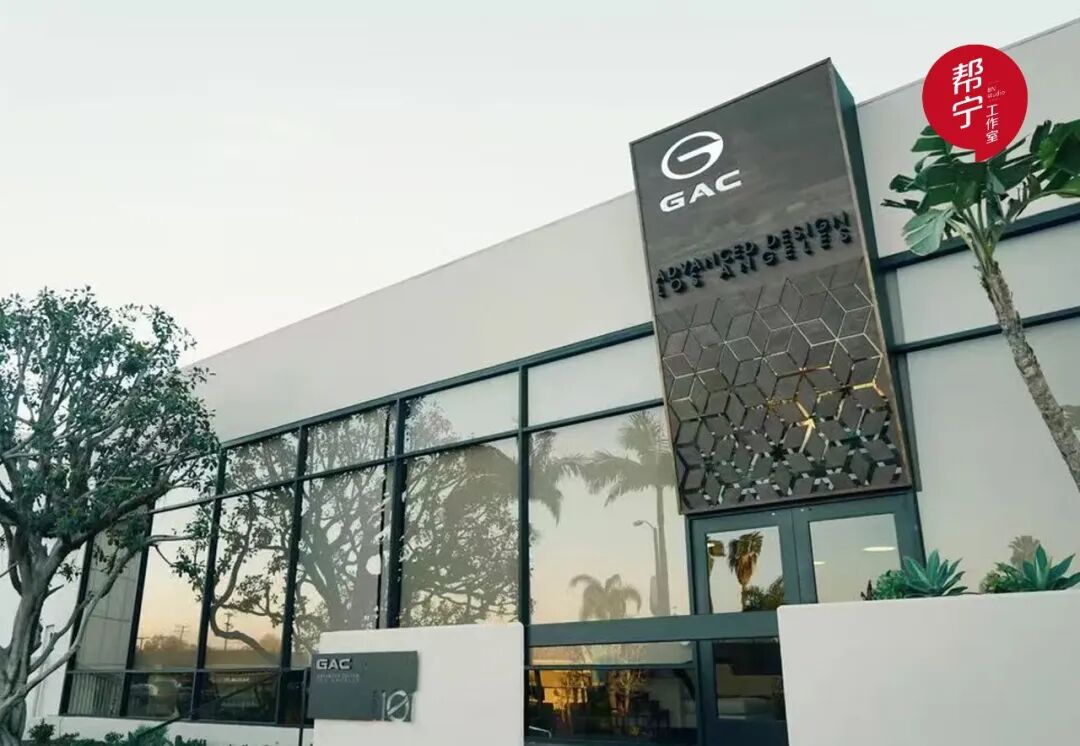
The Pacific breeze still gently caresses the palm trees of Newport Beach in Los Angeles, USA. Not far from the shore, the lights of GAC Motor's Los Angeles Forward-Looking Design Center, which had illuminated the area for seven years, have suddenly gone dark.
On November 29, 2025, Pontus Fontaeus, the head of GAC Motor's Los Angeles Forward-Looking Design Center, confirmed via email to the automotive design information platform Car Design News that the center would cease operations.
Established in 2018, the center was once highly anticipated, with the aim of becoming a pivotal fulcrum for GAC Motor to penetrate the North American market and absorb cutting-edge design trends.
Seven years later, its closure has sparked industry speculation about GAC Motor's strategic shift and prompted a reevaluation of the globalization of Chinese automotive design.
Some have interpreted this as a sign that the era of overseas design for Chinese automobiles is drawing to a close.
In fact, amidst the current industry transformation, GAC Motor's adjustment appears more like a lane change than an exit.
Zhang Fan, Chief Design Officer and Dean of the Styling Design Institute at GAC Motor, told the media, "This move represents a strategic resource adjustment based on the current international situation and market changes. It aims to focus design resources more sharply and align innovation tasks more concretely with market objectives, thereby enhancing the efficiency of input and output."
Zhang informed Bangning Studio that closing the Los Angeles center was part of adjusting strategic resources, with a subsequent focus on building domestic and European teams. "Our Milan Forward-Looking Design Center is operating well and is highly productive," he said.

GAC Motor's Forward-Looking Design Center in Milan, Italy, was established in October 2022. GAC Motor has also set up a European R&D Center there, hoping to build a talent system with stronger global creative design capabilities and infuse GAC Motor's proprietary brand products with a more fashionable and avant-garde edge.
Although the Milan center was established after the Los Angeles center, its achievements have been even more remarkable—ranging from concept cars that have won numerous international awards to the mass-produced new car AION UT, showcasing vigorous creativity. The Los Angeles center has also produced many works and won some international awards, but it lacks mass-produced outcomes.
"Putting aside political factors, there are various reasons for this, such as the integration issues between Chinese and foreign teams and the overseas teams' understanding of Chinese user needs," said an automotive designer who has worked with the Los Angeles team. In recent years, many of the concept cars displayed by GAC Motor at domestic auto shows have been the work of the Milan team.
▍01 Indispensable
The views suggesting that the era of overseas design for Chinese automobiles is over are not entirely unfounded, as they are rooted in systemic changes in industrial logic, corporate capabilities, and the international environment.
Firstly, the strong rise of China's domestic design capabilities is a fundamental internal factor.
Looking back over 20 years ago, China's domestic automotive design was virtually non-existent, with the mainstream model being imitation and introduction under an environment of exchanging market access for technology.
Later, Chinese automakers began to establish R&D centers in Europe and the United States, aiming to learn advanced technologies and design concepts to support product development and help shape an international brand image.
Times have changed.
China's domestic design capabilities are on the rise, not only fully mastering the complete design process from concept to mass production but also demonstrating a faster response speed and bolder innovation in the new design paradigms spurred by electrification and intelligence compared to traditional automotive powers.
As the Chinese automotive market matures, more and more consumers are paying greater attention to domestic designs. Especially in the field of intelligence, domestic designers often innovate based on the needs of domestic users, reducing automakers' reliance on overseas design centers.
Secondly, the uncertainty of the international geopolitical and economic environment has increased the risks and costs of operating overseas design centers.
GAC Motor's Los Angeles Design Center is a prime example. In recent years, complex international relations and trade environments have made it difficult for Chinese automobiles to enter the US market. When the preset market bridge function cannot be realized, an overseas center that is far from headquarters and costly can easily become an isolated island and a burden. In such cases, reforming and focusing resources is actually more pragmatic.
Some also question whether overseas teams can keep up with the intense iterative pace of China's automotive industry.
"Certain design teams in Europe, influenced by their pace of life, have a much lower work intensity than in China. For example, in Sweden, they only work two to three hours a day, making it difficult to match the high-frequency design iteration demands in China," a senior automotive designer told Bangning Studio.
In recent years, Chinese automakers have required rapid responses to market feedback, necessitating close collaboration between design teams and headquarters. However, the geographical distance of overseas layouts inevitably increases communication costs and prolongs decision-making cycles.
However, this does not mean that Chinese automakers no longer need overseas design centers; on the contrary, they remain indispensable.
Firstly, the competition for talent.
Zhang Fan believes that the most irreplaceable value of overseas design centers lies in talent. "Many European and American designers are unwilling to work in China, so we go out and recruit locally," he said.
An automotive designer told Bangning Studio that the competition for talent at overseas design centers is fierce and closely related to the rise and fall of automakers themselves. Some automakers have seen a significant decline in market competitiveness and naturally lack sufficient capital to retain talent, leading to a weakening of their overall design capabilities, which is often evident in the launch of new or revised models.
Secondly, access to different innovation ecosystems.
Global innovation presents different characteristics in various regions. For example, Milan represents fashion and classicism, Stuttgart, Germany, represents engineering rigor, Silicon Valley, USA, represents technological disruption, and Berlin, Germany, represents avant-garde interaction. Chinese automakers establishing design centers at these different nodes are equivalent to establishing ports on the main arteries of the innovation network, enabling them to continuously and cost-effectively absorb the purest nutrients.
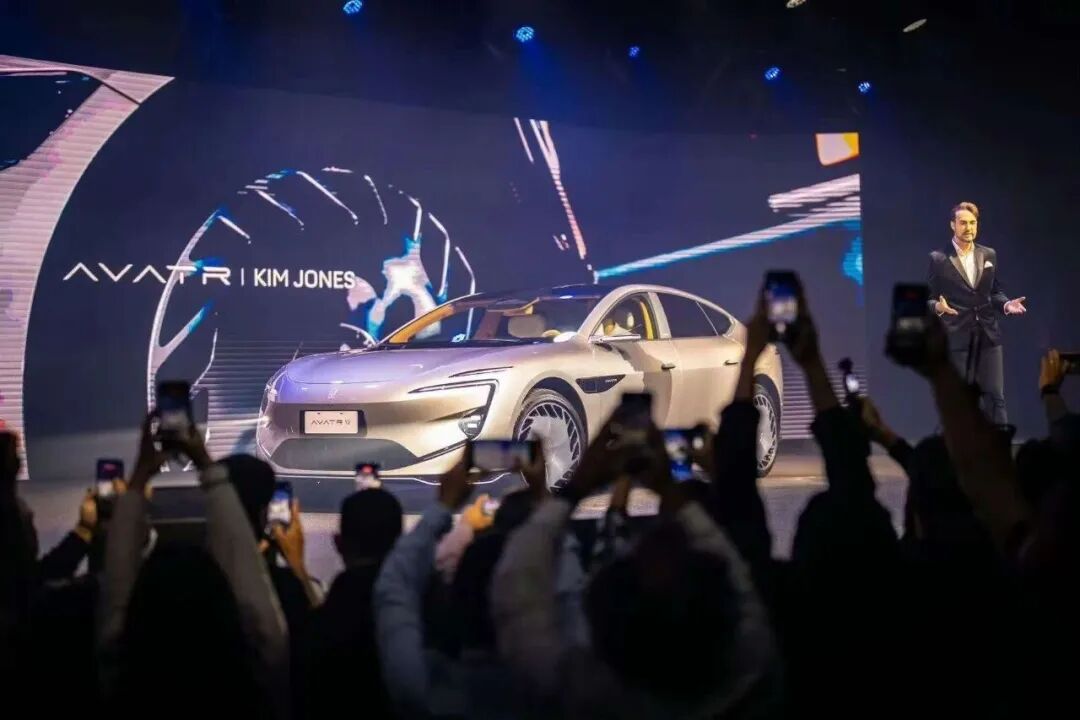
"Many excellent design works from automakers come from overseas teams, such as NIO's first-generation ES8, as well as many works from Avita, Lynk & Co, and Zeekr," said the aforementioned automotive designer. Many creative trends, material processes, and design ideas are not limited to a specific place, whether domestic or overseas.
Thirdly, cultural resonance and emotional connection.
To win over mature markets such as Europe and North America, Chinese automakers need more than just product strength; they also require cultural resonance and emotional connection. A design team rooted in the local area can deeply understand the subtle differences in local users' lifestyles, aesthetic preferences, regulations, and even sense of humor, which cannot be fully replaced by remote research and data analysis in China.
▍02 Reshaping the Core Value
Although overseas design centers remain an indispensable part of Chinese automakers, the core value of these centers is undergoing a profound transformation.
The aforementioned senior automotive designer proposed a viewpoint: the definition of design is being broadened, from styling design to scenario and user experience design.
"Over the past few decades, the traditional design school represented by Turin, Italy, has dominated a styling philosophy that pursues form beauty. However, today, successful brands like Tesla, Li Auto, and NIO often do not win by creating stunning forms but by defining a new driving scenario and user experience," he said.
For example, Li Auto has defined the "mobile home," creating a parent-child travel scenario with refrigerators, TVs, and large sofas; Tesla has defined seamless intelligent driving and minimalist electronic interaction experiences. Even Apple's unfinished automotive project is speculated to have a core concept of seamless ecological flow where "you don't need to take out your phone when getting in the car."
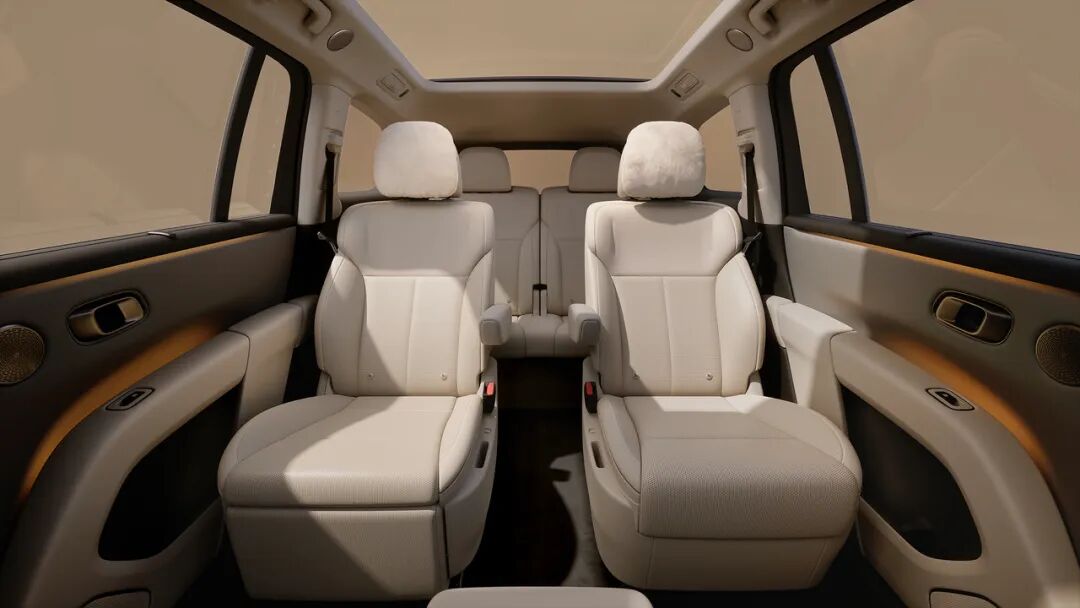
These are not problems that can be solved by traditional designers alone. They involve software architecture, ecological interconnection, user research, and scenario definition.
This means that the functions of overseas design centers must be upgraded from a single styling output endpoint to a cutting-edge hub that integrates diverse innovation elements. Their core task is no longer to deliver several perfect vehicle design proposals to headquarters but to become sensors and incubators that delve deep into local innovation hubs.
Future overseas design centers of Chinese automakers need to build interdisciplinary talent systems.
They still require skilled styling designers to ensure the aesthetic tone and quality of products but even more so need to introduce engineers proficient in human-computer interaction, researchers well-versed in local user habits and emotional needs, scenario planners from the technology and internet industries, and even scholars insightful into sustainable mobility and social psychology.
Meanwhile, efficiency and collaboration methods are also evolving. Zhang Fan said, "The young designers in Europe are quite good, using fully digitalized means and are highly efficient."
Currently, the maturity of cloud-based collaborative design platforms, real-time rendering, and virtual reality review technologies enables overseas centers to play a more flexible role as agile innovation units. They can quickly explore and prototype specific scenarios or technologies and then deeply couple them with headquarters' system engineering, big data, and localization teams.
"Of course, they may have some cognitive biases regarding what designs are more easily accepted by the Chinese market, which requires the domestic headquarters to provide good guidance and selection," Zhang added.
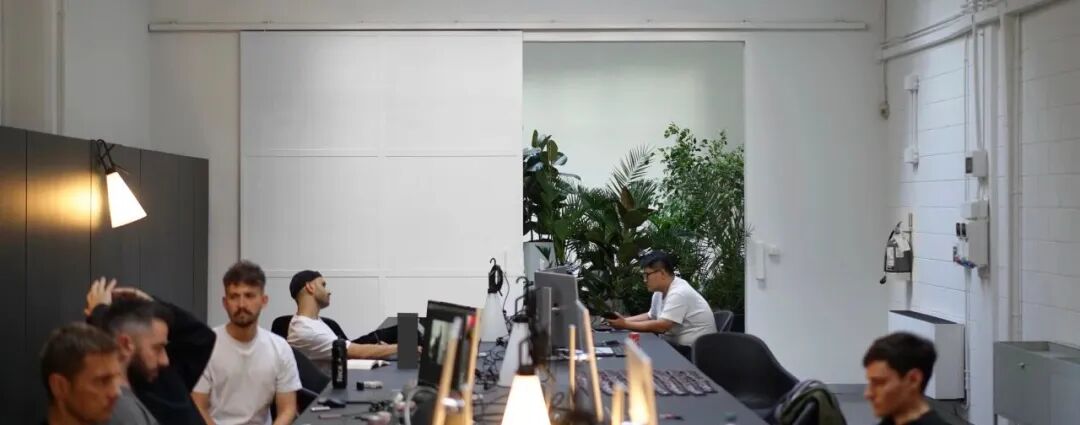
For Chinese automakers, a truly global brand must have a globalized and inclusive design mindset.
For example, establishing a design center in Europe can ensure that products possess an elegance and sense of value that align with local aesthetics; setting up innovation outposts in Silicon Valley, USA, can keenly capture the latest trends in technology and business models; and in East Asia, they can gain insight into the extreme demands of consumers in the region for refinement and space utilization.
All these dispersed and localized insights, through the headquarters' strong integration and guidance capabilities, ultimately merge into a high-end brand image that is both globally minded and precisely localized—that is the ultimate goal of Chinese automakers.
Therefore, the overseas design centers of Chinese automakers have not ended but are undergoing a transformation in their core value.
They have shifted from being aesthetic temples of symbolic significance to becoming innovative outposts that substantially participate in competition. Their existence still embodies the brand promises made by Chinese automakers in the process of globalization, but the connotation of these promises has been upgraded from "we possess world-class design" to "we are committed to creating more cutting-edge travel experiences."
From this perspective, GAC Motor's adjustment is not a retreat but a more precise and sustainable approach to remain at the global innovation table amid the unprecedented changes in the automotive industry.

-
![]()
ByteDance, DJI, and Xiaohongshu Secure Top Three Positions Among China’s Fastest-Growing Unicorns
-
Tesla's in-car voice system in China is finally learning to 'understand human language'
-
![]()
Foreigners Are Amazed: Chinese Electric Vehicle Drive Systems Unveil Innovative 'Poses'
-
![]()
700,000 Brothers and the Future of Robots: Behind JD.com's 'Nirvana Plan'
-
![]()
Zhipu's Trillion-Dollar Valuation: A New Chapter for China's AI
-
![]()
Is Laifen, a 'Dyson Alternative' on the Rise, Now Ensnared by the 'Alternative Curse'?
-
![]()
Beyond Patents: Insta360 and DJI Compete in Retail
-
![]()
Piercing Through Industry Chaos: The Curtain Rises on Compliance for Autonomous Driving