Why Are They So Vexed?
 12/10 2025
 692
692
"Technological Empowerment for All and Brand Elevation"
Author: Shen Tianxiang
Editor: Li Guozheng
Produced by: Bangning Studio (gbngzs)
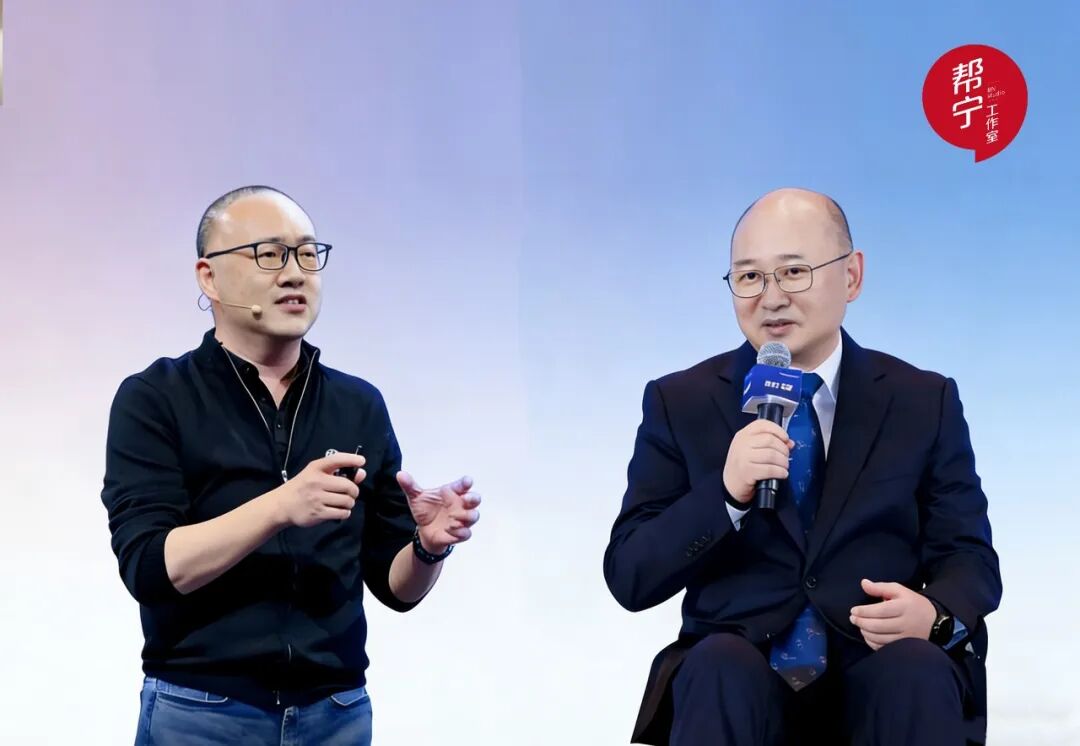
"Shouldn't our mainstream consumers, the vast majority of car owners in China, and everyday folks going about their daily lives have access to the finest urban assisted driving technologies?"
On December 8, at the 2025 Horizon Robotics Technology Ecosystem Conference, Yu Kai, the founder and CEO of Horizon Robotics, voiced his exasperation during his speech.
His vexation arose from a set of data: In China's passenger vehicle market, vehicles priced over RMB 200,000 make up 30% of the market share, while those under RMB 130,000 account for 50%. The crux of the problem is that high-level, high-performance urban intelligent driving chips and comprehensive solutions haven't been widely adopted by the mainstream consumer segment.
Driven by this frustration, Horizon Robotics unveiled the HSD assisted driving system, bringing urban assisted driving experiences to the mainstream market for vehicles priced under RMB 150,000.
"While many innovations are fueled by ambition, many also spring from frustration," Yu Kai remarked.
Twenty days prior, on November 18, the Horizon HSD assisted driving system reached mass production and hit the market. Within two weeks of the launch of the Starway ET5 and Shenlan L06, the first models equipped with HSD, over 12,000 HSD systems had been activated.
Horizon Robotics also brought more thrilling news—a solution for urban assisted driving based on a single Journey 6M chip is on the verge of mass production and will soon be installed in vehicles. This implies that mature and reliable urban intelligent driving experiences will soon be within reach for the RMB 100,000 mass-market vehicle segment.
Another individual who recently expressed frustration is Xiang Xingchu, the Secretary of the Party Committee, Chairman, and General Manager of Jianghuai Automobile Group Holdings Co., Ltd. At the 2025 (23rd) Influential Entrepreneur Annual Conference held on December 6, he shared a tale:
Over three years ago, when Jianghuai was gearing up to enter the luxury car market, someone questioned, "Traditional luxury brands boast centuries of history and numerous brand stories. You can't compete." Xiang Xingchu retorted, "Do we have to wait until we're 100 years old to start?"
"Stories become worth telling when modern people craft them and future generations find them captivating, beautiful, and engaging. That's how they attain timelessness," he said. "Every day, every effort matters. Jianghuai works diligently, Huawei strives, supply chain companies collaborate, and car owners also co-create the brand. These accumulated efforts, when explored and promoted, naturally form brand narratives that future generations will find profound."
On May 30 of this year, the ZUNJIE brand was launched, amassing over 18,000 orders within 175 days, with an average selling price of RMB 900,000. This has bolstered Jianghuai Automobile's confidence and resolve to pursue high-quality development. Xiang Xingchu believes that the automotive industry is currently at a pivotal stage of multi-technological innovation and multi-industry convergence, necessitating a development path centered on quality and brand elevation.
The arrival of ZUNJIE epitomizes the culmination of years of technological accumulation by Chinese brands—from self-developed high-end platform architectures to leading battery, electric motor, and electronic control systems, and user-centric intelligent cabin designs. ZUNJIE has demonstrated with tangible product strength that Chinese brands are fully capable of defining premium automotive value standards.
Xiang Xingchu's frustration underscores a long-standing pain point in China's automotive industry. Over the past few decades, Chinese brands have been pigeonholed as cost-effective, struggling to achieve brand premium comparable to foreign brands even after technological breakthroughs.
However, with the rise of brands like VOYAH, AITO, and ZUNJIE, Chinese automakers have broken free from these shackles. Through technological leadership, experiential innovation, and cultural resonance, they have forged their own premium narratives.
On one hand, there is an urgent call for technological democratization; on the other, a steadfast determination to break through and elevate the brand. At this critical juncture where China's automotive industry is transitioning from scale expansion to high-quality development, these two types of frustration, rooted in dissatisfaction and defiance, are reshaping the industry's value logic.
Bangning Studio believes that the frustrations voiced by these two individuals offer two crucial insights.
Firstly, technology must be accessible to the masses for innovation to hold true meaning.
The intelligent transformation of the automotive industry should not be a privilege for the few but a necessity for the many. The mainstream consumer base in China's automotive market comprises ordinary buyers of vehicles priced between RMB 100,000 and RMB 200,000. Their needs should be the focal point of industry innovation.
If intelligent and electric technologies remain confined to the high-end market, the so-called industrial revolution will ultimately devolve into a niche game, failing to spur genuine industry-wide progress.
Nowadays, technological democratization has evolved from a concept into a mainstream market trend. BYD's strategy of offering electric vehicles at prices comparable to gasoline models, Leapmotor's full-domain self-developed cost reconstruction, and Geely Galaxy's emphasis on delivering true value are all efforts to promote technological democratization.
The practices of these companies illustrate that truly great innovation is one that is affordable and beneficial to the majority. Making technology accessible not only expands market scale but also drives technological iteration and upgrades, creating a virtuous cycle.
Secondly, brands must elevate to establish value.
For an extended period, Chinese brands have often been labeled as low-end and inexpensive in the global market, struggling to break free from price wars even after surpassing competitors in product strength.
The case of ZUNJIE demonstrates that brand stature is not determined by historical longevity but by current value. Brand elevation is not merely about raising prices; it entails building value resonance with users through technological innovation, quality improvement, and cultural empowerment.
In this process, many Chinese brands have blazed their own trails.
For instance, before NIO emerged, the definition of luxury vehicles was long dominated by brands like BBA (Mercedes-Benz, BMW, Audi), with narratives centered on history, heritage, and craftsmanship. NIO's founder, Li Bin, and his team chose a different path: redefining luxury as a holistic user experience.
Thus, "NIO Houses" are not sterile showrooms but vibrant living spaces for car owners; the battery swap system alleviates range anxiety with a worry-free service commitment; and the user community fosters deep emotional connections. NIO has proven that luxury can be defined in ways beyond history, heritage, and craftsmanship.
Brand stature is never determined by the length of past chronicles but by the depth of value and narrative appeal created in the present. Chinese brands do not need to wait for time to bestow legitimacy upon them; instead, they must actively craft stories worth remembering and are fully capable of breaking through barriers in the premium market.
Technological democratization and brand elevation, though seemingly contradictory, are actually mutually reinforcing.
Technological democratization lays a solid user foundation and market scale for brand elevation, enabling more consumers to experience the technological prowess and product quality of Chinese brands. Brand elevation, in turn, provides the research and development investment and value endorsement needed for technological democratization, driving continuous technological iteration and upgrades. Together, they form the dual engines propelling the high-quality development of China's automotive industry.
Without brand elevation, solely focusing on technological democratization could trap China's automotive industry in a cycle of robust manufacturing capabilities but low-profit competition, struggling to access the most profitable and influential segments of the supply chain.
Similarly, without technological democratization, brand elevation would lack a solid foundation and become unsustainable. Without nurturing from the broadest market and fertile ground for technological iteration, premium brands would struggle to maintain long-term competitiveness, betraying the fundamental attribute of automobiles as mass-market industrial products serving the public.
A healthy ecosystem for China's automotive industry should resemble a pyramid—with a broad and solid base of technological democratization supporting several globally renowned premium brands at the pinnacle. The base provides market support, data feedback, and cost dilution for the pinnacle, while the pinnacle guides technological direction, elevates brand image, and breaks through profit ceilings for the base.
More "frustrations" like those of Yu Kai and Xiang Xingchu will serve as driving forces for China's automotive industry. When technological democratization becomes an industry consensus and brand elevation becomes the norm for development, Chinese automobiles will undoubtedly gain greater defining power and influence on the world stage.

-
![]()
Hyundai Motor Workers Strike Today, Fearing Job Losses to Robots
-
![]()
Embracing 'Light': O-film Unveils Its 'Illuminating the Future' Strategy
-
![]()
SenseTime’s SenseNova U1.5 Lite Goes Open Source: Ushering in a New Era of Predictable AI Image Generation
-
![]()
Collaboration Initiated! Tesla Officially Welcomes Doubao Onboard
-
![]()
WPS: From Alternative to Leader, Kingsoft Software Bets on AI Office, H1 Revenue Nears 5 Billion
-
![]()
Can TECNO Mobile Expand Beyond Africa?
-
![]()
A Sample of AI Breakthrough for a Company
-
![]()
Goldman Sachs Raises the Bar: China’s Global Expansion Steps into the '3.0 Era,' Now Exporting AI Industrial Prowess