The richest man in Shandong is no longer into 'assembling great electronics' but is now using BAIC to 'assemble great cars'.
 12/12 2025
 538
538
Source: Yuan Auto
When it comes to the busiest automaker in December, BAIC Manufacturing might not be the first to come to mind, yet it has a packed schedule.
On December 5th, the new brand Ruisheng, which claims to be the 'National MPV,' launched a new car in Pudong, Shanghai. On December 12th, the off-road vehicle brand 212 will release the T01 Changfeng diesel version. On December 17th, Jishi Automobile will introduce the Jishi ADAMAS, aiming to further establish itself in the Middle Eastern market.
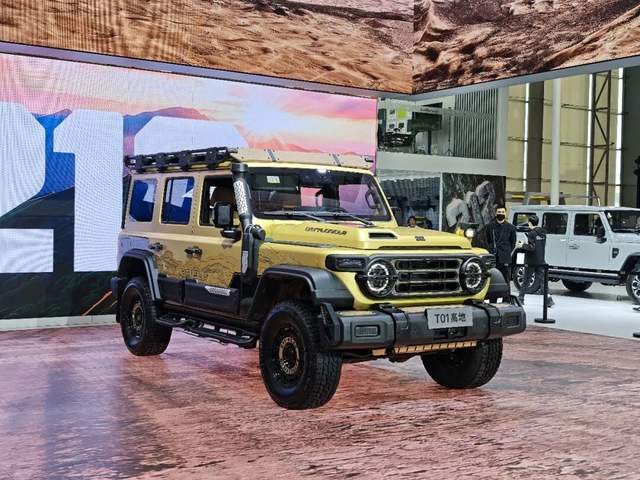
Ruisheng, 212, and Jishi are all produced by BAIC Manufacturing. However, it's worth noting that while Ruisheng and 212 are brands owned by BAIC Manufacturing, Jishi has a contract manufacturing relationship with BAIC Manufacturing.
Some might argue that with BAIC's resources, launching a few new brands and cars is no big deal. But this BAIC is not the same as the other BAIC; in fact, the two have even taken each other to court over the name 'BAIC.'
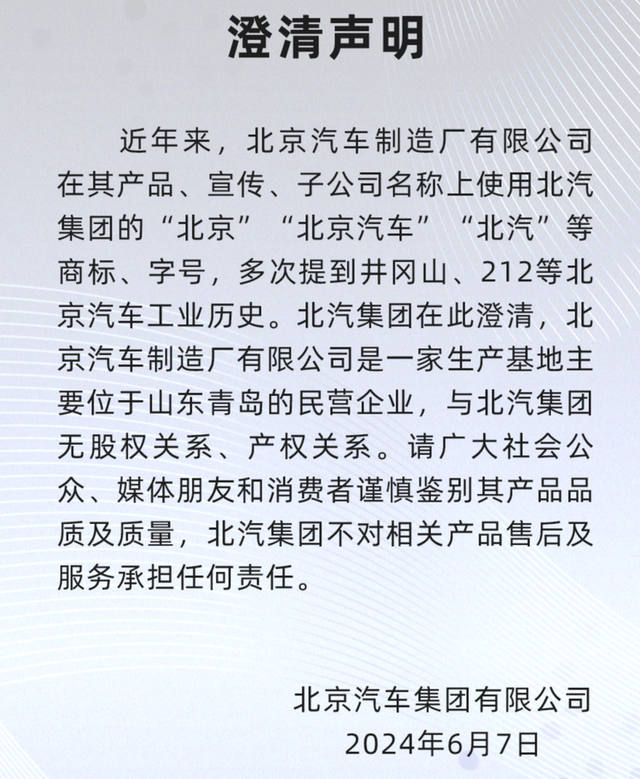
The latest news is that BAIC Manufacturing received a first-instance judgment in November, ordering it to immediately cease using 'BAIC'-related logos and issue a public statement to eliminate the impact. It has since appealed to the second-instance court according to the law. In other words, this brand dispute, which has lasted over four years, will continue.
Given its conflicting interests with BAIC Group, how has BAIC Manufacturing, a private automaker in Qingdao, continued to expand its operations during an industry shakeout?
The answer lies in Shandong's 'Aluminum King' behind BAIC Manufacturing—Weiqiao Pioneering Group (hereinafter referred to as Weiqiao Group).
01
From 'Assembling Great Electronics' to 'Assembling Great Cars'
When it comes to financial clout, Weiqiao Group, primarily engaged in textiles and aluminum, is no less impressive than BAIC Group. Ranked 166th on the Fortune Global 500 list released in July 2025, Weiqiao Group has been on the list for 14 consecutive years, higher than BAIC Group's 201st position.
According to the 2025 Forbes China Rich List, Zheng Shuliang, the mother of Weiqiao Group's chairman Zhang Bo, is on the list, with her family topping the list of richest people in Shandong with a net worth exceeding 180 billion yuan.
Tianyancha APP shows that Beijing Automobile Works (Qingdao) Co., Ltd. is 72% owned by Qingdao Fulu Investment Holding Group Co., Ltd., whose controlling shareholder is Shandong Weiqiao New Energy Automobile Technology Group Co., Ltd. Further digging into the investor background reveals the presence of Zhang Bo and several local state-owned assets.
To a certain extent, BAIC Manufacturing shoulders the heavy responsibility of Weiqiao Group's industrial transformation and represents Shandong's hopes to make a name for itself in the passenger vehicle sector.
For a long time, Shandong's automotive industry has been more concentrated in the commercial vehicle sector, with industry benchmarks such as Sinotruk, Zhongtong Bus, and Weichai Power all rooted in Shandong. In contrast, while well-known automakers like BYD, Chery, and FAW-Volkswagen have established factories in Shandong, the province has long lacked a local automaker that can compete on a national level.
So, with the wind of new energy vehicles still blowing, BAIC Manufacturing has become 'the hope of all Shandong.'
As for Weiqiao Group, BAIC Manufacturing is key to its transformation, especially since one of the 'Aluminum King's' unique advantages has become history this year.
According to a message released by State Grid Shandong Electric Power Company in October this year, Weiqiao Group's isolated grid connection to the public grid has been implemented, making its special industrial model of 'self-generated power + self-built grid' a thing of the past.
As one of the world's largest aluminum product producers, Weiqiao Group relied on its own power generation to significantly reduce the cost of electrolytically producing industrial aluminum. For reference, Aluminum Corporation of China once disclosed in its financial report that the cost of purchased electricity could account for nearly 40% of the production cost of primary aluminum.
At the same time, Weiqiao Group also started supplying electricity to surrounding areas. According to a report by 21st Century Business Herald, in 2012, Weiqiao Group's electricity price was 0.6 yuan/kWh, 0.2 yuan/kWh lower than that of the State Grid.
Without the price advantage of Meituan's 'group-buying meal' level for electricity costs, how Weiqiao Group's aluminum industry will continue to grow and strengthen remains to be seen. However, it is clear that diversifying its business has become one of its strategies.
And the automobile industry, which happens to be a window of opportunity (Note: 'fengkou' literally means 'wind vent,' referring to a booming or trendy industry) industry with relatively high aluminum application, coupled with Weiqiao Group's increased focus on the automotive industry layout since Zhang Bo took over as chairman in 2018, such as acquiring stakes and controlling BAIC Manufacturing to obtain production qualifications, is naturally a key direction for the 'World Aluminum King's' transformation.
02
Taking the 'Unconventional Path' to the End
Even though Weiqiao Group has sufficient motivation and abundant resources to transform into the automotive industry, breaking through in the current domestic auto market remains challenging, especially since brands like 212, Ruisheng, and Jishi are all new faces in the market.
Therefore, these brands generally choose to take unconventional paths.
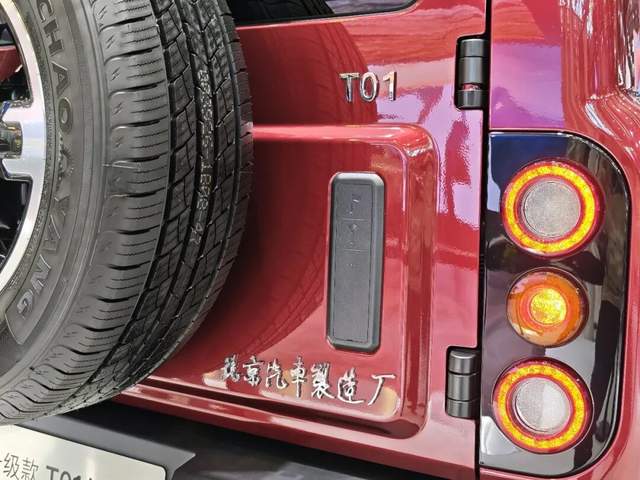
Not to mention Ruisheng, which only officially announced its brand independence in December, let's take 212 as an example. This automaker, which directly extends the name Beijing Jeep 212 into its brand, has successfully converted many consumers with a special nostalgia for China's first independently developed light off-road vehicle in 1965 into its first batch of users.
Considering the authentic BAIC lineage of the Beijing Jeep 212 and the historical background of BAIC Manufacturing completely separating from the BAIC Group system in 2016, there is indeed some controversy over 'pushing the boundaries.'
However, from the perspective of BAIC Manufacturing and 212, this is a path to rapidly increase market visibility and presence.
In terms of sales, 212 has also successfully entered the vision (Note: 'shiyewei' literally means 'field of vision') of off-road vehicle enthusiasts. According to third-party terminal retail data, with only one model available across the entire lineup, 212 has maintained monthly sales of over 1,000 units from January to November this year, with cumulative sales exceeding 15,000 units. Considering its price range of 139,900 to 205,800 yuan, it can be said to have established itself in the niche market of off-road vehicles.
Similar 'unconventional' market strategies can also be seen in Jishi Automobile. It's worth mentioning that although Jishi Automobile is not a brand owned by BAIC Manufacturing, with the latter only serving as its manufacturer, Weiqiao Group completed a $1 billion strategic investment in Jishi Automobile's operating entity in September 2023.
As a car brand created by a boss who crossed over from the robotic vacuum cleaner industry, Jishi's sales were dismal until this year. Monthly sales data, which had long hovered in the three-digit range, raised concerns about its development prospects.
But in 2025, things started to change.
Since its debut at the 2025 LEAP Tech Expo in Riyadh, Saudi Arabia, in February, Jishi Automobile discovered that consumers in the Middle East might be its largest audience. Data shows that the Jishi 01 successfully secured over 200 orders on the opening day of the expo, almost equivalent to a month's sales in China.
Spotting the business opportunity, Jishi Automobile has been continuously improving its overseas business, starting with the Middle East, since March this year. Monthly deliveries broke through 1,000 units for the first time and have been steadily increasing, reaching 1,452 units in November.
To further consolidate and enhance its business in the Middle Eastern market, Jishi's new car, the Jishi ADAMAS, chose to launch first in Abu Dhabi and introduced the Royal Edition version customized for the Middle Eastern royalty.
While 212 stands on the shoulders of 'BAIC' to capitalize on nostalgia and Jishi targets the wealthy in the Middle East, these are uncommon practices among domestic automakers. To a certain extent, this also reflects Weiqiao Group's unconventional approach in the past, establishing industrial differentiation advantages through 'self-generated power + self-built grid.'
Although some practices are debatable, these car brands closely tied to Weiqiao Group also provide new solutions for competitors busy competing on price and configuration.
Some images are sourced from the internet. Please inform us for removal if there is any infringement.
-
![]()
ByteDance, DJI, and Xiaohongshu Secure Top Three Positions Among China’s Fastest-Growing Unicorns
-
Tesla's in-car voice system in China is finally learning to 'understand human language'
-
![]()
Foreigners Are Amazed: Chinese Electric Vehicle Drive Systems Unveil Innovative 'Poses'
-
![]()
700,000 Brothers and the Future of Robots: Behind JD.com's 'Nirvana Plan'
-
![]()
Zhipu's Trillion-Dollar Valuation: A New Chapter for China's AI
-
![]()
Is Laifen, a 'Dyson Alternative' on the Rise, Now Ensnared by the 'Alternative Curse'?
-
![]()
Beyond Patents: Insta360 and DJI Compete in Retail
-
![]()
Piercing Through Industry Chaos: The Curtain Rises on Compliance for Autonomous Driving