Capital | What’s Happening with Coal Prices During the ‘Subdued Peak Season’?
 12/15 2025
 604
604
The ‘subdued peak season’ in the coal market essentially marks the end of the previous business cycle, which was heavily reliant on demand surges and price spikes. Amid the broader narrative of energy transition, investors are now scrutinizing this traditional industry with a more measured and discerning perspective.
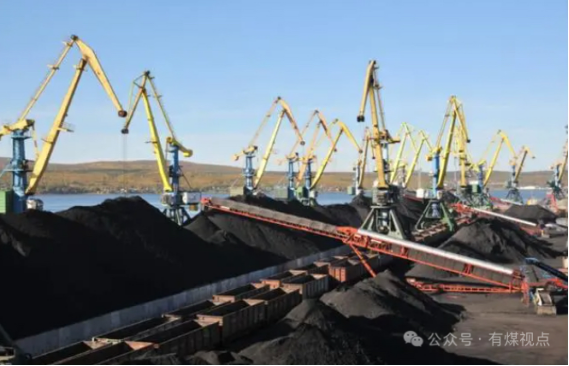
From 2024 to 2025, the Chinese coal market has shown unprecedented ‘anti-seasonal’ weakness. Traditionally, coal prices peak annually from the fourth quarter to the first quarter of the following year, driven by increased heating demand and peak electricity consumption. On December 11, 2025, coal trading prices at northern ports were as follows: 5500 kcal: 766 yuan/ton (-8); 5000 kcal: 664 yuan/ton (-8); 4500 kcal: 564 yuan/ton (-8). As of now, port coal prices are 40 yuan/ton lower than during the same period last year.
This market volatility has directly impacted the financial performance of relevant companies. Take China Shenhua Energy (601088.SH/01088.HK) as an example. Despite its revenue reaching 245.03 billion yuan in the first three quarters of 2024, its quarterly sequential growth rate has significantly slowed, particularly in the coal sales segment, where profit per ton of coal sold has been substantially compressed. Shaanxi Coal Industry (601225.SH) also cautioned in its third-quarter 2024 report that, although it benefits from long-term contract pricing, falling spot coal prices and declining market coal sales volumes have exerted pressure on its performance.
From a capital market standpoint, the valuation of the coal sector (Shenwan Level 1 Industry) continues to face downward pressure. Although most leading companies still maintain high dividend payouts (e.g., China Shenhua's interim dividend payout ratio reached 60% in 2024), the sector's average price-to-earnings (PE) ratio has declined from 8-10 times in 2022 to 5-7 times in early 2025. This suggests that investors are re-evaluating coal assets, and traditional valuation models based on commodity price elasticity are losing their relevance.
The ‘subdued peak season’ is not merely a temporary disruption but a concentrated reflection of structural shifts driven by supply-demand dynamics, macroeconomic conditions, and investor expectations at the business level.
Firstly, oversupply is the primary driver of price declines. Spurred by policies aimed at ‘ensuring supply and stabilizing prices,’ domestic high-quality production capacity has continued to be released. In 2024, China Coal Energy (601898.SH/01898.HK) witnessed a 6.5% year-on-year increase in commercial coal production, reaching 130 million tons. Yanzhou Coal Mining (600188.SH/01171.HK) maintained stable total production through synergies between its overseas and domestic operations. Meanwhile, coal imports have remained elevated, with the total import volume in 2024 hitting a record high. The abundance and flexibility of supply have completely overturned market expectations of seasonal shortages.
Secondly, shifts in demand structure represent a deeper underlying force. In terms of total volume, the growth rate of thermal power generation slowed significantly in 2024, with the ‘cornerstone’ demand from the power sector entering a plateau phase. Structurally, the acceleration of new energy substitution has been remarkable. In 2024, China's newly installed capacity for wind and solar power reached unprecedented levels, directly encroaching on the market share of coal-fired power generation. More critically, leading companies like China Shenhua are themselves investing heavily in solar and wind power projects, with their capital expenditures shifting from traditional coal mining to new energy sectors. This shift itself signals to the market that long-term demand in the industry has peaked.
Furthermore, the capital market serves as a barometer of industry expectations. Currently, investor perceptions of the coal sector are undergoing fundamental changes:

From a ‘growth narrative’ to a ‘value narrative’: Investors are no longer betting on cyclical spikes in coal prices but are placing greater emphasis on whether companies can sustain strong free cash flow and high dividend returns through low-cost operations during periods of stable or declining commodity prices.
From ‘commodity prices’ to ‘enterprise quality’: Investors are beginning to differentiate more rigorously between individual companies. Shaanxi Coal Industry, with its high-quality resource endowment (high-quality thermal coal from the Jurassic strata in northern Shaanxi) and industry-leading cost control capabilities, has commanded a higher valuation premium than the industry average. Conversely, companies with inferior resource conditions and high costs face the risk of being abandoned by the market, even at the same coal price levels.
Hard constraints from ESG factors: The growing emphasis on ESG (environmental, social, and governance) by both international and domestic capital has significantly impacted financing costs and investment willingness. Coal companies must demonstrate clear green transition pathways to gain favor from long-term capital. Yanzhou Coal Mining, China Coal Energy, and other companies have responded to this trend by detailing emission reduction targets and new energy investment plans in their ESG reports.
Meanwhile, we observe that leading companies are shifting their strategic focus towards cost leadership and maximizing cash flow. Shaanxi Coal Industry has continuously reduced mining costs through intelligent transformations, enabling it to maintain a gross profit margin exceeding 30% during industry downturns and providing a solid foundation for its high dividend policy (with a commitment to a dividend payout ratio of no less than 60%). China Shenhua, leveraging its unique advantage of integrated operations across ‘coal-power-rail-port-shipping,’ has smoothed out price fluctuations in individual segments and created the industry's most stable profit and cash flow model. These companies are actively positioning themselves as ‘utility companies in the energy sector’ to attract steady investors with their high-certainty cash flows.
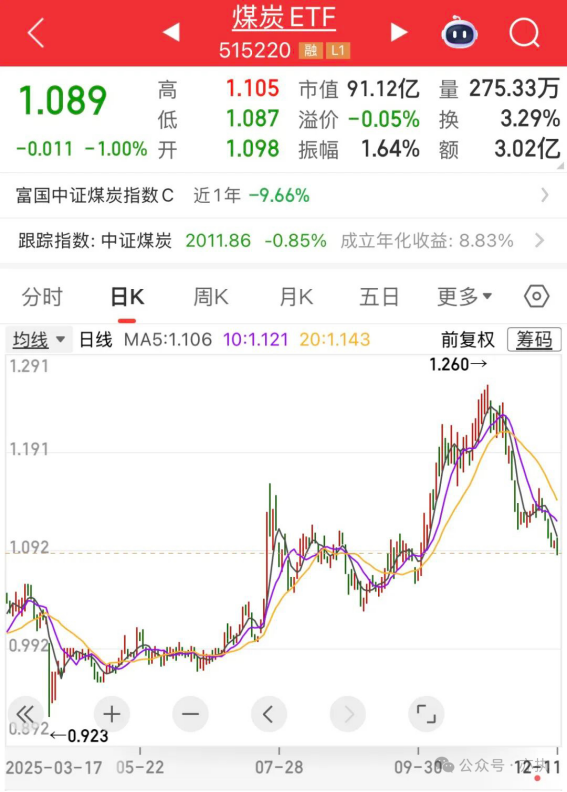
With changes in the capital expenditure structure of listed companies, since 2024, the new capital expenditures of major coal companies have primarily focused on three areas:
1) Intelligent and safety upgrades of existing mines to enhance efficiency and comply with stricter regulations.
2) Development of modern coal chemical industries to transform coal from a fuel into high-end chemical raw materials. Baofeng Energy (600989.SH) is a representative in this field, with its coal-to-olefins business demonstrating higher anti-cyclicality and added value.
3) Investment in new energy and clean energy sources. Almost all leading companies have announced clear new energy development goals, such as investing in wind power, solar power, and hydrogen energy. Although the current scale is still small, this represents a crucial strategic move for securing future valuations and addressing ESG concerns.
Based on the above analysis, the ‘subdued peak season’ for coal prices is, on one hand, determined by shifts in investment value orientation and, on the other hand, an inevitable result of increased industry concentration. Looking ahead, the valuations of pure coal mining companies will remain under long-term pressure. However, companies that can successfully transition into ‘integrated energy suppliers’ will unlock new growth opportunities and valuation ceilings.
-
![]()
The First Batch of Victims of the AI Bubble: Programmers
-
![]()
ByteDance, DJI, and Xiaohongshu Secure Top Three Positions Among China’s Fastest-Growing Unicorns
-
Tesla's in-car voice system in China is finally learning to 'understand human language'
-
![]()
Foreigners Are Amazed: Chinese Electric Vehicle Drive Systems Unveil Innovative 'Poses'
-
![]()
700,000 Brothers and the Future of Robots: Behind JD.com's 'Nirvana Plan'
-
![]()
Zhipu's Trillion-Dollar Valuation: A New Chapter for China's AI
-
![]()
Is Laifen, a 'Dyson Alternative' on the Rise, Now Ensnared by the 'Alternative Curse'?
-
![]()
Beyond Patents: Insta360 and DJI Compete in Retail