Pure Electric Executive Sedans: Uncertainty Dims Their ‘Value’!
 12/15 2025
 698
698
The NIO ET9, which boasts a suite of cutting-edge technologies including the Tianxing chassis, a full-range 900V high-voltage architecture, a 5nm self-developed intelligent driving chip (the Shenji NX9031), and the SkyOS vehicle operating system, offers not only unparalleled comfort—such as gliding effortlessly over speed bumps without spilling a drop of champagne—but also advanced safety features like millisecond-level tire blowout stabilization control. Despite garnering widespread acclaim in the public eye, the ET9 has faced a harsh reality in the marketplace: as of October 2025, cumulative sales stood at a mere 2,193 units, with monthly sales once plummeting to an alarming 127 units.
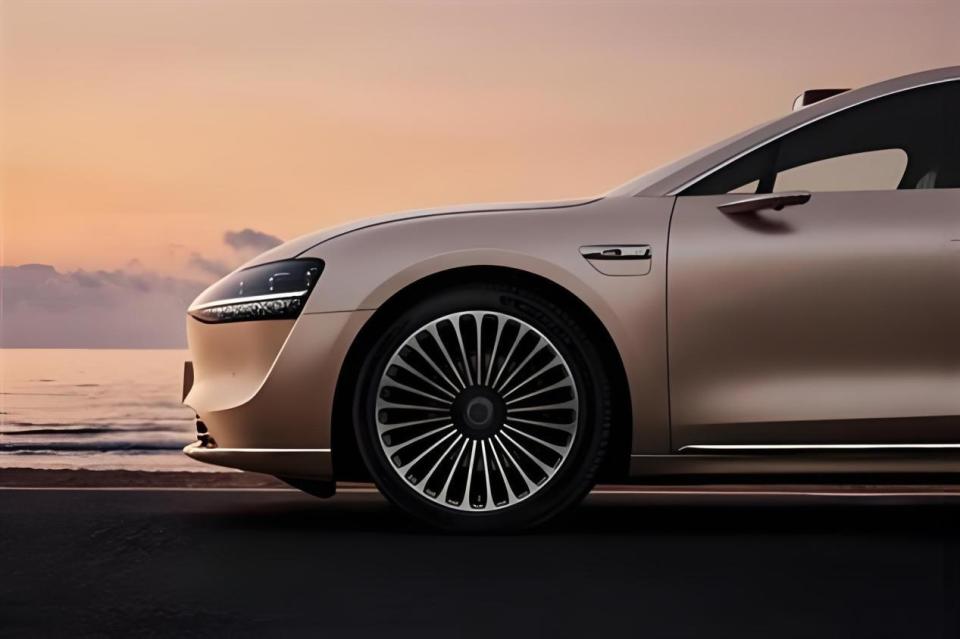
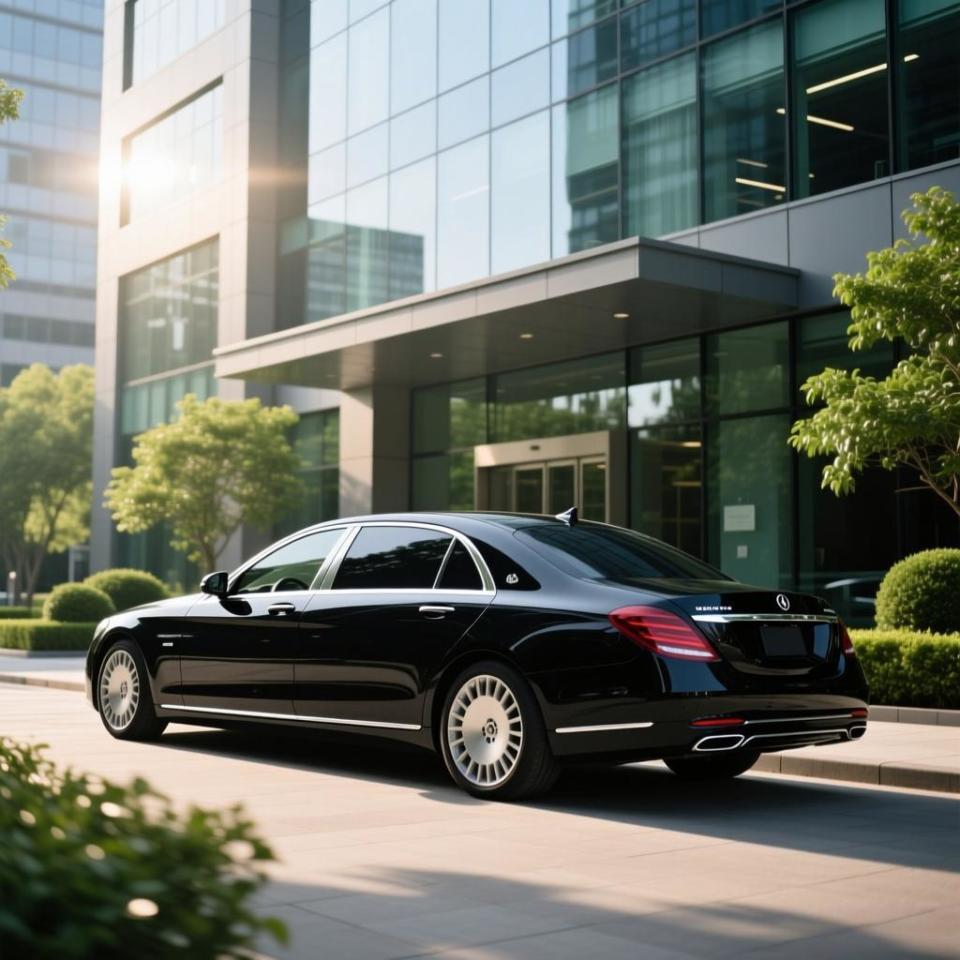
This stark contrast highlights a critical issue: in the market for vehicles priced above RMB 500,000 (or approaching that threshold), pure electric executive sedans have yet to achieve economies of scale. When compared to their internal combustion engine counterparts (e.g., the Mercedes-Benz S-Class) or popular new energy SUVs (e.g., the AITO M9), their market acceptance remains firmly in the early exploratory stage.
As the entire industry equates ‘electrification’ with ‘premiumization’ and sets ‘benchmarking against BBA’ (a common shorthand for BMW, Benz, and Audi in China) as a strategic goal, it overlooks the most fundamental issue: the essence of pure electric executive sedans has never been about commercial success. Instead, they primarily serve as technological showcases or symbols of new entrants’ ambitions—ambitions that, for now, remain largely unfulfilled.
The Essence of Executive Sedans Is Not Technological Accumulation
Despite multiple new entrants (such as the NIO ET9, Xiaomi SU7 Ultra, Li Auto MEGA, Xiangjie S9, etc.) betting on pure electric sedans priced above RMB 500,000 in an attempt to redefine traditional fuel vehicle hierarchies with ‘electric luxury,’ the reality is that while some models in this tier have achieved success—such as the Xiaomi SU7 Ultra (with approximately 1,200–1,500 units sold in November 2025 and cumulative 2025 sales projected at 12,000 units, though Xiaomi does not disclose SU7 Ultra sales separately; industry estimates suggest the Ultra variant accounts for roughly 10% of total SU7 deliveries) and the Li Auto MEGA (with around 9,144 units sold)—their achievements stem from targeting distinct emotional value propositions rather than ‘executive attributes.’ The former caters to ‘performance coupe’ enthusiasts seeking Nürburgring lap times and signature key fobs from Lei Jun, while the latter positions itself as a ‘family MPV’ with reclining second-row seats, refrigerators, and large screens, transforming it into a ‘mobile parent-child space + business reception hub.’
Their success does not originate from ‘executive appeal’ but from precisely targeting niche demographics with clear emotional value.
In contrast, pure electric executive sedans genuinely competing with the Mercedes-Benz S-Class and BMW 7 Series have collectively fallen into the trap of ‘high visibility but low sales’:
The NIO ET9 sold only around 2,300 units annually, while the Audi e-tron GT, a pure electric GT coupe, sold just a few hundred units per year, relegating it to showroom status. The BMW i7 struggled with monthly sales in China hovering between 500–700 units. By comparison, traditional luxury fuel vehicles remain rock-solid: the Mercedes-Benz S-Class and BMW 7 Series recorded cumulative sales exceeding 8,000 and 7,000 units, respectively, in the first ten months.
Even with new energy vehicle penetration surpassing 50% and ultra-fast charging networks covering national highways by 2025, high-end users’ acceptance of ‘pure electric executive sedans’ remains extremely low. Electrification has not automatically translated to market migration in the premium segment, instead exposing a vast gap between ‘technological advancement’ and ‘genuine user needs.’
Traditional luxury executive sedans, exemplified by the Mercedes-Benz S-Class and BMW 7 Series, dominate the high-end market not because of engine power or suspension softness but because they have transcended transportation to become social credit infrastructure. When clients see an S-Class, no explanation is needed—it automatically signals ‘this company is capable and rule-abiding.’ It serves as an ‘entry ticket’ to high-net-worth social circles. An S-Class implies belonging to this elite group, whereas a new entrant’s executive sedan might prompt awkward questions like, ‘What brand is this car?’ While pioneers may enjoy explaining, traditional elites represent the vast majority.
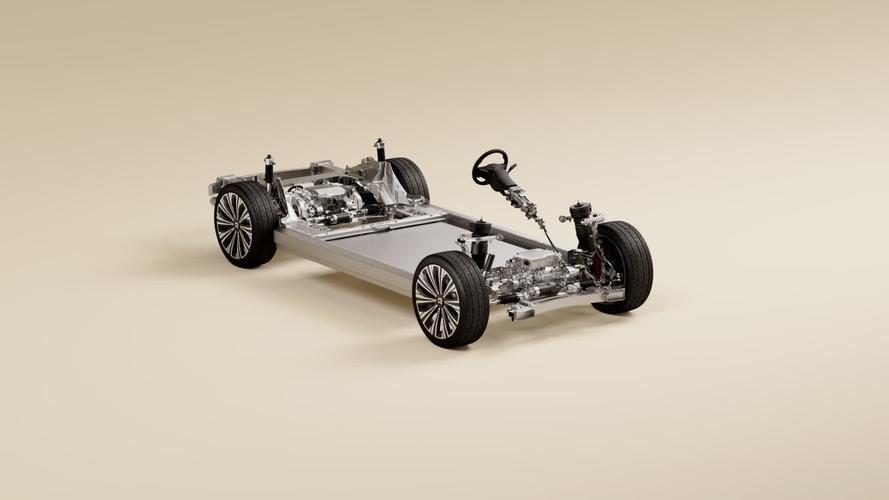
Although pure electric executive sedans attempt to redefine luxury through technical parameters like ‘intelligent cockpits,’ ‘wire-controlled chassis,’ and ‘full-range 900V’ systems, they make a fundamental error: in high-end business contexts, technology serves as a silent backdrop, while branding takes center stage.
Pure Electric Executive Sedans Require Time to Build Credibility
The century-long legacy of traditional luxury executive sedans stems from holistic product, technological, and brand development, culminating in their status as social symbols. Models like the S-Class, 7 Series, and A8 have become default choices for ‘successful individuals,’ with this consensus embedded in business etiquette and popular culture. New entrants lack ‘historical anchors’: even if the NIO ET9 or Zunjie S800 surpass traditional flagships technologically, society has not yet formed the conditioned reflex of equating these vehicles with status symbols. Users choose them more out of ‘novelty’ or ‘technological affinity’ than ‘identity confirmation.’
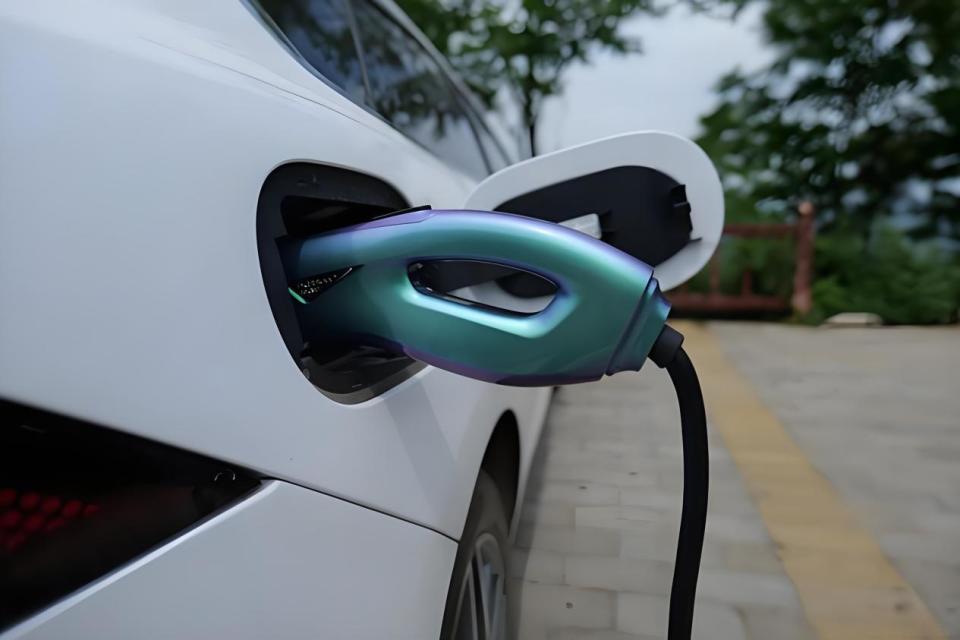
More critically, while the electric attribute thrives in everyday scenarios—such as lower electricity costs attracting mainstream consumers—it becomes a liability in premium contexts, where cost concerns are irrelevant. First, charging uncertainty undermines confidence in long-distance business travel. High-end users frequently travel across provinces, and while NIO’s battery swap stations are concentrated in the Yangtze River Delta and Pearl River Delta, coverage remains sparse elsewhere. A single instance of being late to a meeting due to an unavailable swap station can erode client trust. Second, battery degradation impacts resale value, with high-end users typically replacing vehicles every 3–5 years. BBA fuel-powered executive sedans retain over 60% of their value after three years, whereas pure electric models generally fall below 45%. For asset-sensitive high-net-worth individuals, ‘rapid depreciation’ equates to ‘poor value.’
New entrants’ pure electric executive sedans lack ‘mechanical rituals.’ The V8 engine roar, gearshift jerks, and metallic knob resistance of a Mercedes-Benz S-Class startup—though seemingly redundant—are integral to power aesthetics. In contrast, the quietness, smoothness, and seamless acceleration of electric vehicles can feel ‘lacking in presence’ in certain contexts.

Furthermore, new entrants’ rapid technological iteration exacerbates cognitive dissonance. Their reliance on ‘quick OTA updates + annual facelifts,’ while advantageous in consumer electronics, proves toxic in the luxury segment. A 2020 S-Class still exudes gravitas today, whereas a 2023 new entrant flagship may appear ‘outdated’ due to software obsolescence or hardware redundancy. Additionally, new entrant flagships, including pure electric executive sedans, oscillate between promoting ‘intelligent cockpits,’ ‘full-range navigation,’ and ‘AI large models’ annually, lacking a consistent luxury philosophy. This uncertainty remains a major criticism of models like the ET9.
New entrants mistakenly believe that maximizing specifications and stacking configurations will automatically confer premium status, overlooking the fact that true luxury is instantly recognizable—not measured by counting laser radar sensors.
The author wishes to emphasize that while new entrants have demonstrated technological excellence, replacing traditional luxury executive sedans will require longer incubation and more patient brand cultivation.
Public Opinion on Vehicles
The tide of electrification is irreversible, but market migration in the high-end segment is far slower than anticipated. Technology enables shortcuts, but brand trust must be earned over time. While models like the NIO ET9 may represent the future, in the eyes of traditional elites, their current uncertainties cannot replace the century-tested, rock-solid identity language of established players.
Thus, before pure electric executive sedans become ‘social defaults,’ they will remain trapped between ‘engineering marvels’ and ‘market fringe’—praised but not chosen, discussed but not trusted.
In this marathon of time, trust, and symbolism, new entrants have only just taken their first steps!
-
![]()
Registered Capital Slashed to 372 Million Yuan! Yutong Optical Finalizes Industrial and Commercial Change Registration
-
![]()
Zhuque-3 Successfully Lands, and 'Time Traveler' Secures Another ¥100 Million in Funding: China's Commercial Space Industry Experiences a 'Dynamic August'
-
![]()
Autohome Faces a Shrinking Window of Opportunity
-
![]()
Even a Titan Like Musk Has Faced Setbacks in Fulfilling Promises
-
![]()
AI Office: The End of the Racing Era, Context Becomes the Key to Success
-
![]()
Domestic Vehicle Chassis Revolution ②: The Steering Wheel Remains, But Mechanical Connections in the Steering System Are Decreasing
-
![]()
Exploring MiniMax Design: Can Video Editing Be as Simple as Speaking?
-
![]()
Why Can SenseTime Achieve Profitability While CloudWalk Still Faces Challenges, Despite Both Adopting Large Models?