The Business Model of New Energy Vehicles: Will Hardware Suffer Losses While Software Drives Profits?
 12/16 2025
 683
683
New energy vehicles (NEVs) have evolved far beyond mere transportation tools; they now resemble mobile terminals with rolling charges. For NEV companies, producing hardware at low costs is merely a fundamental requirement. Only by integrating hardware and software to create synergies can they unlock greater opportunities.
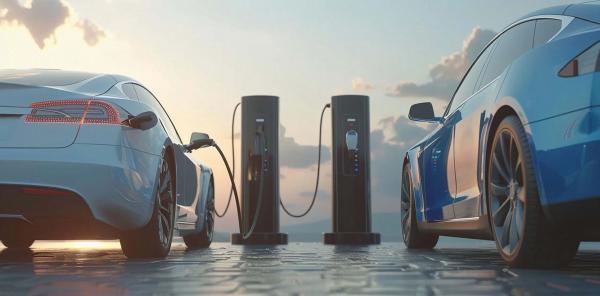
The suspension of "national subsidies" in December triggered widespread pessimism among NEV companies. However, the market appeared to experience a "turnaround" in mid-December.
The Central Economic Work Conference signaled that national subsidies will persist, pending the release of specific implementation rules for vehicle trade-in subsidies in 2026. There is a widespread expectation that subsidy amounts may moderately increase from the 2025 levels. Meanwhile, the purchase tax on NEVs will be imposed in 2026, likely adding around 10,000 yuan to the cost of purchasing a vehicle. To prevent fluctuations in consumer purchasing意愿, mainstream automakers will implement short-term "guarantee" and remedial measures.
In fact, even without these variables, the trend of price reductions for NEVs is unmistakable. According to data from the China Passenger Car Association, the average price of NEV passenger vehicles in China dropped to 158,000 yuan in September 2025, a 14% decrease from the 184,000 yuan average in 2023. This has also sustained the penetration rate of NEVs above 55% since August 2025.
Regarding this trend, Chen Feng (pseudonym), a veteran of a NEV startup, analyzed from a consumer psychology perspective for Lujiu Business Review: "Over the past three years, under industry 'internal competition,' vehicle prices have dropped too rapidly. Buying the same model last year might cost tens of thousands of yuan more than this year. The earlier you buy, the more you lose, creating a 'loss aversion' sentiment among consumers. More importantly, with NEV penetration exceeding 50%, 'price competition' has become less meaningful. Consumers may now prioritize fast charging, long range, and intelligent driving capabilities. If your intelligent driving system can make users feel that 'this car is more reliable than when I drive it myself,' this experience cannot be replaced by subsidies or price reductions."
The impact of low prices and subsidies on NEV sales is diminishing. Mainstream automakers are accelerating into a phase of "internal strength competition."
01 The Test is Quietly Postponed
Chen Feng bluntly stated, "Over the past decade, subsidies and price wars have accompanied the sales growth of NEVs. In the early stages of the NEV market, low penetration rates meant subsidies could significantly stimulate new demand. Today, with NEV penetration (in new car sales) surpassing traditional fuel vehicles in China, providing subsidies again is likely to pre-empt demand."
Various signs indicate that the real challenges for NEVs have arrived.
The latest data from the Ministry of Commerce shows that over 11.2 million vehicles were traded in during the first 11 months of this year, accounting for more than one-third of total car sales in the same period. The combination of "national subsidies + purchase tax incentives + local subsidies" typically allows consumers to save 20,000 to 30,000 yuan. However, in the second half of 2025, the premature depletion of national subsidy funds and quota controls on most local subsidies weakened subsidy intensity, directly impacting overall car sales. Data from the China Passenger Car Association shows that in July 2025, the year-on-year growth rate of car sales rapidly declined, with negative growth occurring in October and a significant decline in November.
After communicating with several automotive industry practitioners, Lujiu Business Review found that due to the imposition of the purchase tax on NEVs starting in 2026, there should have been a year-end surge effect in late 2025, with many buyers rushing to purchase in advance. However, this has not materialized. In November, new orders across the industry significantly declined, and consumers are shifting towards a wait-and-see attitude rather than "buying at every discount."
What is even more challenging is that previous subsidies and tax incentives are leaving the test for tomorrow. Even if subsidies are increased in 2026, the effect may not surpass that of 2025. After an ultra-large-scale trade-in, demand has been released in advance, and users' willingness to trade in has decreased because there is no need to scrap a relatively new car just for a small subsidy, especially since buying a new car would also require paying additional taxes.
For NEV companies, survival of the fittest is both inevitable and harsh.
02 How Much More Room is There for Cost Reduction?
At this moment, the NEV market is transitioning from "price competition" to a phase of "anti-internal competition and internal strength enhancement."
Regarding "national subsidies" and purchase taxes for NEVs, the impact on a few leading companies in the industry (BYD, Tesla) is minimal. However, for NEV startups and many traditional automotive manufacturing companies in transition, it may pose a more realistic survival issue. This is mainly due to two reasons:
Firstly, the specific rules for subsidies are exacerbating the differentiation within the NEV industry. Because the subsidy amount is directly linked to the vehicle's range parameters (e.g., requiring pure electric vehicles to have a range of over 500 kilometers), which is determined by the battery, companies like BYD and Tesla, which manufacture their own batteries, benefit the most. Many car companies that need to purchase batteries externally have to rely on the willingness of battery suppliers to benefit from the subsidy policies.
Secondly, the overall profitability of China's automotive industry is too low. Data disclosed by Cui Dongshu, Secretary-General of the China Passenger Car Association, shows that in October 2025, the automotive industry's sales profit margin was 3.9%, a decrease of 0.5 percentage points from September and reaching the lowest level for the same period in five years. From January to October 2025, the automotive industry's sales profit margin was 4.4%, better than in 2024 but still at the second-lowest level in five years. The automotive industry has become a low-margin industry, and even a slight policy impact could put some car companies to the test of survival.
Over the past three years, mainstream car companies like BYD, Geely, and Chery have seen their profits significantly increase despite continuous product price reductions, while the number of NEV startups has dropped from over 60 to less than 10. The industry shakeout is already evident.
Wang Cheng (pseudonym), a professional investor who has long been following the NEV industry, believes that "product price reductions can actually lead to significant profit growth for companies. Today, mainstream NEV companies can already sustain this trend without relying on policy support."
As early as 2023, after several rounds of price reductions, Tesla's profit per vehicle was still three times higher than Toyota's because many conventional redundant costs could actually be cut. By calculating the "idiot index" (idiot index = finished product price / raw material cost), parts with inflated costs can be identified.
For example, a sensor with a raw material cost of 6 US dollars has an inflated finished product price of 60 US dollars, indicating significant room for optimization. Costs can also be significantly reduced by "cross-industry copying." For instance, the components of toy cars are all molded in one piece, and Tesla attempted to do the same by integrally pressure-casting over 70 parts of the car's rear floor into one piece, greatly improving efficiency while saving hundreds of welding robots. Another example is Tesla's adoption of the "wing as fuel tank" design from airplanes, directly integrating the battery into part of the chassis, reducing the vehicle's weight by over 10% and increasing the range.
BYD, on the other hand, has gained a tremendous cost advantage through full industry chain vertical integration. BYD manufactures almost everything from batteries, frames, air conditioners, airbags, reverse radars, to door handles, seat belts, steering wheels, and lamps, producing "all automotive components except glass, tires, and steel plates."
UBS once disassembled a BYD Seal and compared it with a Tesla Model 3, concluding that even compared to Tesla, BYD still has about a 15% cost advantage because, with 75% of the components in-house, BYD has almost squeezed out the profits of intermediaries.
In a large-scale manufacturing industry like this, the true cost may only be as small as a plum seed. Especially among the leading companies in the NEV industry, the process of competing and enhancing internal strength continuously matures the supply chain, significantly reducing component costs. This is a natural result of competition in the NEV industry and has little to do with the amount of purchase tax levied or the amount of consumer subsidies provided.
03 Could Software Revenue Be a New Profit Point?
The NEV market in 2026 will face a very strange situation where subsidies continue on one hand, while tax incentives decline on the other. Calculating how to save money when buying a car will become much more complex than in the past. However, one thing is very certain: the business model of NEVs has changed, and "national subsidies" will find it difficult to help you save money.
Ultimately, the purchase tax and "national subsidies" for NEVs are all related to the vehicle's hardware. However, today, the business model of NEVs is leaning towards making money through software. For example, Tesla cars were initially toys for the wealthy but quickly transformed into an affordable electric vehicle brand, continuously reducing prices to increase sales volume. Hardware can generate less profit, with more earnings coming from APPs and autonomous driving capabilities.
Take Xiaomi cars as an example. In the third quarter of 2025, Xiaomi's automotive gross profit margin reached 25.5%, a significant increase from the same period last year. Undoubtedly, the software component has contributed significantly to Xiaomi's high gross profit margin. This includes advanced intelligent driving systems (including urban NOA, automatic parking, etc.), which support one-time buyouts ranging from 18,000 to 26,000 yuan, following the same principle as software businesses. It also includes in-car entertainment services such as gaming and video subscriptions, charged annually, much like a large iPad with a steering wheel and wheels. Especially with Xiaomi's AIoT ecosystem synergy, comprehensive software revenue from in-car application sharing, data packages, and OTA (over-the-air) updates contributes nearly one-fourth of the total gross profit, and this proportion is still rising.
In the future, don't just think you've bought a NEV; in reality, you've been drawn into a long-term paid user ecosystem. The subsidies and low prices when buying a car are more like a final push to get you in quickly.
New energy vehicles have long ceased to be just a means of transportation; they now resemble mobile terminals with rolling charges. For NEV companies, producing hardware at low costs is merely a fundamental requirement. Only by integrating hardware and software to create synergies can they unlock greater opportunities.
Just as Han Tixin, the century-long manager of NEVs, asserted to Lujiu Business Review: "The future winners will definitely have both manufacturing genes and internet thinking; they will definitely understand both users and products; they will definitely be sustainably profitable rather than burning money for scale."
-
![]()
The Allure of 'Acquisition Spree': Li Shufu's Left Turn, Xu Jiayin's Right
-
![]()
Strategic Transformation Yields Results: Phoenix Optics Reports 10.9% YoY Rise in Core Net Profit for H1 2026
-
![]()
Three Key Growth Trajectories Synergize! Crystal-Optech Reports 3.478 Billion Yuan in Revenue for H1 2026
-
![]()
Semi-Annual Report Sparks XPENG Motors Buzz
-
![]()
1.6 Billion Big Order Secured! SeeYA Technology's Revenue Soars by 287.87% in the First Half of the Year
-
![]()
Baidu's Profits Plunge by 68%: Unraveling the Mystery Behind the Numbers
-
![]()
Baidu’s Profits Tumble by 68%! Where Has All the Money Gone?
-
![]()
Hynix’s Taobao Store Shuts Down Abruptly: What Should Customers Do About Warranty Services for Memory Modules?