How Will VOYAH Fare Post-Leadership Transition?
 12/17 2025
 787
787
Introduction
A Crucial Personnel Shift at a Pivotal Moment
At the recent launch event for the VOYAH ZHIGUANG L, Lu Fang stepped down from his role as CEO, assuming a new title: Chairman and Party Secretary of VOYAH Automotive Technology Co., Ltd.
Simultaneously, Jiang Tao, previously in charge of the manufacturing system, was appointed General Manager of the company.
The initial reaction from observers was one of bewilderment. Jiang Tao boasts extensive experience in production and manufacturing but lacks significant exposure to product definition, brand marketing, or user operations. In today’s fiercely competitive new energy vehicle (NEV) market, where the emphasis has shifted from “feature-based competition” to “ecosystem and experience-driven competition,” does appointing a manufacturing expert to lead the company signal that VOYAH will prioritize factory operations at the expense of market responsiveness and user engagement?
These concerns are not without merit. After all, among emerging NEV players like Li Auto, NIO, and XPeng, founders or CEOs often act as product managers or brand ambassadors, deeply involved in user communication and product iteration. In contrast, Jiang Tao’s background appears traditional, even conservative.
However, it would be premature to conclude that VOYAH is “reverting to old ways.” We must ask: Why this leadership change now? Is it a retreat, or is there a strategic shift underway?
Signals of Organizational Evolution
Since its inception, Lu Fang has played multiple roles—aligning resources with Dongfeng Group, shaping the brand’s narrative externally, and overseeing technology, products, and supply chain management. While this multifaceted approach was necessary during the startup phase, as VOYAH’s annual sales surpass 100,000 units, its product line expands to include SUVs, MPVs, and sedans, and it enters a phase of scaled operations, the need for refined internal operations, cost control, and a robust supply chain has never been more urgent.
At this stage, having one person handle strategy, capital, manufacturing, and marketing could become an efficiency bottleneck. Elevating Lu Fang to Chairman allows him to focus on capital operations, ecological partnerships, and long-term strategy, while Jiang Tao can concentrate on internal operations, cost control, and delivery assurance—a rational move toward a mature corporate governance structure.
Moreover, Jiang Tao’s experience in driving digital production lines and lean management within the Dongfeng system is precisely what VOYAH needs to improve gross margins and optimize inventory turnover, especially during this critical window for its Hong Kong IPO.
Of course, market concerns persist: a manufacturing mindset may lead to “hardware over experience.” If Jiang Tao’s team prioritizes cost control at the expense of intelligent technology investments or user service, VOYAH risks losing its appeal to premium users. This is a valid risk to monitor.
Conversely, without a stable and reliable manufacturing system, even the most cutting-edge smart cockpit would be built on shaky ground. Numerous cases of new forces suffering reputation damage due to delivery delays or quality control issues underscore that “manufacturing fundamentals” remain the foundation of premium branding.
If Jiang Tao’s manufacturing strengths can deeply integrate with Lu Fang’s user-centric thinking, turning cost control into a lever for enhancing user experience, it could pave a new path in automotive manufacturing.
After all, a car that stands the test of time must first be a great car.
The Sedan Obsession
There’s no denying that VOYAH’s current product portfolio is robust: the Dreamer holds a top-three position in the 300,000+ RMB MPV market; the FREE series wins over family users with its performance and intelligence; and the Zhiyin has secured its footing in the mid-size pure electric SUV segment. Horizontally, VOYAH stands out among state-owned automakers; vertically, its growth trajectory far exceeds the industry average.
However, robustness does not equate to invulnerability. A closer look reveals a structural weakness: VOYAH lacks a true luxury sedan blockbuster.
Amid the wave of Chinese brands targeting the premium segment, SUVs and MPVs have achieved partial breakthroughs—the Li Auto L series has redefined luxury family vehicles, and the Denza D9 has disrupted the MPV landscape. Yet, the luxury sedan market above 300,000 RMB remains a fortress held by BBA (BMW, Mercedes-Benz, Audi). While the NIO ET7/ET9 and some “Chinese-brand sedans” have their merits, none have achieved sustained sales breakthroughs.
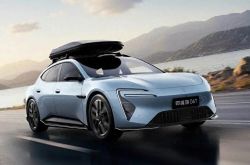
Now, with VOYAH doubling down on the ZHIGUANG L, it aims to break this stalemate. The question is: sedan users have higher expectations for brand heritage, driving experience, and intelligent features, and their decision-making cycles are longer. Can the ZHIGUANG L truly win over BBA users with mere specs or price advantages? That remains uncertain.
More profoundly, does VOYAH possess the cultural DNA to create a “flagship sedan”?
In recent years, its product strategy has leaned toward pragmatic scenario-based design—for example, the Dreamer as a “mobile home” and the FREE as “versatile for city and wild.” This approach works well for SUVs/MPVs but falls short in the sedan segment, where users seek not just functionality but emotional resonance and status symbolism. Can VOYAH craft a compelling “Chinese luxury sedan narrative”? This is a tougher challenge than technology alone.
In reality, for VOYAH, which is about to list on the Hong Kong Stock Exchange, the push into the sedan market is somewhat controversial in the industry. The reason is simple: investors are more concerned with sales scale and profitability and have no particular “sedan obsession.” Meanwhile, leaders in the new luxury segment like AITO and Li Auto currently focus on the SUV market, specifically the mid-to-large SUV segment. For VOYAH, a more pragmatic and growth-oriented approach would likely prioritize SUVs and MPVs.
Racing Avatr to the Hong Kong Stock Exchange
Interestingly, as VOYAH advances toward its listing, Avatr—another “Huawei-affiliated brand”—has also formally submitted its application to the Hong Kong Stock Exchange. While their technological paths differ (VOYAH emphasizes in-house R&D; Avatr is deeply integrated with Huawei HI), both are heading to the same capital market at the same time.
This reflects both proactive choices and passive pressures.
On one hand, the Hong Kong Stock Exchange’s valuation logic for new energy vehicle companies has become markedly more rational. There was a time when high-growth narratives could command triple-digit P/E ratios; today, investors prioritize profitability, cash flow health, and sustainable business models. The dynamic P/E ratio of BYD Company Limited has fallen from a peak of 100x in 2021 to around 20x, while XPeng and Li Auto’s Hong Kong valuations have consistently traded below their U.S. counterparts.
Moreover, the current environment offers a rare blend of “policy-friendly conditions and decent liquidity.” Missing this window could lead to valuation discounts or even insufficient subscription and delayed offerings.
On the other hand, both parent companies urgently need to unlock asset value through subsidiary listings and attract external capital to ease R&D investment pressures.
However, listing is not the finish line but the start of a new test. Past cases illustrate this: WM Motor and Aiways’ failed Hong Kong IPO attempts exposed issues like persistent losses and unclear business models, while Seres’ turnaround with AITO succeeded due to its strong synergy with Huawei and rapid monetization capabilities.
The common challenge for VOYAH and Avatr is proving to international investors that they are not just “another sales-at-any-cost story.”
VOYAH’s strength lies in its stable supply chain and mature manufacturing system backed by Dongfeng; its weakness is its perceived lack of brand independence, often seen as a state-owned subsidiary rather than a true new force. Avatr, conversely, boasts a strong tech identity but risks being seen as overly reliant on Huawei, raising questions about its autonomy.
Some argue that simultaneous listings could divide investor attention and create internal competition, while others believe dual-brand progress could strengthen the narrative of a “Chinese premium electric coalition,” boosting international confidence in China’s new energy ecosystem.
Conclusion
In summary, VOYAH’s recent leadership changes and IPO push reflect a critical shift from product expansion to systematized operations. Whether it can solidify its manufacturing advantages without sacrificing intelligent experience and user value will determine its premium branding success—a challenge not just for VOYAH but for all Chinese brands striving to break through the luxury sedan ceiling.
-
![]()
Enflame Tech's IPO Journey: Navigating Over 5.9 Billion Yuan in Losses and Soaring Debt in Q1 This Year
-
![]()
Trillion-Yuan Giant Li Shufu 'Streamlines': Could Levc Be the Casualty?
-
![]()
AI Competes for Electricity and Generates Power in the Gobi Desert
-
![]()
The First Batch of Victims of the AI Bubble: Programmers
-
![]()
ByteDance, DJI, and Xiaohongshu Secure Top Three Positions Among China’s Fastest-Growing Unicorns
-
Tesla's in-car voice system in China is finally learning to 'understand human language'
-
![]()
Foreigners Are Amazed: Chinese Electric Vehicle Drive Systems Unveil Innovative 'Poses'
-
![]()
700,000 Brothers and the Future of Robots: Behind JD.com's 'Nirvana Plan'