Honda Actively Delays Launch of Ye GT: Strategic Retreat or Desperate Move for Survival?
 12/18 2025
 641
641

Written by / Xue Fei
Produced by / Five-Star Vehicle Review
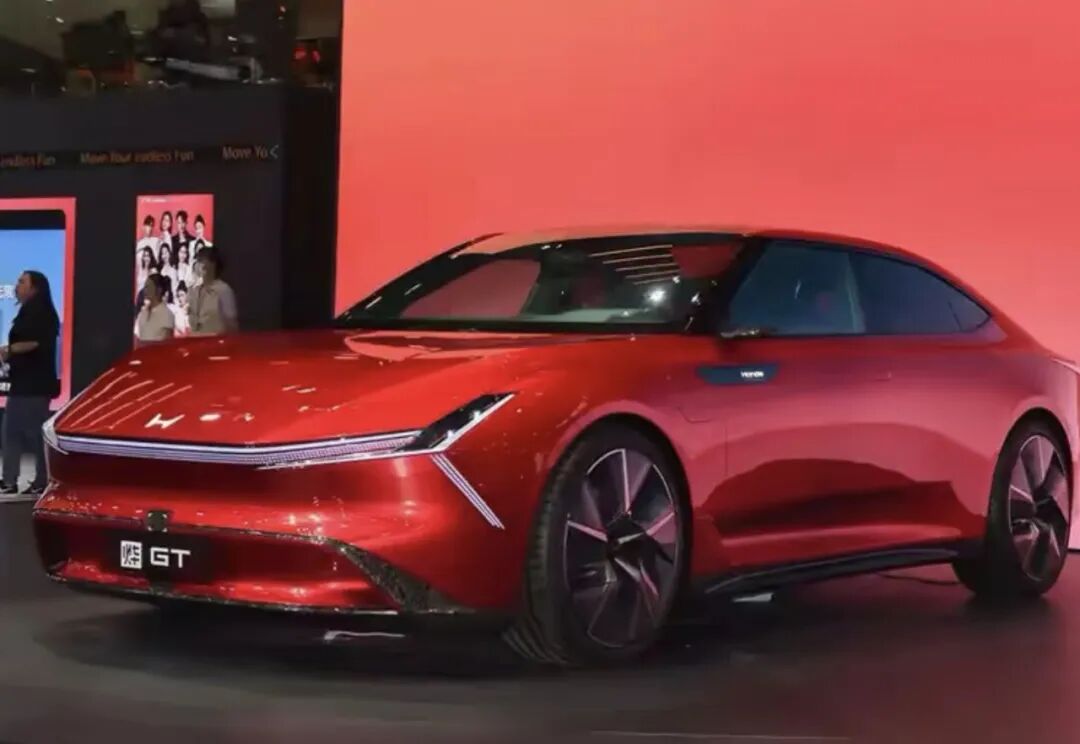
As 2025 enters its final countdown, the all-new all-electric flagship model Ye GT, originally slated for launch in the Chinese market before the end of 2025, has recently seen its launch postponed to after 2026.
This adjustment comes just months after its global debut at the Shanghai Auto Show in April 2025. On the surface, it appears to be a simple adjustment to the product launch plan; however, a deeper analysis reveals it as a forced strategic retreat by Honda in the rapidly evolving Chinese automotive market, reflecting the strategic dilemmas faced by this Japanese automotive giant in China's electric vehicle market.
01 Strategic Adjustment Under Multiple Pressures
In April 2025, Honda's two joint ventures in China simultaneously launched the all-electric SUV models—Dongfeng Honda S7 and GAC Honda P7. These models embody Honda's profound understanding of electrification, showcasing typical 'Honda characteristics' at the product level: outstanding driving texture (driving quality), exquisite mechanical tuning, and reliable power systems.
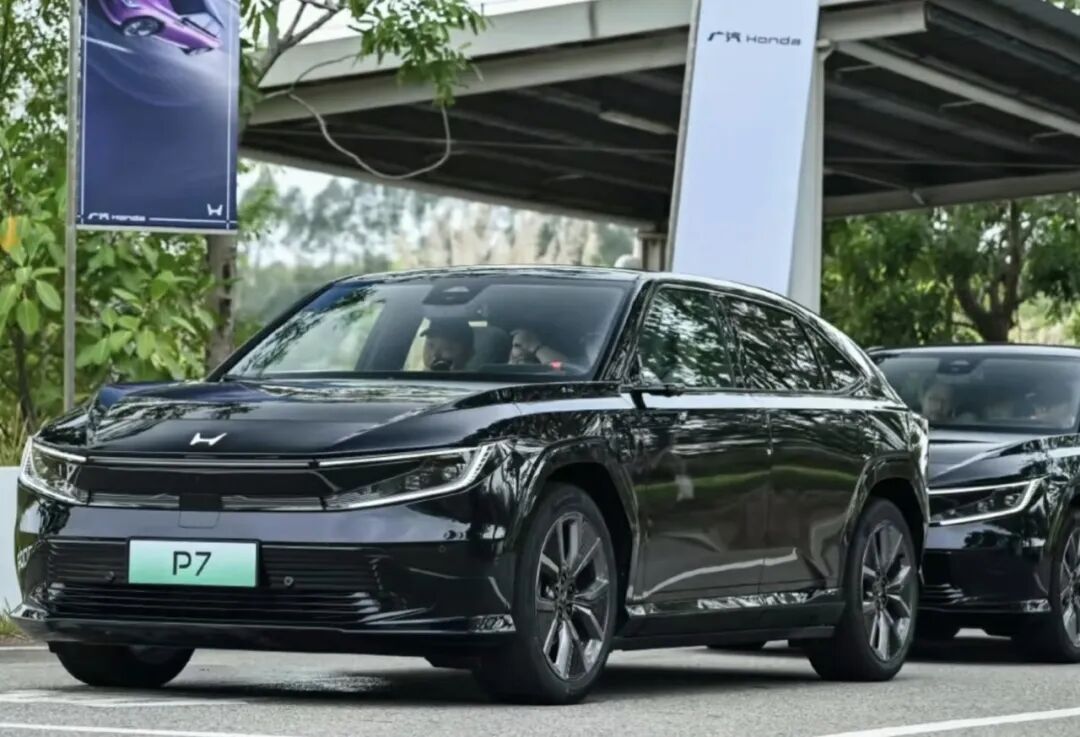
However, the market reaction caught Honda off guard. The S7/P7 were launched in the 200,000-300,000 yuan price range, directly competing with the Tesla Model Y. Yet, within just a few weeks of launch, both models were forced to initiate official price cuts due to market pressure, with actual transaction prices quickly dropping to the 150,000-180,000 yuan range.
This 'high-price launch, rapid price cut' strategy inflicted double damage on the brand. On one hand, early adopters felt 'betrayed,' damaging brand loyalty; on the other hand, the new price anchor positioned Honda's electric vehicles in the 150,000 yuan tier in consumers' minds, severely hindering the brand's premiumization efforts.
Why did the Honda S7/P7 underperform in the market? Industry analysts believe that the S7/P7 continued Honda's pursuit of 'driving essence' from the fuel vehicle era, investing heavily in handling, power response, and chassis tuning. However, by 2025, Chinese electric vehicle consumers' mindsets had shifted: super large space (ultra-large space), top-tier intelligent cockpit experiences, high-class assisted driving capabilities, and more competitive pricing compared to similarly sized fuel vehicles had become standard expectations, with their weight in mainstream purchasing decisions continuously rising.
In the fuel vehicle era, the 'Honda' name signified reliability, fuel efficiency, high residual value, and a certain sporty gene (DNA). However, in the electric vehicle domain, these traditional advantages are being eroded. Consumers now care more about: Is your intelligent cockpit user-friendly? Can your assisted driving reduce driving burden? On these new dimensions, Honda has yet to establish brand recognition advantages comparable to those in the fuel vehicle era.
Against this backdrop, the higher-end positioned Ye GT, if launched as originally planned by the end of 2025, would likely face a 'defeat before battle' scenario. The delayed launch represents a strategic adjustment by Honda under multiple pressures.
02 Recalibration of Pricing Strategy
As Honda's high-end flagship model for electrification in China, the pricing strategy for Ye GT has not been officially finalized. However, multiple sources indicate that its target price range is primarily above 250,000 yuan.
This pricing positioning is closely tied to Honda's strategic adjustments in the Chinese market. Ye GT is planned as the flagship model of the Ye brand, aiming to enhance brand image through a higher price band. However, the market response to the first model under the Ye brand, the Ye P7, fell short of expectations, causing the brand value anchor to shift downward and posing challenges for Ye GT's premium pricing.
If launched as originally planned, Ye GT would face the dual dilemmas of 'insufficient brand premium support' and 'difficulty in product value perception.' The delayed launch provides Honda with a valuable time window to redesign product configurations, optimize cost structures, and find a new price point that balances brand positioning with market competitiveness.
According to industry forecasts, the Chinese electric vehicle market in 2026 will be even more ruthless than in 2025. On one hand, policy subsidies will further decline, and the market will enter a phase of 'head-to-head' competition based solely on product strength; on the other hand, joint venture giants like Volkswagen and Toyota will launch more new models based on pure electric platforms, while domestic brands such as BYD, Geely, and Changan will continue to make strides in the premium market, making the track (track) even more crowded.
This delayed launch also allows Honda to more fully observe competitors' dynamics, particularly in key areas such as the urban NOA (Navigate on Autopilot) Progress of popularization (popularization progress) in intelligent driving, the Mass production schedule (mass production timeline) for semi-solid/solid-state batteries in battery technology, and changes in business models regarding subscription services and service ecosystems.
03 Deep-Seated Supply Chain Challenges
Meanwhile, Honda's delayed decision also exposes the common dilemma faced by Japanese automakers in their electrification transition: relatively insufficient cost control capabilities.
Chinese domestic automakers, represented by BYD, have built full industry chain control capabilities through deep vertical integration, from battery raw materials to chips and software systems. This integration brings significant cost advantages, enabling domestic brands to navigate price wars with ease. In contrast, although Honda collaborates with Chinese companies like CATL and Huawei, it essentially remains a 'procurement and integration' model, putting it at a disadvantage in cost control.
The scalability of electric vehicle platforms directly impacts per-unit costs. Honda's electric vehicle platform is still in its early stages, with a limited number of models, making it difficult to dilute R&D and manufacturing costs through economies of scale. The underperformance of the S7/P7 in the market further affects subsequent model scale planning, creating a negative feedback loop.
This delayed launch also provides Honda with an opportunity to renegotiate with suppliers, particularly regarding battery costs—a critical component accounting for 30%-50% of total electric vehicle costs. Based on current market trends and institutional forecasts, with the decline in lithium carbonate prices and the continuous release of battery production capacity, battery procurement costs in 2026 are expected to be lower than in 2025. Additionally, prices for core components such as intelligent cockpits and sensors are also rapidly declining. Leveraging the delay period to reoptimize the supply chain could become a crucial foundation for Ye GT's pricing competitiveness.
However, even with the delayed launch, Ye GT still faces not only pricing and supply chain cost challenges but also gaps compared to domestic brands in three-electric technologies (battery, motor, and electronic control) and intelligence.
Chinese consumers' current demands for intelligent cockpits have upgraded from 'having functions' to 'smooth experience, rich ecosystem, and rapid iteration.' Systems like Huawei's HarmonyOS Cockpit and NIO's Banyan System have set high user expectations. In comparison, even if Ye GT is equipped with a Huawei-empowered cockpit system, integrating it deeply with Honda's vehicle control and driving modes to create a unique and excellent user experience still requires extensive time for tuning.
Furthermore, Ye GT's delayed launch until after 2026 will leave Honda with a nearly one-year or even longer new product gap in the premium electric vehicle market. During this period, domestic premium electric sedans like NIO's ET7/ET5 and the all-new Seres M7 will further consolidate their market positions, while traditional luxury brands' electric models like BMW's Neue Klasse iX3 and Mercedes-Benz's EQE will continue to penetrate the market. Honda may face multiple risks, including a decline in brand stature, eroded dealer confidence, and loss of potential customers.
Overall, the delayed launch of Ye GT has its pros and cons. While it may raise market doubts, it at least preserves the imagination space of 'product refinement in progress' and the possibility of a future turnaround.
------- The end -------
-
![]()
Enflame Tech's IPO Journey: Navigating Over 5.9 Billion Yuan in Losses and Soaring Debt in Q1 This Year
-
![]()
Trillion-Yuan Giant Li Shufu 'Streamlines': Could Levc Be the Casualty?
-
![]()
AI Competes for Electricity and Generates Power in the Gobi Desert
-
![]()
The First Batch of Victims of the AI Bubble: Programmers
-
![]()
ByteDance, DJI, and Xiaohongshu Secure Top Three Positions Among China’s Fastest-Growing Unicorns
-
Tesla's in-car voice system in China is finally learning to 'understand human language'
-
![]()
Foreigners Are Amazed: Chinese Electric Vehicle Drive Systems Unveil Innovative 'Poses'
-
![]()
700,000 Brothers and the Future of Robots: Behind JD.com's 'Nirvana Plan'