In-Depth Analysis: "China's First Batch of L3 Autonomous Driving Vehicles Secures Approval for Market Entry"
 12/18 2025
 699
699
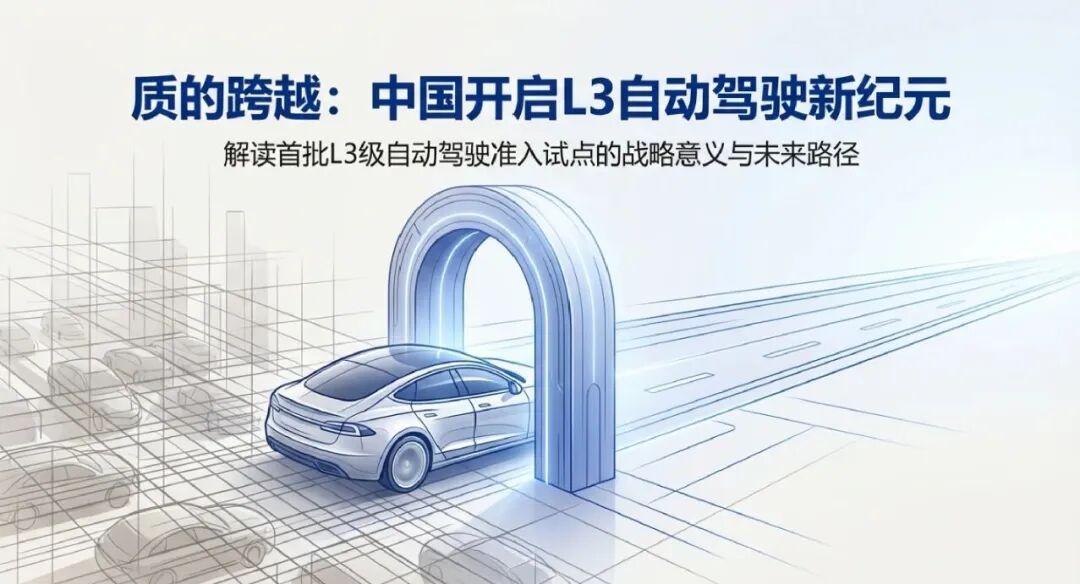
Recently, China has witnessed a landmark achievement as the inaugural batch of L3 autonomous driving vehicles has been granted approval for market access.
What precisely does this watershed moment signify?
What implications does it hold for the evolution of China's intelligent connected vehicle sector?
What are the defining features and constraints of L3 autonomous driving?
What infrastructural and regulatory support is essential for the widespread adoption and implementation of L3 and advanced autonomous driving technologies in the future?
This article delves into the core perspectives from the following dimensions:
L3 Approval: A Leap Forward for the Industry and a Pivotal Regulatory Milestone
L3 as the Gateway to 'Genuine Autonomous Driving': According to national benchmarks, automotive autonomous driving is categorized into six tiers, spanning from L0 to L5. Only vehicles attaining L3 (inclusive of L3, L4, and L5) can claim entry into the realm of true autonomous driving capabilities.
Presently, the majority of vehicles on the market fall below the L2 threshold, indicating that China has yet to witness the advent of truly autonomous vehicles.
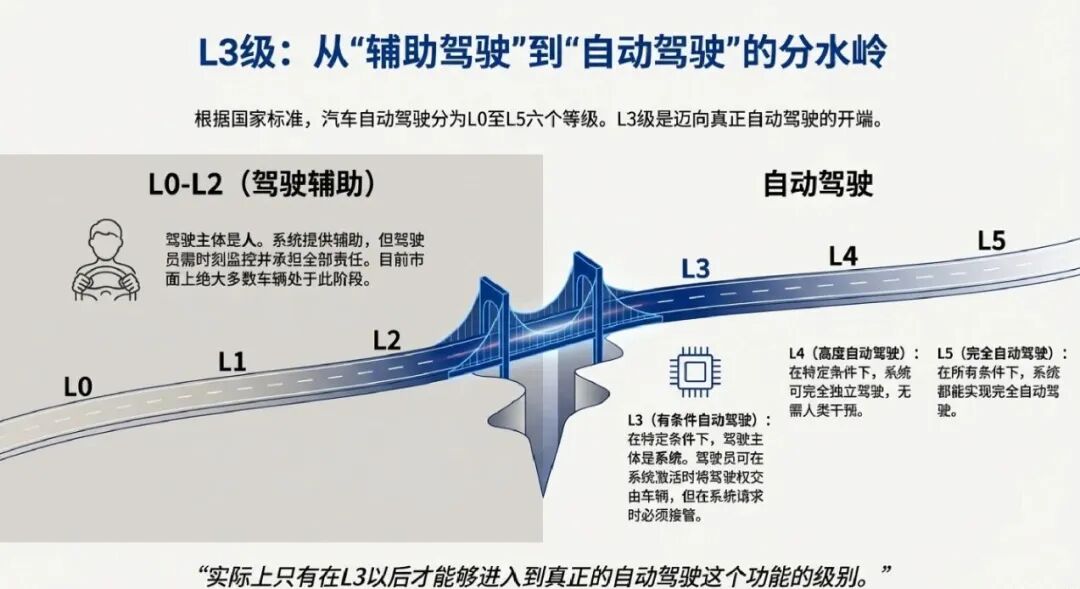
The announcement of the first batch of L3 autonomous driving vehicles receiving market access approval is widely perceived by the public as a new era where China's autonomous vehicle industry officially transitions from technical validation to mass production deployment.
This access pilot not only represents a critical stride in fostering industrial innovation and development while upholding safety standards but also marks a significant leap in China's autonomous driving regulatory framework, holding immense significance for the entire industry.
Definition and Technical Constraints of L3 Autonomous Driving
L3 autonomous driving is not fully autonomous but rather conditional autonomous driving.
Drivers Must Remain Prepared to Intervene: The crux of L3 autonomous driving lies in its requirement for drivers to be ready to take control when the autonomous system surpasses its operational limits. Upon receiving a takeover request, the driver must promptly assume control.
Specific Approved Models and Their Limitations: The two models that have secured approval are the Changan all-electric sedan and the Arcfox pure electric sedan.
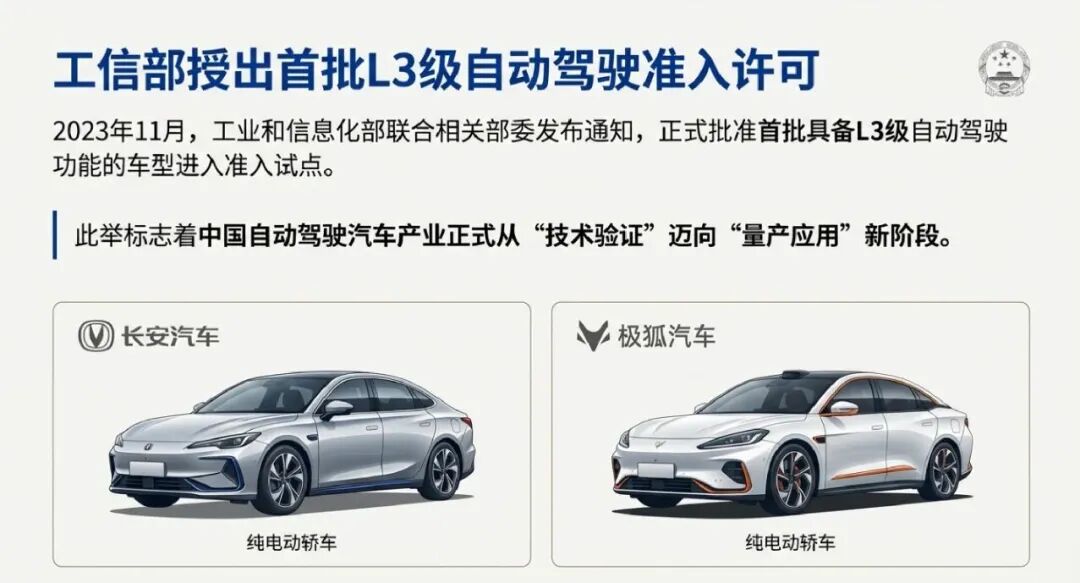
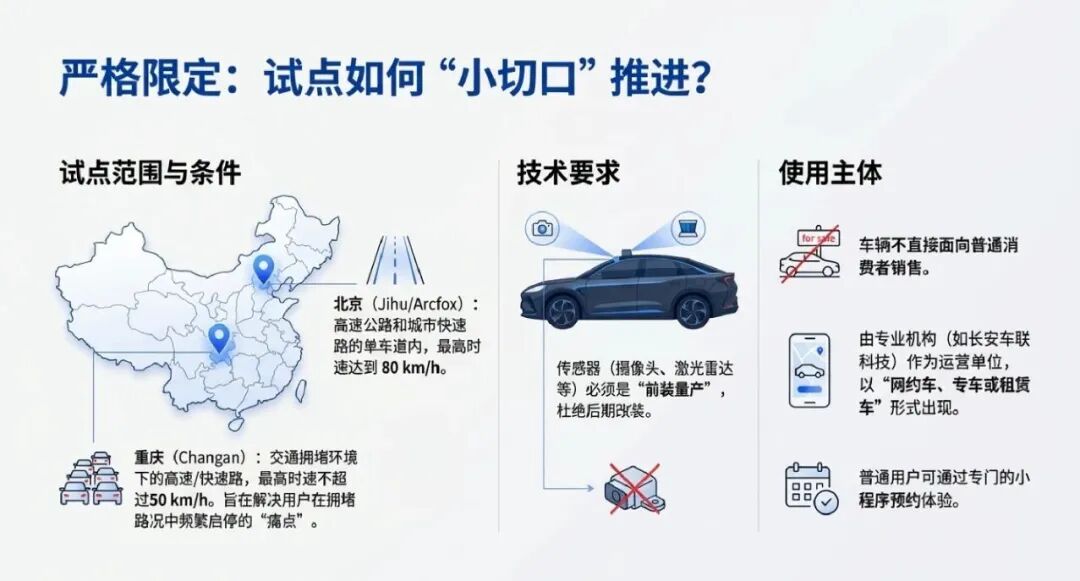
During the pilot phase, these vehicles are subject to specific road and speed restrictions:
The Changan all-electric sedan can operate autonomously on highways and expressways under congested traffic conditions, with a maximum speed capped at 50 kph.
The Arcfox pure electric sedan, under identical road conditions, can achieve a maximum speed of 80 kph.
Pilot Operation Model: L3 vehicles will initially be deployed in designated regions as ride-hailing, dedicated, or rental vehicles, operated by professionally trained commercial entities. Ordinary consumers can access these vehicles through reservations.
Differences Between 'Access Pilot' and Previous 'Road Testing'
Divergent Objectives: Previous road testing and demonstration applications, organized by local authorities, primarily aimed to assist companies in refining product functionality and safety. In contrast, the current access pilot seeks to facilitate the transition of autonomous driving technology from testing and demonstration to mass production deployment.
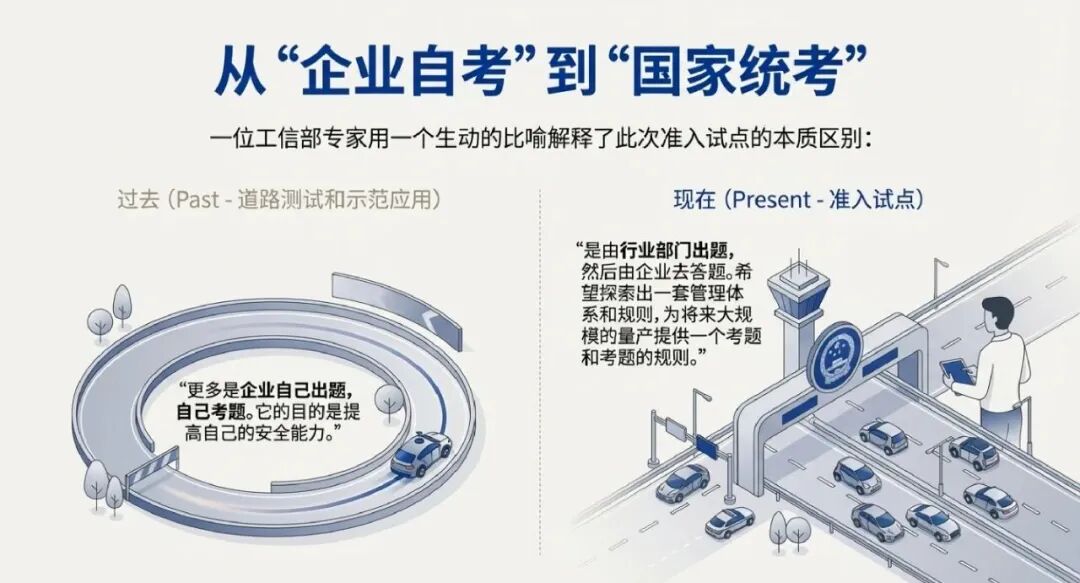
Varied Regulatory Bodies: If road testing can be likened to 'companies setting their own questions and taking their own exams,' then the access pilot is akin to an exam set by industry regulatory authorities. It aims to devise a management system and rules to provide exam questions and guidelines for future large-scale mass production. This pilot also signifies that the piloted models have successfully navigated through multiple stages, including solution verification, testing and evaluation, and expert reviews.
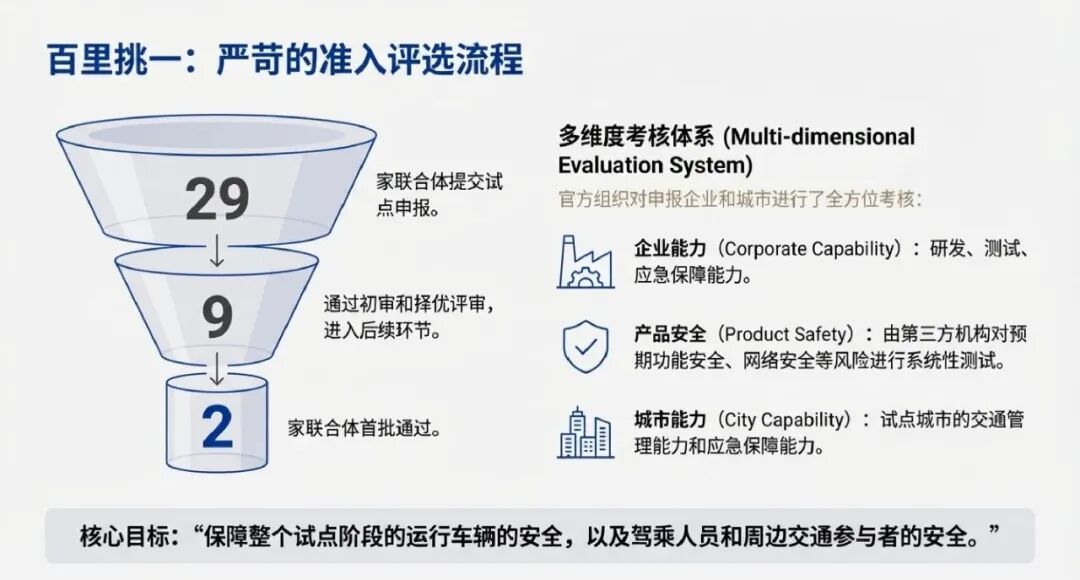
Technical Specifications: The cameras, radars, and other equipment of the approved L3 autonomous driving vehicles must be factory-installed for mass production. Vehicles retrofitted with sensors are ineligible for the access pilot.
Supporting Measures Essential for L3 Implementation
The deployment of L3 autonomous driving necessitates not only technological advancements but also systemic regulatory progress, particularly in the realms of legislation and infrastructure.
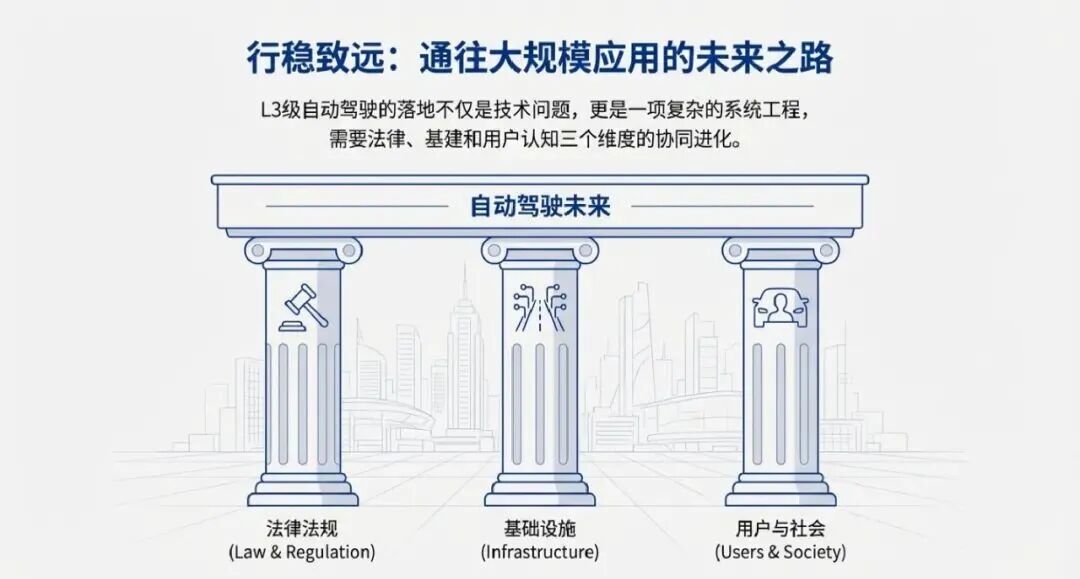
Legislative Amendments (Liability Determination): L3 autonomous driving entails a redefinition of liability determination. Traditional driving tasks are shouldered by drivers, whereas in L3, the liable party for accidents varies based on specific operational scenarios, with both users and autonomous driving systems potentially bearing responsibility.
There is an urgent need to revise the Road Traffic Safety Law to delineate the liability allocation mechanism for autonomous vehicles. The legal concept of 'takeover' must be clarified, specifying whether it constitutes a right or an obligation for drivers to intervene in emergency situations.
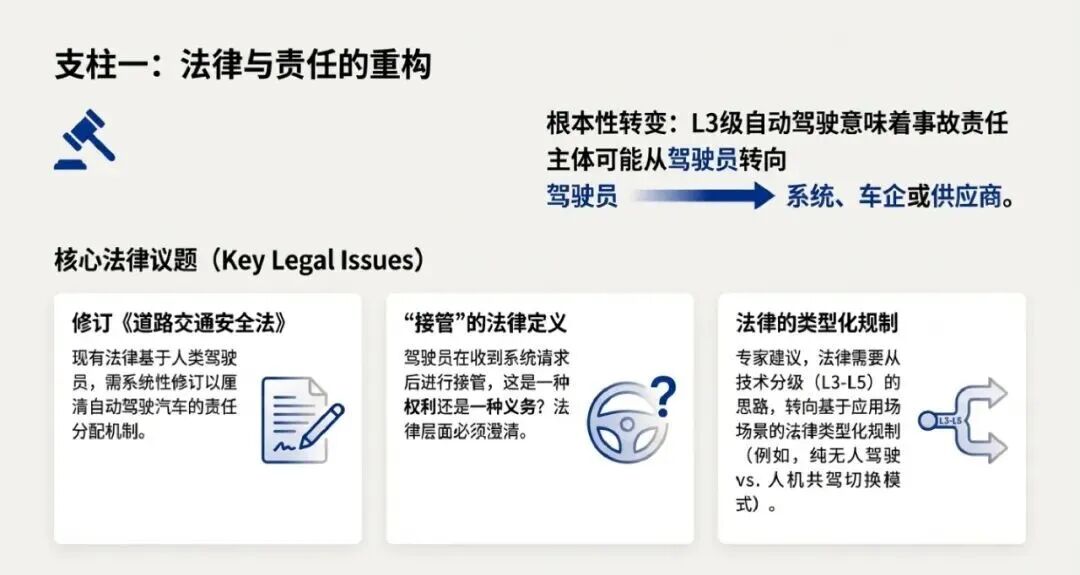
Traffic Management and Infrastructure Development: Cities must intensify the intelligent construction of roadside infrastructure.
It is imperative to systematically advance the construction of 'dual smart cities,' elucidating the progression of intelligent roadside infrastructure, communication networks, high-precision maps, and accident handling platforms. Beijing has spearheaded the planning and construction of a high-level autonomous driving demonstration zone, achieving comprehensive coverage of intelligent roadside infrastructure across 600 square kilometers. 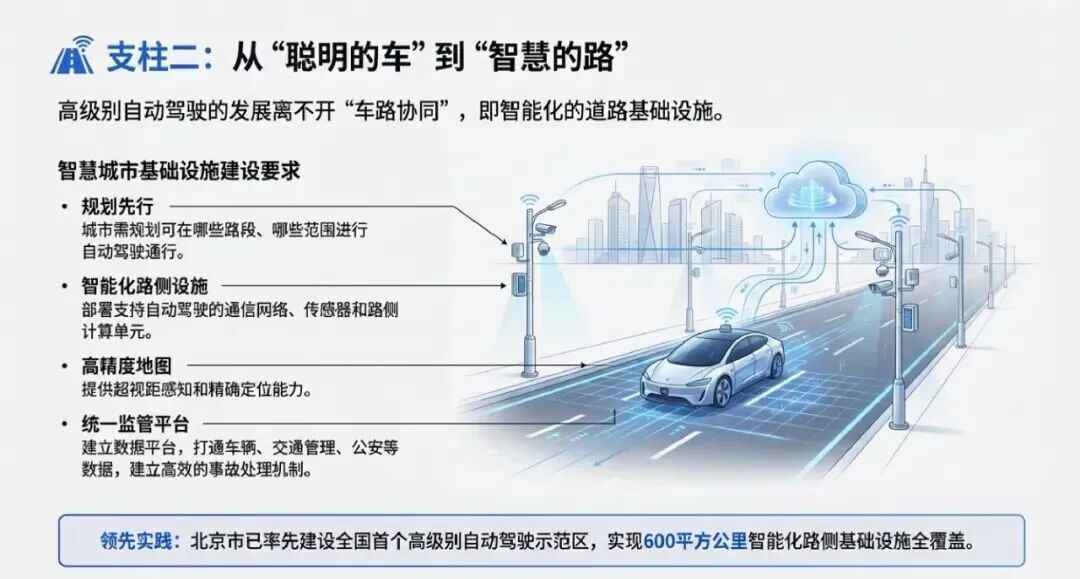
Driver Training: L3 autonomous driving imposes new demands on drivers' attention allocation and emergency response capabilities. The Ministry of Public Security has indicated its intention to incorporate knowledge pertaining to autonomous driving assistance technologies into driver training curricula in future revisions of the Road Traffic Safety Law.

Conclusion
In essence, the approval of L3 autonomous driving vehicles marks a qualitative leap, propelling autonomous driving technology from the research and testing phase to the brink of commercial deployment. However, given its implications for life safety, the progression must be 'steady and orderly.' The next pivotal step entails establishing comprehensive laws, regulations, and supporting facilities to ensure the safety and standardization of large-scale mass production applications.
This process can be likened to constructing a bridge across a river: technological breakthroughs lay the foundation of the main bridge structure, while laws and supporting facilities act as the safety regulations and foundational engineering that ensure the bridge deck is level and the load-bearing capacity meets standards.
References and Images
*Unauthorized reproduction and excerpting are strictly prohibited*
-
![]()
Global and Chinese Market Research Report on Autonomous Logistics Delivery Vehicles
-
![]()
Qianwen App Faces Financial Struggles Amidst Competition with Qianwen Office—Wu Jia Under Increasing Pressure
-
![]()
【Intelligentization】 No Resignation, but Entrepreneurship! Ren Shaoqing of NIO Takes on Dual Roles
-
![]()
"Ox Coming" Makes a Splash in the AI Circle! Mysterious Large Model Goes Viral, Who's Behind the Big Move?
-
![]()
Xiaopeng’s New Car is Popular, but Financial Results are Less Impressive
-
![]()
Dialogue with Lv Wenbin from Great Wall Motors: The 30,000+ Orders for Great Wall H10 is Just the Beginning!
-
![]()
Can Xiaomi Pengcheng N90 and N70 Recreate the 'Success Story' of the SU7?
-
![]()
Can Stellantis Revitalize Jeep’s Domestic Production in China via the ‘New Dongfeng Peugeot Citroen Automobile’ Initiative?