Purchase Tax Exemption Nears End: New Energy Vehicle Firms Race Against Time with Guarantees
 12/19 2025
 554
554
Introduction | Lead
The long-standing policy of exempting new energy vehicles (NEVs) from purchase tax is drawing to a close. Starting January 1, 2026, the policy will shift to a '50% tax reduction', thereby increasing vehicle purchase costs for consumers. In response, nearly 20 automakers have initiated a 'subsidy war' at year-end, offering purchase tax 'guarantee' plans to cover potential expenses for customers who place orders within the year. Will this collective push, sparked by the policy window's closure, inject a final burst of energy into the market, or signal the start of NEVs' complete transition from policy-driven growth to full market competition?
This article is produced by | Heyan Yueche Studio
Written by | Cai Yan
Edited by | He Zi
Full text: 1,743 characters
Reading time: 3 minutes
A pivotal moment has arrived. As the decade-long purchase tax support policy gradually phases out, China's NEV industry officially moves beyond its infancy, venturing into 'deep waters' driven by market forces and technological advancements. This transition is not merely about subsidy reductions; it represents a major test for the NEV sector. Who has the confidence to succeed? Who will be exposed as vulnerable? This ultimate survival test has just begun.
Purchase Tax Policy Adjustment on the Horizon
The decade-long policy of exempting NEVs from purchase tax will officially conclude by the end of this year, marking a crucial policy shift in China's automotive industry. According to a joint announcement by the Ministry of Finance, the State Taxation Administration, and the Ministry of Industry and Information Technology, starting January 1, 2026, the purchase tax exemption will be replaced by a 50% reduction, with a maximum reduction of 15,000 yuan. This translates to a significant increase in vehicle purchase costs for consumers. For instance, the tax cost difference before and after purchasing a 300,000-yuan model will exceed 13,000 yuan. The policy not only adjusts the tax rate for NEV purchases but also substantially raises the pure electric range threshold for plug-in hybrid models to qualify for the exemption, from 43 kilometers to 100 kilometers, compelling the industry to undergo technological upgrades. It is estimated that nearly one-third of currently available plug-in hybrid models will face adjustment pressures.
Faced with the impending purchase tax policy adjustment, automakers have launched a 'subsidy' war in the fourth quarter of 2025. Mainstream brands like Xiaomi, Zeekr, and Shenlan have introduced 'guarantee' plans, pledging to cover potential purchase tax differences for customers who place orders before year-end, aiming to secure orders and mitigate market fluctuations caused by the policy transition.
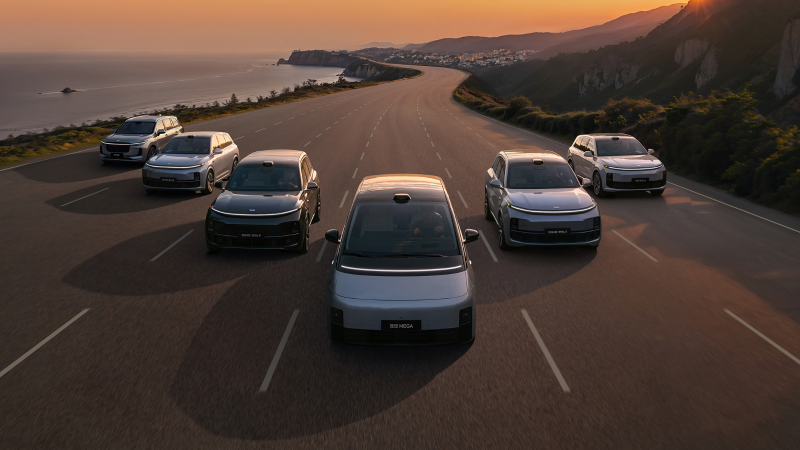
△ The policy of exempting new energy vehicles from purchase tax is coming to an end.
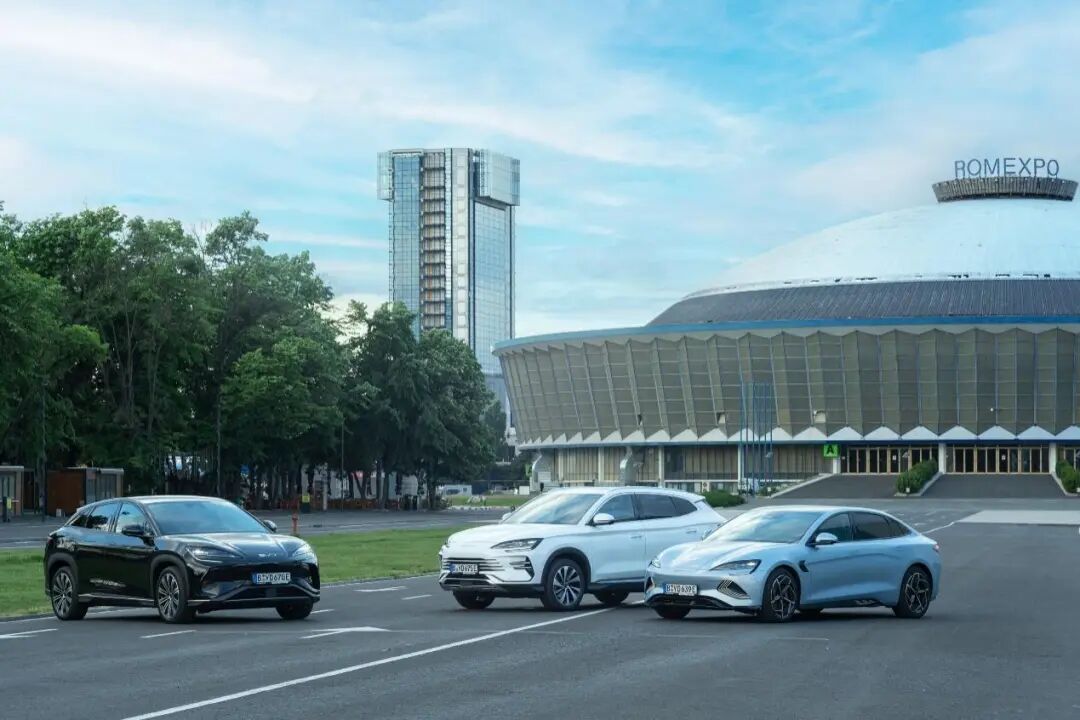
However, this high-profile 'last train' promotion has not sparked the expected market frenzy. In November 2025, retail sales of NEV passenger vehicles reached 1.321 million units, with a penetration rate rising to 59.3%. The market overall exhibited a mild 'low at the beginning, high at the end' trend, without a surge in panic buying. On one hand, competition among leading players has intensified. Although BYD remains the sales leader, its domestic market sales have declined year-on-year for several consecutive months; Geely is closely following with a robust 42.4% growth rate; Tesla has made a strong comeback with a new configuration model, achieving an 181.3% month-on-month increase. On the other hand, newcomers like Hongmeng Zhixing and Xiaomi have achieved nearly doubled growth rates through product innovation, becoming the market's brightest growth poles.
This phenomenon of 'policy hype, market calm' is precisely a positive signal, indicating a fundamental shift in the driving forces of China's NEV market. When the monthly penetration rate exceeds 50% and stabilizes at a high level of nearly 60%, product strength, brand power, and user experience have replaced fiscal subsidies as the core factors influencing consumer decisions. The withdrawal of the policy incubator heralds the industry's 'coming-of-age ceremony', and a knockout round based on genuine market competition has already commenced.
△ The NEV market shows signs of 'policy hype, market calm'.
Major Upheaval in the NEV Market
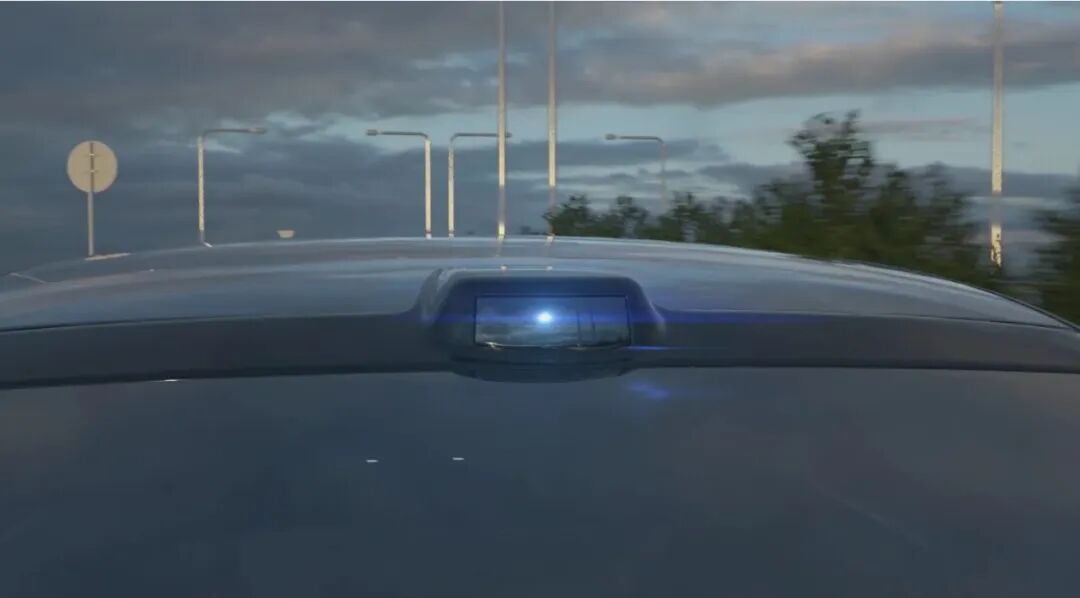
With the phasing out of the purchase tax policy, the focus of competition in the NEV market has shifted to in-depth technological innovation centered around intelligent driving. In this transition, LiDAR has evolved from a high-end optional feature to an 'entry ticket' for achieving advanced intelligent driving, driven by a combination of regulations, safety considerations, and commercial logic. Policy has clearly affirmed the value of a multi-sensor fusion approach, primarily because when driving responsibility shifts from human-machine co-driving at L2 level to system-dominated driving at L3 level, the high-precision three-dimensional perception capability provided by LiDAR, unaffected by lighting conditions, serves as 'critical redundancy' to ensure system safety and reliability. This trend has ignited the market: in the first half of 2025, the front-mounted installation volume of LiDAR in Chinese passenger vehicles exceeded 1.04 million units, surging by 83.14% year-on-year. However, market prosperity has been accompanied by fierce reshuffling, with Hesai, Huawei, and RoboSense collectively occupying over 90% of the market share, indicating a highly concentrated industry.
To survive, mainstream manufacturers have adopted distinct strategies: one side aims to drive costs down to the 'thousand-yuan level' through technological iteration, extending to more affordable models to pursue economies of scale; the other side focuses on high-performance digital products, partnering with high-end models to establish technological benchmarks. This fierce battle in the upstream supply chain profoundly influences the downstream vehicle landscape. The rapid popularization and cost reduction of LiDAR actually signal the end of the arms race reliant on stacking hardware parameters. The key to success in intelligent driving now lies in the deep integration of software algorithms, data loops, and user experience. For automakers, in the 'post-subsidy era', the ability to efficiently integrate this key sensor and build a unique, reliable intelligent experience based on it will become the core competency determining their success in the ultimate knockout round.
△ Front-mounted installation volume of LiDAR in Chinese passenger vehicles surged in the first half of 2025.
Commentary
The policy adjustment will be a significant turning point for some automakers, particularly those relying on policy subsidies to sustain sales. Learning to stand on their own is now a top priority. Of course, in this major test, some 'candidates' have already made adequate preparations and will seize this opportunity to update the rankings.
(This article is original to 'Heyan Yueche' and may not be reproduced without authorization.)
-
![]()
Global and Chinese Market Research Report on Autonomous Logistics Delivery Vehicles
-
![]()
Qianwen App Faces Financial Struggles Amidst Competition with Qianwen Office—Wu Jia Under Increasing Pressure
-
![]()
【Intelligentization】 No Resignation, but Entrepreneurship! Ren Shaoqing of NIO Takes on Dual Roles
-
![]()
"Ox Coming" Makes a Splash in the AI Circle! Mysterious Large Model Goes Viral, Who's Behind the Big Move?
-
![]()
Xiaopeng’s New Car is Popular, but Financial Results are Less Impressive
-
![]()
Dialogue with Lv Wenbin from Great Wall Motors: The 30,000+ Orders for Great Wall H10 is Just the Beginning!
-
![]()
Can Xiaomi Pengcheng N90 and N70 Recreate the 'Success Story' of the SU7?
-
![]()
Can Stellantis Revitalize Jeep’s Domestic Production in China via the ‘New Dongfeng Peugeot Citroen Automobile’ Initiative?