ZEEKR's Privatization Completes, Marking a Strategic Shift Valued at HK$32.9 Billion
 12/22 2025
 728
728
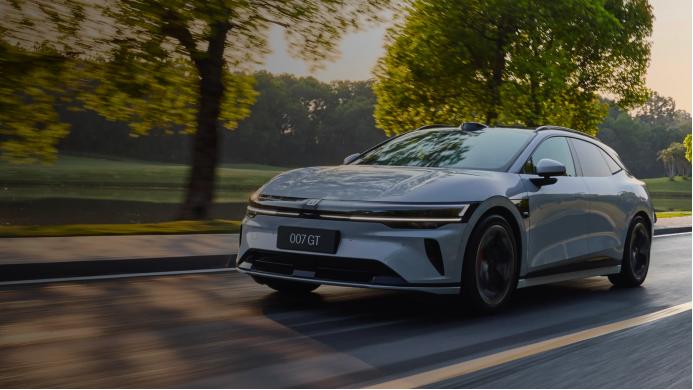
On the evening of December 9, Geely Automobile Holdings Limited released an official announcement detailing the results of the counterparty selection process for ZEEKR's privatization deal, signaling the final phase of this strategic consolidation. According to the announcement, the merger is expected to be finalized by December 29, 2025.
When the announcement disclosed that roughly 70.8% of ZEEKR shareholders opted for Geely Auto shares over cash compensation, it sent a powerful signal to the market that extended beyond the transaction itself. Investors were effectively casting long-term confidence votes with their capital, backing a premium brand's reintegration into the 'One Geely' ecosystem. This transition marks the formal end of a three-year strategic experiment—initially launched as an independent financing venture—and the beginning of a new phase focused on long-term growth through systemic integration.
Three years ago, ZEEKR launched as Geely's premium pure electric brand, seeking independent valuation and financing opportunities through a New York Stock Exchange listing. Now, valued at approximately HK$32.9 billion, it is set to rejoin the 'One Geely' framework.
While this move may seem like a cyclical adjustment in capital structure, it fundamentally reflects a deeper evolution in the competitive logic of China's new energy vehicle (NEV) industry—shifting from single-brand agility to group-based systemic capabilities.
01 Why 'Going Solo' Was Initially Necessary
Rewinding to 2021, China's NEV market achieved a historic milestone, with monthly retail penetration surpassing 20% for the first time, marking a full transition from policy-driven to consumption-driven growth.
Global capital enthusiasm for 'new automotive species' peaked, with Tesla's market capitalization exceeding $1 trillion and NIO, Li Auto, and XPeng at times surpassing traditional automotive giants in valuation.
Against this backdrop, Geely Automobile Group made a bold—and initially audacious—decision to fully spin off its internally developed ZEEKR brand and pursue an independent U.S. listing. This move was not merely a divestiture but a precision capital operation aligned with contemporary valuation logic, aiming to establish an independent valuation framework.
Traditional OEMs' price-to-earnings ratios failed to capture the imaginative potential of smart electric vehicles in areas like software, ecosystems, and user operations. Independent listing not only opened ZEEKR to global capital, raising over RMB 10 billion for R&D and channel development but also allowed it to adopt a startup-like organizational structure and culture, free from corporate decision-making inertia. This positioned ZEEKR to compete directly with Tesla and other Chinese NEV pioneers in the premium market.
During this period, ZEEKR successfully played the role of a 'strategic vanguard.' With just the ZEEKR 001 model, it quickly established a presence in the RMB 250,000+ pure electric market, cultivating a unique 'shooting brake' brand identity.
Subsequently, the ZEEKR 009 dominated the luxury MPV segment, while the ZEEKR 007 expanded market share by penetrating the RMB 200,000 price range. The 'ZEEKR Speed' of achieving 500,000 units produced in 44 months, along with 245,000 deliveries in the first half of 2025—temporarily topping the new force rankings—validated its product and market capabilities.
However, beneath this independent success lay significant financial pressures that ZEEKR had to bear alone.
As an independent listed company, ZEEKR faced constant scrutiny from capital markets. Public financial reports revealed cumulative net losses of RMB 26.223 billion from 2021 to 2024. This massive deficit did not stem from operational inefficiency but rather reflected the inherent 'strategic loss' model of the premium smart electric vehicle sector during its expansion phase, driven by several rigid expenditures:
First, the substantial ongoing investments in battery systems, smart cockpits, and advanced autonomous driving R&D—the price of building technological moats;
Second, the capital-intensive expansion of direct sales channels required to establish a premium brand image and reach users;
Third, the marketing and user benefits investments necessary to maintain visibility and market share in a fiercely competitive landscape.
As the industry moved past its explosive growth phase, slowing growth rates prompted capital markets to shift from aggressive 'revenue growth narratives' to stringent 'profitability path interrogations.'
This compelled ZEEKR's management to reconsider whether the solo assault model had reached its phased ceiling and whether a more robust system was needed for the next competitive phase.
02 Why 'Reintegration' Became the Optimal Path
If the 2021 spin-off capitalized on capital market tailwinds, today's reintegration represents a rational response to industrial deep-water competition. The industry's competitive focus has shifted from isolated electrification and intelligence highlights to comprehensive contests in cost control, supply chain security, globalization, and full-stack technological capabilities. Against this backdrop, rejoining the Geely ecosystem offers ZEEKR three layers of core value realization:
First, financial pressure relief and economies of scale sharing. Post-privatization, ZEEKR no longer needs to worry about quarterly independent financial reporting, allowing it to focus more on medium-to-long-term technological investments and brand building. More critically, it gains seamless access to Geely Holding's global procurement and supply chain system, which boasts annual sales exceeding one million units. Preliminary estimates suggest supply chain synergies alone could reduce ZEEKR's material costs by 5%-8%. Geely Holding's robust financial strength—with net cash reserves reaching RMB 45.2 billion in the first three quarters—provides 'strategic antifreeze' for ZEEKR to navigate technological investment cycles.
Second, technological ecosystem complementarity and brand matrix synergy. Reintegration is not merely an organizational merger but a strategic alignment with other Geely brands, particularly LYNK & CO, under the 'One Geely' framework. ZEEKR will concentrate on the RMB 300,000+ luxury pure electric segment and cutting-edge technological exploration, as demonstrated by its newly launched SEA-S super hybrid architecture extending pure electric advantages to hybrid domains—technology that could benefit other group brands. Meanwhile, LYNK & CO focuses on the RMB 200,000-level high-performance new energy market, creating clear price and style differentiation to avoid internal competition while maximizing R&D utilization across the group.
Finally, and most crucially, accelerated globalization. ZEEKR has preliminarily proven its product competitiveness in overseas high-value markets, with the ZEEKR 009 becoming Hong Kong's luxury MPV sales champion. However, independently establishing overseas channels and service systems entails prohibitive costs and lengthy timelines. Leveraging Geely Group's global sales networks, supply chain infrastructure, and localization expertise enables ZEEKR's globalization to upgrade from 'product exports' to 'systemic expansion,' significantly reducing risks and enhancing efficiency.
The preference for share exchange by over 70% of shareholders precisely reflects capital market recognition of this synergistic logic. Shareholders now perceive ZEEKR not as an isolated star company but as a strategic core unit integrated into China's largest private automotive group ecosystem with comprehensive support.
03 Future Challenges: Can 1+1 Exceed 2?
While legal merger procedures near completion, the true integration saga has just begun. Rejoining 'One Geely' does not mean simply returning to origins but initiating a profound chemical reaction determining long-term value. The core challenge lies in preserving ZEEKR's premium independent brand equity while harvesting systemic scale dividends.
The primary balance involves brand independence versus systemic synergy. ZEEKR's success stems largely from its distinct user-tech brand image and high-stickiness community cultivated through direct sales. Integration success hinges on designing an 'agile architecture' featuring 'frontend independence with backend fusion.' Frontend operations must fully retain autonomy in product definition, user engagement, and services; backend systems should seamlessly connect to Geely's global supply chains, manufacturing infrastructure, and R&D platforms for cost efficiency.
Channel network fusion presents another major challenge. ZEEKR's direct sales model must coexist with Geely's vast dealer network. A potential path is 'direct sales as flagships, agency as networks': maintaining direct touchpoints in core Tier 1 markets as brand benchmarks while selecting premium dealers in broader markets for agency operations under unified ZEEKR management of user interfaces and standards, enabling efficient network expansion.
The deepest challenge lies in organizational culture fusion. ZEEKR's internet-derived DNA emphasizes flat structures and rapid execution, whereas mature conglomerates prioritize processes and scale efficiency. This demands strategic resolve and management wisdom from Geely to establish an 'innovation enclave' for ZEEKR, preserving its agility within defined boundaries while facilitating bidirectional methodology infiltration through talent exchanges and project collaborations.
Integration success will have clear metrics: financially, through sustained gross margin optimization and profitability path clarification; strategically, through ZEEKR's cutting-edge technologies elevating the group's overall tech image while enabling technical sharing and market complementarity among brands rather than mere aggregation. This integration serves as a critical test of Chinese automotive groups' ability to manage complex multi-brand strategies.
04 Conclusion
ZEEKR's three-year journey from independence to reintegration provides a classic case study of China's new energy vehicle industry evolution from wild growth to rational maturity. It clearly demonstrates that while flexible 'special forces' models were breakout weapons in the industry's first half, the second half—contesting comprehensive endurance, systemic capabilities, and global vision—necessitates returning to 'main force formations,' leveraging strong industrial foundations and systemic ecosystems for coordinated operations as the inevitable path to long-term competitive victory.
December 29 may mark a legal full stop for this strategic experiment. For Geely and ZEEKR, however, it represents a fresh starting point—to prove that Chinese automotive groups can achieve sustainable leadership in the premium smart electric vehicle arena through dynamic strategic adjustments and robust systemic capabilities.
Its success or failure will profoundly influence industry thinking on organizational forms and competitive strategies.
-
![]()
Too Pessimistic! MiniMax Isn't Doing That Badly
-
![]()
The 150,000-Yuan SUV Market: A Tempting yet Elusive Prize
-
![]()
The Endgame for New Car-Making Forces Is Set: Only a Three-Year Window Remains, Who Will Be Completely Eliminated?
-
![]()
Who Crossed the 'Kill Line' After DeepSeek's Price Adjustment?
-
![]()
Profits Plunge by 61% in the First Half of the Year! The Rise and Challenges of Great Wall Motors
-
![]()
BYD Han Unveiled for Pre-sale with Striking Design, Sparking Netizen Debate: Is It Merely an Enhanced Version of a Ride-Hailing Vehicle?
-
![]()
BAIC Taitan 700 vs. Xiangjie G9: A Clash of Kin, How Will Yu Chengdong Navigate This Challenge?", "Taitan 700, Xiangjie G9, BAIC, Huawei Intelligent Driving, Pricing Showdown", "BAIC has unveiled its
-
![]()
Volkswagen's Layoffs and Factory Closures: What Should Car Owners Make of It?