Weekly Stock Review | Is the Automotive Segment Merely Valued at $30? Tesla's Autonomous Driving and Energy Ventures Bolster Its Market Worth
 12/22 2025
 650
650
Dive into the Weekly Auto Stock Review and Discover Diverse Trends in the Auto Market.
Thanks to significant strides in the Robotaxi sector, Tesla's stock price has been on an upward trajectory lately, reaching an all-time peak of roughly $495 per share this week.
Over the past five trading days, the company's stock price has seen a cumulative gain of over 7%, with its market capitalization surpassing the $1 trillion milestone. The immediate impetus for this surge is Tesla's unveiling of the Robotaxi road test initiative in Austin, coupled with growing market confidence in its metamorphosis from an electric vehicle manufacturer to a titan in autonomous driving.
From specific figures, Tesla's stock price has soared by 48% in the past six months, with a 14.3% rise in just the last month. Consequently, Tesla's current anticipated GAAP price-to-earnings ratio has soared beyond 380 times, a staggering 1,820% higher than the industry median. Moreover, its projected price-to-sales ratio has also surpassed 17 times, approximately 1,672% of the industry median.
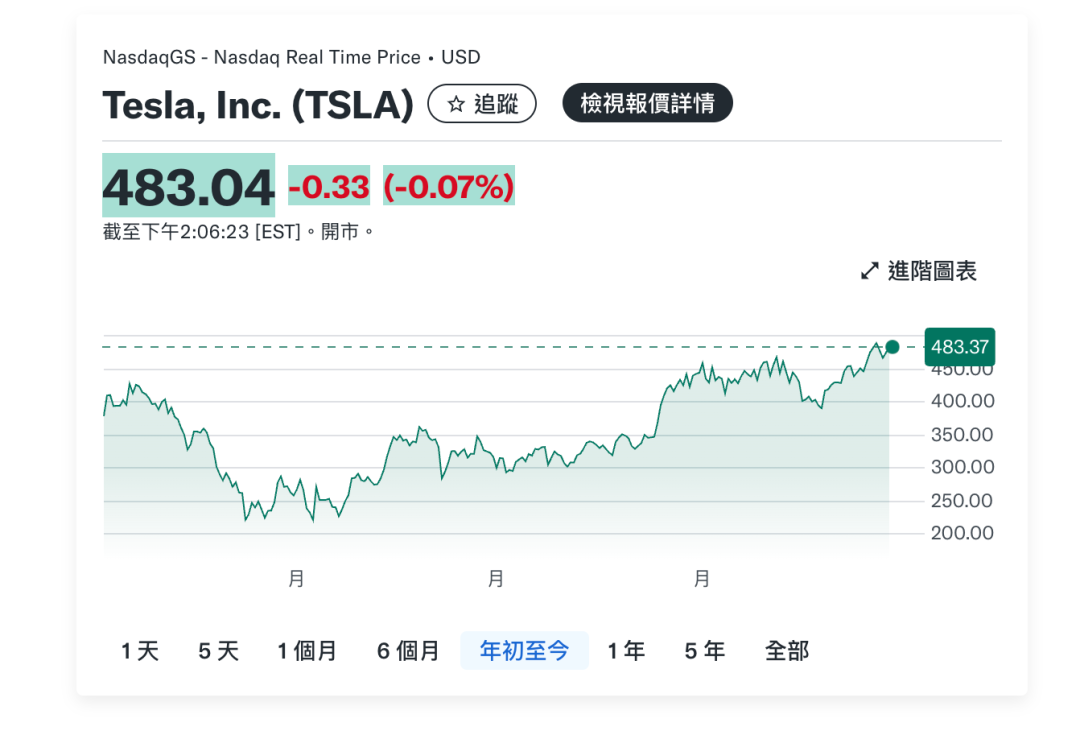
Following a robust round of gains, Wall Street's consensus forecast indicates a 15.3% potential downside for Tesla's stock, with a target price of $395.73, suggesting the market believes the stock's subsequent performance may be fraught with volatility.
Is the Automotive Segment Merely 6% of Market Value?
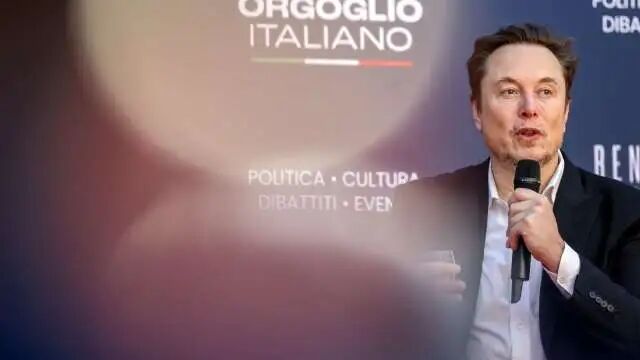
Jed Dorsheimer, Head of Energy Research at William Blair, points out that Tesla's valuation rationale has undergone a fundamental shift: 'The market is reassessing Tesla from the vantage points of autonomous driving and energy ventures, with the automotive segment's weight being significantly diluted.'
Through segmented valuation scrutiny, Dorsheimer's team discovered that if only the automotive manufacturing segment is considered, Tesla's per-share value is merely around $30-40, less than 8% of its current stock price.
Although the electric vehicle segment remains Tesla's primary revenue stream (accounting for over 75% in the third quarter), Dorsheimer believes that investors now perceive Tesla as an artificial intelligence and robotics entity, with market expectations for the commercialization of the FSD (Full Self-Driving) system becoming the primary driver of its valuation.
On the flip side, the value of the energy segment is catching up to that of the automotive segment. Tesla's energy storage products and solar business value continue to burgeon, with Dorsheimer believing that they are now on par with, or even slightly surpassing, the value of the automotive segment.
This underscores the market's acknowledgment of Tesla's stance as an 'energy company.'
In contrast, Tesla's automotive segment growth is decelerating. From a performance standpoint, although Tesla's total operating revenue has continued to escalate in recent years, its growth rate has persistently declined, plummeting to 1% in 2024, a sharp downturn from previous years. Net profit even halved in 2024.
In the first three quarters of this year, Tesla's performance further waned, with both revenue and net profit experiencing declines, particularly a year-on-year profit drop exceeding 40% to $2.954 billion.
According to Cox Automotive data, Tesla's U.S. sales in November plummeted to a four-year nadir. This was primarily influenced by the expiration of the federal electric vehicle tax credit at the end of September and ongoing consumer backlash against Musk's political endeavors.
The situation ameliorated in the third quarter, with Tesla's revenue growing by 12%, predominantly driven by U.S. buyers' rush purchases before the tax credit expiration. However, the introduction of entry-level Model Y and Model 3 models in October did not significantly bolster sales and may have even diverted demand from high-end models.
Although Tesla still maintains its lead in electric vehicle sales, the profitability of its traditional automotive segment is facing formidable challenges from Chinese brands such as BYD and NIO. Dorsheimer points out that the automotive segment's contribution to Tesla's overall valuation has plummeted to a historical low.
Robotaxi Timeline Emerges as a Pivotal Variable
Morgan Stanley analysts anticipate Tesla to substantially augment its Robotaxi fleet size to 1,000 vehicles by 2026 and reach 1 million vehicles by 2035. With a cost advantage of $0.59 per mile, Tesla not only gains an early foothold in the autonomous driving mobility market but also amasses crucial data and regulatory groundwork for the comprehensive promotion of its full FSD.
Morgan Stanley also underscores that the automotive industry is nearing an AI-driven inflection point, with Tesla's leading edge being substantial and continuously expanding. Developing autonomous driving capabilities necessitates three elements: data (fleet/miles), computing power, and algorithms (AI models). Tesla far outstrips most competitors in these three domains.
The market is brimming with expectations for Tesla's transformation, but some analysts are apprehensive about its execution risks. Dorsheimer emphasizes: 'Tesla's current stock price is almost entirely predicated on unrealized ventures, and this transformation has not yet been substantiated by financial data.'
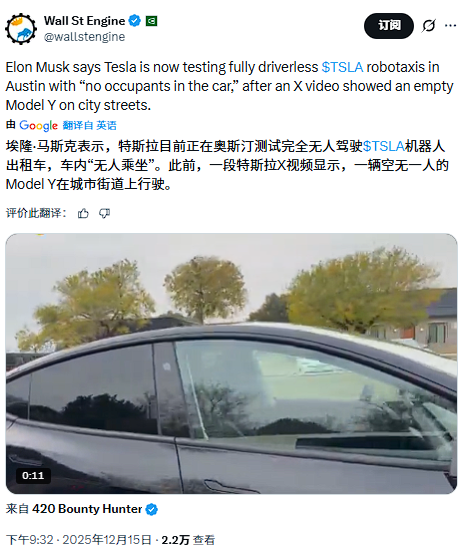
Due to the current ambiguity in the technological implementation of Robotaxi, California regulatory agencies this week mandated Tesla to clarify or eliminate Autopilot's marketing claims within 90 days, exposing the legal and regulatory hurdles faced by autonomous driving technology. Dorsheimer cautions: 'If the Robotaxi commercialization timeline is delayed again, the market will re-examine the true value of the automotive segment.'
Additionally, to actualize the commercialization of Robotaxi and Optimus, Tesla needs to perpetually invest substantial R&D funds. Dorsheimer points out: 'Tesla must strike a balance between its investments in autonomous driving and energy ventures while upholding the competitiveness of its automotive segment.'
Will SpaceX's IPO Alleviate Pressure?
According to Bloomberg, SpaceX is planning an internal share sale, with its company valuation anticipated to reach $800 billion, rendering it the highest-valued unlisted company globally, and its subsequent IPO may also set a historical record in scale.
Investors harbor mixed perspectives on the impact of SpaceX's IPO.
Dmitry Shlyapnikov, an analyst at Horizon Investments, states: 'SpaceX's IPO may exert certain selling pressure on Tesla's stock, as some investors hold Tesla primarily to gain exposure to Musk's vision, rather than based on its automotive segment itself.'
However, Adam Sarhan, CEO of 50Park Investments, holds a divergent view: 'Historical experience indicates that when a company under Musk achieves a significant milestone, it often bolsters market sentiment for its affiliated companies.' He anticipates SpaceX's high-profile IPO to attract more investors drawn to Musk's innovation narrative into its ecosystem.
Steve Man, an analyst at Bloomberg Intelligence, points out that Tesla's current stock price has already been somewhat propelled by expectations of SpaceX's IPO. The two companies harbor synergistic potential at the strategic level: Tesla's Optimus robot may assist in future Mars colonization plans, while SpaceX's Starlink system can enhance the interconnection capabilities of ground vehicles.
This expectation of technological integration further fortifies the market's perception of the long-term relevance between the two companies.
Despite short-term uncertainties, the outside world still views Tesla's long-term prospects favorably, particularly emphasizing the value of its energy segment: 'The energy segment is a pivotal driver for Tesla's future profit growth, but the market may still undervalue it currently.'
Demand for Tesla's Powerwall and Megapack products remains robust, with the energy storage segment becoming the most significant revenue source outside of automobiles. By integrating SolarCity, Tesla has established a comprehensive clean energy ecosystem, with its solar segment gradually achieving profitability. As the global carbon neutrality process accelerates, Tesla's布局 (layout) in the renewable energy sector will garner greater market space.
For investors, Dorsheimer recommends focusing on three key indicators.
First is the Robotaxi testing progress, with testing data from Austin, Texas, directly influencing market expectations for FSD commercialization. Second is the change in shipment volume and gross profit margin of energy storage products, an important indicator for judging Tesla's transformation efficacy. Third, in the context of escalating competition, whether Tesla can sustain the profitability of its automotive segment will determine the baseline for its overall valuation.
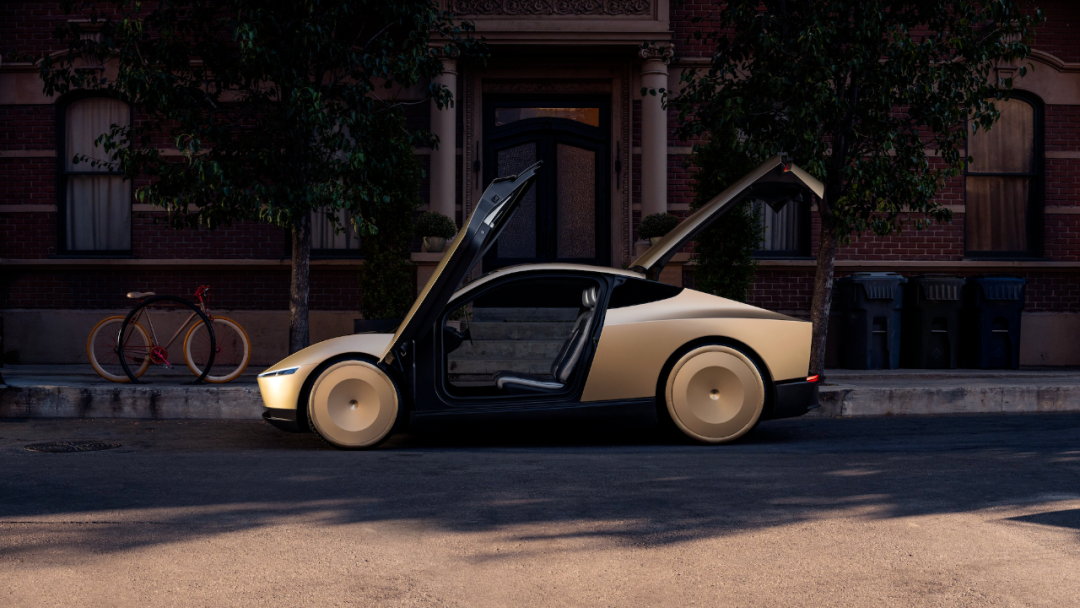
It can be said that Tesla's valuation restructuring mirrors the capital market's profound recognition of the automotive industry's transformation.
While traditional automakers are still grappling with electrification transformation, Tesla has taken the lead in entering the third stage of 'autonomous driving + energy.' However, the success of this transformation will hinge on Tesla's ability to find a balance between technological implementation, business synergy, and capital efficiency.
For investors, while pursuing the dream of autonomous driving, they still need to be wary of the risk of overvaluing 'unrealized ventures.'
Note: Some images are sourced from the internet. If there is any infringement, please contact for deletion.
-END-

-
![]()
Enflame Tech's IPO Journey: Navigating Over 5.9 Billion Yuan in Losses and Soaring Debt in Q1 This Year
-
![]()
Trillion-Yuan Giant Li Shufu 'Streamlines': Could Levc Be the Casualty?
-
![]()
AI Competes for Electricity and Generates Power in the Gobi Desert
-
![]()
The First Batch of Victims of the AI Bubble: Programmers
-
![]()
ByteDance, DJI, and Xiaohongshu Secure Top Three Positions Among China’s Fastest-Growing Unicorns
-
Tesla's in-car voice system in China is finally learning to 'understand human language'
-
![]()
Foreigners Are Amazed: Chinese Electric Vehicle Drive Systems Unveil Innovative 'Poses'
-
![]()
700,000 Brothers and the Future of Robots: Behind JD.com's 'Nirvana Plan'