Year-End Bargains: Joint Venture Cars Slashed by Tens to Hundreds of Thousands—Act Now!
 12/22 2025
 754
754
In December 2025, the automotive market is a curious blend of frosty conditions and heated activity. Outside 4S dealerships, the chill of winter prevails, but inside, it’s a hive of excitement. Showrooms are adorned with vibrant red banners proclaiming “Direct ¥60,000 Off,” “70% Clearance Discounts,” and “Purchase Tax Assurance.” Sales consultants’ WeChat notifications buzz incessantly as they rush to send out promotional messages to potential buyers, all while emphasizing a “Final 3-Day Countdown.” In this year-end sales blitz, joint venture brands are the most anxious participants. From cash discounts on traditional fuel-powered vehicles to policy assurances on new energy models, the joint venture阵营 (once commanding half of China’s automotive market) is launching an unprecedented promotional campaign to safeguard its market share.
This is no ordinary year-end sales drive but an inevitable response to mounting pressures. By 2025, the penetration rate of new energy vehicles (NEVs) is nearing 50%. Domestic brands, leveraging intelligence and cost-effectiveness, are mounting a full-scale assault, causing the market share of joint venture brands to plummet from 60% in 2020 to less than 30%. The full exemption policy for NEV purchase taxes is set to expire on December 31, the inventory index has surpassed the two-month warning line, and fuel-powered vehicle sales have hit a 21-year low for the same period. These multiple challenges have forced joint venture brands to resort to “bottom-of-the-barrel” discount strategies. Behind this promotional surge lies not only the practical need to clear inventory but also strategic anxieties during a transformative era, with each discount reflecting the struggles and negotiations of joint venture brands amidst industry upheaval.
The Final Carnival of Volume-for-Price Exchange
“The original price of ¥399,800 for the Audi Q5L 45TFSI Luxury Dynamic Edition is now slashed to just ¥277,000 for the base model, a direct discount of ¥122,800—but only for deals finalized before the end of December.” As soon as the sales manager at a FAW-Audi 4S store in Beijing’s Chaoyang District finished speaking, Mr. Shen, who was inspecting the car, looked stunned. Such substantial price reductions have become the norm in the joint venture fuel-powered vehicle market, where once-prestigious price benchmarks have lowered their standards, entering the final carnival of “volume-for-price exchange.”
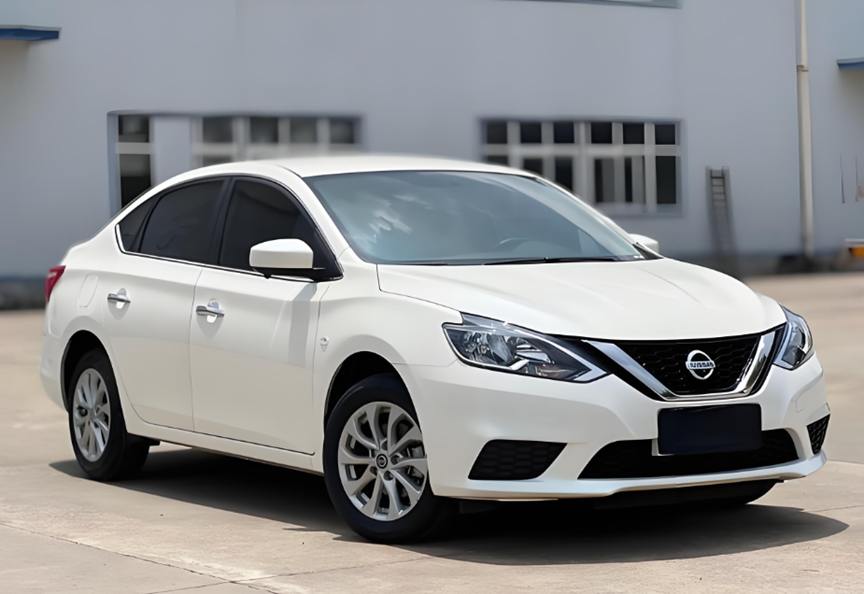
The discount intensity of joint venture fuel-powered vehicles has reached its “annual peak,” with nearly all models—from compact sedans to mid-size SUVs—joining the price reduction ranks. Among the national-level family car lineup, the Nissan Sylphy Classic starts at a flat ¥69,800, the Toyota Corolla’s entry-level price has dropped below ¥80,000, and the Buick Verano is available for just over ¥70,000 after terminal discounts. These models, once stably priced between ¥100,000 and ¥150,000, have now collectively dropped to the ¥60,000–¥80,000 range, directly encroaching on the traditional strongholds of domestic brands. The mid-size car market is even more brutal, with the Honda CR-V offering comprehensive discounts exceeding ¥60,000, the Ford Mondeo providing over ¥40,000 in discounts shortly after its launch, and the Volkswagen Magotan offering up to ¥79,000 in discounts for loan purchases. Some second-tier luxury brands, like the Jaguar XEL, have seen price reductions of up to ¥174,800, with terminal prices nearly halved.
The core driving force behind this price reduction wave is the survival crisis in the fuel-powered vehicle market. In 2025, rapid technological advancements in NEVs—with technologies like Hongmeng Intelligent Connectivity and Huawei Qiankun extending to affordable models—have gradually eroded the technological advantages of fuel-powered vehicles. Data shows that fuel-powered vehicle sales dropped by over 30% year-on-year in the first half of 2025, with domestic sales failing to surpass 300,000 units in the first half of December, marking a new low in sales over the past 21 years. Meanwhile, the strict implementation of the China VI B emission standards has put pressure on clearing inventory for models with a stock cycle exceeding 10 months, forcing dealers to adopt “price-trampling” discounts to recoup funds.
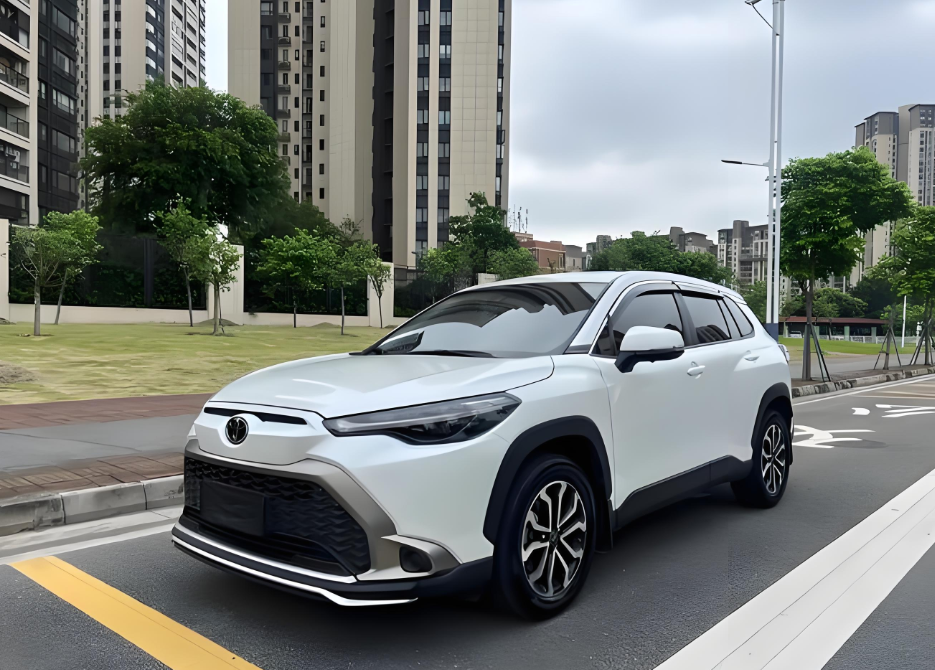
In addition to direct cash discounts, joint venture brands have also introduced “combination punches” to enhance attractiveness. The GAC Toyota Venza starts at ¥89,800 while offering a lifetime warranty on the three major components; the Beijing Hyundai Tucson provides an additional ¥60,000 in cash discounts along with old car trade-in subsidies; and the Volkswagen brand has introduced a strategy where “loans are cheaper than full payments,” with the Volkswagen Sagitar offering an extra ¥20,000-plus in discounts for installment purchases. These measures, while seemingly enriching the forms of discounts, actually expose the market dilemmas of fuel-powered vehicles—when product competitiveness no longer holds an absolute advantage, they can only retain consumers through price concessions and value-added services.
Data from the China Automobile Dealers Association shows that the automotive consumption index reached 93.2 in November, higher than in October, with a projected significant month-on-month increase in terminal retail sales in December. However, this brief sales rebound more resembles a “deathbed reprieve” for the fuel-powered vehicle market. Multiple dealers have admitted that while year-end promotions can alleviate short-term inventory pressures, in the long run, the market contraction of fuel-powered vehicles is inevitable, and this price reduction carnival is merely the final struggle of joint venture brands before the advent of the new energy era.
Race Track Breakthroughs Supported by Policy Guarantees
If the promotions for fuel-powered vehicles are a “passive inventory clearance,” then the discounts for joint venture brand new energy vehicles represent an “active breakthrough.” Facing the policy change where the NEV purchase tax exemption will be adjusted from full exemption to a 50% reduction in 2026, nearly 20 joint venture brands have collectively introduced “purchase tax guarantee” policies, attempting to lock in potential customers during the year-end window and secure a foothold in the new energy race track.
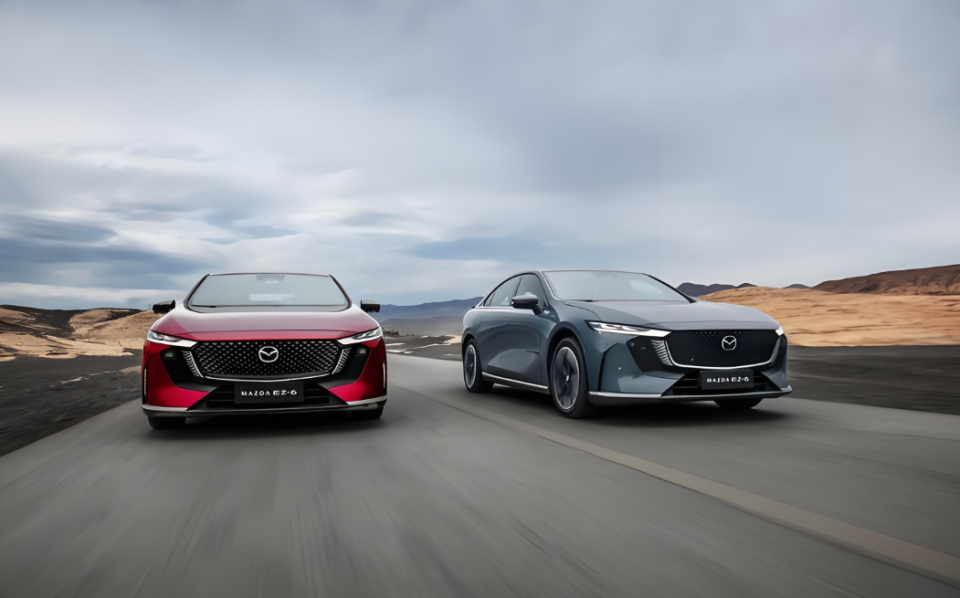
Chang’an Mazda’s promotional strategy is quite representative. Its new energy twins, the MAZDA EZ-6 and EZ-60, offer “dual benefits”: the EZ-6 starts at ¥119,800 with up to ¥25,000 in trade-in subsidies; the EZ-60 starts at ¥119,900 with a free ¥5,000 configuration upgrade, and both models come with a “lifetime zero-fire insurance” benefit worth ¥7,999. More crucially, in response to the purchase tax policy changes, the brand has simultaneously introduced financial support plans, with both models eligible for up to 60-period zero-down-payment purchases and an annual fee rate as low as 1.99%, drastically lowering the vehicle purchase threshold. Additionally, purchasing the EZ-60 Pro/Max models comes with a complimentary Bluetooth charging station and the first year’s compulsory traffic insurance, along with the benefit of lifetime free basic data traffic, further enhancing product attractiveness.
This model of “policy guarantee + cash discount + value-added service” has become the standard promotional approach for joint venture new energy models. A joint venture brand 4S store in Beijing prominently displays the calculation method for the purchase tax difference in its showroom, with sales consultants repeatedly emphasizing in live streams that “orders locked before December 31 will still enjoy full purchase tax exemption for cross-year deliveries”; a German brand has introduced a “trade-in subsidy + insurance subsidy” combination, allowing customers to save up to ¥35,000 when purchasing new energy models. Unlike fuel-powered vehicles, the discounts for joint venture new energy vehicles focus more on “precise policy implementation,” aiming to alleviate consumers’ policy concerns through purchase tax guarantees while enhancing user loyalty through long-term benefits.
Behind the promotions of joint venture brands in the new energy sector lies an urgent need for “catch-up.” Although traditional joint venture brands have accumulated profound technological expertise in the fuel-powered vehicle era, they have been relatively slow in the new energy transformation, with their market share continuously eroded by domestic brands and new entrants. The breakthrough case of Chang’an Mazda’s new energy twins proves that when joint venture brands combine “global quality” with “Chinese intelligent manufacturing,” supplemented by targeted promotional policies, they can still gain market recognition—the EZ-60 has consecutively won the title of the best-selling joint venture new energy mid-size SUV for two months, and its global model, the MAZDA 6e, has received the five-star safety certification from the European E-NCAP and multiple international design awards.
However, overall, the promotions for joint venture new energy models still face numerous challenges. Some brands’ new energy products exhibit traces of “fuel-to-electric conversion,” with intelligent configurations lagging behind those of domestic brands; despite substantial discounts, their brand premium capabilities have declined, with consumers placing more emphasis on the technological prowess of the products themselves rather than brand aura. Furthermore, the competition in the new energy market has entered a “fierce” stage, with domestic brands holding significant advantages in battery technology, intelligent cockpits, and other areas. Joint venture brands cannot achieve fundamental breakthroughs through promotions alone and need to genuinely invest in product research and development and technological innovation.
Public Car Reviews
The joint venture car promotional surge at the end of 2025 is less a routine year-end sales push and more a microcosm of industry transformation. As fuel-powered vehicles bid farewell to the market with “50% discount inventory clearance” and new energy vehicles struggle to break through with “purchase tax guarantees,” joint venture brands have finally realized that their once-prestigious brand premiums and technological barriers no longer hold significant advantages in the new energy intelligent era.
The promotional surge at the end of 2025 serves as a “survival alert” for joint venture brands and an “acceleration signal” for industry reshuffling. No matter how substantial the discounts are, they cannot conceal the anxieties of delayed transformation; regardless of how noticeable the sales rebound is, it cannot alter the trend of market restructuring. For joint venture brands, the true path forward does not lie in discount posters but in research and development centers and in precise insights into consumer needs. As the noise of promotions fades, the automotive market in 2026 will become even more ruthless. Those joint venture brands that can lower their standards and accelerate transformation may find new vitality, while those that cling to tradition and rely on price wars will eventually be swept away by the tides of the era. After all, the Chinese automotive market is no longer an era where “price reductions guarantee victory.” Only by truly understanding trends and embracing transformation can one stand invincible in fierce competition.
-
![]()
Cubic Sensors and Instruments Air Quality Sensor Module: Focusing on PM2.5 for Comprehensive Cabin Air Monitoring
-
![]()
Optical Components and Assemblies Surge 45.75% Year-on-Year! Yongxin Optics Reports 564 Million Yuan in First-Half Revenue
-
![]()
Sunny Optical’s Semi-Annual Report: Mobile Phone Profits Slide by RMB 280 Million, Robotics Business Surges to Mitigate Losses
-
![]()
Performance Examination of Hong Kong Stocks: From Pop Mart to Newborn Town and Kingsoft Cloud, Market Preferences May Be Shifting
-
![]()
ARR in August Surges Past $800 Million, MiniMax's Darkest Hour May Be Over
-
![]()
Major Changes in the Mobile Phone Industry: From 'Small Profits and High Sales Volume' to 'High-Priced Game of One Phone per Person'
-
![]()
Even Sues XGIMI in U.S. Court: $1.2 Million ‘AI Glasses’ Crowdfunding Campaign Abruptly Stops!
-
![]()
The world's third largest mobile operating system was born in China! Installed on over 1.3 billion devices