Battery Health of New Energy Vehicles: A Perplexing Tale 'Tailored' by Automakers
 12/23 2025
 608
608
As 2025 nears its end, the sales of new energy vehicles in China have soared past 15 million units. However, alongside this sales surge, a growing sense of 'battery health anxiety' is permeating among vehicle owners.
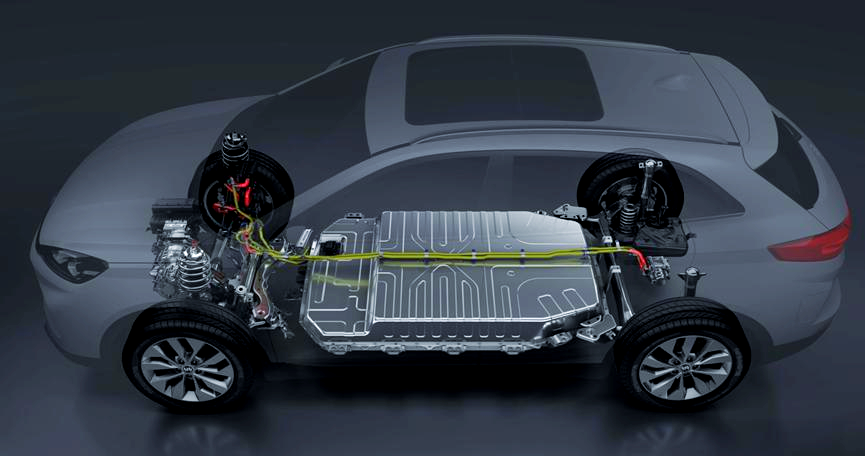
On one hand, vehicle owners are witnessing a significant 'shrinkage' in their driving range. On the other, automakers are providing 'exclusively verified' health data, with third-party testing struggling to find a foothold amidst this divide.
Battery Dilemmas Faced by Electric Vehicle Owners
Mr. Li, a ride-hailing driver, is among the many vehicle owners grappling with battery health uncertainties. His new energy vehicle, bought three years ago, has seen its driving range nearly cut in half, making it arduous to accept consecutive-day orders.
What he finds particularly hard to swallow is that, despite the substantial drop in driving range, the vehicle's system still indicates a battery health of 82%. Similarly, Ms. Chen has encountered suspected battery degradation, with her driving range diminished by one-third compared to when the vehicle was new. Yet, after undergoing testing at a 4S dealership, she was informed that the battery health remained impressively high at 91%.
The frustration experienced by new energy vehicle owners is widespread. A senior maintenance technician, who preferred to remain anonymous, divulged to reporters, 'We frequently receive complaints from vehicle owners about a drastic reduction in driving range, but the health data presented in testing reports often contradicts the owners' perceptions.'
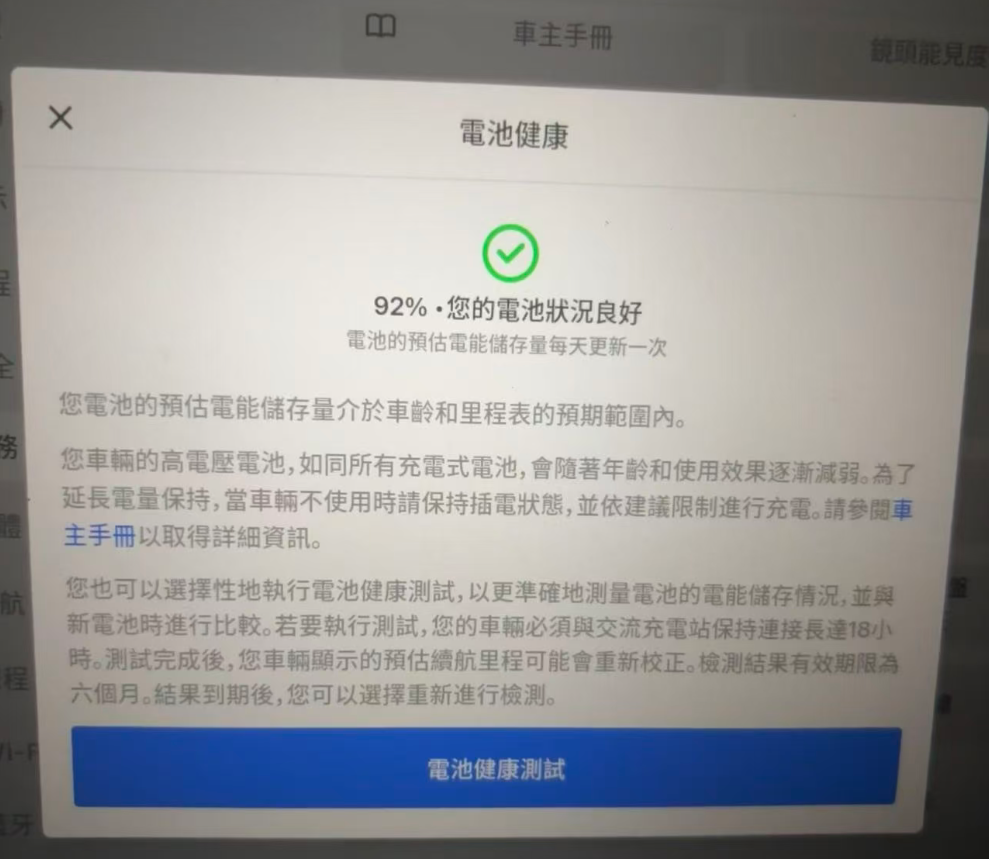
According to pertinent regulations, automakers are obligated to provide a warranty of no less than 8 years or 120,000 kilometers for power batteries. Should the battery capacity decay to below 80% of its initial capacity during the warranty period, the automaker bears the responsibility for replacement. Consequently, whether the battery health reaches the 80% threshold has become a point of contention between vehicle owners and automakers.
The 'Management Measures for the Recycling of Power Batteries for New Energy Vehicles,' which came into effect on January 1, 2025, also stipulate clear standards: For new energy passenger vehicles, the health decay of power batteries should not exceed 20% within three years of normal use, implying that a remaining health of ≥80% is deemed normal. However, the crux of the matter lies in the fact that the authority to test battery health has long been almost exclusively vested in the hands of automakers.
An industry analyst remarked, 'The interpretation rights of data from the Battery Management System (BMS) rest with the automakers. The testing standards and calculation algorithms are internal enterprise regulations, and ordinary vehicle owners simply lack the means to verify the authenticity of the data.'
Algorithmic 'Black Boxes' and the Absence of Standards
Why do different testing methods yield vastly disparate health readings for the same battery? This exposes a glaring issue: the absence of standards.
Current national standards merely outline testing methods for battery status but fall short of providing unified calculation rules for health. This grants automakers some leeway in defining their own standards. Consequently, for the same degraded battery, different automakers' calculation methods may produce vastly different health readings.
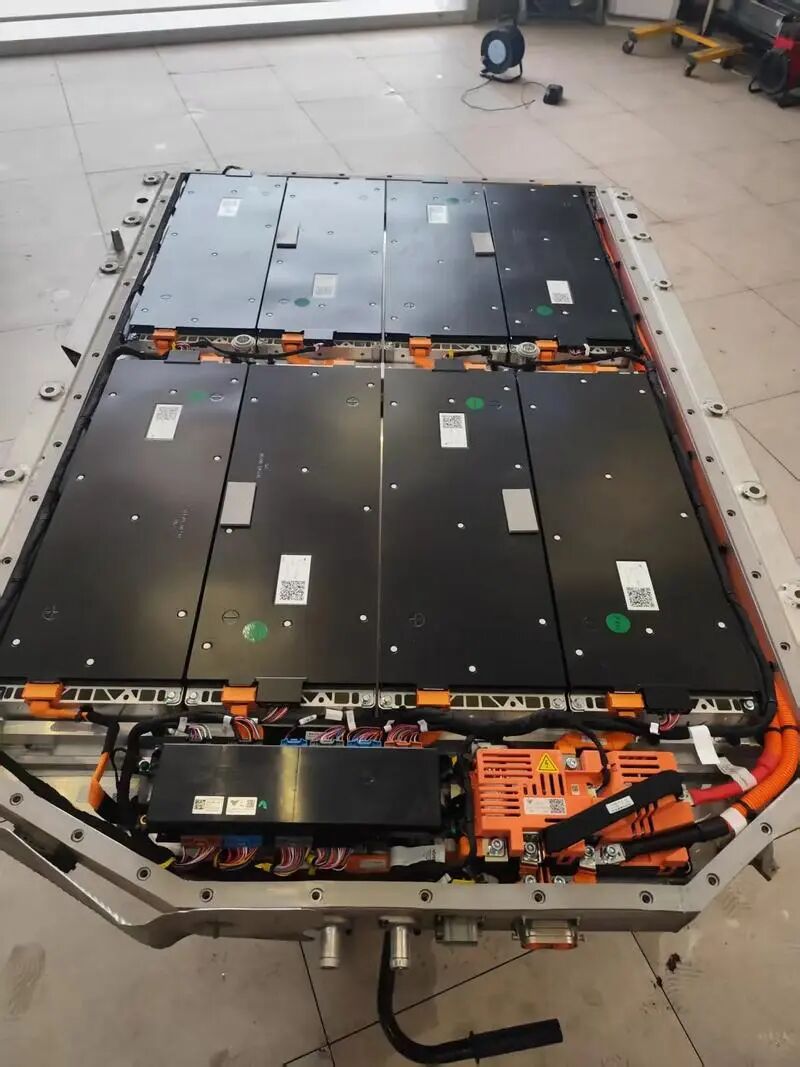
A BMS engineer who has worked at multiple automakers revealed, 'Each automaker's battery health algorithm is a closely guarded trade secret, but there is a general tendency to 'embellish' the data. Some algorithms overlook certain degradation factors or smooth out the data, resulting in a displayed health that exceeds the actual value.'
In more extreme cases, some automakers' testing reports merely present the final percentage without providing core data such as capacity decay curves or individual cell voltages, rendering health a vague concept 'shrouded in mystery.'
When vehicle owners question the health data provided by automakers, third-party testing appears to be the only recourse. However, this path is also fraught with hurdles.
Third-party testing necessitates automakers granting access to the battery management system, but automakers often refuse on the grounds of 'trade secrets.' Even if abnormal data is detected, the results lack definitive legal authority and are challenging to use as a basis for rights protection.
'We have encountered numerous instances where the same vehicle shows 85% health at a 4S dealership but only 78% at a third-party institution, and automakers often only acknowledge their own data,' lamented a frustrated leader of a third-party testing agency.
However, positive changes are afoot in 2025. As controversies continue to mount, policy-level demands for data transparency are being reinforced, and the third-party testing system is also expediting its implementation.
Increased Transparency Shapes the Industry's Future
The 'autonomy' of automakers has reduced third-party testing to a mere formality. Consequently, automakers find themselves in the dual role of 'athletes' and 'referees,' leaving consumers in a 'stalemate' when seeking rights protection.
An observer of the new energy vehicle industry pointed out, 'The Battery Management System encompasses core technologies of automakers, but it should not erect information barriers. Technical protection should not supersede consumers' right to know.'
Fortunately, some automakers have begun to heed consumers' calls. Many brands have commenced sharing more battery data, incorporating decay curves and charge-discharge records into testing reports to enhance their comprehensibility for vehicle owners.
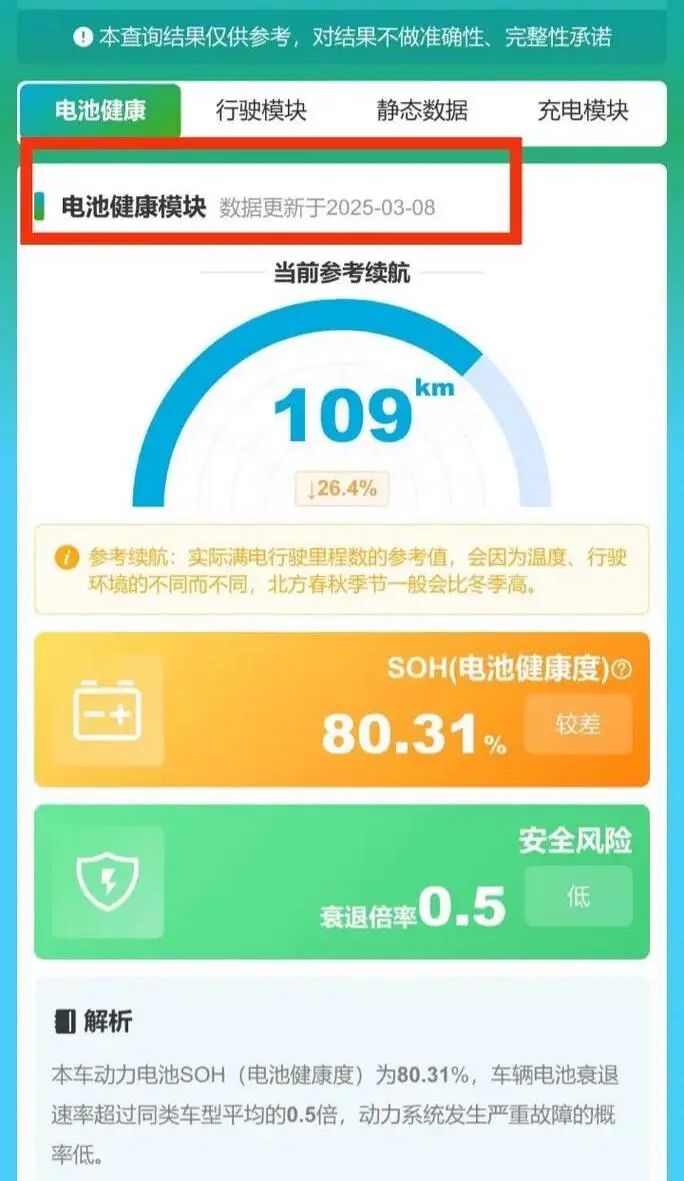
Some automakers have also introduced 'battery health visualization' services, dispatching monthly health reports to vehicle owners via official apps to alert them of potential abnormal degradation risks.
From an industry development standpoint, the 'battle for discourse' over battery health is essentially a necessary stride for the new energy vehicle industry to attain maturity.
In the future, with the widespread adoption of 'battery digital IDs,' data from the entire lifecycle of production, use, and recycling will be traceable, and issues such as health fraud and data embellishment will be stamped out at their roots.
When testing standards are harmonized, data is publicly transparent, and third-party institutions play an effective role, 'health shenanigans' will have no place to hide, and vehicle owners will no longer need to agonize over 'who to trust.'
-
![]()
Cubic Sensors and Instruments Air Quality Sensor Module: Focusing on PM2.5 for Comprehensive Cabin Air Monitoring
-
![]()
Optical Components and Assemblies Surge 45.75% Year-on-Year! Yongxin Optics Reports 564 Million Yuan in First-Half Revenue
-
![]()
Sunny Optical’s Semi-Annual Report: Mobile Phone Profits Slide by RMB 280 Million, Robotics Business Surges to Mitigate Losses
-
![]()
Performance Examination of Hong Kong Stocks: From Pop Mart to Newborn Town and Kingsoft Cloud, Market Preferences May Be Shifting
-
![]()
ARR in August Surges Past $800 Million, MiniMax's Darkest Hour May Be Over
-
![]()
Major Changes in the Mobile Phone Industry: From 'Small Profits and High Sales Volume' to 'High-Priced Game of One Phone per Person'
-
![]()
Even Sues XGIMI in U.S. Court: $1.2 Million ‘AI Glasses’ Crowdfunding Campaign Abruptly Stops!
-
![]()
The world's third largest mobile operating system was born in China! Installed on over 1.3 billion devices