Plagiarism, Pseudo-Innovation, and Parameter Races Abound! Multiple Auto Executives Unite to Criticize Industry Involution
 12/25 2025
 517
517
“At first glance, the phenomenon of 'involution' may seem to be nothing more than fierce competition among enterprises. However, it actually underscores fundamental issues within the industry, such as severe homogenization and a lack of innovation. Many companies prioritize short-term gains, often resorting to plagiarism and imitation rather than engaging in genuine, user-driven innovation,” remarked Lu Fang, Chairman of VOYAH, on December 24th, as he revisited the topic of involution. He emphasized that this low-level competition results in products vying solely on price and parameters, ultimately flooding the market with a plethora of 'pseudo-innovations' that fail to genuinely address user needs.
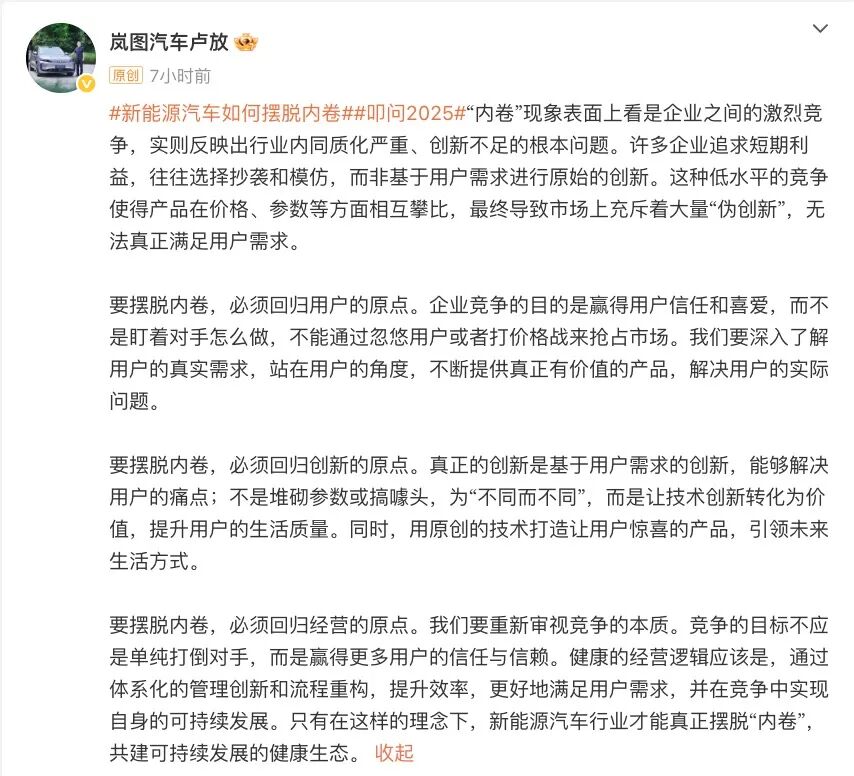
In Lu Fang's perspective, breaking free from the shackles of involution necessitates a return to three fundamental principles: user-centricity, innovation, and sound business operations. Firstly, he stressed the importance of returning to a user-centric approach. 'The ultimate goal of enterprise competition is to earn the trust and loyalty of users, not to obsess over competitors' moves. We cannot capture the market through deception or price wars,' Lu Fang asserted. He believes that automakers must deeply understand users' real needs, empathize with them, and consistently deliver products that truly solve their problems.
Secondly, Lu Fang called for a return to the roots of innovation. 'True innovation stems from user needs and addresses their pain points. It's not about merely stacking parameters or creating gimmicks for the sake of differentiation, but about transforming technological advancements into tangible value and enhancing users' quality of life,' he stated candidly. Simultaneously, automakers should leverage original technologies to craft products that surprise and delight users, setting the tone for future lifestyles.
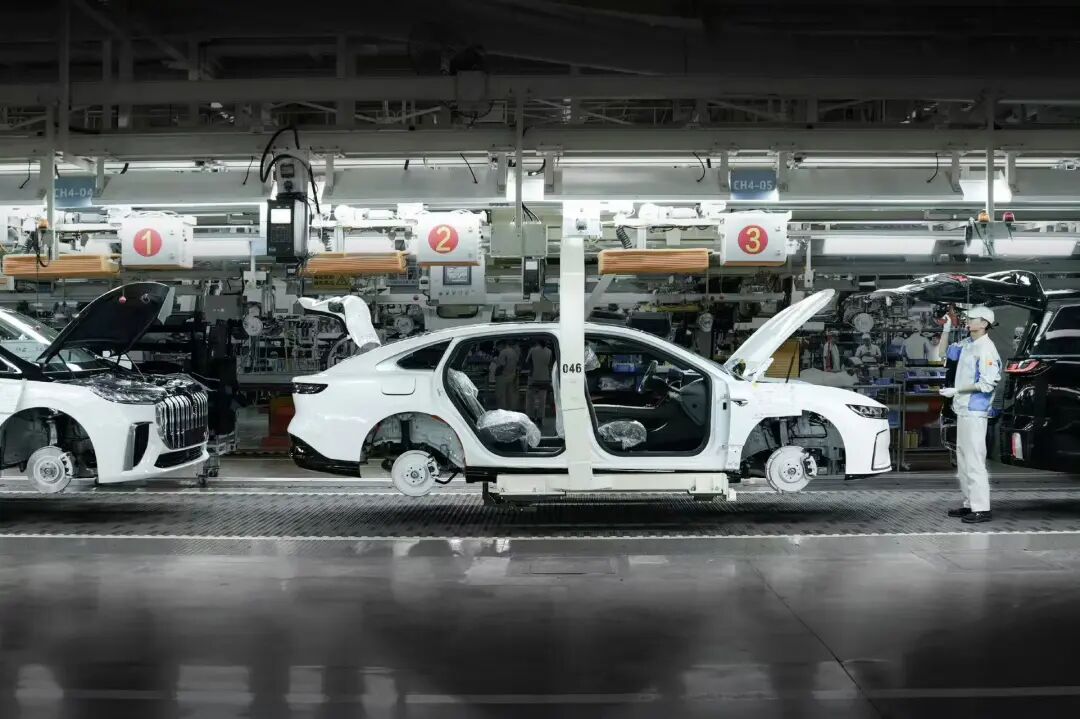
Thirdly, Lu Fang emphasized the need to return to the core of business operations. He proposed that automakers must re-evaluate the essence of competition. 'The objective of competition should not be merely to outdo rivals, but to win the trust and reliance of a broader user base,' Lu Fang explained. He believes that a healthy business logic entails enhancing efficiency through systematic management innovation and process restructuring, thereby better meeting user needs and achieving sustainable growth amidst competition. Lu Fang is convinced that only under such a philosophy can the new energy vehicle industry truly break free from 'involution' and foster a healthy ecosystem for long-term development.
In addition to Lu Fang, several executives from automakers like Shenlan and Beijing Off-Road also delved into the 'involution' plaguing the automotive industry and proposed strategies to combat it on the same day. Deng Chenghao, Chairman of Shenlan, pointed out that the current new energy vehicle market is witnessing escalating design homogenization and a relentless parameter race. Deng Chenghao elaborated on three key areas: technology, openness, and user engagement.
Regarding technology, Deng Chenghao advocated for deeper exploration and prioritizing safety. 'Users' demands for intelligence have evolved beyond mere presence to focusing on quality and reliability. In the latter half of the competition, we must compare not just the quantity or cost of functions, but also the user experience and safety,' Deng Chenghao stated. He cited Shenlan's pioneering use of 3nm chips in vehicles not for publicity but to ensure a seamless in-car experience that remains responsive even after five years of use.
On the topic of openness, Deng Chenghao suggested expanding the 'circle of friends' and adopting a global perspective. He believes that smart electric vehicles represent a competition in the industrial chain, and isolation will not lead to success. As a new central enterprise, Shenlan aims to collaborate openly with partners to grow the market. Simultaneously, Shenlan is actively pursuing global expansion.
Regarding user engagement, Deng Chenghao stressed the importance of brands exuding warmth and fostering genuine connections with users. He believes that as products become increasingly similar, users' choices are increasingly influenced by emotional ties. Based on this insight, Shenlan aspires to become a 'tech-sports brand' that engages and creates with users, listening to their feedback and collaborating to enhance products. 'Looking ahead to 2026, we will continue to delve deeper into technology, openness, and user proximity. This path may not be the quickest, but we believe it will be more stable and far-reaching,' Deng Chenghao affirmed.
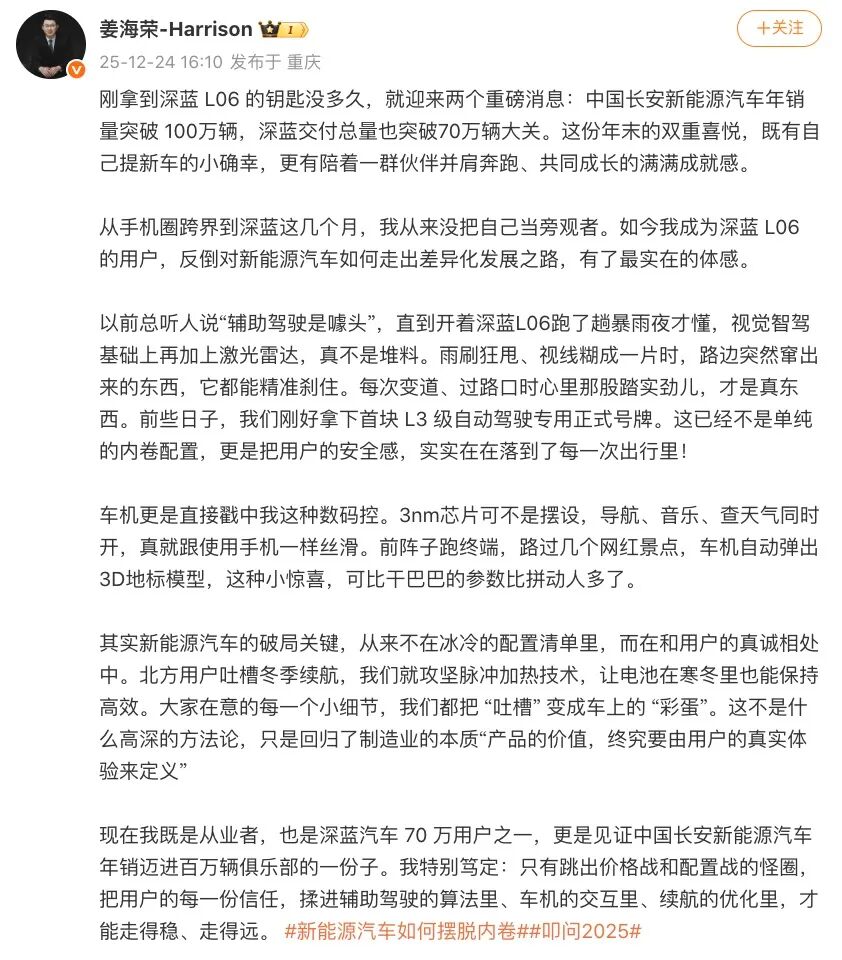
Subsequently, Jiang Hairong, CEO of Shenlan, shared his perspectives on the topic. He believes that the key to breaking through in the new energy vehicle industry lies not in a mere list of configurations but in sincere interactions with users. He cited an example where northern users expressed concerns about winter range, prompting Shenlan to address the issue with pulse heating technology to maintain battery efficiency in cold winters. In Jiang Hairong's view, transforming 'complaints' into 'hidden gems' within the vehicle is the key to breakthrough. This approach, he argues, is not a profound methodology but a return to the essence of manufacturing - the value of a product is ultimately defined by the real experience of users.
'I firmly believe that only by breaking free from the vicious cycle of price wars and configuration battles and incorporating every ounce of user trust into the algorithms of assisted driving, the interactions of the in-car system, and the optimization of range can we achieve steady and long-term success,' Jiang Hairong emphasized.
'Since the industry entered the new energy era, involution has been a constant presence: prices, parameters, configurations, and even communication volumes are all involved,' remarked Wang Hao, Chairman of Beijing Off-Road. He believes that a more fundamental issue underlying involution is determining what kind of car users truly need and what value experience it brings.
In response, Wang Hao proposed three key points. Firstly, technology should be grounded in real-world usage scenarios, meaning it should withstand the rigors of daily use and extreme environments, not just look impressive on paper. Secondly, user value must be respected and understood. Wang Hao pointed out that in the new energy era, users are diverse; some prioritize efficiency, others comfort, and still others a sense of freedom and security. He believes that much involution stems from assuming all users are the same and calls for genuine differentiated analysis and long-term, patient understanding of niche groups, rather than relying on brief marketing insights.
Thirdly, brands should demonstrate a commitment to long-termism. Wang Hao believes that the new energy transition is not a sprint but a structural transformation. Beijing Off-Road will continuously evolve by 'listening to advice' rather than starting from scratch or simply copying others. 'Getting back to the core question: How can new energy vehicles break free from involution? My answer is - those companies willing to persist in doing difficult yet correct things will ultimately be the ones that remain,' Wang Hao concluded.
This type of 'involutionary' competition in the automotive industry has long drawn attention, and the countermeasures proposed by the aforementioned auto executives are all enterprise-level initiatives. This year, 'anti-involution' policy measures have been gradually implemented at the policy level. From automakers heeding the call for a 60-day payment period in June to the recent release of the 'Compliance Guidelines for Price Behavior in the Automotive Industry (Draft for Comment)' by the State Administration for Market Regulation, which prohibits selling cars at a loss, multiple automakers have responded. With the implementation of more anti-involution policies, this type of 'involutionary' competition is expected to be further alleviated. However, as long as competition exists, involution will not cease entirely; what is desired is more benign competition.
-
![]()
Enflame Tech's IPO Journey: Navigating Over 5.9 Billion Yuan in Losses and Soaring Debt in Q1 This Year
-
![]()
Trillion-Yuan Giant Li Shufu 'Streamlines': Could Levc Be the Casualty?
-
![]()
AI Competes for Electricity and Generates Power in the Gobi Desert
-
![]()
The First Batch of Victims of the AI Bubble: Programmers
-
![]()
ByteDance, DJI, and Xiaohongshu Secure Top Three Positions Among China’s Fastest-Growing Unicorns
-
Tesla's in-car voice system in China is finally learning to 'understand human language'
-
![]()
Foreigners Are Amazed: Chinese Electric Vehicle Drive Systems Unveil Innovative 'Poses'
-
![]()
700,000 Brothers and the Future of Robots: Behind JD.com's 'Nirvana Plan'