Heavy Rain and Power Outages: Two Major Setbacks for Google Waymo, Sounding the Alarm for Autonomous Driving's 'Natural Disaster' Testing
 12/29 2025
 580
580
Introduction
A heavy rain warning brought operations of Waymo, the global leader in autonomous driving, to a complete standstill across the San Francisco Bay Area. This event starkly revealed, more clearly than any technical report, just how far L4 autonomous driving technology is from achieving true 'all-weather' capability.
Just this week, San Francisco residents received a brief yet significant notification on the Waymo app: autonomous taxi services were temporarily suspended due to a flash flood warning issued by the National Weather Service.
This suspension came only days after Waymo's fleet was halted because vehicles stalled mid-route during a citywide power outage, further exacerbating traffic congestion.
Two consecutive shutdowns caused by 'natural disasters' unrelated to technical malfunctions have dealt a sobering blow to overly optimistic projections about autonomous driving technology.
Let's delve deeper into this with 'Autonomous Vehicles Are Coming' (WeChat Public Account: Autonomous Vehicles Are Coming)!
(For reference, please click: 'Google Waymo Autonomous Driving Hit by Epic Scandal: Widespread Power Outage in San Francisco Leaves Autonomous Vehicles Stranded! But Blogger Claims Tesla FSD Doesn't Freeze in Tests')
I. Heavy Rain Warning: A Dual Test of Autonomous Driving's 'Vision' and 'Intelligence'
Waymo's proactive decision to suspend services due to a heavy rain warning, while seemingly overly cautious, actually exposes fundamental shortcomings in current autonomous driving systems when faced with extreme weather conditions.
For autonomous vehicles, heavy rain presents multidimensional and severe challenges.
Firstly, the perception system faces severe tests: dense raindrops and splashing water severely interfere with LiDAR point cloud data, leading to a dramatic increase in 'noise'. Camera visibility becomes blurred, with significantly reduced recognition rates for lane markings and traffic signs.
More daunting is the collapse of decision-making logic. Ordinary standing water and deep water zones that may trigger flash floods might appear similar to sensors, yet the system must adopt entirely different response strategies.
When faced with low-lying roads that may be submerged, human drivers rely on experience to detour. In contrast, current autonomous driving systems lack this high-level judgment based on geographic knowledge and risk assessment.
Waymo's decision essentially admits that its system has not yet passed the 'extreme weather stress test'.
This is not an isolated case but an industry-wide issue.
Prioritizing safety over commercial operations represents a responsible retreat but also clearly delineates the capability boundaries of existing technology.
II. Power Outage Paralysis: When Digital Wheels Encounter a Physical 'Network Disconnection'
If heavy rain represents challenges from the natural environment, then the power outage incident a few days ago reveals the deep dependency of autonomous driving on urban infrastructure and its vulnerability.
On December 20, a widespread power outage in San Francisco left some Waymo vehicles 'frozen' in the middle of the road.
(For reference, please click: 'San Francisco, USA: A Major Power Outage Exposes the Current Dilemma of Autonomous Driving's Single-Vehicle Intelligence! Li Feifei Points Out That the 'Imbalance' Between Data and Algorithms Is the Root Cause')
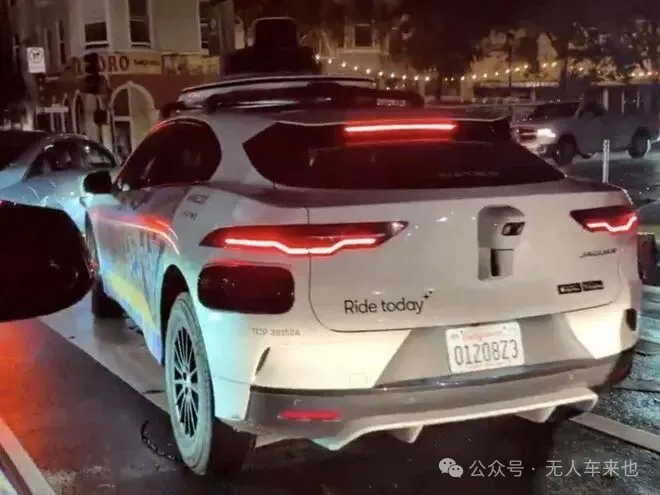
This scene is highly symbolic: when the digital network (signals, communications, cloud monitoring) supporting its operation is physically cut off, these vehicles, representing future technology, instantly degenerate into a pile of expensive roadblocks.
This incident exposes two fatal issues.
Firstly, the redundancy design of onboard systems may be inadequate.
After losing cloud instructions and remote monitoring, do vehicles possess sufficient local computing power and preset safety procedures to execute the most basic 'pull over safely' command?
Apparently, the answer was negative at the time.
Secondly, there are gaps in emergency response mechanisms.
When traditional vehicles break down, drivers can immediately exit to place warning signs or call for a tow. However, when autonomous vehicles lose power and 'go offline,' how do they notify vehicles behind?
How can emergency personnel quickly unlock and move them?
Waymo's paralysis serves as a wake-up call for all autonomous driving companies regarding infrastructure resilience and emergency protocols.
III. Behind the Two Shutdowns: The Growing Pains from 'Demo Mode' to 'Resilience Mode'
Waymo's two service interruptions should not be simply viewed as technical failures but rather as a necessary 'rite of passage' for the entire industry as it transitions from the technical demonstration phase to large-scale, reliable service deployment.
During early testing, companies could choose sunny days and main roads, avoiding all complex scenarios. However, once launched as a commercial service to the public, it means facing everything that can happen in a city 24/7, 365 days a year, including power outages, heavy rain, earthquakes, parades, and even traffic accident scenes.
Waymo announced this week that it would upgrade its fleet to enhance operational stability during power outages.
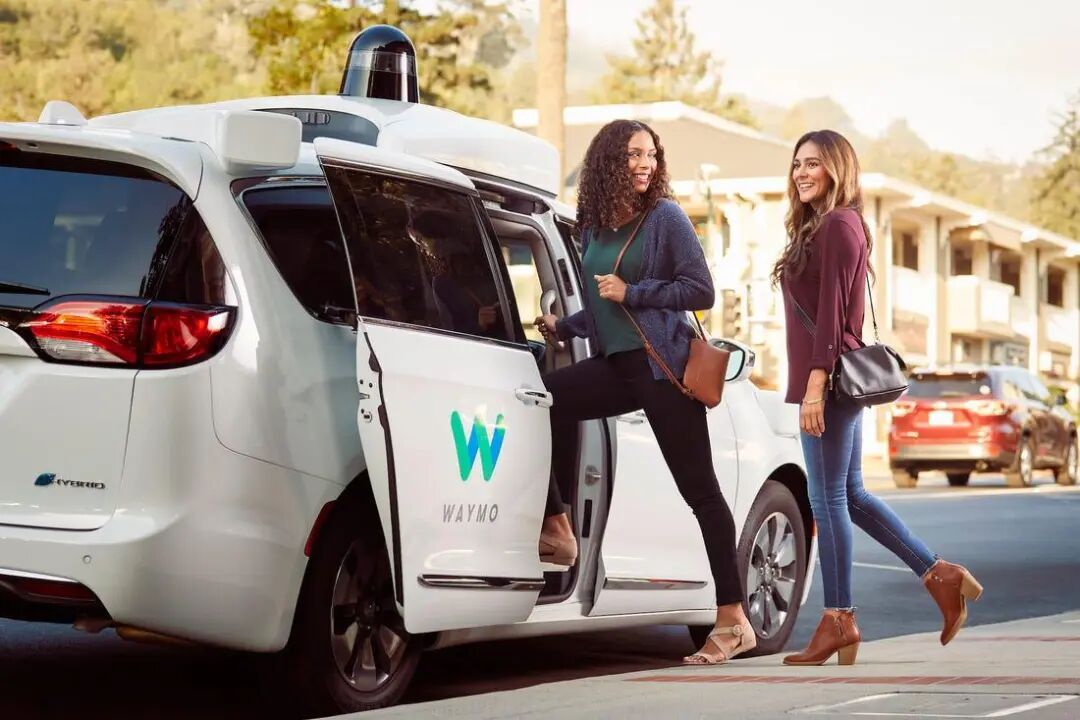
This indicates that they are painfully but actively incorporating these 'extreme cases' into the product improvement loop. Every breakdown and every forced suspension add a valuable exception handling rule to the system's robustness.
This transformation is profound.
The evaluation criteria have shifted from 'whether the journey can be completed' to 'whether it can safely respond in 99.9% of unexpected situations'.
San Francisco's heavy rain and power outages have become Waymo's most authentic 'pressure test field'.
IV. Industry Reflection: Opportunities and Warnings for Chinese Players
The troubles Waymo encountered in San Francisco serve as an extremely valuable mirror for China's booming commercialization trials of autonomous driving.
Chinese autonomous driving companies, such as Baidu Apollo, Pony.ai, and WeRide, are also rapidly deploying in areas like Robobus and Robotaxi.
However, we must be acutely aware that our urban environments are equally complex: summer heavy rain and flooding, severe winter cold in the north, and complex traffic participant behaviors all pose significant challenges.
Waymo's lessons remind us:
1. Extreme weather testing must be prioritized.
Do not wait until large-scale operations begin to catch up; instead, proactively conduct high-intensity testing in heavy rain, snow, and fog during the technical verification phase.
2. Vehicle-road coordination may be a key enabler.
China's advantage lies in advancing vehicle-road coordination (V2X) within the smart city framework.
When vehicle 'vision' is affected by weather, can roadside intelligent facilities provide critical information to fill the gap?
This may represent a differentiated path distinct from pure single-vehicle intelligence.
3. Define a clear 'operational design domain'.
Companies need to more honestly and detailedly explain to the public and regulatory authorities under what weather conditions, in what regions, and under what infrastructure states their current services are reliable.
Vague promises carry significant safety and public relations risks.
V. Conclusion: The 'Required Course' for Autonomous Driving—Reverence for the Real World Has Just Begun
Waymo's experiences ultimately point to a philosophical question: what autonomous driving must conquer is never just the roads marked on maps but the real physical world filled with uncertainties.
The rules of this world are far more complex than algorithmic models. It includes suddenly fallen trees, unexpected pipeline bursts, animals behaving erratically, and human drivers making split-second emotional decisions.
Heavy rain and power outages are merely the first two items on this long list of challenges.
For Waymo and all its peers, service suspensions are not setbacks but necessary steps toward maturity.
They mark the industry's beginning to systematically address 'long-tail risks'.
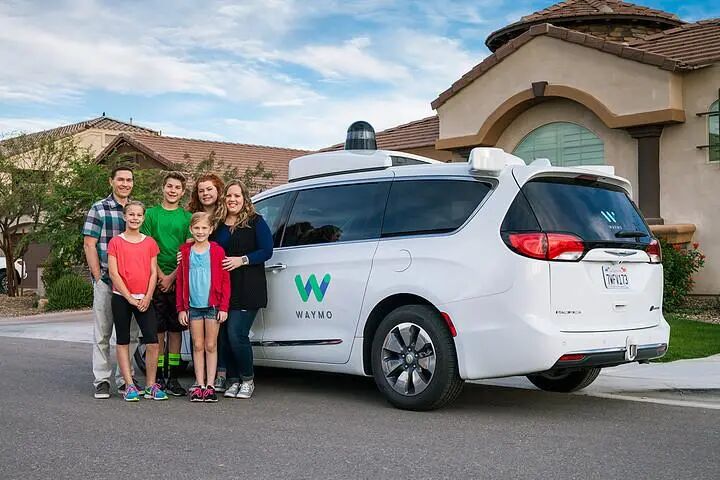
Waymo's 'double whammy' of heavy rain and power outages serves as a reminder to the industry: the endpoint of autonomous driving is not a 'technological singularity' but 'urban resilience'. As aging power grids, extreme weather, and network fluctuations become the new normal, autonomous vehicles must integrate themselves into the city's 'emergency systems'—receiving meteorological warnings in advance, dynamically scheduling charging resources, and connecting with traffic signal systems for 'last-minute' coordination. Otherwise, no matter how expensive the LiDAR, it cannot scan a 'path to survival', and no matter how dazzling the algorithm, it cannot outmaneuver a 'powerless cable'.
In conclusion, 'Autonomous Vehicles Are Coming' (WeChat Public Account: Autonomous Vehicles Are Coming) believes: for autonomous vehicles to 'reach the sky', they must first learn to 'stay grounded'—after all, what users want is not a 99.99% safety statistic but a vehicle that can safely bring them home on a stormy night. What do you think? What do you think?
#AutonomousVehiclesAreComing #AutonomousDriving #SelfDriving #AutonomousVehicles
-
![]()
It's Hard to Build Cars, Even Harder to Build Humans, and XPENG is Doing Both
-
![]()
Valuation Soars by $57 Billion: Three Entrepreneurs Born in the 1980s Forge an AI Unicorn Now Suddenly on the Market
-
![]()
How Can We Achieve the Goal of 100,000 Hydrogen Vehicles by 2030?
-
![]()
July Online Market for Consumer-Grade Sports Cameras: Robust Double-Digit Growth in Sales Volume and Value, Mid-Range Products Fuel Market Expansion
-
![]()
A Hundred Billion Dollar Market! When Will the 'Golden Age' of Agentic AI Arrive?
-
![]()
Changzhou’s Wealthiest Woman Faces Unexpected Setback
-
![]()
FAW Seeks Efficiency Gains, Leapmotor Accelerates Expansion
-
![]()
Dual Leaders in Robot Vacuum Industry Look Overseas for Growth