Geely Sues Sunwoda for RMB 2.3 Billion in Damages, but Ideal and Xiaomi Are the Most 'Panicked'?
 12/29 2025
 795
795
When Automakers Start 'Settling Accounts After Autumn'
After Two Years of Hard Work, They End Up Losing Money.
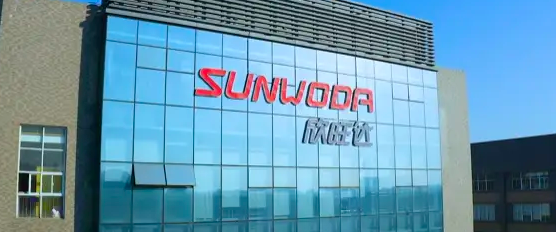
On December 26, Sunwoda announced that its subsidiary, Sunwoda Power, had been sued by VREX. The lawsuit alleges that the cells delivered by Sunwoda Power to the plaintiff from June 2021 to December 2023 had quality issues and caused losses to the plaintiff, demanding RMB 2.314 billion in compensation.
Everyone is familiar with Sunwoda because, apart from CATL, BYD, and CALB, Sunwoda, EVE Energy, and Guoxuan High-Tech are all key players in China's second-tier battery industry.
So, who is VREX, the company suing Sunwoda?
This name may be slightly unfamiliar to the general public, but its backing comes from the renowned Geely Holding Group. As a core enterprise under Geely specializing in the research, development, and manufacturing of three-electric systems (battery, motor, and electric control), VREX Electric is not only a crucial piece in Geely's new energy puzzle but also a powertrain supplier for high-end models such as Zeekr, Smart, Volvo, and even Lotus.
What sends chills down the industry's spine is that Sunwoda's client list extends far beyond Geely. Mainstream automakers like Ideal, XPeng, Xiaomi, Volkswagen, and Dongfeng, which dominate half of the Chinese auto market, have all regarded Sunwoda as an important ally in reducing costs and countering the hegemony of 'Ning Wang' (CATL).
In other words, if the cells delivered by Sunwoda are indeed 'problematic,' they may have already been installed in these popular models familiar to consumers. This would not just be a simple commercial dispute but rather a 'butterfly effect' that could trigger an industry-wide earthquake.
So, with VREX exposing a corner of the quality controversy, how will other automakers react? Is this lawsuit an isolated incident of a broken cooperation, or is it an inevitable 'quality backlash' after Sunwoda's wild growth?
01
After Years of Hard Work
A Lawsuit Wipes Out All Gains
If the new energy vehicle market is a war without smoke, then the battles among supply chains are often more covert and brutal than those in the vehicle market. For Sunwoda, the lawsuit filed by VREX is not just a legal defense but also a major blow to its cash flow lifeline and future expectations for a spin-off and listing.
It is called a major blow because the compensation amount has touched Sunwoda's pain threshold.
RMB 2.314 billion may be a drop in the bucket for internet giants raking in huge profits daily, but for a mid-tier power battery company still in the investment phase with razor-thin profit margins, it is a suffocating figure simply because battery companies' profitability is extremely low.
According to the announcement, although Sunwoda's revenue has soared in the past few years, its profitability has been far from impressive. From 2021 to 2024, the company's non-recurring profit and loss attributable to shareholders were RMB 528 million, RMB 804 million, RMB 973 million, and RMB 1.605 billion, respectively. The RMB 2.314 billion compensation roughly accounts for nearly 90% of Sunwoda's combined non-recurring profit and loss attributable to shareholders in 2023 and 2024.
In other words, the 'blood and sweat money' earned by the entire Sunwoda Group over the past two years under the best market conditions and with the hardest work may be almost entirely wiped out due to this single lawsuit.
The situation of 'hard-earned gains, easy losses' can also be attributed to the power battery industry and the company itself. A glance at Sunwoda's financial reports in recent years reveals deep-seated concerns: although its power battery business has been expanding in revenue scale, profitability has always been its Achilles' heel.
Over the past few years, to carve out a niche in the duopoly of CATL and BYD, Sunwoda had to adopt an aggressive 'price-for-volume' strategy. Although this approach successfully captured market share and secured its position as a leading second-tier battery manufacturer, it also resulted in long-term low net profit margins.
When profit margins are as thin as a blade, any large-scale quality claim or bad debt can pierce through a company's financial safety net. VREX's strike has accurately targeted Sunwoda's weakness—'a large body but little fat'—hitting it where it hurts the most.
Besides the financial devastation, the most damaging aspect of this 'former ally turning enemy' drama is the question (zhì yí, doubts) raised about its products.
Looking back at the period mentioned in VREX's lawsuit, from 2021 to 2023, it was the 'golden era' of explosive sales growth in China's new energy vehicle market and the most scarce period for power batteries. At that time, Sunwoda became an important partner for the Geely Group due to its flexible cooperation and highly competitive prices. However, with the public disclosure of this lawsuit, the once-celebrated cooperation has instantly turned into a 'quality incident.'
For a manufacturing company, especially one in the safety-first automotive supply chain, being publicly accused by a core client of 'having quality issues with cells' means that Sunwoda's proud manufacturing capabilities and quality control system have been exposed by its once most understanding and closest 'ally.'
The chilling effect brought by this public shaming is far more terrifying than the compensation amount. In the power battery industry, building trust between automakers and battery companies often takes years, involving countless sample submissions, tests, and verifications. VREX's accusation is equivalent to stamping a red seal of 'unstable quality control' on Sunwoda's forehead.
More fatally, this lawsuit will also become the biggest obstacle on Sunwoda Power's road to an IPO.
According to a report by National Business Daily, although Sunwoda Power is a subsidiary of Sunwoda, the parent company only indirectly holds a 40% stake. Due to concerns that keeping it within the group would affect valuation, Sunwoda had long planned to spin off and list this subsidiary.
In July 2023, Sunwoda announced a preliminary plan for the spin-off and listing. The announcement disclosed that Sunwoda Power's revenue had grown significantly from 2020 to 2022, increasing from less than RMB 500 million to nearly RMB 13 billion in three years. After the spin-off and listing, it could directly obtain equity or debt financing from the capital market to meet the funding needs of its existing business and future expansion, accelerating development and improving operational and financial performance, thus providing higher investment returns for the company and Sunwoda Power's shareholders.
Since then, investors have frequently asked about the progress of the spin-off and listing during Sunwoda's investor conferences.
However, the progress of the spin-off and listing has stalled there, with no further substantive advancements. Now, standing at the end of 2025, the 'golden window' of the most booming new energy vehicle market and the influx of hot money in previous years has quietly closed. In today's more rational and picky market environment, this single lawsuit may become the last straw that breaks the camel's back.
A lawsuit involving a staggering RMB 2.3 billion in claims and concerning the quality of core products is enough to deter all auditing firms, sponsors, and potential investors.
This will not only directly affect the valuation logic of Sunwoda Power but may even lead to the suspension or termination of its covertly advanced IPO process. At a critical juncture when the power battery industry is entering a 'knockout stage,' if Sunwoda Power loses the opportunity to obtain capital market infusions through an independent IPO, how can it compete with CATL and BYD in research and development, production capacity, and future growth?
From this perspective, VREX's lawsuit may have already rewritten the fate of Sunwoda Power.
02
When the 'King of Cost-Effectiveness' Faces a Trust Crisis
Will Ideal and Xiaomi Still Pay the Bill?
If VREX's lawsuit has ignited the fuse, then what truly sends shivers down Sunwoda's spine is probably the reaction of its vast 'friend circle' as the fire spreads.
After all, in the power battery industry, which highly emphasizes economies of scale, losing Geely may be bearable, but if it triggers collective panic among the client base, that would be a true disaster.
Sunwoda's foothold in China's second-tier power battery industry relies on an extremely impressive client list. Apart from the now-estranged Geely Group, Sunwoda is also a core supplier for many mainstream automakers such as Ideal, Xiaomi, XPeng, Dongfeng, and Volkswagen.
Among them, the most eye-catching are the current 'top stars' of the new energy vehicle startups—Ideal Auto and Xiaomi Auto.
For Ideal Auto, Sunwoda's importance is self-evident. In the high-volume versions of the Ideal L7 and L8, such as the Air and Pro models, Sunwoda's batteries account for a significant share. Ideal Auto introduced Sunwoda to break CATL's exclusive supply and reduce procurement costs, thereby maintaining gross margins in a fierce price war.
However, Ideal Auto promotes the concept of 'family safety,' and its user base has almost harsh (kē kè, demanding) requirements for vehicle safety and reliability.
Once Sunwoda's 'quality issues' are confirmed by the court or ferment in public opinion, Ideal Auto will face tremendous brand pressure. Imagine if consumers start questioning whether 'Ideal cars equipped with Sunwoda batteries are unsafe,' then Li Xiang's carefully cultivated image of a 'family-friendly car' will be at risk of collapsing.
The same anxiety looms over Xiaomi Auto. As the new king of traffic in the automotive circle, Xiaomi's new models also use Sunwoda's batteries. Lei Jun proclaimed loudly at the launch event that 'various technical indicators are far ahead,' but this premise relies on an absolutely robust supply chain.
For a new brand like Xiaomi, which has always been under the microscope and spotlight, any negative rumors about core components are unbearable. VREX's lawsuit is like an open 'whistleblower letter,' instantly putting the purchasing and quality departments of these automakers on high alert.
Thus, in the coming days, a silent psychological battle will unfold within major automakers: to use or not to use?
Although currently only VREX has filed the lawsuit, and it targets specific batches of cells, in automotive supply chain management, there is an unwritten 'risk aversion principle.' When a supplier is embroiled in a major quality lawsuit, automakers often instinctively activate their 'Plan B' to mitigate risks.
This means that in future new model awards or existing model production schedules, Sunwoda's share is likely to be quietly reduced, with orders potentially flowing back to CATL and BYD or being diverted to competitors of similar scale, such as CALB.
This 'implicit blacklisting' is more frightening than direct compensation claims because it subtly cuts off a company's ability to generate revenue. Sunwoda's once-proud 'low-cost alternative' strategy may instantly become ineffective in the face of 'quality doubts'—after all, for automakers, while cost is important, the inability to afford large-scale recalls or brand damage due to battery quality issues is a price they cannot pay.
From a broader industry perspective, Sunwoda's plight is a microcosm of the entire second-tier battery factory sector.
Under the duopoly of CATL and BYD, the living space for second-tier battery factories is already extremely squeezed. To compete with the giants, they have to lower prices, compress profits, and even rush production schedules under extreme conditions.
VREX's lawsuit against Sunwoda may just be the first domino to fall. In the coming days, automakers will conduct even harsher screenings of suppliers to protect themselves.
For Sunwoda, this crisis is not just about losing money. It must prove its innocence to Ideal, Xiaomi, XPeng, and others: the issues encountered by Geely are isolated cases, not common problems. Otherwise, in this brutal knockout stage, it may become the first player to drop out.
- THE END -
-
![]()
It's Hard to Build Cars, Even Harder to Build Humans, and XPENG is Doing Both
-
![]()
Valuation Soars by $57 Billion: Three Entrepreneurs Born in the 1980s Forge an AI Unicorn Now Suddenly on the Market
-
![]()
How Can We Achieve the Goal of 100,000 Hydrogen Vehicles by 2030?
-
![]()
July Online Market for Consumer-Grade Sports Cameras: Robust Double-Digit Growth in Sales Volume and Value, Mid-Range Products Fuel Market Expansion
-
![]()
A Hundred Billion Dollar Market! When Will the 'Golden Age' of Agentic AI Arrive?
-
![]()
Changzhou’s Wealthiest Woman Faces Unexpected Setback
-
![]()
FAW Seeks Efficiency Gains, Leapmotor Accelerates Expansion
-
![]()
Dual Leaders in Robot Vacuum Industry Look Overseas for Growth