Automotive Market Highlights: Major Event for Level 3 Autonomous Driving!
 12/29 2025
 537
537
Weekly Report on the New Energy Vehicle Industry
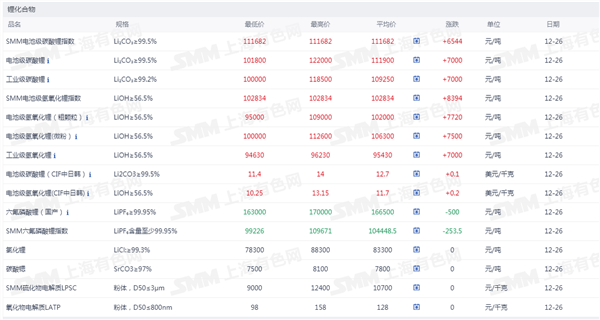
According to Shanghai Metals Market, battery-grade lithium carbonate is priced between RMB 101,800 and 122,000 per ton, with an average price of RMB 111,900 per ton, up RMB 7,000 per ton from the previous workday; industrial-grade lithium carbonate ranges from RMB 100,000 to 118,500 per ton, averaging RMB 109,250 per ton, also up RMB 7,000 per ton from the previous workday. Currently, upstream lithium salt plants primarily focus on fulfilling long-term agreement orders, with fewer spot transactions. Downstream material plants generally remain cautious about the rapid price increases, relying mainly on long-term agreements and customer-supplied lithium carbonate, adjusting their procurement pace dynamically based on next month's production plans. However, some companies are forced to accept high-priced supplies to maintain production due to urgent needs. Such high-priced transactions continue to drive up today's spot price levels.
01. Institutional Views
Central China Securities points out that the Ministry of Industry and Information Technology's announcement of China's first batch of Level 3 conditional autonomous driving vehicle models receiving market access approval marks the official transition of China's autonomous driving technology from the testing phase to the early stages of commercialization, with the industry expected to enter an accelerated period of intelligent and connected transformation. The trade-in policy continues to exert influence, with the central government setting the tone for optimizing the implementation of the 'two new' policies by 2026, suggesting that the automotive trade-in policy is likely to continue in 2026.
It is recommended to focus on two major themes: First, under the backdrop of industry optimization driven by 'anti-inner-roll' policies and regulatory compliance, autonomous brand automakers with technological innovation advantages in intelligent driving and those in the upward cycle of brand development; Second, amid the industrial upgrading of automotive intelligence and connectivity, companies with the capability to mass-produce and market-match relevant core components.
02. Macro Events
Ministry of Transport: Accelerate the Development of Smart Logistics, Low-Carbon Economy, and Digital Transport Industries; Initiate Construction of Zero-Carbon Road Transport Corridors
On December 24, Liu Wei, Secretary of the Party Leadership Group and Minister of the Ministry of Transport, stated that China will accelerate the construction of a modern technological system for transport equipment. Focusing on intelligent, comprehensive, and three-dimensional transport, major scientific and technological breakthroughs will be implemented, promoting the development of common technologies in infrastructure, transport equipment, and other fields, and launching a series of major innovation projects.
Efforts will be made to drive the cross-sectoral integration of cutting-edge technologies such as artificial intelligence, next-generation information technology, big data, and aerospace information with transport, implementing the 'AI + Transport' initiative. Strategic emerging industries such as high-end transport equipment manufacturing, new energy vehicles and vessels, new materials, energy conservation and environmental protection, and information technology will be promoted, accelerating the development of smart logistics, low-carbon economy, and digital transport industries. Clean and low-carbon transport tools and equipment, such as new energy vehicles and vessels, will be actively promoted, and the construction of zero-carbon road transport corridors will be initiated.
Beijing Issues First Batch of Special License Plates for Level 3 Autonomous Vehicles on Highways; Three Sections Now Operational
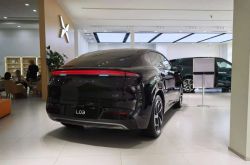
On December 23, the Beijing Municipal Public Security Bureau Traffic Management Bureau officially issued the first batch of special license plates for Level 3 autonomous vehicles on highways to three BAIC Arcfox intelligent connected vehicles, marking the first issuance of such plates in China. This signifies that China's autonomous vehicles have progressed from testing and demonstration to formal mass production, ushering in the Level 3 autonomous driving era and marking a milestone event in the automotive intelligence process.
Currently, the 'conditional autonomous driving' function is limited to activation on the Beijing-Taipei Expressway (Daxing District Jiugong New Bridge - Airport North Line Expressway), Airport North Line Expressway (Daqu South Bridge - Daxing Airport Expressway), and Daxing Airport Expressway (Southern 6th Ring Road - Airport North Line Expressway) sections in Beijing. On other roads or in other areas, this function will be forcibly disabled by the system.
Wuhan's '15th Five-Year Plan' Proposal: Accelerate the Race in Emerging Fields Such as Embodied Intelligence, High-End Chips, Quantum Technology, and Brain-Computer Interfaces
On December 22, the Wuhan Municipal Party Committee released its proposal for formulating the city's 15th Five-Year Plan for National Economic and Social Development, which includes cultivating and expanding emerging and future industries. This involves accelerating the growth and strengthening of advantageous industries such as integrated circuits, new energy and intelligent connected vehicles, life and health, high-end equipment manufacturing, and Beidou, and cultivating world-class industrial clusters.
Efforts will be made to promote the large-scale advancement of emerging industries such as artificial intelligence, low-altitude economy, software information, network security, commercial aerospace, industrial mother machines, green and intelligent vessels, new energy, and new materials. Focusing on future manufacturing, future information, future materials, future health, and future energy, China will accelerate the race in emerging fields such as embodied intelligence, future displays, sixth-generation mobile communications, high-end chips, quantum technology, brain-computer interfaces, biological manufacturing, hydrogen energy, and nuclear fusion energy, striving to create national demonstration bases for emerging industry development.
03. Industry News
National Energy Administration: China's Electric Vehicle Charging Infrastructure (Guns) Total Reaches 19.322 Million Units by End-November, Up 52% Year-on-Year
On December 23, the National Energy Administration released data on national electric vehicle charging facilities for November. According to the National Charging Facility Monitoring Service Platform, as of the end of November 2025, China's total electric vehicle charging infrastructure (guns) reached 19.322 million units, up 52.0% year-on-year.
Among them, there were 4.625 million public charging facilities (guns), up 36.0% year-on-year, with a total rated power of 210 million kilowatts and an average power of approximately 45.34 kilowatts; there were 14.697 million private charging facilities (guns), up 57.8% year-on-year, with a reported installed electrical capacity of 129 million kilovolt-amperes.
CPCA's Cui Dongshu: China's New Energy Vehicle Exports Perform Better Than Expected in the First 11 Months
On December 23, Cui Dongshu, Secretary-General of the China Passenger Car Association, stated in an article that China exported 810,000 vehicles in November 2025, up 48% year-on-year and down 2% month-on-month; from January to November, China exported 7.33 million vehicles, up 25% year-on-year. In November 2025, China exported 350,000 new energy vehicles, up 156% year-on-year; from January to November, new energy vehicle exports reached 3.01 million units, up 62% year-on-year, performing better than expected.
2025 Automotive Globalization and Sustainable Development Forum Releases Three Industry Consensuses
The 2025 China Automotive Industry Globalization and Sustainable Development Forum recently released three industry consensuses:
At the critical stage of China's automotive industry accelerating its global expansion, it is essential to deeply integrate electric and intelligent advantages with ESG responsibilities, upgrading 'going out and integrating in' to a path of responsible global corporate citizenship through value identify with (identification), local coexistence, and long-termism.
In the evolution from software-defined to AI-defined vehicles, for Chinese intelligent vehicles to transcend 'inner rolls' and go global, the key lies in adhering to safety and user value as the bottom line, rationalizing the ecological relationship between automakers and the supply chain, and achieving genuine win-win development through open collaboration.
In the new phase of China's automotive industry toward (advancing towards) globalization, sustainability and ESG have shifted from 'optional' to 'mandatory,' necessitating smarter investments to internalize them as the core underlying logic for long-term competitiveness and value creation within enterprises.
04. Company Updates
Waymo to Upgrade Autonomous Fleet, Optimizing Vehicle Navigation During Power Outages
On December 24, Waymo stated that it would complete technological upgrades for its fleet, enabling vehicles to better cope with various potential power outages in the future. Waymo has always been committed to developing autonomous driving systems suitable for real-world road conditions, including special scenarios where infrastructure fails.
Geely Automobile Announces Completion of Zeekr Privatization
On December 22, Geely Automobile announced in a Hong Kong Stock Exchange filing that it had completed the privatization of Zeekr. All prerequisites for the transactions proposed under the merger agreement (including privatization and merger) have been met, and the transactions were completed on December 22, 2025. Under the privatization arrangement, the company has acquired all issued and outstanding Zeekr shares and Zeekr American Depositary Shares. Pursuant to the merger, the merged subsidiary has merged with Zeekr, which continues to operate as the surviving entity. Consequently, Zeekr has been privatized as a wholly-owned subsidiary of the company and delisted from the New York Stock Exchange.
Uber Teams Up with Baidu to Launch Autonomous Taxi Trial in London
On December 22, Uber stated that it would collaborate with Baidu to launch a trial of autonomous taxis in the UK, following the example of Waymo, a US autonomous driving technology company, which initiated testing projects in London this month. Uber said it would launch a pilot project using Baidu's Apollo Go RT6 autonomous taxis in London in the first half of 2026, with plans to officially commence operations in the city by the end of next year.
05. Secondary Market
Industry Performance
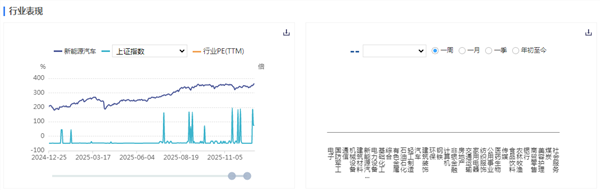
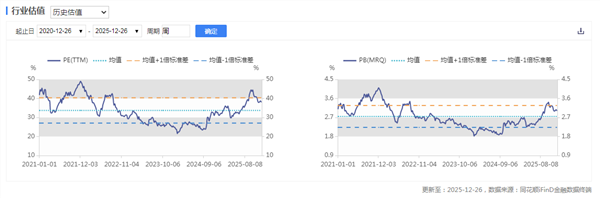
Industry Valuation
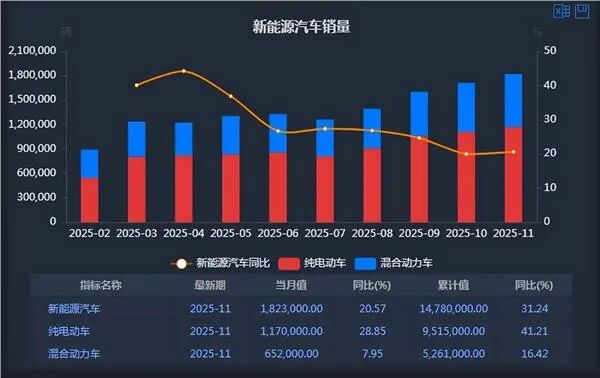
New Energy Vehicle Sales
06. Raw Material Prices
Lithium Compound Spot Prices
Cathode Material Prices

Electrolyte Prices

- End -
-
At a Crossroads: From Profit to Loss, Will Investors Remain Patient with Insta360?
-
![]()
Silicon Flow IPO: The 'Token Factory' Experiencing 653% Growth—Why Are Sales Increasing While Losses Mount?
-
![]()
Employee Count Declines by 3,680 in Six Months, Li Auto Reports RMB 4 Billion Loss
-
Despite Performance Pressures, Why Did Haier Smart Home Buck the Trend with Increased Market Share?
-
![]()
Xpeng's Exquisite Cost Management: Visible Even in Seat Belt Design
-
![]()
Net Profit Surges 13.65% Year-on-Year! Yutong Optics Reports RMB 1.782 Billion in H1 Revenue
-
![]()
Q2 Net Profit Slashes Losses by 80%! Has Costar Emerged from Its Darkest Hour?
-
AI Agents: The Paradigm Shift from 'Conversation' to 'Execution'