Knockout Stage Unfolds! The 2026 New Energy Vehicle Arena Undergoes a Major Reshuffle—Are the 'Game Rules' Entirely Rewritten?
 01/16 2026
 592
592
As we step into 2026, the domestic new energy vehicle landscape has witnessed fresh alterations in policies. The subsidy allocation approach has transitioned from 'fixed sums' to being 'computed as a percentage of the vehicle's price'. Meanwhile, purchase tax incentives have been 'slashed by half', with a particular preference emerging for models boasting extended ranges. This essentially sends a strong message to the market: the domestic emphasis will no longer be confined to merely boosting sales figures but will place a heightened focus on enhancing the inherent quality of the vehicles.
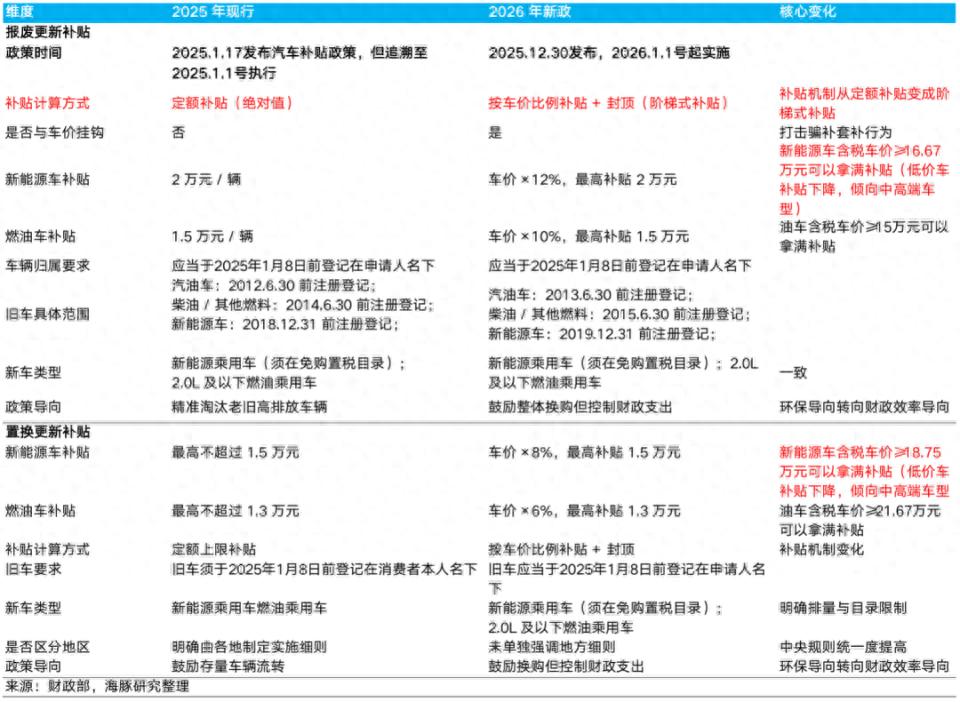
Source: Dolphin Research
With these policy shifts, automakers are compelled to revamp their competitive strategies. The domestic automotive market is gradually moving away from the previous paradigm of relying solely on price reductions to seize market share and is instead pivoting towards 'value-based competition', centered around technological advancements and customer experience.
In the mid-to-high-end market segment, the price bracket spanning from 150,000 to 250,000 yuan has emerged as a fierce battleground for all contenders. This signifies a pivotal shift in industry competition from merely 'achieving electrification' to 'deepening intelligence'. When battery and motor performance become uniformly comparable across the board, and L2+ level intelligent driving functions become a near-standard feature in mid-to-high-end models, the intelligent experience becomes the ultimate differentiator.
Of course, intelligence transcends merely adding digital bells and whistles; it is fundamentally redefining the automobile. For instance, how sensor data from millimeter-wave radars and LiDARs influences suspension adjustments and ensures both active and passive safety. Automobiles are evolving from mere 'transportation means' into 'intelligent mobile spaces', and this transformation is also swaying consumers' car-buying decisions. Those who can grasp this trend early on will gain a competitive edge in the new round of market competition.
Morgan Stanley forecasts a potential 7% slight dip in domestic car sales in 2026, primarily attributed to the new policy-driven shift from chasing sales volume to optimizing the product mix in the domestic market. Consequently, overseas markets have emerged as a crucial new avenue for growth.
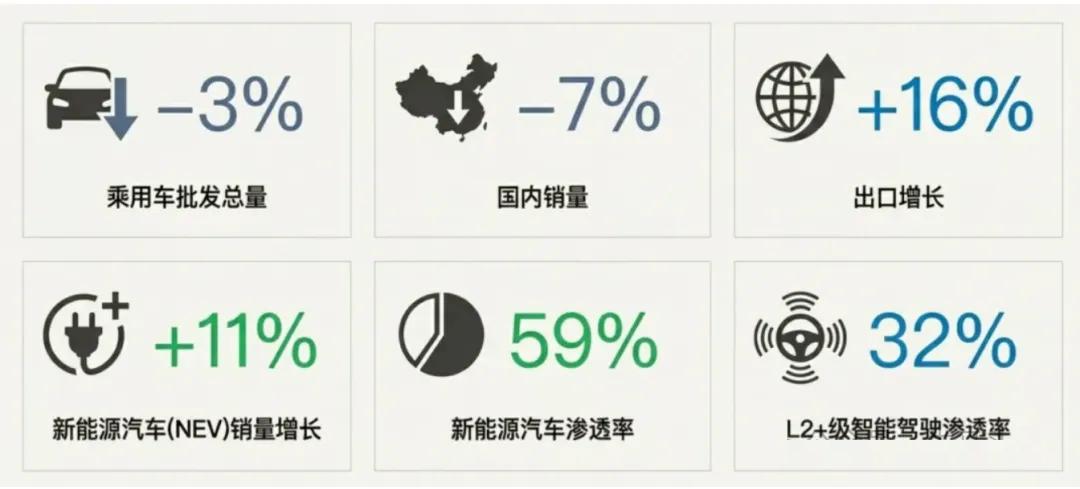
For domestic brands, deepening their foothold in the domestic market and venturing into overseas markets are not mutually exclusive but rather complementary dual-pronged strategies. The domestic market continues to serve as a testing ground for technological innovation and the bedrock for brand building; overseas markets, on the other hand, present fresh opportunities for scaling up growth and establishing a global brand presence.
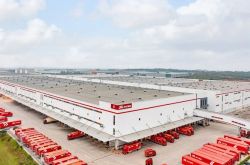
Instances like BYD's factory construction in Hungary represent a significant stride in the globalization of the Chinese automotive industry. This model of 'localized production + comprehensive industry chain output' implies that the competitiveness of the Chinese automotive industry has extended beyond the product itself to encompass the manufacturing system and industry chain levels. Projections suggest that by 2030, Chinese electric vehicle companies could capture 30-35% of the overseas new energy vehicle market share, reflecting confidence in China's global automotive strategy.
As consumers, what everyone is most keenly interested in is how to navigate the new changes in the automotive market in 2026.
Firstly, don't solely fixate on subsidies; start by considering your genuine needs. The new policies do favor mid-to-high-end models, but this doesn't imply that low-priced vehicles are not worth considering. The key is to align with your usage scenario: if you primarily commute within the city, compact pure electric vehicles remain a cost-effective and practical choice; if you frequently embark on long-distance travels, long-range plug-in hybrid models might be more suitable for you.
Secondly, prioritizing technological maturity is more crucial than chasing the latest features. Intelligent configurations are updated at a rapid pace, so opting for mature technologies that have been validated by the market is a more prudent approach than blindly pursuing the 'latest models'. Pay closer attention to whether the vehicle's basic architecture supports future upgrades, rather than just focusing on the current number of features.
Finally, consider the total cost of ownership; don't just fixate on the purchase price. As the new energy vehicle market matures, factors such as vehicle residual value, maintenance costs, and energy consumption efficiency increasingly impact long-term ownership costs. Car buying should transition from a 'one-time consumption' mindset to a 'long-term ownership' perspective.
In Conclusion
The Chinese automotive market in 2026 has bid adieu to the rapid growth phase fueled by subsidies and is stepping into a new era defined by technology, quality, and global competitiveness. While this transformation may temporarily affect sales growth, it is a necessary trajectory for the Chinese automotive industry to transition from being large to becoming truly strong in the long run.
For consumers, this translates to more mature product choices, a more rational market environment, and clearer car selection criteria. When policies, the industry, and consumer demands all converge in the same direction, the Chinese automotive market will enter a phase of genuinely high-quality and sustainable development. Ultimately, the victors will be those automakers that truly understand their users, continuously innovate, and possess a global outlook. What are your thoughts on this? Feel free to share your opinions in the comments section below.
-
![]()
Enflame Tech's IPO Journey: Navigating Over 5.9 Billion Yuan in Losses and Soaring Debt in Q1 This Year
-
![]()
Trillion-Yuan Giant Li Shufu 'Streamlines': Could Levc Be the Casualty?
-
![]()
AI Competes for Electricity and Generates Power in the Gobi Desert
-
![]()
The First Batch of Victims of the AI Bubble: Programmers
-
![]()
ByteDance, DJI, and Xiaohongshu Secure Top Three Positions Among China’s Fastest-Growing Unicorns
-
Tesla's in-car voice system in China is finally learning to 'understand human language'
-
![]()
Foreigners Are Amazed: Chinese Electric Vehicle Drive Systems Unveil Innovative 'Poses'
-
![]()
700,000 Brothers and the Future of Robots: Behind JD.com's 'Nirvana Plan'