Porsche: Is Its Glory Fading?
 01/23 2026
 530
530
A Troubled Era
The icy grip of a 99% profit plunge in the first three quarters of 2025 still lingers, and Porsche has now hit a new low. First, there was the abrupt closure of the 'Zhengzhou Zhongyuan Porsche Center, where vehicles were almost completely cleared out.' Then came the shocking discovery that the 'Guiyang Mengguan Porsche Center had been abandoned.' Subsequently, the Zhengzhou Dongjin Volkswagen dealership announced a temporary halt to its operations. The sales business at the Beijing Shijingshan Porsche Center is on the brink of termination, and the Yancheng Porsche Center has confirmed the cessation of its sales operations as of December 31, 2025.
Although Dong'an Holdings Group, the entity behind the Zhengzhou Zhongyuan Porsche Center, Guiyang Mengguan Porsche Center, and Zhengzhou Dongjin Volkswagen dealership, has denied any wrongdoing or 'running away,' numerous netizens have reported being blocked by in-store sales staff, with promised benefits nowhere to be found.
News of 'Porsche dealerships fleeing' spread like wildfire. According to the previous blueprint, the number of Porsche 4S stores is set to be slashed to 80 by 2026. Given that there were 150 stores in 2024, this means nearly half of Porsche's dealerships will be wiped out.
Surprisingly, the suspected 'runaway' of dealerships has outpaced the planned strategic contraction. Moreover, in addition to store closures, Porsche has also announced that starting from March 1, 2026, approximately 200 self-built exclusive charging stations across the nation will gradually cease operations.
A barrage of negative news has plunged Porsche into an unprecedented trust crisis. Amidst this winter chill, where does Porsche's future lie?
Channel Turmoil
The chaos in Porsche's distribution channels did not erupt overnight.
In 2024, Porsche repeatedly made headlines due to clashes with its dealerships. At that time, Porsche resorted to pushing inventory onto dealerships to meet sales targets, causing tensions between the two sides to escalate. Eventually, three Porsche China dealerships—Xinfengtai, Betterlife, and Meidong Group—launched a collective protest and boycott, using the cessation of vehicle purchases as a 'weapon' to publicly demand management changes and subsidies from the German headquarters. Public data reveals that Meidong Group operates 16 Porsche dealerships nationwide, while Xinfengtai and Betterlife each have around 5.
This dealership 'rebellion' continued to escalate, and eventually, Porsche responded by stating it would face the challenges together with its dealerships. It soon announced the replacement of its China region president and CEO. Subsequently, Porsche China's senior management team also underwent a series of shake-ups.
However, the anticipated stability failed to materialize. Before the recent suspected 'closures and runaways' of multiple Porsche centers, a larger-scale and more meticulously planned network reduction had already commenced.
In April 2025, the Luoyang Porsche Center, which had been in operation for 10 years, ceased operations due to average monthly sales of less than 10 units, transferring owner files and after-sales business to Zhengzhou. In November, the Zhuhai Porsche Center, which had been operating for 11 years, also officially shut its doors. Meanwhile, stores in Yiwu, Tangshan, and Ordos completed integrations or service transfers due to overlapping regional resources or shrinking market demand.
The closures of the two Zhengzhou Porsche centers also mean that the owners transferred from Luoyang will face another relocation. What is alarming is that no one can guarantee the longevity of the next recipient, the Zhengkai Porsche Center, adding to the growing concerns of Porsche owners.
On December 25, 2025, Porsche China expressed its deepest apologies for the distress and concerns caused to owners and consumers by this incident, stating it would actively work towards a proper resolution and prioritize the legitimate rights and interests of consumers.
'We are deeply concerned about the operational abnormalities at the Zhengzhou Zhongyuan Porsche Center, an authorized Porsche dealership, and are currently verifying facts on-site with the police and relevant departments.' Behind the dealership 'rebellion' and suspected 'runaways' lies the significant decline in Porsche's profitability in recent years. A Porsche representative stated that with annual sales plummeting from nearly 100,000 to 40,000, short-term growth is not expected. Therefore, the network will be downsized, and production reduced to maintain high profitability despite low sales.
Currently, the main solutions involve significantly reducing the number of 4S stores to align with market demand and ensure dealership profitability, as well as halting operations of approximately 200 self-built charging stations nationwide to cut costs.
However, this will undoubtedly impact owner rights and inevitably lead to a decline in service quality. For Porsche, whose luxury brand premium has already been severely shaken, this is akin to adding insult to injury.
Struggling Transformation
In recent years, Porsche has placed its bets on electrification, with its first all-electric model, the Taycan, once seen as the linchpin of the brand's transformation. However, as competition in China's new energy vehicle market intensified, domestic brands like AITO, Li Auto, NIO, and BYD swiftly captured market share with their high-end electric models, gradually eroding the Taycan's advantages.
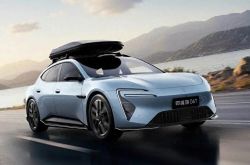
The current all-electric Macan fails to stand out in terms of intelligence. The Xiaomi SU7, dubbed 'Porsche-mi' by netizens, even surpasses Porsche in some configurations and has become the subject of numerous comparisons and jokes online.
Perhaps for this reason, Porsche decided to slow down its electrification pace and reprioritize fuel-powered vehicles. A Porsche China representative stated that faced with intensifying competition for all-electric models and pressure on its China market performance, Porsche chose to refocus on fuel-powered vehicles and proposed a 'Win Back China' strategy.
Although Porsche has not completely abandoned electrification (it will release all-electric Cayenne and 718 models in 2026), it has clearly shifted from an aggressive to a steady approach. For example, the planned large SUV positioned above the Cayenne will first launch with an internal combustion engine version, and the B-segment SUV market will also see simultaneous layouts of fuel-powered and plug-in hybrid models.
Meanwhile, in terms of intelligence, Porsche has also begun to emphasize localization. In November 2025, Porsche inaugurated its first comprehensive R&D center outside Germany in Shanghai, focusing on developing exclusive solutions for the Chinese market.
According to the plan, the all-electric Cayenne equipped with a new intelligent navigation and infotainment system solution will debut as a major product in Porsche's China market push in 2026.
Porsche's strategic reversals are not isolated incidents but reflect the broader challenges faced by traditional ultra-luxury brands in their electrification transformation. According to McKinsey's 2024 Consumer Insights Report, nearly half of consumers are no longer willing to pay a premium for foreign brands.
Once, with its strong brand premium, even the base version of the Porsche Cayenne required additional options and commanded a landing price exceeding 1.2 million yuan, with waiting periods up to half a year. Now, to cope with cost pressures from luxury car tax adjustments, some dealerships have offered discounts as high as 24%, even enticing consumers with tax subsidies, yet sales growth remains extremely limited.
With a significant reduction in store numbers and the halt of self-built charging stations, Porsche will further lose some of its once-proud customer service quality and luxury brand aura, thereby affecting sales. At this juncture, Porsche seems to have fallen into a vicious cycle.
This article is original to China Auto News. Feel free to share it with friends. For media reprints, please credit the author and source at the beginning of the article. Any media or self-media creating video or audio scripts from this article's content is strictly prohibited, and violators will bear legal responsibility.
-
![]()
Enflame Tech's IPO Journey: Navigating Over 5.9 Billion Yuan in Losses and Soaring Debt in Q1 This Year
-
![]()
Trillion-Yuan Giant Li Shufu 'Streamlines': Could Levc Be the Casualty?
-
![]()
AI Competes for Electricity and Generates Power in the Gobi Desert
-
![]()
The First Batch of Victims of the AI Bubble: Programmers
-
![]()
ByteDance, DJI, and Xiaohongshu Secure Top Three Positions Among China’s Fastest-Growing Unicorns
-
Tesla's in-car voice system in China is finally learning to 'understand human language'
-
![]()
Foreigners Are Amazed: Chinese Electric Vehicle Drive Systems Unveil Innovative 'Poses'
-
![]()
700,000 Brothers and the Future of Robots: Behind JD.com's 'Nirvana Plan'