Countdown to Brand Exit: Predicting Which Auto Brands Will Fail by 2026 Based on 2025 Sales Figures
 01/26 2026
 645
645
When we review the 2025 Chinese auto market landscape through the lens of sales data, a stark reality emerges: at the brand level, BYD emerged as the undisputed leader, selling 3.1 million units. In stark contrast, brands languishing at the bottom of the sales charts witnessed their annual sales plummet to single-digit figures. Over 60 brands sold fewer than 50,000 units annually, creating a lengthy "market tail." Notably, the bottom 10 brands each sold fewer than 400 units per year, with some averaging fewer than 10 monthly sales, highlighting their precarious market positions.
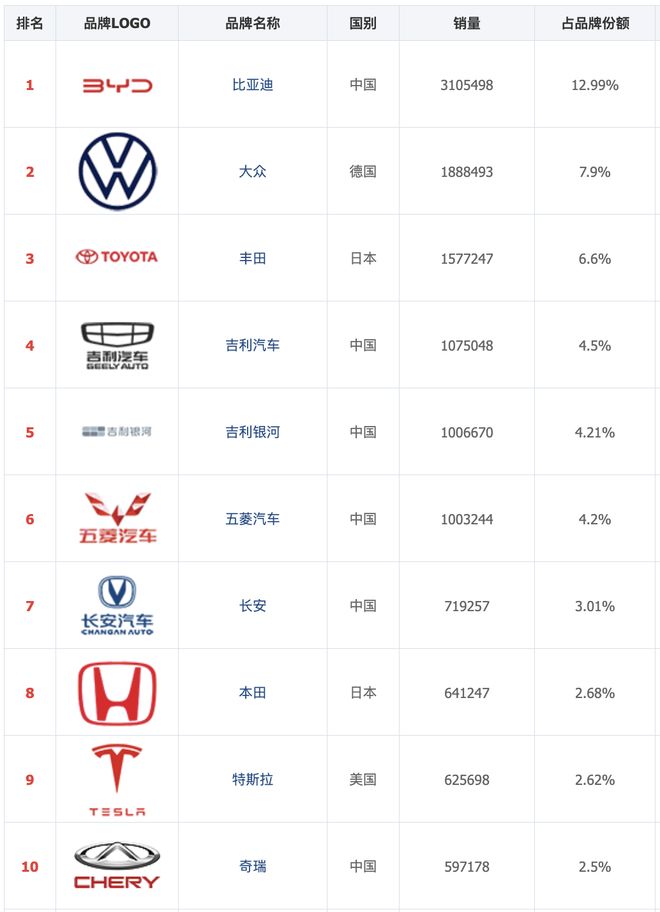
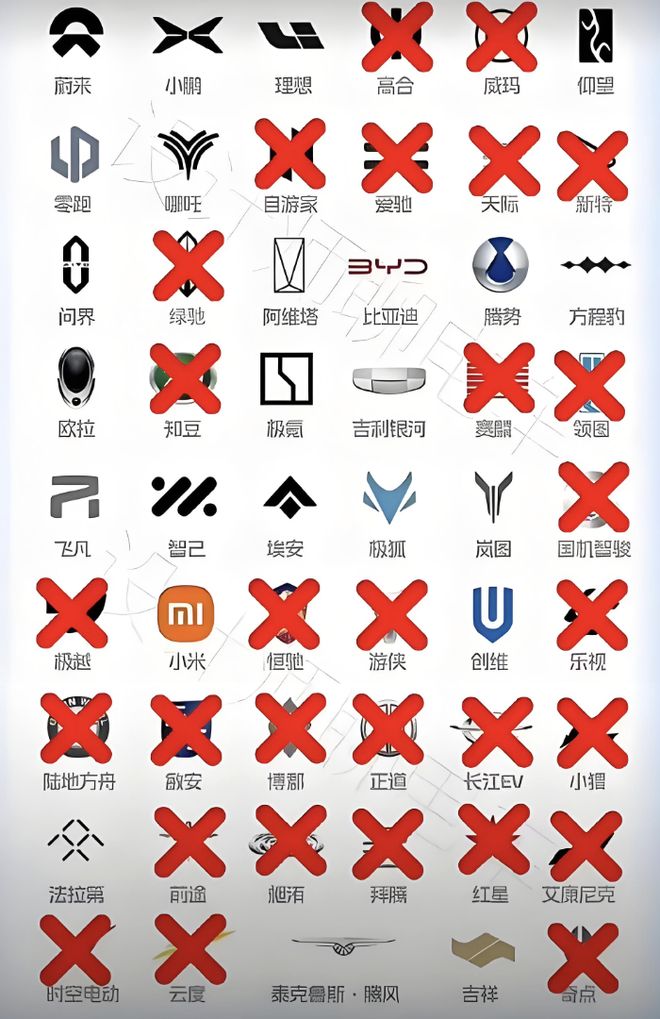
As market concentration intensifies, with leading brands steadily capturing an increasing market share, the survival space for these marginalized brands is being severely squeezed. By 2026, China's auto market could witness a ruthless brand elimination race, where only the fittest will survive.
On the Brink: Profiles of the Bottom 10 Brands Based on 2025 Sales
Based on the 2025 sales data, the bottom 10 brands are already on the fringes of the market. These brands share several common characteristics: extremely low sales volumes, a weak market presence, and, in most cases, a loss of normal commercial operational capabilities.
2025 Sales Data for the Bottom 10 Brands (Data sourced from a major auto platform)
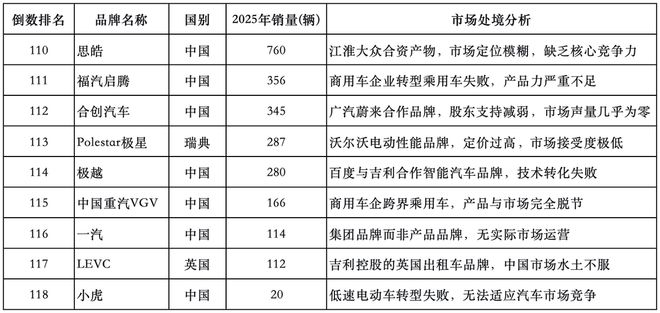
From the table, it is evident that these marginal brands can be categorized into four groups: First, failed joint ventures (e.g., Sihao); second, traditional automakers' unsuccessful transformation attempts (e.g., Fuqi Qiteng, Sinotruk VGV); third, struggles faced by new forces (new energy startups) in collaboration models (e.g., Hechuang Auto, Jiyue); and fourth, foreign brands struggling to adapt to the Chinese market (e.g., Polestar, LEVC). These brands share common traits: a lack of clear market positioning, insufficient product competitiveness, and weakened strategic support from their parent companies.
Disappearance Forecast: A Three-Tier Elimination Risk Assessment
Based on sales data, brand backgrounds, and industry trends, the likelihood of these marginal brands disappearing can be categorized into three risk tiers.
High-Risk Brands (>80% likelihood of disappearance):
This category includes Jiyue (280 units sold annually), Hechuang Auto (345 units), Polestar (287 units), and Xiaohu (20 units). These brands are effectively already on their way out of the market. Take Jiyue as an example: despite being a smart car brand backed by Baidu and Geely, its vague product positioning, lack of price competitiveness, and extremely low market acceptance have led Baidu to shift its strategic focus to autonomous driving solutions, significantly reducing investment in the vehicle brand.
Medium-Risk Brands (50%-80% likelihood of disappearance):
This group includes Sihao (760 units), Fuqi Qiteng (356 units), and Sinotruk VGV (166 units). These brands still receive some support from their parent companies, but their market performance continues to decline. Sihao, an electric brand jointly ventured by JAC and Volkswagen, faces insufficient resource investment amid strategic adjustments by both shareholders. Volkswagen is concentrating its resources in China to promote its ID. series, reducing its attention to joint venture brands.
Low-Risk but Transformation-Needed Brands (<50% likelihood of disappearance):
This category includes LEVC (112 units). Despite their extremely low sales, these brands hold special strategic value. LEVC, a British taxi brand controlled by Geely, primarily serves as a gateway to the European market and a source of technical accumulation. It may transform into a technology platform or special vehicle provider rather than directly targeting the mass market.
Elimination Logic: Inevitable Outcomes Under Triple Pressures
The elimination of these brands is driven by three major pressures stemming from China's auto market structural transformation.
First is the extreme rise in market concentration. 2025 sales data reveal that the top 10 brands captured 53.4% of the market share, while the top 20 accounted for 76.8%. Leading brands have forged strong competitive advantages through scaled production and cost control. BYD's vertical integration across the entire supply chain enables it to produce vehicles at a cost 15%-20% lower than competitors—an advantage unattainable for smaller brands. Marginal brands are trapped in a dual dilemma, unable to compete on price or brand strength.
Second are the technological and financial barriers to the new energy transition. Profit margins for traditional fuel vehicle brands have been squeezed to the limit, while electrification demands massive R&D investment. For brands selling fewer than a thousand units annually, they cannot generate sufficient cash flow from existing operations or afford the high costs of developing electrified platforms. Industry estimates suggest that developing a new electric platform requires at least RMB 10 billion in investment—an astronomical figure for marginal brands.
Third is the extreme scarcity of consumer recognition resources. In an era of information overload, consumers can recall no more than 20 auto brands. Market research indicates that Chinese consumers consider an average of only 3.5 brands when purchasing a vehicle. This means a vast number of marginal brands cannot even enter consumers' consideration sets, gradually being forgotten by the market. When a brand loses mind share, its dealer network and after-sales service system collapse, creating a vicious cycle.
Exit Paths: Four Distinct Endings for Brands
Brand disappearance is not instantaneous but follows different exit paths, leading to varied outcomes.
The most direct path is strategic abandonment by parent companies. When a brand continues to incur losses with no hope of recovery, the parent company may choose to cease funding. This scenario is common among joint venture brands and traditional automakers' new energy spin-offs. Polestar has repeatedly faced rumors of being spun off by Volvo or seeking independent listing, reflecting waning patience from the parent company for continuously loss-making brands.
The second path is acquisition or integration. Some brands with specific technologies or production capacities may be acquired by leading companies. Since 2023, multiple mergers and acquisitions have occurred in China's auto industry. Marginal brands with production qualifications and capacity, such as Sinotruk VGV, may find relatively dignified exits through acquisition. Despite its dismal sales, its production base and commercial vehicle qualifications may hold acquisition value for certain companies.
The third path is transitioning to contract manufacturing or service provision. Some brands may abandon proprietary brand operations and become contract manufacturers. This approach allows them to retain some employment and production capacity. For example, Haima Auto has begun contract manufacturing for Xpeng Motors. Sihao, as a joint venture between JAC and Volkswagen, may transform its production base into a contract manufacturer for Volkswagen's electric models in China.
The most brutal path is direct bankruptcy liquidation. For startups lacking parent company support and unique assets, a funding crisis may lead to immediate bankruptcy. Hechuang Auto, a brand jointly ventured by GAC and NIO, faces direct delisting risks as both shareholders have adjusted their strategic directions and significantly reduced investment in the brand.
Industry Impact: Chain Reactions and Market Restructuring from Brand Exits
The large-scale exit of brands will profoundly impact China's auto industry landscape, triggering a series of chain reactions.
First is the reshuffling of dealer networks. Each brand's exit means the collapse of its dealer system. According to the China Automobile Dealers Association, establishing a dealer network for a mainstream brand requires an average investment of RMB 5-10 million. The exit of marginal brands will result in hundreds of billions of yuan in lost channel investments. These dealers may switch to other brands or exit the auto distribution industry altogether, accelerating channel consolidation.
Second is the reallocation of production capacity resources. After marginal brands exit, their factories and production capacity will be released. Data from the China Association of Automobile Manufacturers shows that in 2025, the overall capacity utilization rate of China's auto industry was below 60%, with marginal brands operating at less than 30% utilization. The exit of these inefficient capacities will help optimize the industry's overall capacity structure and improve resource utilization efficiency.
For consumers, brand elimination means increased risks in after-sales service. Consumers purchasing brands at risk of disappearing will face uncertainties in parts supply and maintenance. The State Administration for Market Regulation has introduced policies requiring automakers to guarantee at least 10 years of parts supply even after exiting the market, but implementation faces challenges.
For the industry as a whole, the reduction in brand numbers facilitates optimal resource allocation, avoiding homogeneous competition and resource waste. A more concentrated market structure will drive China's auto industry from being "large but not strong" to "both large and strong." Leading companies can concentrate more resources on technological R&D and international market expansion, enhancing the global competitiveness of Chinese auto brands.
Final Thoughts: The 2026 Auto Brand Elimination Race Accelerates
Experts from the China Association of Automobile Manufacturers point out: "Market elimination is not the goal but an inevitable process of industrial upgrading. A healthy auto market should have moderate competition but does not need over a hundred brands competing on the same stage." The brand elimination in 2026 will not be an overnight upheaval but a continuous process.
Each brand's disappearance is not merely a business failure but a manifestation of market choice. Amid the waves of electrification and intelligence, China's auto industry is undergoing profound self-renewal. Brands lacking core technologies, vague market positioning, and dependent on subsidies and capital infusions will be the first to be eliminated by the market.
As the market returns to rationality and resources flow to the most valuable enterprises, China's auto industry can truly establish its global competitiveness. Though brutal, this elimination race is a necessary path for China to transition from an auto manufacturing giant to an auto industry powerhouse. The survivors will be those brands truly possessing innovation capabilities, understanding user needs, and capable of sustainable development—they will represent the future of China's auto industry.
-
![]()
Enflame Tech's IPO Journey: Navigating Over 5.9 Billion Yuan in Losses and Soaring Debt in Q1 This Year
-
![]()
Trillion-Yuan Giant Li Shufu 'Streamlines': Could Levc Be the Casualty?
-
![]()
AI Competes for Electricity and Generates Power in the Gobi Desert
-
![]()
The First Batch of Victims of the AI Bubble: Programmers
-
![]()
ByteDance, DJI, and Xiaohongshu Secure Top Three Positions Among China’s Fastest-Growing Unicorns
-
Tesla's in-car voice system in China is finally learning to 'understand human language'
-
![]()
Foreigners Are Amazed: Chinese Electric Vehicle Drive Systems Unveil Innovative 'Poses'
-
![]()
700,000 Brothers and the Future of Robots: Behind JD.com's 'Nirvana Plan'