Did Musk 'Bow' to Apple? Tesla Collaborates with CarPlay, Yet Still Can't Surpass China's Advanced Smart Cockpits
 02/06 2026
 484
484
Openness is often just a facade; the real priority is safeguarding core interests.
Tesla has frequently faced criticism for its 'minimalist' interiors, but its infotainment system has consistently been its 'luxury upgrade.' The clean, distraction-free UI design and seamless, closed ecosystem remain unparalleled among many domestic brands.
However, Tesla recently made a decision that seems to 'defy its heritage': Bloomberg reporter Mark Gurman exclusively confirmed that Tesla is steadily advancing the integration of Apple CarPlay.
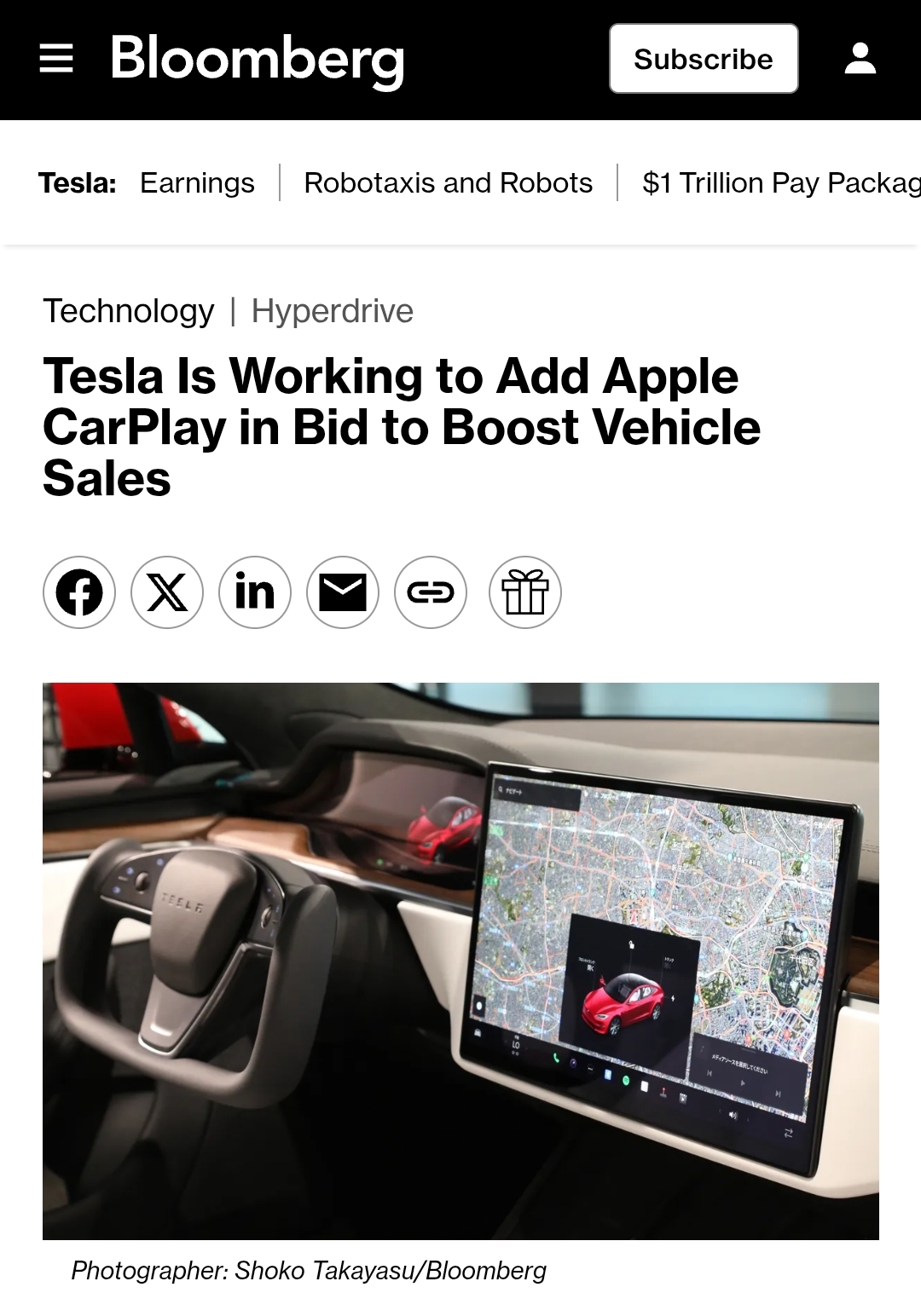
Screenshot: Bloomberg
Since the launch of its first model, the Model S, Tesla has been dedicated to developing its own infotainment, autonomous driving, and in-car entertainment systems. So, is this move to adopt CarPlay truly a response to persistent demands from owners, or does even the most robust in-house ecosystem need to make concessions to Apple?
The news has sent ripples through overseas automotive enthusiast communities. Some dismiss it with a casual 'We can give it a try,' while others pour cold water on the idea, deeming it 'unnecessary.' Yet, after extensive online research, Electrek couldn't find a single Tesla owner ecstatically shouting, 'Finally!'
Tesla, known for its relentless cost-cutting measures, is investing resources into CarPlay—a seemingly thankless endeavor. What does this truly signify?
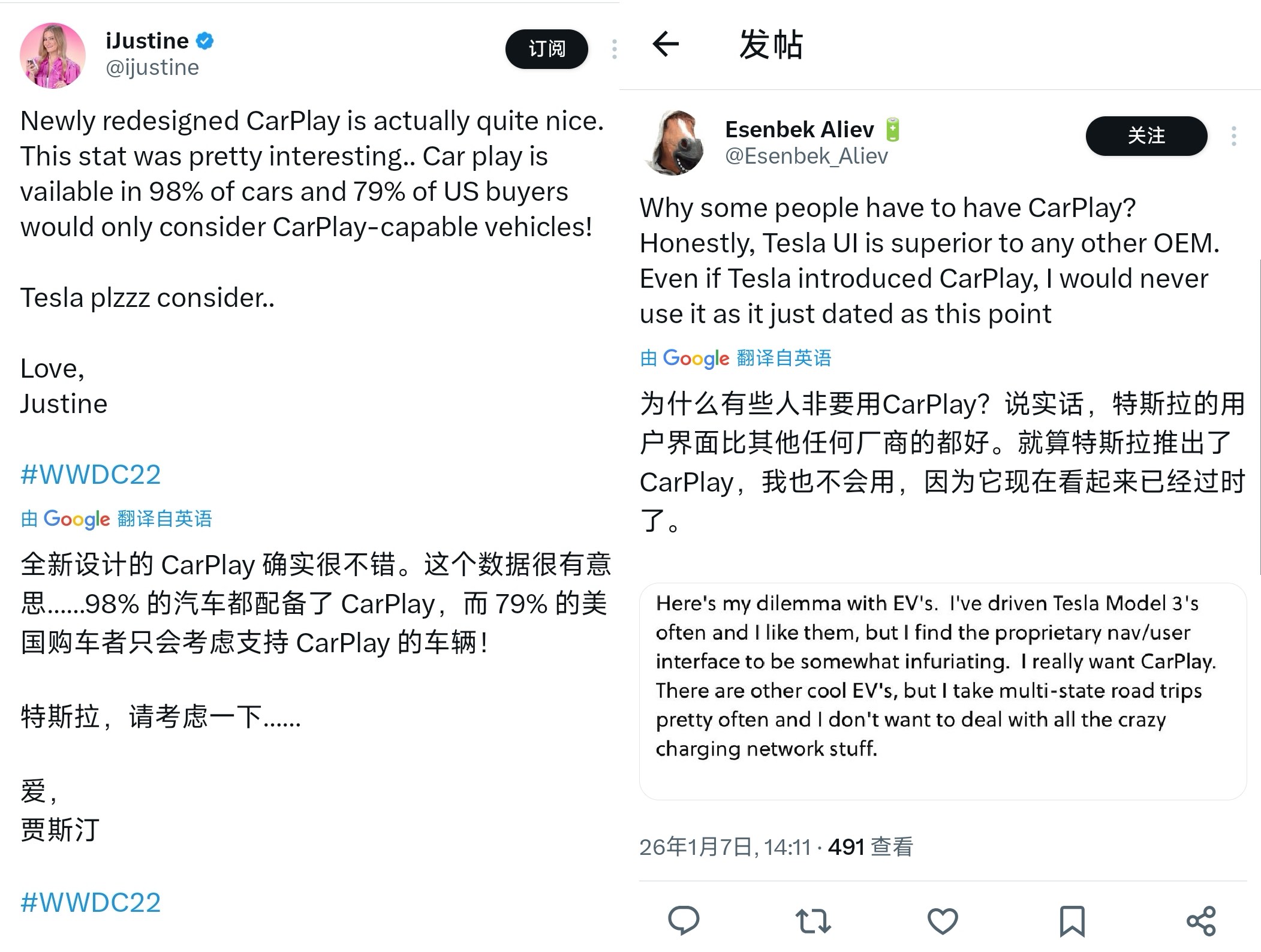
Screenshot: X
Is Tesla's adoption of CarPlay merely for show?
Electrek has previously test-driven multiple Model 3 and Model Y units, praising their smooth infotainment performance. Several Tesla owners also attested to the system's stability. Even when compared to entertainment, navigation, or quirky features like 'fart simulations,' Tesla holds its own against domestic brands.
In the Chinese market, CarPlay faces more criticism than acclaim. Domestic automakers such as Haval, Geely, and BYD have abandoned CarPlay, while overseas brands like General Motors are also phasing out support.
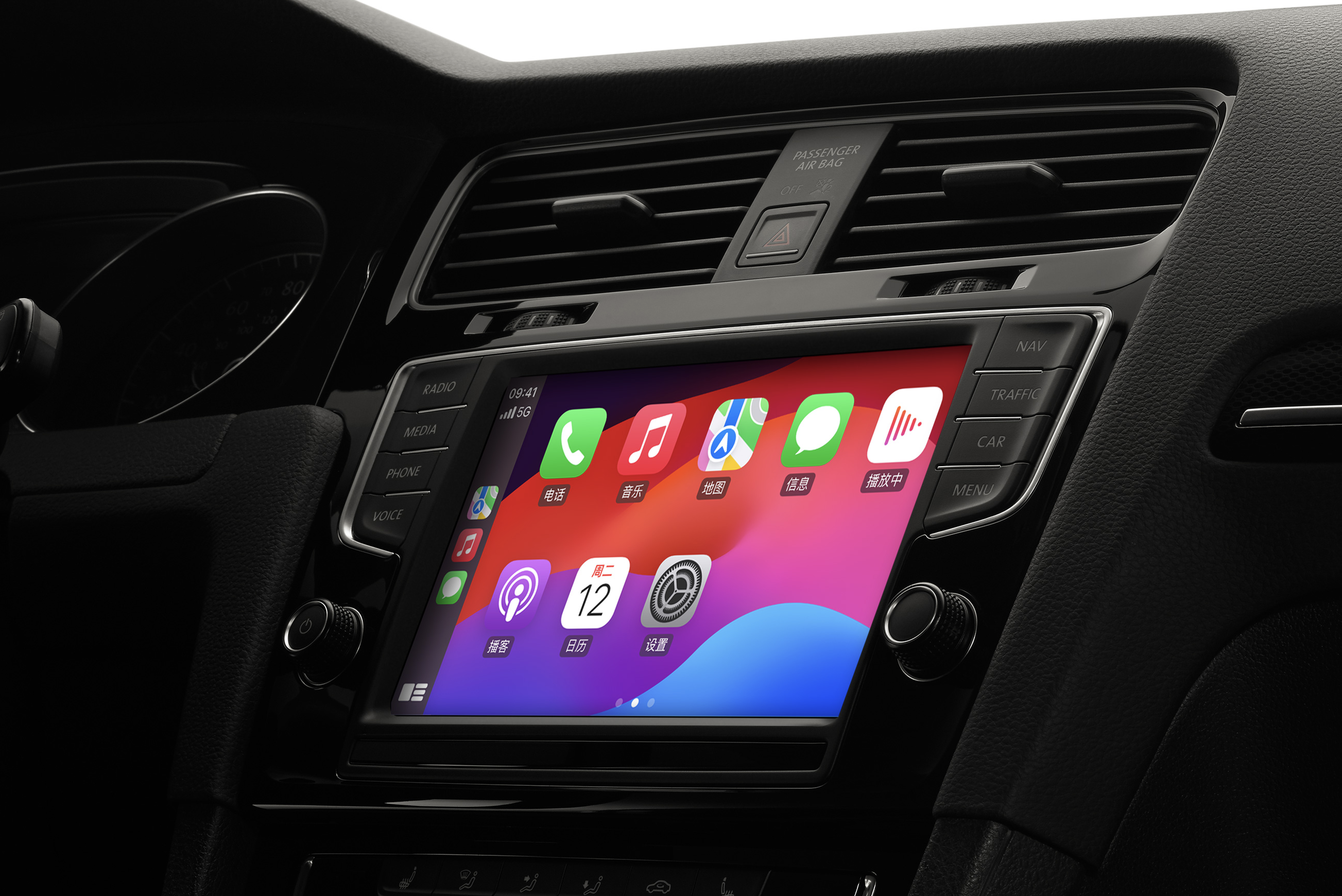
Image source: Apple official website
Beyond the mockery of CarPlay's experience, Electrek also noted rational perspectives: 'CarPlay was revolutionary in traditional fuel vehicles, but now, new energy automakers' in-house systems have reversed that disruption.'
CarPlay's decline is the best evidence of automakers' growing in-house capabilities. However, its continued existence reflects users' lingering ecological habits.
An Electrek editor, 'Yiwei Tianming,' a Lynk & Co 03+ owner who heavily relies on CarPlay, shared his reasons for sticking with it:
Simply put, there are three key factors:
1. 'Yiwei Tianming' owns more than just the Lynk & Co 03+. CarPlay provides a unified infotainment interface and voice assistant experience across different models, eliminating the need to re-adapt when switching vehicles.
2. As a native Cantonese speaker, he demands high-quality Cantonese voice interaction. iPhone's native Maps and Siri offer more accurate Cantonese recognition and pronunciation than third-party apps like Baidu or Gaode Maps.
3. CarPlay is more convenient for him, enabling Siri-controlled WeChat replies in Cantonese and smoother operation with Spotify, while delivering superior sound quality compared to standard Bluetooth connections.
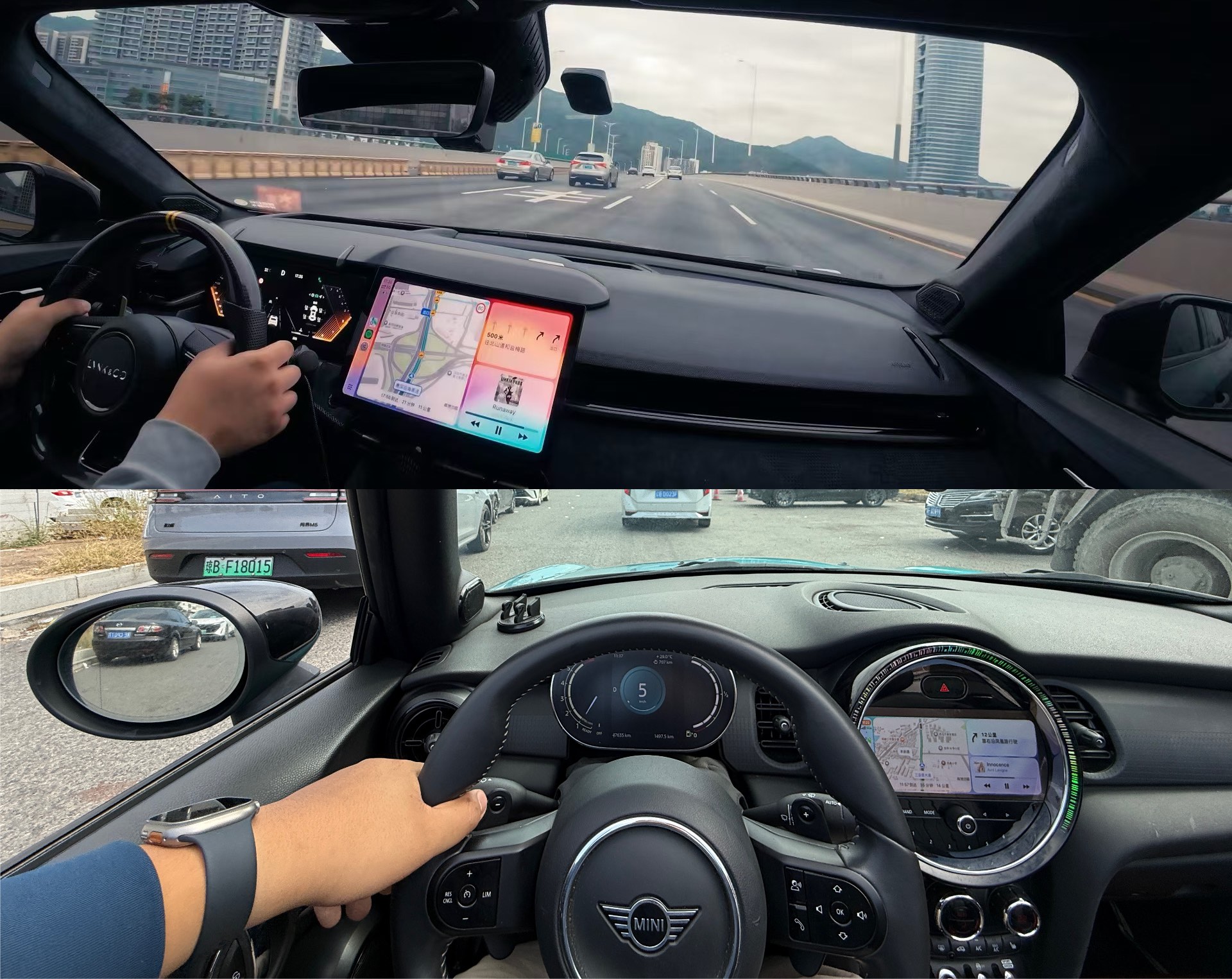
Image source: Provided by the owner
Thus, CarPlay retains unique value in the automotive market. It caters not only to users pursuing Apple's closed ecosystem but also precisely meets the needs of multi-vehicle households and dialect users. Even as automakers' in-house systems evolve rapidly, CarPlay will remain 'unkillable' for the foreseeable future.
Not all users crave novelty; some simply desire 'an unchanging sense of familiarity.' Tesla's proactive adoption of CarPlay likely targets this demand.
Tesla's CarPlay integration appears meticulously designed: instead of a full-screen display, CarPlay occupies only the right two-thirds of the screen, leaving the left side for the native system to display core vehicle data like speed, battery level, and FSD status.
In Electrek's view, Tesla's 'dual-system' design is unsurprising. After all, its infotainment system handles critical vehicle controls like gear shifting, while CarPlay is limited to entertainment and navigation—incapable of deep vehicle data access. Thus, reserving space for the native system is essential.
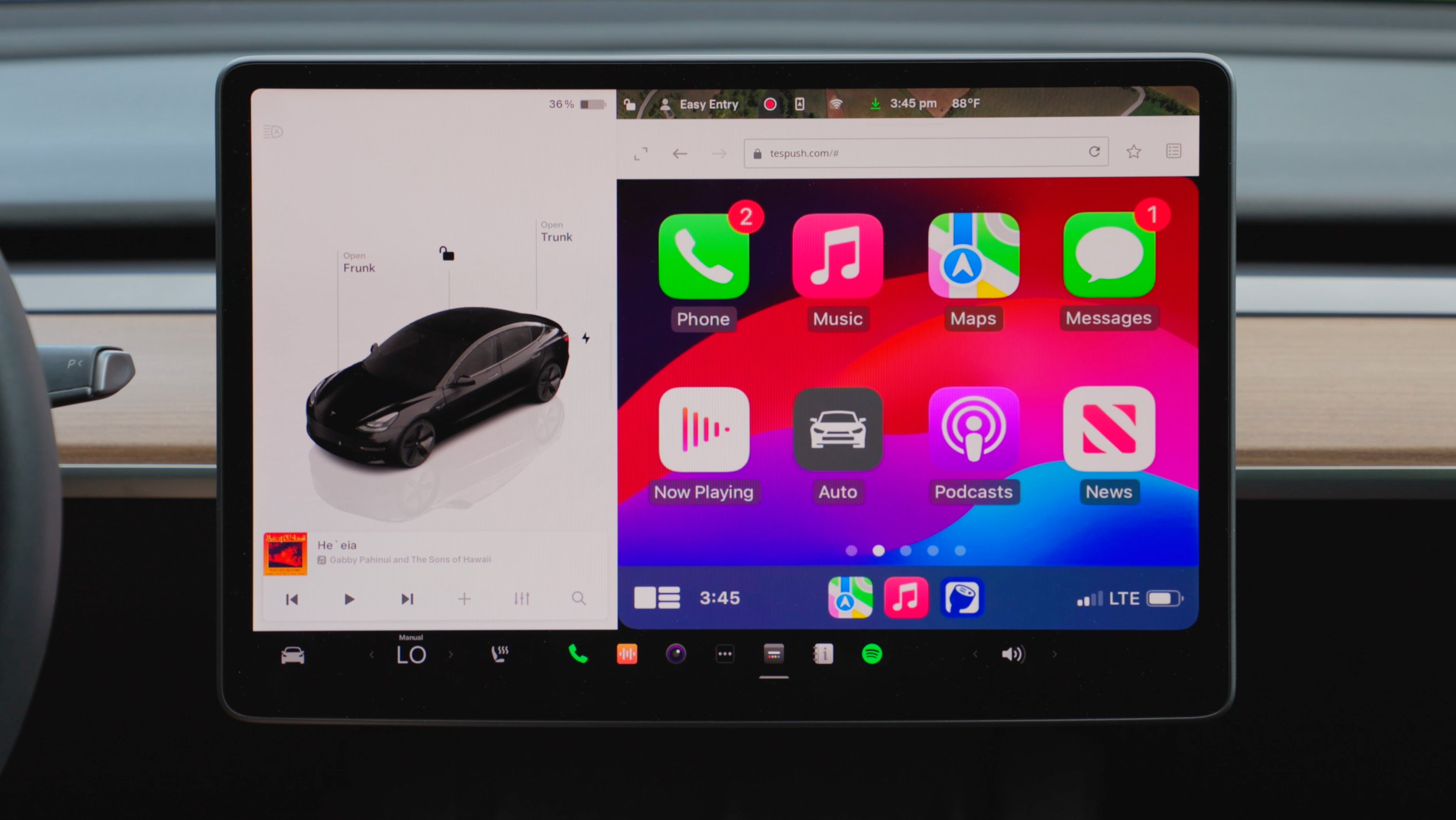
Image source: X
Apple's Three-Year Hype Falls Short of Chinese Smart Tech
While joint-venture fuel vehicles still promote CarPlay as a standard feature, mainstream new energy models no longer consider it a core selling point. Only Xiaomi Motors has announced deep wireless CarPlay integration at product launches.
Xiaomi's compatibility with Apple devices is nothing new. While CarPlay enhances fuel vehicles, automakers now view intelligence as a competitive arena. Infotainment systems, as a key platform, offer a 'diverse array' of features, making CarPlay's offerings seem 'extremely basic.'
Not just CarPlay, but screen-mirroring tools like Baidu CarLife also fail to integrate with vehicle hardware, driving data, or autonomous systems, exposing their inherent limitations.
Apple, a tech giant, attempted to upgrade CarPlay but ultimately fell short.
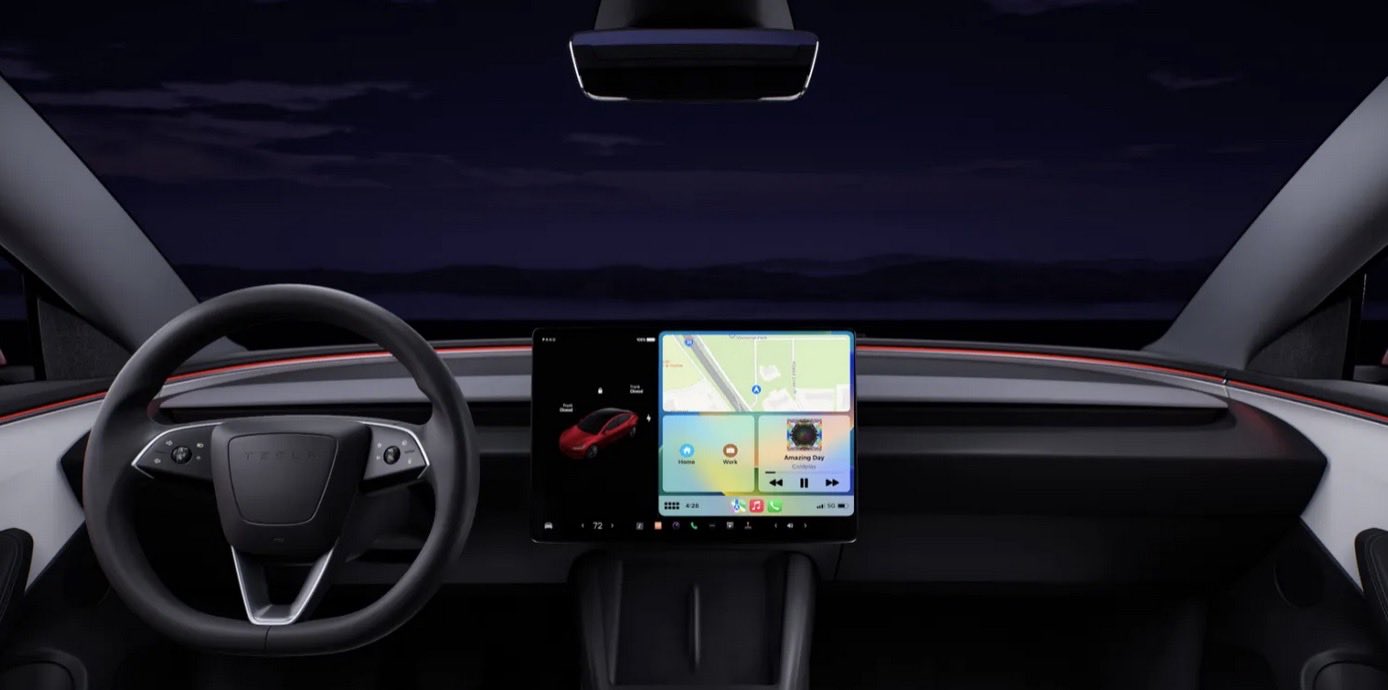
Image source: X
At WWDC 2022, Apple unveiled the next-gen CarPlay (CarPlay 2.0), claiming it would fully take over multiple in-car screens, including the instrument cluster, and control key vehicle functions. It promised the first compatible models by 2024, generating industry-wide excitement.
But the hype faded quickly. 2024 passed without a single compatible model.
In May 2025, Apple rebranded CarPlay 2.0 as CarPlay Ultra, still touting 'deep control' over climate, seat heating, and driving modes. It claimed brands like Hyundai, Kia, and Genesis planned CarPlay Ultra models, aiming to cover more global vehicles within 12 months—a move seemingly set to disrupt the infotainment ecosystem.
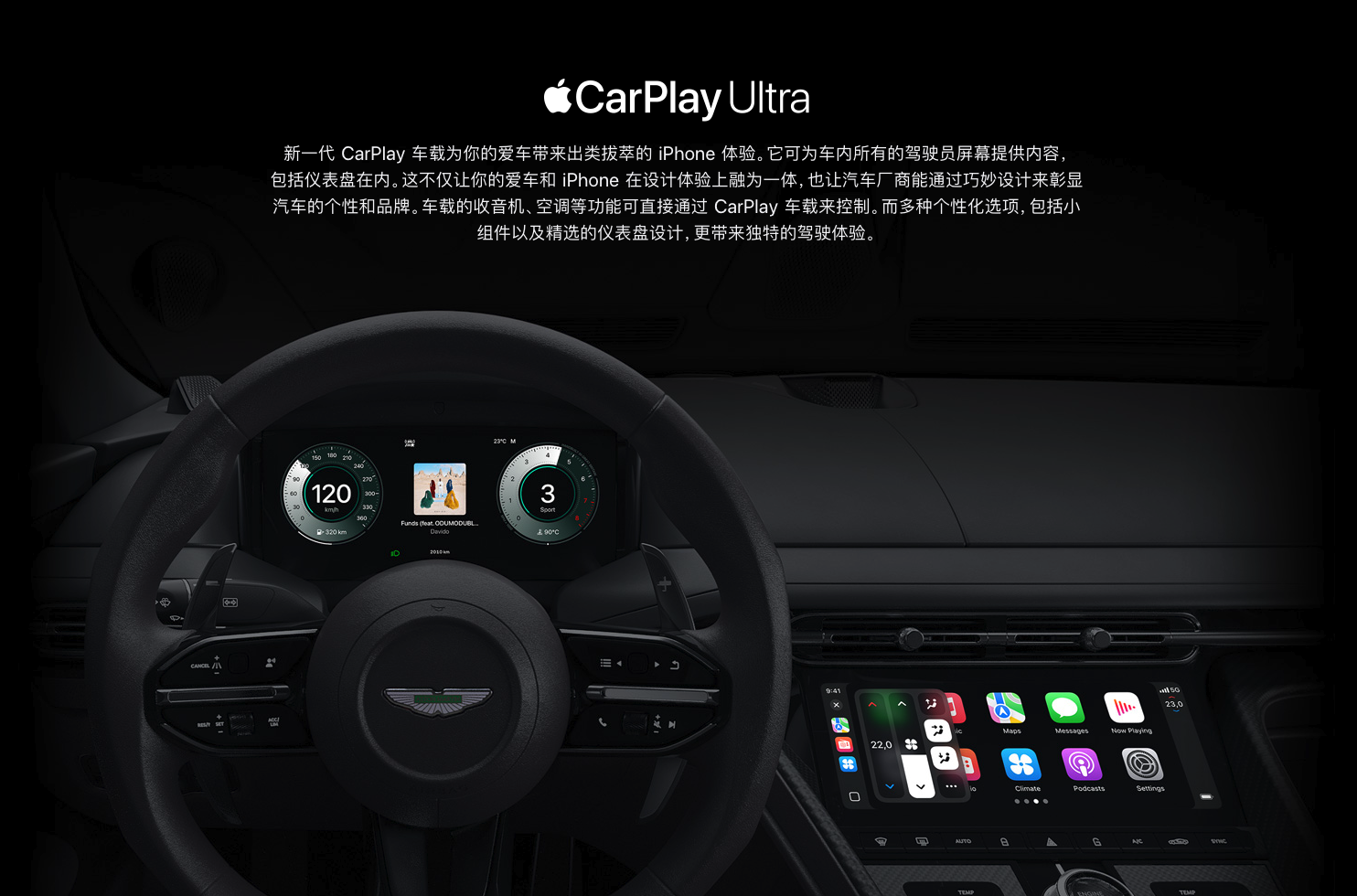
Image source: Apple official website
The result? Three quarters later, only Aston Martin has adopted CarPlay Ultra.
Mark Gurman revealed that Hyundai or Kia might launch at least one new model with CarPlay Ultra later this year, barely saving face for Apple. Meanwhile, BMW, Ford, Rivian, and other mainstream automakers have publicly stated their skepticism, arguing that 'deep integration' is both unnecessary and risky, as it could compromise data security and cockpit sovereignty.
Apple's grand promise of 'global multi-model coverage' for CarPlay Ultra now seems like empty rhetoric.
Ironically, this system—highly anticipated yet widely rejected—has only highlighted the prowess of Chinese smart technologies. Solutions like HarmonyOS Cockpit and Huawei's ADS are gaining traction among overseas automakers: Nissan Dongfeng directly adopted HarmonyOS, while even luxury benchmark Audi partnered with Huawei ADS for tangible technological deployment.
In contrast, Apple's repeated hype and delays look embarrassing.
Ultimately, CarPlay's decline stems not from misfortune but from its inability to keep pace with smart vehicle development. While Apple aims to enhance the cockpit experience, automakers have their own agendas, making CarPlay's path increasingly difficult.
Final Thoughts
Tesla's adoption of CarPlay aligns with some users' practical needs, but it has always kept core driving and vehicle data firmly in-house. This means that even if CarPlay Ultra hypes 'deep control,' such features will never appear in Tesla vehicles.
In essence, Tesla's CarPlay integration is a commercial choice to address experience gaps, not an endorsement of Apple's deep integration model.
Tesla shares the same reservations as other automakers regarding CarPlay Ultra—and is even more cautious. Its 'openness' is a calculated, bounded concession that accommodates Apple users' habits without compromising vehicle safety or data sovereignty.
For owners, there's no need to overanalyze whether to feel ecstatic or indifferent—usability matters most. From an industry perspective, Tesla's move may prompt more brands to rethink their ecological strategies, avoiding pointless competition and refocusing smart cockpits on serving users.
(Cover image source: X)
Tesla, Apple, infotainment system, smart cockpit
Source: Leikeji
Images in this article are from 123RF's licensed library.
-
![]()
Doubao Charges Fees: Zhang Yiming Helps Zhang Xiaolong Explore the Path
-
In-depth Analysis | Wave Power Generation + Seawater Cooling: The Technological Logic Behind Panthalassa's Offshore AI Data Center
-
Chip Sector Insights | NVIDIA & Google Reveal AI Liquid Cooling Approaches, A-Share Firms Strategize Across Industrial Chain
-
Industry Insight | The Underestimated Backbone of Computing Power: The Transmission Chain of MLCC, PCB, Copper Foil, and Electronic Fabric
-
Tech News丨'Lingxi AI' Secures Hundreds of Millions of Yuan in Funding
-
![]()
Apple’s Price Hike Repercussions: Hardware Pricing Reflects the Tech Giant’s Growth Challenges
-
![]()
Xiaomi Sparks Car Modification Trend, BYD Joins In: Will the 1/4 Screw Hole Become the Automotive Industry's USB-C?
-
![]()
Enflame Tech's IPO Journey: Navigating Over 5.9 Billion Yuan in Losses and Soaring Debt in Q1 This Year