Auto Giants Place Big Bets on Spacious Six-Seater SUVs, Stepping into the 'Battleground' in 2026
 02/26 2026
 637
637
Lead | Introduction
From the era of traditional fuel vehicles to the dawn of new energy vehicles, the large six-seater SUV segment has consistently been hailed as a 'golden track' within the automotive industry. After all, these 'high-value models' are backed not only by a solid consumer base but also offer an opportunity to elevate brand image and command premium product pricing. Over the past year, automakers have harnessed the potential of new energy large six-seater SUVs to dominate sales rankings, turn losses into profits, or overcome market challenges. As 2026, a year centered around 'value creation,' approaches, even more players are set to flood this lucrative segment.
Produced by | Heyan Yueche Studio
Written by | Cai Yan
Edited by | He Zi
Full text: 1,786 characters
Reading time: 3 minutes
How popular are large six-seaters? Data provides compelling evidence. In 2025, total annual sales of six-seater SUVs from mainstream brands surpassed 1 million units, with projections indicating a leap to over 1.2 million units in 2026. Compared to the less than 200,000 units sold in 2020, this represents nearly a fivefold increase within five years, marking the segment's official transition from niche to mainstream.
In terms of specific models, last April, the Lynk & Co 900 sounded the starting horn, with the Li Auto i8 and Leitao L90 facing off in July. In August, Tesla's Model YL received a significant upgrade, followed by the Denza N9, Galaxy M9, NIO ES8, Seres' new M7, and Zeekr 9X all launching in September. In November, the IM LS9 made a last-ditch effort. In just over half a year, nearly 10 new large six-seater SUVs were introduced, most of which quickly became hot sellers.
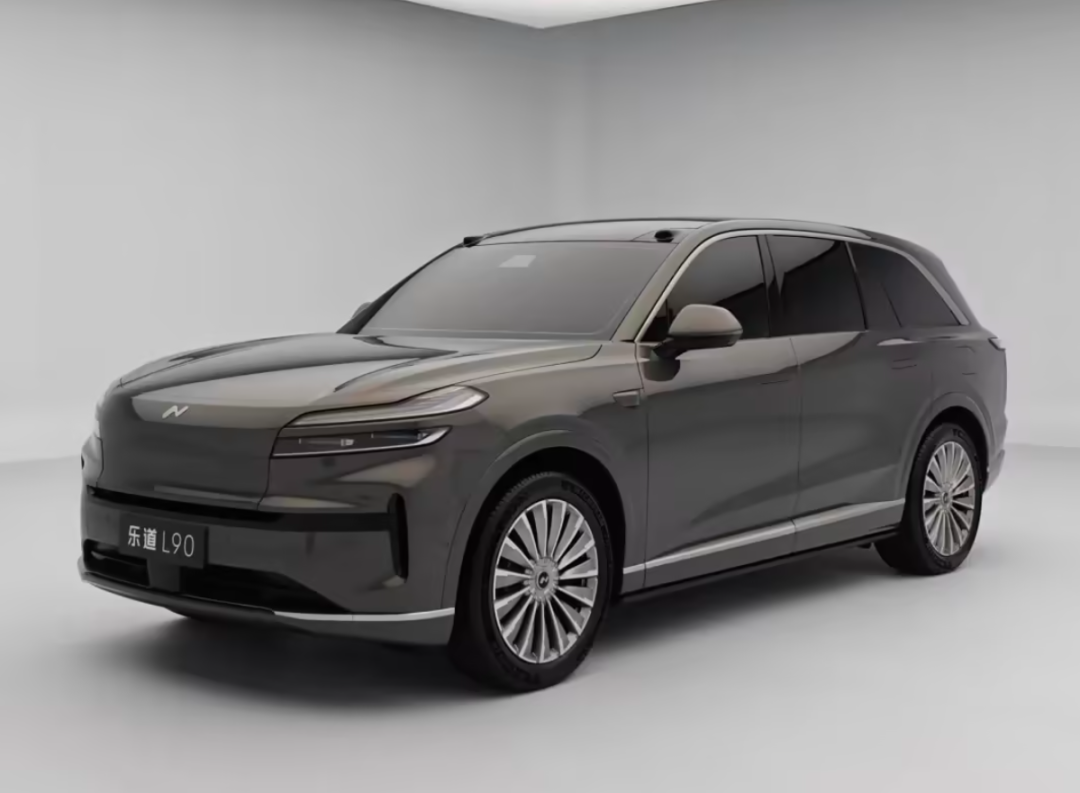
These models, with pre-orders and reservations exceeding 10,000 units, encompass pure electric, extended-range, and plug-in hybrid variants. They not only create a strong 'gold rush' atmosphere for large six-seater SUVs but also further encroach on the market space traditionally occupied by mid-size SUVs.
Following last year's wave of 'product explosions' in the large six-seater SUV market, automakers continue to flood this segment in 2026. In January, the Ministry of Industry and Information Technology's (MIIT) 403rd batch of new vehicles included the SAIC Volkswagen ID.ERA 9X, Leapmotor D19, NIO ES9, and IM LS8, setting the stage for this year's high-end new energy SUV launches.
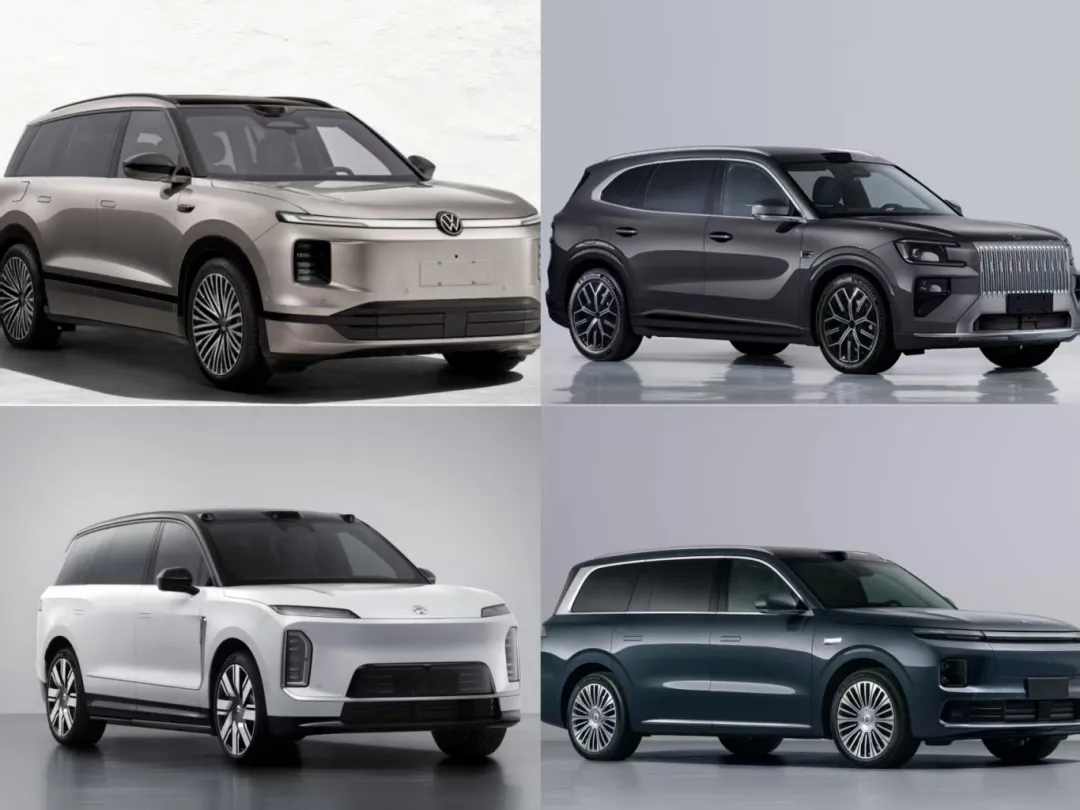
In February, the MIIT's 404th batch of new vehicles featured flagship SUVs from Xpeng GX, Li Auto L9 livis, Wey V9X, and BYD Datang, along with the known launch of Xiaomi's extended-range large six-seater SUV. This undoubtedly further indicates that 2026 will be a year of decisive battles for pure electric large six-seater SUVs.
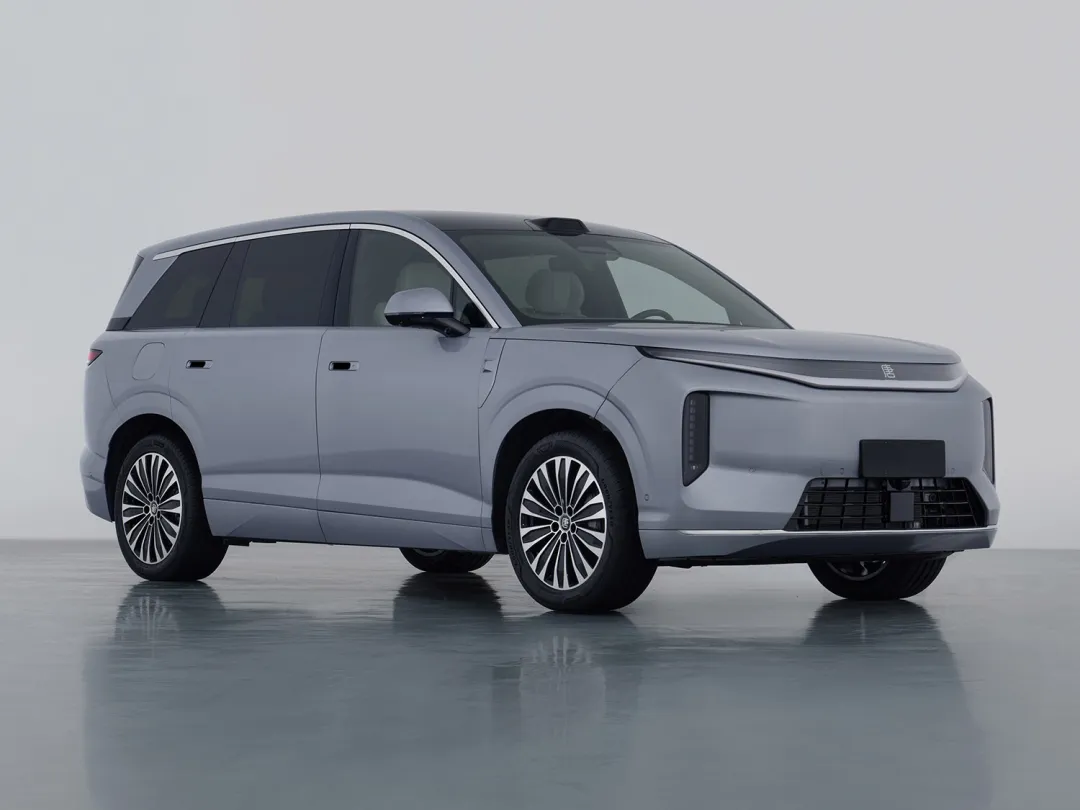
Leading new energy brands in the Chinese market either position large six-seater SUVs as flagship products, such as the Xpeng GX, Li Auto L9 livis, Leapmotor D19, and NIO ES9, or replicate the successful formulas of their 2025 flagship models, like the Zeekr 8X and IM LS8. In short, automakers are eager to capture a share of this burgeoning segment.
Why Are Large Six-Seater SUVs So Popular?
The core reason lies in the fact that 'Chinese consumers love to buy them, and automakers are happy to build them.'
From a user perspective, as the number of multi-child households grows, the '2 (parents) + 2 (grandparents) + 2 (children)' travel dynamic has become the norm, making the 'comfortable and equitable' experience of six-seater SUVs an unavoidable choice.
Another factor is Chinese consumers' first impressions of SUVs and MPVs. Due to the early product attributes of MPVs, some users perceive them as 'business or utility vehicles,' while SUVs generally offer better aesthetics. Therefore, under similar usage needs, consumers tend to prefer SUVs.
Additionally, SUVs offer better handling than MPVs. As more new energy large six-seater SUV options become available, consumers naturally gravitate toward them. In fact, just two years ago, many automakers launched MPVs to cater to second-child families, but today, the large six-seater SUV segment has claimed a share of that market.
From an automaker's perspective, large six-seater SUVs offer higher premiums and profit margins, making them an attractive proposition in today's hyper-competitive environment. From a cost standpoint, whether it's a large six-seater or mid-size SUV, as long as they share the same production line, electrical architecture, and platform, fixed costs remain similar. However, the pricing of large six-seater SUVs can easily cover the additional costs of materials, battery size, and entertainment system configurations.
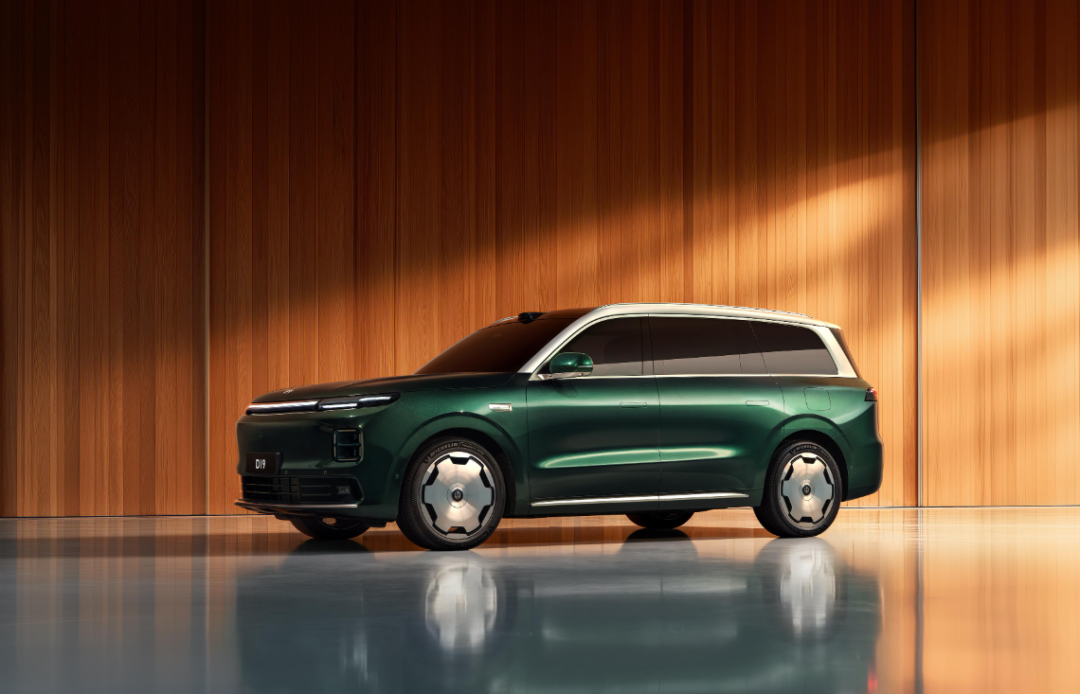
Secondly, automakers typically position large six-seater SUVs as their 'flagship' products. If these models maintain popularity and sales in the market, they not only significantly enhance brand premium capabilities but also help automakers tell a 'brand elevation' story. The Leapmotor D19, Li Auto L9 livis, and Wuling Starlight L are prime examples of such models.
Are There Really That Many Buyers?
While 2025 saw a surge of new large six-seater SUVs and 2026 has made them a symbol of value, are there really that many buyers?
The internet and consumers tend to focus only on successful models. In reality, among the large number of large six-seater SUVs flooding the market, only a few achieve significant sales breakthroughs.
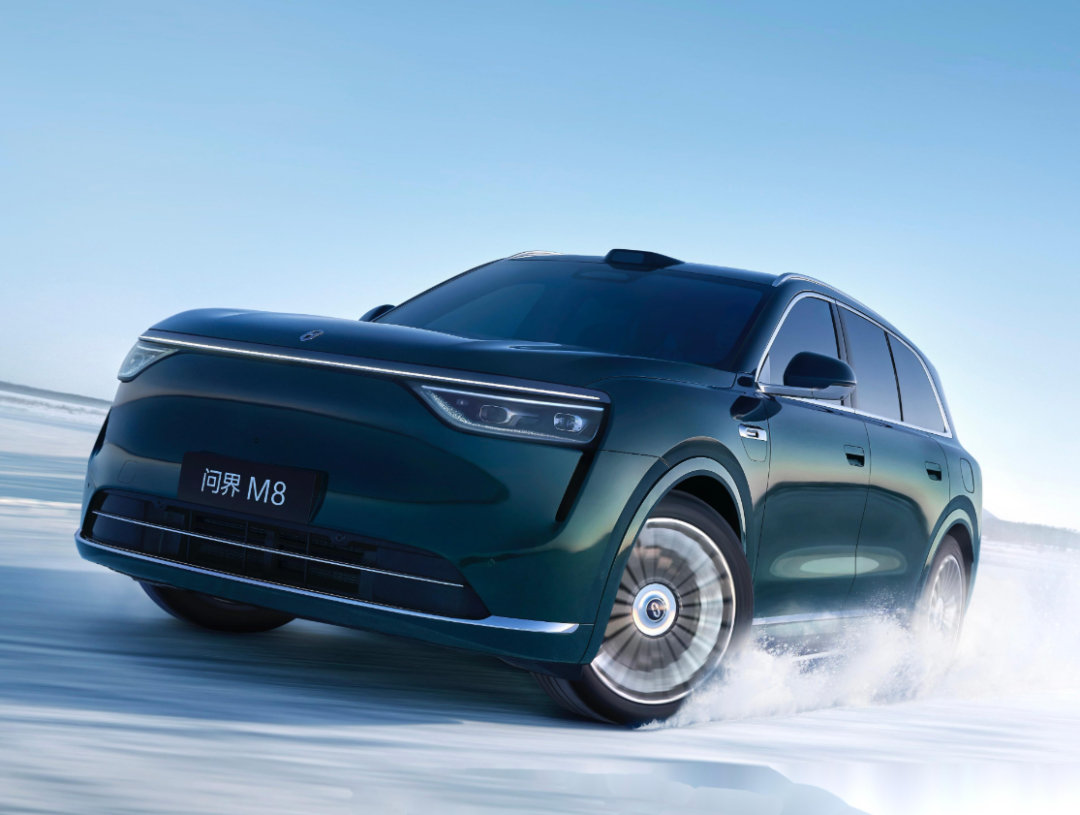
In 2025, nearly 70 large six-seater SUVs were available, but only a dozen consistently sold over 5,000 units per month, while over 30 models sold fewer than 1,000 units monthly. This 'head effect,' where a few top players dominate while the rest struggle, is the true reality of the large six-seater SUV segment. What appears to be a broad gold mine is, in fact, a fiercely competitive red ocean.
More critically, as homogenization issues become more pronounced in large six-seater SUVs—with similar space designs, intelligent configurations, and powertrain solutions—products that fail to outperform competitors or establish strong brand effects within a short time will ultimately join the ranks of 'one-hit wonders.'
Rather than calling it a 'gold mine,' the mid-to-large SUV segment is more akin to a 'coliseum.' In this segment, the competition is no longer about configurations or superficial luxury but about a brand's systemic capabilities, including 'branding, technology, market perception, marketing, delivery, financing, distribution channels, and after-sales service.' These capabilities are indispensable.
Commentary
Previously, the core selling points of blockbuster large six-seater SUVs included Zeekr and IM's focus on three-electric systems, Seres' reliance on intelligent driving, and NIO and Leitao's emphasis on supporting ecosystems. Where will the breakthroughs for large six-seater SUVs lie in 2026? On one hand, it will be about shaping brand identity; on the other, amid the challenge of value restoration, automakers must strive to achieve 'lower prices, higher value.'
(This article is original to Heyan Yueche and may not be reproduced without authorization.)
-
![]()
Depreciation Rate on Par with Mobile Phones: Just 40% Value Retention After Three Years—Why Do Battery Electric Vehicles Lose Their Worth?
-
![]()
Clearing Bugatti Stock Worth 7 Billion: Why is Porsche 'Cutting Ties'?
-
![]()
Don’t Dismiss Huawei’s Potential in Sedans Just Because the Shangjie Hasn’t Hit It Big Yet
-
![]()
Unsold Cars in China Find Success Overseas
-
![]()
Ghosn: Only I Can Save Nissan, Shareholders Beg Me to Return
-
![]()
Expanding Automobile Consumption: It's Time to Address the High Cost of Electric Vehicle Repairs
-
![]()
Luna Ultra Entangled in 'National Subsidy Fraud' Controversy, Insta360 Pushed to the Brink by DJI
-
![]()
People have long suffered from splash ads. Will the 'temporarily disappeared' traffic behemoth make a comeback?