Amid Over 70% of Used Car Dealers Facing Losses, Some Achieved 400,000 Yuan Annual Income in County Towns
 03/02 2026
 658
658
Introduction
Short videos have emerged as a pivotal tool for these dealers to navigate through tough times.
In 2025, China's used car transaction volume surged past 20.1 million units, marking a new record high. However, beneath this seemingly prosperous data lies the harsh reality faced by individual auto dealers. With sluggish growth in transaction volumes and a continuous decline in new car prices, the used car market is grappling with a supply-demand imbalance, leading to a downward trend in average selling prices. The industry's survival environment has deteriorated sharply.
In the first half of 2025, over 70% of used car dealers incurred losses. "Halting losses and ensuring survival" became the overarching theme for the vast majority of individual businesses in 2026.
Yet, amidst this widespread industry pressure, a group of small and medium-sized auto dealerships rooted in lower-tier markets have charted contrasting growth paths. During Lunar New Year visits, I accidentally learned from a friend working at a local used car dealership that their profits were particularly noteworthy.
In the dealership's promotional videos, the boss is seen distributing year-end bonuses, salaries, and red envelopes to employees, with two top salespeople receiving thick stacks of cash. In a subsequent interview, he stated, "Someone like Lao Kong (one of the top salespeople) can earn 400,000 yuan a year working for me."
The 400,000-yuan compensation far exceeds county-level income standards and even surpasses the earnings of salespeople at automakers in first-tier cities. Upon further inquiry, it became evident that short videos have become a potent tool for individual used car dealers to break through adversity.
01 "Next Year, I'm Switching to Sales Too"
"I just wrapped up the annual meeting and earned the most from games. Let's go! I'll treat you to milk tea." During the Lunar New Year, my childhood friend waved a wad of cash and enthusiastically invited me out.
My friend had recently started working as a video editor at a local used car dealership before the New Year. During our gathering, she vividly described her work experience, clearly satisfied with her job. Out of curiosity and to gain insights into the local used car market, I inquired about the company's profitability.
"Profits are pretty good." According to her, the top salesperson earned over 30,000 yuan in wages and bonuses in December, aligning with the dealership owner's statements in the videos. My friend, deeply involved in social media, excitedly declared, "I've decided—I'm switching to sales next year too."
My hometown is a fourth-tier county town where most workers earn around 4,000 yuan per month. The salaries and bonuses of salespeople at the dealership far exceed local income levels.
However, based on previous conversations with used car dealers and colleagues, as well as information from various media sources, the recent situation for used car dealers has been challenging. According to a survey by the China Automobile Dealers Association, the proportion of losing used car dealers rose to 73.6% in the first half of the year.
For individual used car dealers, trust is the most crucial factor in facilitating transactions. Against this backdrop, leading used car dealers and platforms are accelerating their expansion into chain operations, with branding in the used car market becoming increasingly prominent.
Guazi Used Cars and Dongchedi dominate online traffic; traditional dealer groups like Zhongsheng Group and Yongda Automobile continue to expand; after opening franchises, Kaitai Chi's combined directly operated and franchised stores exceeded 100; and Shuaiche focuses on large-scale stores, with expansion plans in Hangzhou, Zhengzhou, and other cities. Automakers are also addressing shortcomings in their used car businesses, with Yangwang, NIO, Geely, SAIC Volkswagen, and others entering the market.
Larger stores can acquire vehicles at lower costs due to their scale, and their brand effects add a layer of trust for consumers. Just like choosing a well-known brand when buying a car, at least there's no worry about the company disappearing or lacking after-sales support.
However, individual businesses in small counties lack advantages in terms of location, resource scale, or brand influence. How do they break through?
02 Authenticity: The Ultimate Game-Changer
"Our biggest advantage is building a short video personal brand IP. You can tell the boss is constantly learning."
The account my friend recommended has 120,000 followers. With a clean page, consistent editing style, and Verified badge, each video maintains a unified style and distinct personal branding. A quick browse through several videos reveals the account's keywords: authenticity, no gimmicks.
For example, a 2022 Porsche Macan with license plates costs just over 200,000 yuan, while a top-spec 2023 Jaguar F-PACE with 30,000 kilometers on the odometer can be purchased outright for only 175,000 yuan, with additional subsidies available for installment plans.
In the videos, customers often mention following the account or being referred by friends. In the latest video, a "long-time fan" made their fourth purchase from the store.
During peak daytime hours, the account is always live-streaming, regardless of when you tune in. According to the host, the account streams daily from 8 AM to 6 PM, totaling 10 hours. During several viewings, I noticed frequent interactions between fans and the host, with viewer counts consistently around 20-40.
According to para-social relationship theory, viewers who watch videos regularly and repeatedly tend to develop a one-sided, imaginary intimate relationship with the figures on screen. Through the repeated reinforcement of an authentic personal brand and sustained interaction during long live-streams, viewers' attachment to the dealership owner grows stronger, accumulating goodwill and ultimately fostering trust.
Unlike standardized new cars, used cars have unique conditions and prices, making consumers highly sensitive to vehicle condition and pricing. This dealership precisely grasps this pain point by proactively requiring third-party inspections immediately after customer transactions. They also publicly commit that all vehicles support third-party inspections, with the dealership covering inspection fees if the vehicle condition doesn't match what was seen, and offering a refund plus triple compensation if discrepancies are found after purchase.
Transparent vehicle conditions combined with prices far below those of new cars effectively lower the barrier to user decision-making. The dealership owner revealed that in 2025, the dealership sold nearly a thousand vehicles.
In terms of model mix, the dealership focuses on mid-to-high-end used cars from BBA and other luxury brands. The sales manager stated that in 2025, vehicles priced below 200,000 yuan accounted for only 10%-15% of sales, those priced between 200,000-400,000 yuan made up 60%, vehicles priced between 400,000-600,000 yuan accounted for 20%-25%, and those priced above 600,000 yuan shrank to 10%. This precise positioning allowed them to avoid low-end price wars amid market chaos.
03 When Used Car Dealers Start Competing on After-Sales Service
If short videos opened the floodgates of traffic, then service upgrades have been the dealership's secret weapon for retaining customers and achieving high conversion rates.
I previously followed the online sales models for new cars. In the new car market, online sales have always been in an awkward position and have struggled to gain traction.
On one hand, new cars come with worry-free conditions and nearly transparent pricing systems, often backed by brand-guaranteed after-sales support, reducing consumer concerns. On the other hand, as high-value items, cars aren't suitable for impulsive online purchases, and consumer purchasing power is limited. Additionally, for new car sales, the limited online conversion capabilities mean live streams and short videos mostly serve as lead generation tools, with insufficient follow-up on subsequent services, focusing only on lead data.
However, used cars heavily rely on information transparency and personal trust, making short videos and live streams a natural fit for quickly establishing communication and reducing decision-making costs. The more information merchants provide in videos, the more confident consumers feel and the more willing they are to make a purchase. The better the service offered, the easier it is to close deals.
In the dealership's pinned short video titled "Top 10 Reasons to Buy Here," the first and most significant commitment is: all vehicles come with a 3-year/90,000-kilometer warranty, with free repairs for any issues and direct vehicle replacement if repairs fail.
Originally, the warranty covered 1 year/20,000 kilometers. The increased coverage wasn't due to the boss's sudden conscience but rather intensified competition within the used car industry. The 3-year/90,000-kilometer warranty was revised in October last year and is included in the vehicle's warranty service contract.
The live stream salesperson explained that the dealership partners with repair shops nationwide. If no partnership exists, vehicle owners can contact local repair shops themselves, and the dealership will reimburse repair costs. Maintenance shops aren't designated, and warranty fees are included in the vehicle price, with room for further price reductions if the warranty is waived.
While warranties benefit consumers, their long-term costs are uncertain. If repair costs exceed profits, the dealership stands to lose on the transaction. How do they avoid this? "We're essentially betting on probabilities," my friend replied.
And so far, the dealership appears to have won the gamble. In a video from late 2025, the boss revealed renting a nearly 2,000-square-meter factory space to build their own repair shop for after-sales, maintenance, repairs, and vehicle reconditioning. The repair shop has also become a new source of vehicles.
Beyond warranties, the dealership offers a series of service policies, such as unconditional vehicle exchanges within 3 days of contract signing, full-price trade-ins within 30 days, and 90% buyback protection within 3 months.
This series of online expansion efforts and commitments have undoubtedly yielded significant results. My friend revealed that the dealership targets the national market, with only 20%-30% of customers from nearby cities and over 60% from outside the province. For out-of-town customers, they directly offer complimentary meals, accommodation, and transportation services, completely eliminating concerns about purchasing vehicles remotely.
This approach isn't unique. Amid intensifying industry competition, many used car dealerships are upgrading their services. Chen Jianze, known as the "second-largest car dealer in Northeast China," introduced a 7-day no-questions-asked return policy and a 90-day/5,000-kilometer warranty last year, also providing hotel accommodations for out-of-town customers. Additionally, he offers home delivery for used cars: customers can inspect and pay for vehicles online, after which the dealer transports the car directly to the user via tow truck.
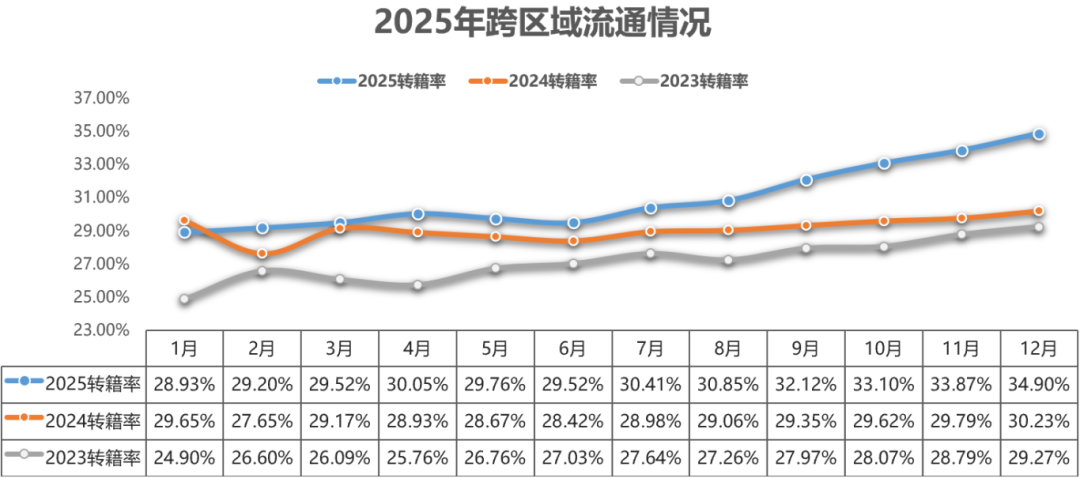
Behind these individual business strategies, policies supporting cross-regional used car flow have also played a significant driving role. In recent years, the national government has continuously promoted standardization in the used car industry, implementing policies like "reverse invoicing" and cross-regional transaction registration, guiding the industry to transition from traditional brokerage models to more standardized dealership models. In 2025, the total volume of used car transfers exceeded 6.25 million units, up 9.3% year-on-year, with a transfer rate of 31.1%, a 1.9% year-on-year increase.
However, behind the reliance on short videos for breakthroughs, the used car market still harbors many gray areas and industry concerns, which have become bottlenecks restricting high-quality industry development.
Earlier, Wei Jianjun, chairman of Great Wall Motors, criticized the prevalence of "zero-kilometer used cars" among some dealers. In Chen Jianze's videos, he openly discusses these "nearly new" vehicles. Leveraging bulk purchases of hundreds of vehicles at a time, he can significantly lower acquisition costs and sell below 4S store prices to earn profits.
Additionally, covert operations involving accident-damaged or heavily repaired vehicles remain an unspoken industry norm between some merchants and consumers. While these vehicles are cheap, they pose severe safety hazards. Once faults occur, repair costs are high, and they may even endanger occupants, damaging consumer rights and disrupting industry order.
The online live stream sales model isn't perfect either and can easily lead to consumer misunderstandings and disputes. Some netizens complain that after traveling long distances to the dealership, they find the actual vehicle condition and model severely mismatched from what was shown in videos. Dealers may advertise having hundreds of units in stock but only have a few poorly conditioned models available. This erodes consumer trust and casts a shadow over the reputation of online used car models.
Looking deeper, like the new car market, the used car market is also undergoing accelerated reshuffling. The new car market is eliminating brands with insufficient comprehensive capabilities, while the used car market is accelerating industry transformation by rewarding transparent, authentic, and continuously learning dealers. As information becomes increasingly transparent and consumer rights awareness grows, survival strategies relying solely on low prices, gimmicks, or concealed vehicle conditions will gradually be eliminated by the market.
For individual auto dealers, experiencing losses and finding it extremely tough to stay afloat is currently the common scenario. Instances like the hometown dealership managing to turn a profit and achieving an annual sales revenue of 400,000 yuan are still rare exceptions, shaped by a combination of diligent effort, strategic choices, and a dash of good fortune.
Fortunately, this breakthrough model is not a one-off success story that cannot be replicated. Internally, the dealership owner cultivates a personal brand (IP) to generate leads, while the sales team follows up to secure conversions. These two elements work in tandem, complementing each other seamlessly. Externally, the dealership establishes connections with consumers through the pillars of "trust" and "service," utilizing standardized commitments to bridge any gaps—this forms the replicable core of the model.
China's used car market in 2025 was a year marked by both prosperity and struggle. Behind the milestone of 20 million transactions, there lay the loss-stricken predicament faced by 70% of dealers, the territorial expansion of leading market players, and the remarkable ability of small dealerships in lower-tier markets to make breakthroughs despite facing adversity. The rise of short videos has indeed opened up a new avenue for individual dealers, enabling those previously limited by geographical constraints and scale to reach the national market. However, it's crucial to understand that behind this new opportunity has never been a quick fix where "traffic is king." Instead, it requires a long-term strategy rooted in "authenticity as the foundation and service as the core."
In 2026, with competition in the new car market intensifying, the survival environment for the used car market is likely to deteriorate further, and the industry reshuffling will become even more thorough. How to survive—or even thrive—in such a challenging landscape will be a severe test for all individual auto dealers.
Editor-in-Chief: Du Yuxin Editor: Chen Xinnan
THE END
-
![]()
Can Chinese Automakers Pose Such Fierce Competition? Mercedes-Benz Cancels Year-End Bonuses for 90,000 Staff, Volkswagen to Lay Off 100,000 Employees...
-
![]()
Anhui and Zhejiang Vie for the Crown in New Energy Vehicle Dominance: Who Will Prevail?
-
![]()
Tmall 618 Rankings Unveil Trends Transforming the Home Appliance Industry
-
![]()
This Week in Home Appliances: Overseas Boom! Midea, TCL, Dreame Break Through; Casarte, Fotile, Gree, Hisense, Ronshen Lay Foundations
-
![]()
Aiming to Be the Alphard of the Electric Era! After D99's Launch, Leapmotor Will Release All-New Technologies to Pave the Way for a High-End Brand | Mirrormedia Pro
-
![]()
Over 5,200 Orders Placed on First Day: Can the Qijing GT7, Priced from 209,900 Yuan, Compete with the Z7 and SU7? | Mingjing Pro
-
![]()
AI Predicting the World Cup? It’s Time to Stop Insulting AI
-
![]()
iPhone 18 Pro Memory Costs Soar Threefold! Apple Seeks Trump Administration Approval for CXMT Memory Chips