Merz is 'Anxious' After Visiting China! Can Chinese Technology Be the Solution for Germany's Industrial Transformation?
 03/02 2026
 610
610
German Chancellor Merz's visit to China sends a positive signal for Sino-German industrial cooperation while revealing strategic concerns about the future development of Germany, a traditional industrial powerhouse. German manufacturing faces systemic pressures from digitalization and green transformation. Can China become a technological complement and value collaborator for Germany's industrial transformation?
You may have recently come across a video on social media humorously dubbed 'A parent visits a top student's home and comes back angry at their own child.' The protagonist is German Chancellor Friedrich Merz. On February 27 (local time), after concluding his first official visit to China, Merz spoke candidly at a CDU gathering in Hesse, Germany, about the country's current economic challenges: 'Our productivity is indeed insufficient. Everyone says, 'I've already done a lot,' which may be true; but if you've just returned from China, you'll deeply realize that we must work even harder.'
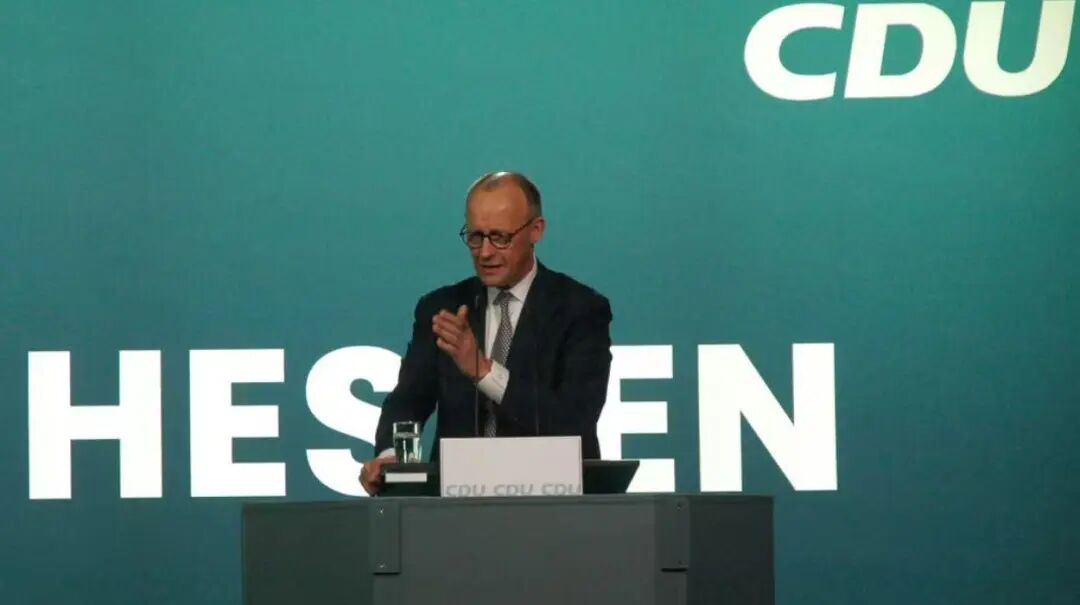
Image Source: CDU
Behind these remarks lies the stark contrast Merz experienced during his visit to China. German public broadcaster ARD noted that this sense of urgency stems from Merz's firsthand observations in Hangzhou and other cities, where he witnessed the depth of digital adoption and industrial automation. In recent years, China's 'Chinese speed' in new energy and high-end manufacturing is no longer just cold statistics but a powerful industrial rhythm that has left a strong impression on the German leader.
However, Merz's anxiety extends beyond immediate productivity gaps; it points to deeper strategic concerns about the erosion of Germany's 'industrial foundation.' He stated, 'I will never sacrifice Germany's status as a global industrial hub just to pursue an overly lopsided environmental policy. While we must achieve climate neutrality, losing all industrial jobs is not my answer.'
As Europe's economic engine, Germany stands at a crossroads: one path upholds its century-old precision machinery advantages, while the other requires urgent entry into digital and green technology sectors. Merz's 'visceral anxiety' reflects a core question for Germany: Can it maintain its industrial leadership under the original model as digital and green waves reshape global manufacturing?
Against this backdrop, the series of corporate cooperation signals released after this visit warrant close observation. Is Chinese technology emerging as an indispensable 'complement' for Germany's industrial transformation?
Is 'Germany's Old Engine Stalling'? Transformation: A Choice or Survival Issue?
'Declining old strength, undeveloped new strength'—these eight words may capture Germany's manufacturing dilemma. As an industrial powerhouse long reliant on automotive, machinery, and chemical exports, Germany is undergoing its most dramatic productivity restructuring since 1945.
First is the collapse of cost advantages. German industry's global competitiveness was built on 'cheap energy + precision machinery.' However, geopolitical shifts have deprived Germany of Russian natural gas subsidies, causing electricity costs in energy-intensive sectors like chemicals and steel to surge and remain among the highest globally. This cost inflation directly erodes the premium of 'Made in Germany' in international markets. Merz's concern about 'job losses from climate neutrality' stems from a core issue: if environmental costs cannot be offset through technological innovation, German factories will lose their economic viability.
Second is the 'strategic tear ' (strategic split) in automotive transformation. German automakers face a dilemma: they must maintain expensive internal combustion engine R&D to sustain traditional vehicle profits while investing astronomical sums in electric platforms and intelligent architectures. This dual capital expenditure (Capex) not only raises financial leverage but also leaves profit models adrift during transition. As 'three electric' systems (batteries, motors, controls) reshape value chains, Germany's traditional expertise in transmissions and engines no longer automatically translates to success in the electrification era.
Third is the 'rhythm gap' in intelligence. Traditional precision manufacturing relies on hardware iteration, while modern automotive competitiveness has shifted to chip and software architectures. Germany's relatively slow response in operating systems and underlying frameworks has left its automakers lagging in the intelligence race against Chinese and U.S. firms. This gap cannot be bridged by simply increasing work hours; it requires rethinking innovation models, talent structures, and entire industrial ecosystems.
Finally, demographic constraints harden productivity limits. Merz's mention of 'insufficient productivity' reflects Germany's aging population and high labor costs. The ratio of hourly wages to output in Germany is approaching a tipping point. With complex industrial transitions compounding severe skill shortages, German companies recognize that traditional incremental improvements will not ensure survival in global competition.
These challenges force German firms to re-examine global division of labor (division of labor) amid anxiety and seek 'capability complementarity' paths. China's technological maturity in scalable manufacturing, digital efficiency, and decarbonization toolchains offers Germany a 'plug-and-play' solution for transformation.
Battery Passport Cross-Border Data Trial: Germany's 'Ticket' for Transformation
In Germany's automotive transformation, power batteries represent both a 'ticket' to climate neutrality and a bottom line (bottom line) for manufacturing profits. Merz's emphasis on 'environmental protection must be economically feasible' finds practical expression in BMW's latest collaboration with CATL.
On February 25, 2026, BMW Group and CATL signed a memorandum of understanding in Beijing, marking a shift from simple capacity procurement to deeper systemic collaboration. The core focus is battery passport cross-border data trials and supply chain carbon footprint coordination.
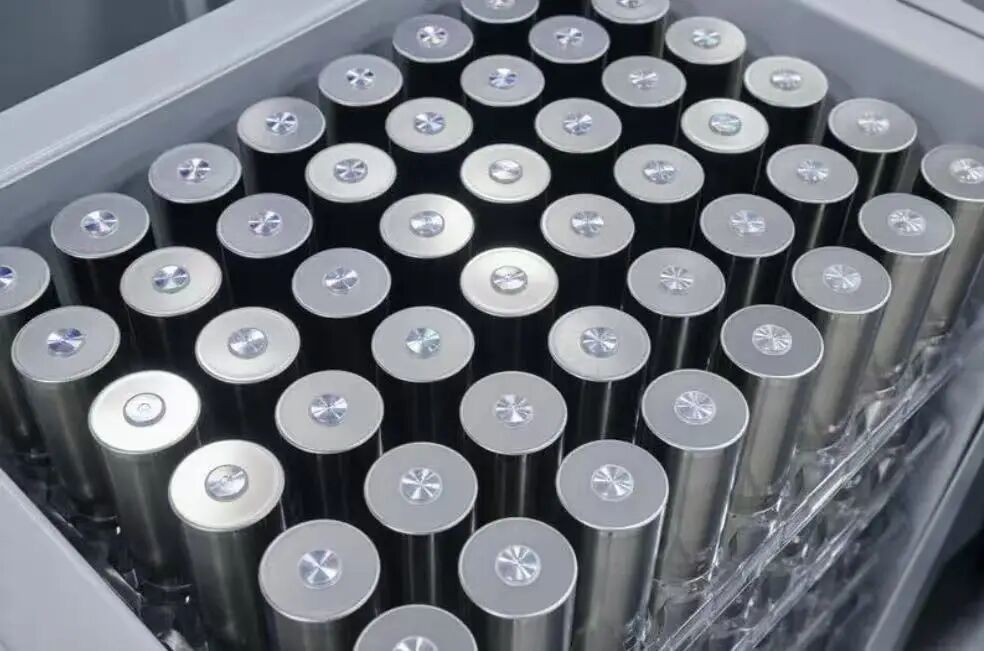
Image Source: BMW Group
The 'battery passport' transforms batteries from mere energy containers into entities with complete 'digital identities.' Under the EU Battery Regulation, batteries entering Europe must demonstrate full lifecycle traceability. For BMW, maintaining European market access requires ensuring every supply chain link meets carbon footprint compliance and enabling seamless data linkage.
Another key focus is enhancing cross-border data interaction capabilities. In a highly sensitive global data environment, aligning Chinese production data with German consumption regulations poses a common challenge for multinationals. The system being developed essentially creates a digital foundation for global high-end manufacturing that meets carbon neutrality requirements. Through battery passport exploration, BMW can monitor and manage supply chain low-carbon performance in real time. This deep systemic integration means Chinese technology is evolving from hardware supply to digital management tools, helping German manufacturing navigate stricter carbon trade rules.
For German automakers, this fulfills environmental obligations while leveraging mature production processes and digital tools to reduce vehicle bill-of-materials costs—a practical path to maintaining competitiveness during transformation.
Notably, 2026 marks a critical juncture for German industrial transformation. Failure to achieve breakthroughs in data compliance and cost control could result in market access restrictions or cost overruns. By integrating external advantage (strengths) through compliant solutions and digital tools, Germany's green transformation is achieving productive system coevolution (co-evolution).
When Germany Lacks Algorithms: Leveraging China for Intelligent Driving
As automotive intelligence enters its second half, mechanical excellence alone no longer guarantees sales dominance. Software algorithm responsiveness, interaction experiences, and complex scenario understanding now drive global competitiveness. On February 26, Mercedes-Benz and Chinese intelligent driving firm Momenta signed an upgraded cooperation memorandum in Beijing, offering a new perspective on 'Germany's transformation with Chinese solutions.'
During his visit, Merz, accompanied by Mercedes-Benz Chairman Ola Källenius, test-drove a new-generation assisted driving system in a Mercedes S-Class sedan. This state leader-endorsed experience sends a clear signal: German industry is accelerating integration of global top-tier algorithm capabilities.
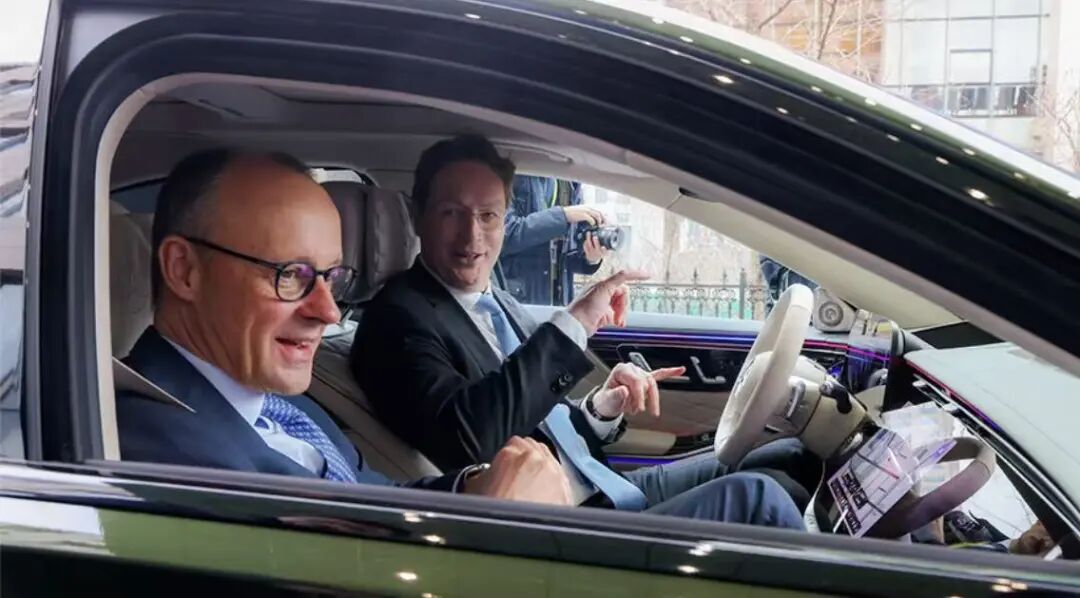
Image Source: Mercedes-Benz
Mercedes' choice reflects industry trends. Rather than purchasing standardized intelligent driving packages, it opted for Momenta's full-stack self-developed capabilities integrated into its proprietary MB.OS system. For Mercedes, this introduces not just algorithms but a self-evolving underlying architecture. Momenta's 'end-to-end' deep learning framework enables vehicles to learn driving strategies through massive data, reducing reliance on traditional rule-based coding. This technological complementarity addresses traditional software engineering bottlenecks in handling 'unstructured complex scenarios.'
Historically, German intelligent driving focused on rule-clear, relatively simple 'highway' logic. However, the competitive edge now lies in complex urban scenarios. China's dynamic urban traffic—frequent lane-changing negotiations, random non-motorized vehicle movements, and complex interchange navigation—provides a natural 'training ground' for algorithms. Through Chinese market testing, Mercedes' system has improved in two dimensions:
1. **Negotiation capability reshaping**: Addressing past user pain points of 'over-conservatism,' the new system learns human-like lane-changing interactions in congested conditions through Chinese data-driven training.
2. **Perception boundary expansion**: Visual perception models show significantly improved robustness against irregular construction vehicles or obstacles compared to European solutions.
In this transformation path, Chinese technology demonstrates 'modular' adaptability. The cooperation model maintains clear boundaries: Mercedes retains absolute control over chassis drive and braking safety, while delegating perception, decision-making, and planning software modules to Chinese partners.
This division also boosts R&D efficiency. First, it shortens development cycles—Mercedes avoids stacking tens of millions of code lines from scratch by leveraging verified models through API interfaces and shadow modes. Second, it enables rapid iteration through a joint data closed-loop system that collects extreme scenarios (Corner Cases) during driving, accelerating algorithm updates and changing the slow OTA upgrade pace of German vehicles.
Thus, Merz's anxiety about industrial job losses finds a pragmatic solution in the intelligence wave. Mercedes' integration of Chinese algorithm capabilities aims to secure brand premiums for high-end models through 'intelligent overtaking.' As German business daily *Handelsblatt* noted, this cooperation is not simple one-way technology transfer but a survival battle for 'brand soul and digital brain.' Chinese technology is being reshaped as the 'digital foundation' for German cars to regain intelligent driving discourse power. This bottom-up complementarity reflects a new German industrial mindset: defending industrial base status no longer means isolation but depends on efficient integration of global innovation resources.
Humanoid Robots Enter German Factories: Who Defines Next-Gen Production Lines?
Humanoid robot applications in manufacturing are adding a new dimension to Germany's industrial automation logic. On February 27, BMW Group announced the launch of a humanoid robot pilot at its Leipzig plant, marking a key step in deploying 'Physical AI' in European production systems.
This move echoes Merz's China visit. During his trip, Merz toured Chinese humanoid robot firm Unitree Technology, learning about their motion control capabilities and hardware integration ecosystems. Almost simultaneously, BMW unveiled its German robot pilot plan.
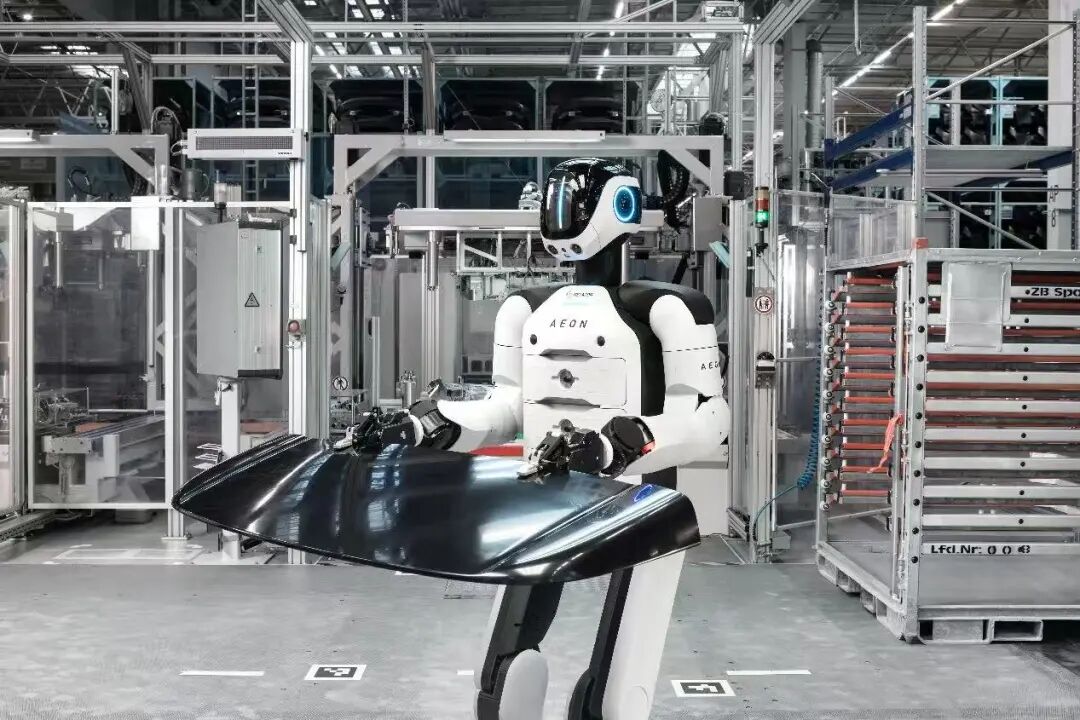
Image Source: BMW Group
While Merz's visit and BMW's decision are independent events, both point to an industry trend: amid aging populations and rising labor costs, 'human-like' automation solutions have become one option for German industry to preserve its manufacturing foundation.
BMW's Leipzig pilot, developed with partner Hexagon, uses AEON humanoid robots. This follows a 2025 pilot at BMW's Spartanburg plant in the U.S. with Figure AI, which provided industrial environment data for this European deployment.
BMW targets high-voltage battery assembly and component manufacturing for initial testing. This choice has clear industrial logic: battery pack assembly involves numerous precision plugging, wiring, and inspection tasks. Traditional industrial robot end-effectors are relatively rigid, limiting their ability to handle tasks requiring flexible touch. Humanoid robots with 'Physical AI' can achieve finer force control, mimicking human finger dexterity. BMW emphasizes that humanoid robots are not simple labor replacements but automation supplements designed to handle monotonous, ergonomically demanding, or safety-risk processes.
Meanwhile, to ensure that technology can be translated into actual productivity, BMW has established a 'Production Physics AI Competence Center.' This move reflects a transformative recognition within the German industrial sector: while hardware foundations remain crucial, the core competitiveness lies in mastering the definition rights of integrating 'AI with real manufacturing scenarios.'
Currently, although BMW has chosen European technological solutions in its German pilot projects, within the global industrial landscape of humanoid robots, the capabilities demonstrated by Chinese companies, represented by Unitree Technology, in terms of iteration speed and cost control, have become variables of global industrial attention.
From an industry observation perspective, Merz's visit to Unitree Technology in Hangzhou has been interpreted by German media as a new signal of German industry seeking 'cost reduction and efficiency enhancement.' As in-depth commentaries from Deutsche Presse-Agentur and 'Der Tagesspiegel' have noted: This is not merely a technical observation but represents Germany's attempt to leverage China's cost-effective hardware ecosystem to address its own dilemma of depleting human resources. As European manufacturing faces dual pressures of long R&D cycles and high application costs, China's mature robot supply chain may play a pivotal role as a 'substitute,' becoming a critical asset for German factories to maintain global competitiveness.
From trade exchanges to systemic integration: Chinese and German industries begin to 'need each other'
The collaborations in power batteries, intelligent driving, and humanoid robots mentioned earlier still fall under the integration of capabilities in specific sectors. However, deeper changes are occurring within the industrial systems themselves.
During Merz's visit to China, Roland Busch, Chairman of the Board and CEO of Siemens AG, accompanied the delegation and expressed the hope that both sides would 'become important components of each other's industrial ecosystems.' This reflects, to a certain extent, a systemic consensus reached by the industrial sectors of China and Germany on 'industrial ecological collaboration' in the deep waters of transformation. Such a consensus indicates that the cooperation model between the two sides is evolving from one-way 'trade exchanges' to two-way 'systemic integration.'
Over the past decades, the main theme of Sino-German industrial cooperation has been characterized by 'Germany exporting equipment and standards, while China provides the market and scale.' However, in the industrial context of 2026, this one-way flow is gradually evolving into a two-way ecological coupling.
Take digital transformation as an example: Germany possesses globally leading industrial software foundations (such as Siemens' Xcelerator and SAP's enterprise management systems), while China boasts globally intensive 5G industrial internet application scenarios. Through deep integration with Chinese cloud infrastructure and software developers, German companies can embed their rigorous industrial logic into China's digitalization process; meanwhile, China's agile innovations at the application level also provide reference samples for optimizing Germany's industrial system.
On the other hand, under the pressure of carbon neutrality, China and Germany have found more intersections in industrial software, automation systems, and green production standards. China's practical experience in areas such as new energy consumption and zero-carbon park management is also expected to become a feasible path for German industrial parks to explore climate goals—after all, such standard-level benchmarking can objectively significantly reduce the institutional costs of cross-border collaboration.
Against this backdrop, Chancellor Merz's concerns about 'how to preserve the industrial foundation amid transformation' have found practical response paths through deep collaboration. Chinese technology does not merely appear as a 'competitor' but is executing a structural substitution: Germany needs to consolidate its high-end manufacturing position through 'software reconstruction' of electrification and intelligence, while China, by embedding into globally high-standard industrial systems, is driving its own transformation from a 'manufacturing powerhouse' to an 'industrial standard participant.' As new energy solutions, intelligent driving assistance algorithms, and humanoid robot hardware supply chains gradually integrate into the German industrial system, this collaboration will no longer be a simple supply-demand relationship but a value symbiosis formed under the backdrop of deepening global industrial division of labor.
The solution may not be unique, but China is becoming a critical variable
On the track of global industrial restructuring, first-mover advantage has never been a permanent pass. Changes in energy costs, demographic structures, and the rapid evolution of next-generation industrial technologies are forcing Germany to readdress a question: how to strike a balance between green transformation and industrial status.
Merz's emphasis on 'not sacrificing industrial status for environmental protection' essentially seeks a practical path to secure a buffer period for traditional manufacturing to transform amid the dual pressures of green transition and industrial competition through technological upgrades and systemic collaboration.
Reviewing the cooperation signals released during this visit to China, it becomes clear that what Chinese technology offers is not merely a simple cost substitution but an embeddable capability structure: in the battery and supply chain sectors, it provides large-scale decarbonization and compliance tools; in intelligent driving, it supplements algorithmic iteration and data closed-loop capabilities; in humanoid robots and physical AI scenarios, it offers new technological options to hedge against labor constraints in manufacturing systems.
This embedding is transforming the logic of Sino-German cooperation. The focus of cooperation is shifting from markets and orders to capability integration at the industrial system level. Germany exports engineering standards, brand value, and safety systems, while China provides high-density manufacturing capabilities and digital efficiency. The interweaving of the two is no longer just complementary but resembles a reconfiguration of the division of labor structure.
Returning to the initial question: When Germany needs to transform, is Chinese technology one of the solutions? The answer may not be unique. However, under current realities, it has become an unavoidable variable. It can buy time for German industry and provide tools for reshaping its competitive structure.
In a global manufacturing system no longer dominated by a single center, such deep collaboration between China and Germany may not eliminate competition but is redefining the boundaries of cooperation. And this, perhaps, is the true resonance left by this visit to China.
Image: From the Internet
Article: Auto Review
Layout: Auto Review
-
![]()
AI Predicting the World Cup? It’s Time to Stop Insulting AI
-
![]()
iPhone 18 Pro Memory Costs Soar Threefold! Apple Seeks Trump Administration Approval for CXMT Memory Chips
-
![]()
AI Tutoring: A Crack in the Intense Competition of East Asia
-
![]()
Weekly Stock Review | Li Bin Sounds Alarm on 'Toughest' Year, Casting a Shadow Over Lei Jun's Noodle Moment
-
![]()
Car Manufacturing Paused, Yet Dreame’s Automotive Dream Marches On
-
![]()
Can the Brand-New Hongqi H7 Forge Its Own Identity in the Hybrid Vehicle Market?
-
![]()
Challenges in Redeeming Certificates for New Cars: Mercedes-Benz Dealership Group Grapples with Operational Hurdles Once Again
-
![]()
Porsche Returns to Volkswagen, Ending the 'Electric Ferrari' Story