Behind Toyota's Presidential Change and Mercedes-Benz and BMW's CEO Swaps: Prioritizing Sales or Profit?
 03/02 2026
 498
498
Not Just 'Understanding China,' but Also 'Crunching Numbers.'
On January 30, BMW Group officially announced that effective April 1, Cory Chen will succeed Gao Xiang as President and CEO of Greater China, while Gao Xiang will be transferred to serve as Vice President of MINI Americas, responsible for local business expansion.
On February 6, Toyota announced that current President and CEO Sato Koji will officially step down on April 1 and transition to Vice Chairman and Chief Industry Officer. The new President and CEO will be Kon Kinata, the current CFO, a 'financial pie ' executive.
On February 14, Mercedes-Benz issued a statement announcing that Duan Jianjun, President and CEO of Beijing Mercedes-Benz Sales Service Co., Ltd., resigned for personal reasons, with Lides taking over effective March 1. Additionally, Zhang Mingxia, Global Chief Marketing Officer of Smart, was transferred to serve as Executive Vice President of Sales at Mercedes-Benz Sales Company, strengthening the management team in preparation for 2026.
On February 24, Jaguar Land Rover China released an internal letter on structural adjustments, promoting Pan Qing to Global Procurement Director while retaining his role as China President. Meanwhile, Tim Howard (Han Shaoshuai), the Chief Financial Officer with a decade of experience in China, will succeed as China CEO, overseeing commercial operations.
Audi also announced personnel changes. Effective April 1, Daniel Weissland will take over as General Manager of FAW-Audi Sales Co., Ltd., while the current General Manager, Andi Koehl, will transfer to South Korea to oversee the Volkswagen passenger car brand.
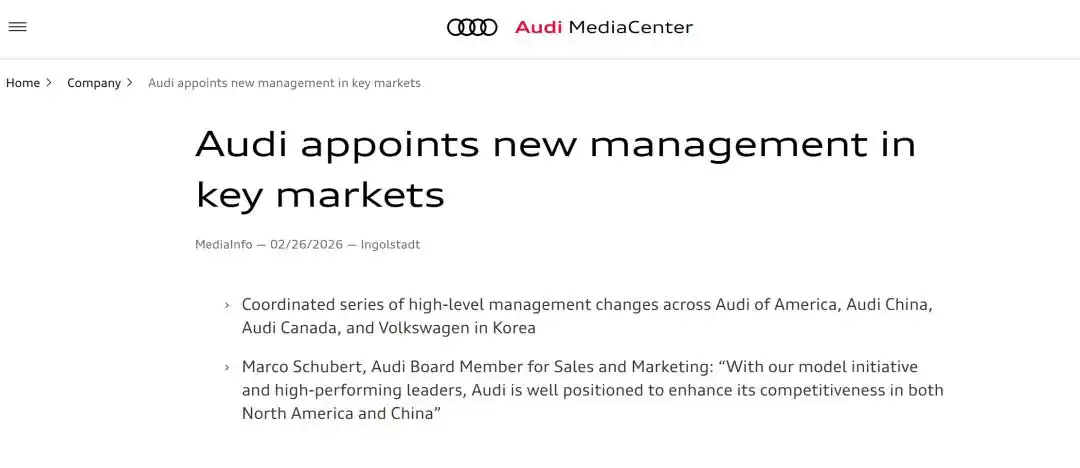
Following this, on June 1, Matthias Schepers, a key figure from Japan, will assume the role of Vice President of Sales and Marketing at Audi China, succeeding Zeng Huifang, who left for personal reasons.
From leaders in joint-venture automakers to top players in luxury brands, 'personnel changes' have become the main theme of the year, marked by a sense of urgency and imminence.
These are just the tip of the iceberg in terms of personnel changes. According to statistics, the automotive industry has witnessed a silent 'power game' at the start of 2026, with 21 global automakers replacing 160 executives. This spans from new-force automakers to established players, with Chang'an, Dongfeng, GAC, FAW, and BAIC all making strategic adjustments at the beginning of the year.
According to AlixPartners' '2026 Disruption Index' report, amid industry transformation pains, 40% of automotive executives fear job loss, with 95% of automaker CEOs expecting AI to lead to layoffs, and 44% believing related positions will shrink by over 10%.
Personnel across various roles are feeling 'uneasy.'
In summary, it can be distilled into a cold truth: 'When sales are poor, no one is indispensable.' Indeed, there are many reasons for such frequent personnel changes, but ultimately, the core issue is declining sales and reduced profits.
Take Toyota, the world's most profitable automaker, as an example. Despite achieving global sales of 11.3 million vehicles in 2025, securing its sixth consecutive year as the top seller, its net profit in the third quarter of last year still plummeted by 43% year-on-year. Thus, Toyota Chairman Akio Toyoda, sitting in a racing car and gazing at Toyota's account balance, fell into deep thought. The idea of replacing the president became a reality.
Joint-venture and luxury brands have been swift in their personnel reshuffles. The successors all have a core mission: 'Stay ahead of the market, and ensure channels and products keep pace.' Because selling cars in China today requires more than just storytelling.
Not Just 'Understanding China,' but Also 'Crunching Numbers.'
Understanding the Chinese market is a 'core consideration' evident in the leadership changes at most joint-venture automakers.
The timing of Mercedes-Benz's handover is seen by industry insiders as 'clever' and 'subtle.' It coincides with Mercedes-Benz's ambitious plans for 2026, marking the beginning of a significant product year.
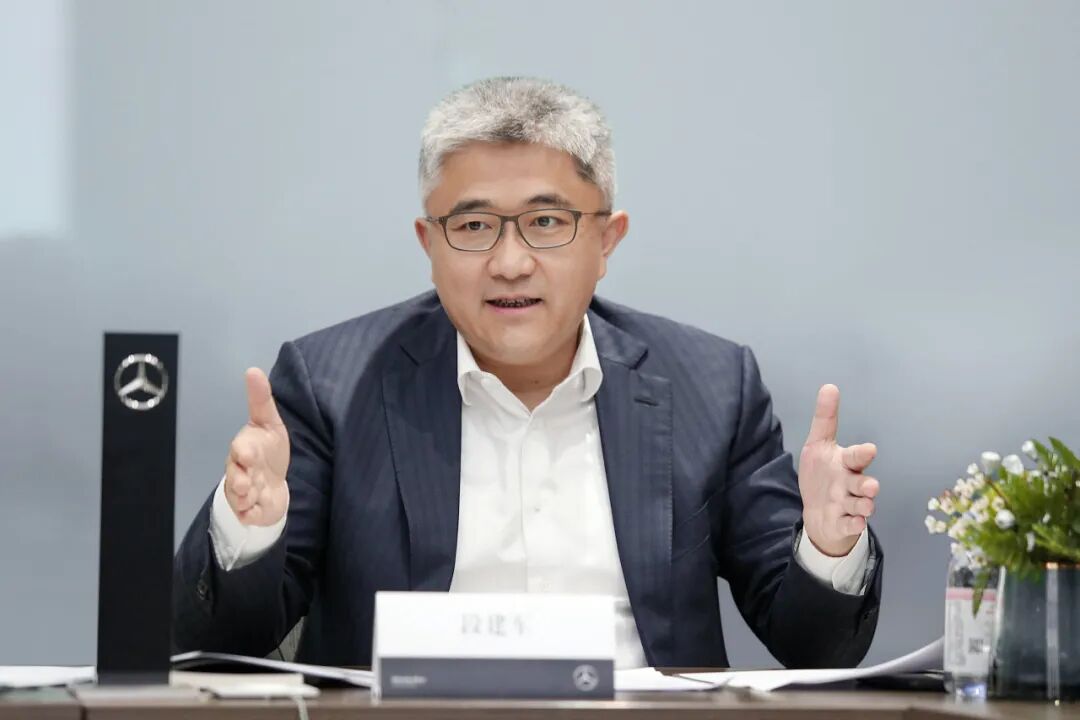
Duan Jianjun, who has served as CEO for nine years, is departing. How to describe Duan's tenure at Mercedes-Benz? In a nutshell, 'China has been Mercedes-Benz's largest single market globally for years, and Duan's contributions have been indispensable.'
Notably, from 2023 to 2025, amid erosion of the luxury car market by new forces and the onslaught of 'price wars,' Duan's strategies maintained Mercedes-Benz's pricing system and brand dignity.
However, with market dynamics shifting, Mercedes-Benz needs to break free from old constraints and enter a new phase. This means Mercedes-Benz requires a more robust and direct approach to mobilize global resources to forge its business in the Chinese market.
Lides, who joined Mercedes-Benz in 2004, is an ideal choice. He is not an empty suit from Stuttgart but has spent a quarter of his time deeply rooted in the Chinese market.
He was deeply involved in the rebranding of Smart, with its electric transformation serving as a model jointly crafted by Mercedes-Benz and Geely. Additionally, during his tenure as Executive Vice President of Sales at Mercedes-Benz Sales Company, he vigorously promoted digital transformation, bridging the gap between online and offline channels.
In other words, Lides understands the Chinese market and is familiar with modern operational methods. More importantly, as a 'German executive' with long-term experience in China, he understands Stuttgart's global logic, reducing communication costs with headquarters and making it easier to mobilize global resources for the Chinese market.
He is undoubtedly the ideal successor to Duan Jianjun. However, this does not mean his job will be easy; in fact, it will be even more challenging. He must leverage the foundation built during Duan's tenure to 'attack.'
2026 is seen by Mercedes-Benz as a significant product year and a year of technological breakthroughs. How to achieve these breakthroughs? With a series of new mass-market and electric vehicles launching, how to achieve both volume and quality growth? This has become Lides's 'top priority.'
Speaking of mobilizing global resources to forge the Chinese market, Jaguar Land Rover's personnel changes also reflect this intention.
In January 2017, Pan Qing was appointed to lead Jaguar Land Rover China amid a sales slump, dealer system turmoil, and a stalemate in localization cooperation. Under Pan's adjustments, Jaguar Land Rover achieved a record high of 146,000 sales in 2018.
However, changing times have impacted Jaguar Land Rover. The subsequent story is a familiar one. In 2025, Jaguar Land Rover's annual sales in China fell below 30,000 units, with Jaguar selling 14,217 units and Land Rover selling 12,302 units, a dismal decline.
With declining sales, a comprehensive lag in electrification, and encirclement by local brands, how can the market be defended? This personnel adjustment at Jaguar Land Rover can be seen as a 'forced self-rescue' amidst the turmoil. The responsibilities of the two individuals provide some insight.
Pan Qing stated in the internal letter, 'The current automotive industry landscape is complex and volatile, with global procurement functions elevated to the core of the global management board.' The new China CEO, Han Shaoshuai, comes from the financial system and previously served as CFO of Jaguar Land Rover China, leading the internal cost-reduction and efficiency-enhancement 'Dragon Plan,' skilled in cost control, profit stabilization, and contraction.
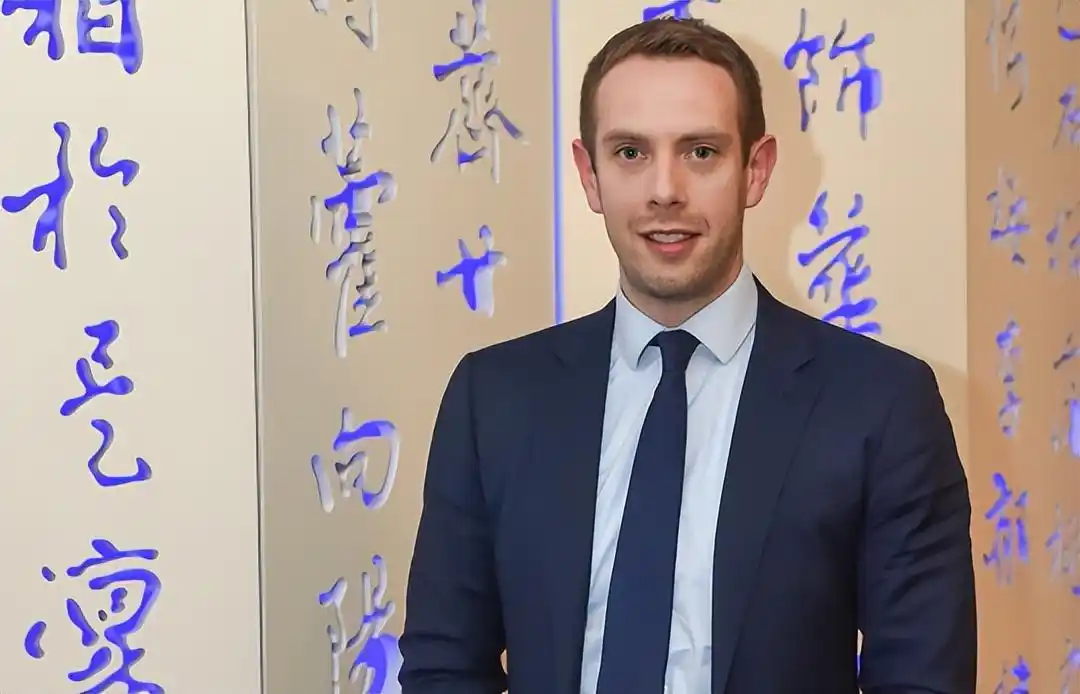
This personnel change has two objectives: first, the current strategic focus is on stemming the bleeding, preserving the core business, and prioritizing survival. Second, it elevates Pan Qing to the global core decision-making layer, breaking down barriers between China's supply chain and global R&D, enabling Jaguar Land Rover's electric vehicles to possess cost and technological advantages comparable to Chinese brands.
The intention of Jaguar Land Rover's headquarters is clear: control costs, preserve cash flow, and meticulously navigate through the winter. However, the question remains: Can a 'steward' skilled in cost calculation save Jaguar Land Rover?
'Crunching Numbers' is also Toyota's consideration.
On February 6, Toyota announced a change in president, with current Executive Director and CFO Kon Kinata ascending to the presidency effective April 1, and current President Sato Koji transitioning to Vice Chairman. This marks the first time in 30 years that Toyota has replaced its CEO a year ahead of schedule.
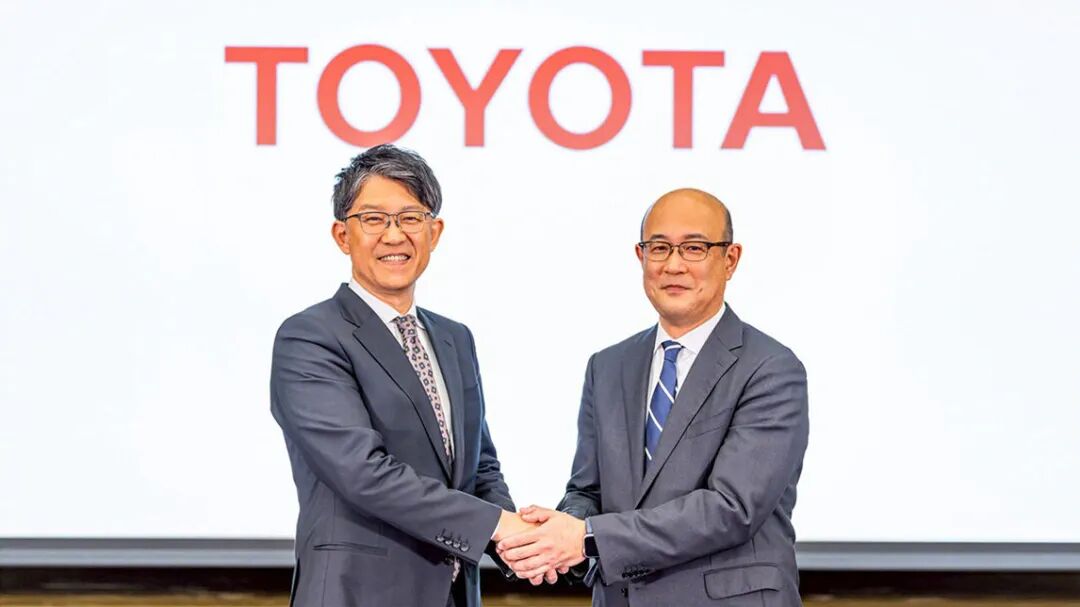
Why did Toyota unexpectedly switch its leader from an automotive engineer to a financial steward? The answer lies in the declining profits announced alongside the personnel changes.
The financial report for the first three quarters of 2025 continues to show revenue growth without profit increase, with sales up 6.8% year-on-year but operating profit down 13.1%. Meanwhile, Toyota cited Kon Kinata's appointment as president due to his position at the forefront of improving profitability amid declining profitability caused by factors such as high U.S. tariff policies.
Christopher Richter, Chief Asia Automotive Analyst at CLSA in Tokyo, said, 'Choosing a financial person as Toyota's helm is unusual.' There are also speculations that 'there seems to be some sort of regime change within Toyota.'
Koji Endo, Senior Automotive Analyst at SBI Securities in Tokyo, echoed a similar view. 'Kon Kinata has helped Toyota achieve positive financial results, but Toyota also faces significant challenges, lagging in software, robotaxis, and other areas. Catching up will require substantial funds.'
Currently, Toyota's predicament is evident. While maintaining its global sales crown, it faces higher U.S. tariffs in its most important market, increased competition from China, and potential supply chain challenges.
In Kon Kinata's view, the immediate priority is to improve the profitability of Toyota's global production bases and lower the break-even point, helping Toyota better navigate industry downturns.
BMW's moves are even more direct, replacing executives familiar with the Chinese market with German headquarters executives lacking local operational experience. Cory Chen, with a financial background, takes over BMW Brilliance, shifting the management approach from localization to financial control and alignment with global standards.
Since joining BMW in 1998, Korchinsky has spent his entire 26-year career within the group, deeply understanding BMW's culture and strategic direction. BMW Group values Korchinsky's ability to lead business development in complex and volatile market environments.
Meanwhile, Korchinsky has experience in markets with high electric vehicle penetration, such as Northern Europe, and achievements in driving electrification transformation in Germany. This is also what BMW values. 'Under Korchinsky's leadership, one in every five BMWs sold in Germany is a pure electric vehicle.'
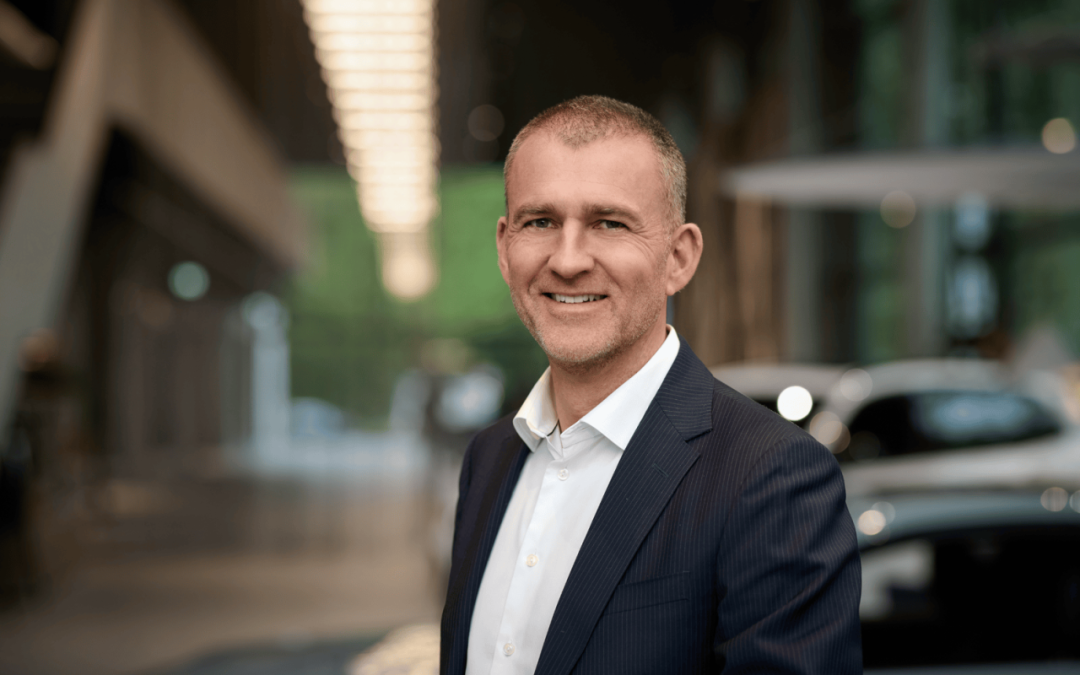
However, the question remains: Will an executive without Chinese experience 'acclimate,' and can the 'German experience' be successfully replicated from Munich to Beijing? This has become a challenge for BMW.
There's no room for gambles.
The wave of personnel changes at foreign automakers is essentially to adapt to the rapid changes in the Chinese market. However, it also reveals a fundamental truth: the rapid iteration of electrification and intelligence is forcing multinational automakers to prioritize profitability, cost reduction, and cash flow, propelling financial executives to the forefront.
A glimpse into this trend shows that the automotive industry in 2026 has shifted from scale expansion to prioritizing efficiency and profitability. Efficiency and profitability have become fundamental to survival.
This applies to every participant.
Note: Some images are sourced from the internet. If there is any infringement, please contact us for removal.
-END-
-
![]()
AI Predicting the World Cup? It’s Time to Stop Insulting AI
-
![]()
iPhone 18 Pro Memory Costs Soar Threefold! Apple Seeks Trump Administration Approval for CXMT Memory Chips
-
![]()
AI Tutoring: A Crack in the Intense Competition of East Asia
-
![]()
Weekly Stock Review | Li Bin Sounds Alarm on 'Toughest' Year, Casting a Shadow Over Lei Jun's Noodle Moment
-
![]()
Car Manufacturing Paused, Yet Dreame’s Automotive Dream Marches On
-
![]()
Can the Brand-New Hongqi H7 Forge Its Own Identity in the Hybrid Vehicle Market?
-
![]()
Challenges in Redeeming Certificates for New Cars: Mercedes-Benz Dealership Group Grapples with Operational Hurdles Once Again
-
![]()
Porsche Returns to Volkswagen, Ending the 'Electric Ferrari' Story