BMW M Surpasses 10,000 Sales for the First Time, Mercedes-Benz C63 Sees Double-Digit Decline: A Glimpse into the 2026 Performance Car Market
 03/03 2026
 473
473
Author / Rui Wu
Produced by / Insight Auto
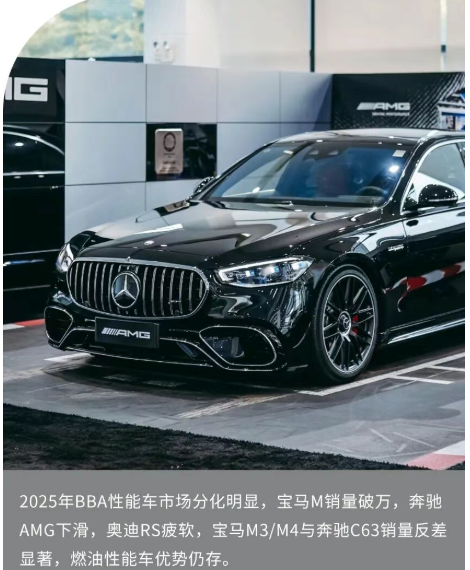
In 2025, the domestic BBA performance car market will undergo significant fragmentation. BMW M will distinguish itself with its robust product lineup, while Mercedes-AMG will experience a sharp decline due to strategic missteps, and Audi RS will show signs of weakness. The sales disparity between the BMW M3/M4 and Mercedes-Benz C63 will epitomize the year's most notable market trend.
When discussing BBA performance cars, it's common to categorize the performance divisions of these three brands into 'high and low tiers.' For instance, Audi's S models and AMG models without distinct badges are often overlooked for being perceived as 'not pure enough.' However, in the current era of new energy vehicles, some attributes of traditional fuel-powered performance cars have been eclipsed by household electric vehicles, fundamentally altering the criteria for evaluating performance cars.
In the 2025 domestic luxury performance car market, the sales gap among the three brands will continue to widen. BMW M's sales in the Chinese market will exceed 10,000 units for the first time, marking a year-on-year increase of 27.9% and solidifying its position at the pinnacle of the BBA performance car rankings.
Mercedes-AMG Brand: Overall sales will decline, with the core C63 series registering only double-digit sales, effectively marginalizing the model. Audi RS Brand: Annual sales will reach approximately 3,000 units, a year-on-year decrease of 13%, indicating a continued decline in product competitiveness and market presence.
Focusing on the highly anticipated mid-size performance sedans, the BMW M3 and M4 will achieve annual sales exceeding 2,000 units, establishing them as the hottest models in the current BBA performance car segment.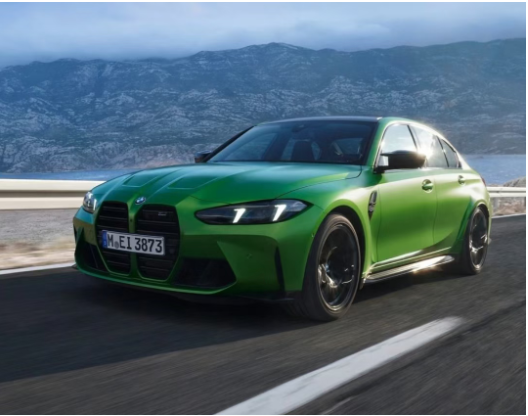
This is understandable, as the main selling points of performance cars are power, modification potential, and ultimate handling. While the advantages of performance cars over ordinary household cars have been neutralized by various forms of new energy vehicles, the ultimate driving experience remains a strong suit of fuel-powered performance cars, with BMW's advantages particularly prominent.
This generation of the S58 engine not only boasts significantly improved reliability but also reaches unprecedented levels of modification potential, with cases of 800 or even 1,000 horsepower emerging frequently. Combined with the use of composite materials and carbon fiber, its lightweight design leaves many new energy competitors trailing. In terms of overall strength, it can be considered nearly unmatched in its class when compared to the C63, RS5, or even niche models like the Quadrifoglio.
Meanwhile, the Mercedes-Benz C63, once a benchmark for V8 sentimentality, will see its sales plummet to single digits in 2025 due to product and pricing missteps. On the power front, it abandoned the classic V8 engine in favor of a 2.0T four-cylinder plug-in hybrid powertrain. Despite achieving a combined output of 680 horsepower, it has lost the iconic sound and mechanical feel that define performance cars, while its weight has surged to 2.1 tons, significantly degrading its handling.
For consumers seeking handling, the C63 is over 300 kilograms heavier than the M3/M4, equivalent to carrying a full load of passengers in a comparison. As for the improved power response from the plug-in hybrid system, wouldn't it be more straightforward to spend half the money and buy a 1,000-horsepower electric car?
In fact, it's not just Mercedes' electrified performance cars that have hit a wall; even the M series' flagship, the M5, hasn't fared well. After incorporating a plug-in hybrid system, the new M5's weight has ballooned to nearly 2.5 tons, heavier than an F150 pickup truck from the same period, transforming its positioning from a 'gentleman racer' to a 'straight-line flyer.'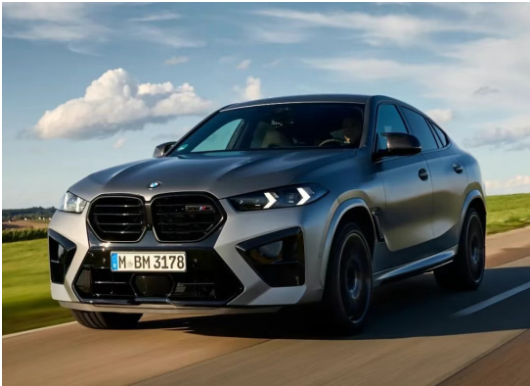
During that time, a quick news update brought joy to car enthusiasts, with the headline: 'A Performance Car Heavier Than the M5 Has Emerged!'
Curious netizens clicked in, only to find that BMW had introduced an M5 Touring version, which naturally weighed several dozen kilograms more than the sedan version!
However, quite unexpectedly, the best-selling BMW M globally in 2025 turns out to be the X3 M50, an 'unorthodox' BMW M. Nevertheless, Frank van Meel, head of the M division, recently confirmed that CS versions will not be introduced for the X3, X5, and X6.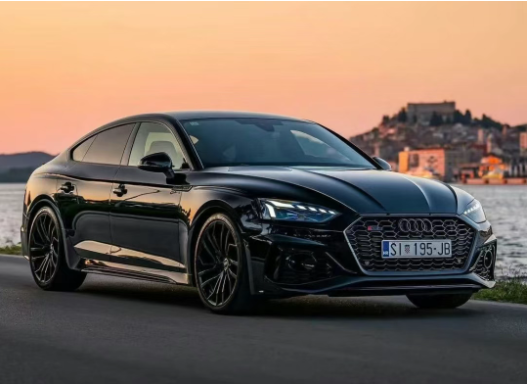
Since the debut of the M1 in 1978, the M division has expanded from pure motorsport to the mainstream market. While high-performance crossovers like the X5 M and X6 M have achieved remarkable sales and profitability, BMW believes there should be limits to excess. Frank van Meel pointed out that the CS, CSL, and GTS series have always been rooted in racing DNA. Applying these extreme lightweight and streamlined labels, designed for the track, to SUVs with a higher center of gravity would be illogical.
In summary, after a flourishing period for performance cars, the market has now entered a phase of winnowing. Irreplaceable models like the M2, M3, and M4 will continue to thrive in the foreseeable future.
On the other hand, 'ordinary' high-horsepower BBA models that offer a similar experience to domestic new energy vehicles will need to reposition themselves, at least in the domestic market. For instance, the once-popular Audi RS6, which commanded a premium price exceeding 2 million yuan upon launch, now struggles with its pricing system for both new and used cars.
In 2026, electrification will be the dominant trend in the performance car industry, but pure fuel-powered performance cars will still hold irreplaceable niche value. To maintain their market position, BBA performance cars must not only adapt to electrification trends but also refrain from abandoning their mechanical feel and core brand values; otherwise, they will continue to lose market share to domestic electric performance cars.
END
-
![]()
Buying Jimeng and Getting Doubao for Free? Decoding the Pricing Strategy of ByteDance's AI Services
-
![]()
Robot Sets New Human Record in Half Marathon: Honor’s AI Ecosystem Strategy Hits Milestone
-
![]()
Who are the key players in the WiFi6 chip market, both visible and behind the scenes?
-
![]()
Doubao to Start Charging: Without Transparent Pricing, How Can There Be Competition?
-
![]()
What is the recovery timeline for Microsoft after the breakup?
-
![]()
Who is Most Panicked by Doubao's Charging Model?
-
![]()
OpenAI Surprises Apple: Doubao Phone Emerges as the 'Trailblazer'
-
![]()
There's No Such Thing as a Truly Free Doubao