Amid Middle East Turmoil, Chinese Autonomous Vehicles Undergo a 'Stress Test': WeRide, Apollo Go, and Pony.ai Temporarily Halt Robotaxi Trials—Not a Retreat, but a Strategic Step Toward Global Expansi
 03/03 2026
 540
540
Introduction
In late February and early March 2026, tensions flared unexpectedly in the Middle East, drawing global attention to geopolitical rivalries. Amid this turmoil, an industry not typically in the spotlight—Chinese autonomous driving—found itself thrust into the limelight.
According to Yicai Global, leading Chinese autonomous driving firms, including WeRide, Baidu's Apollo Go, and Pony.ai, were compelled to swiftly modify their operations in the UAE, Saudi Arabia, and other regions.
(For further reading, click: WeRide Suspends Autonomous Operations in Dubai Amid Iran Tensions)

I. Autonomous Driving in Conflict Zones: From Rapid Expansion to Risk Mitigation
As the specter of conflict loomed over the Middle East, Chinese autonomous driving companies abruptly shifted their overseas Robotaxi strategies from aggressive expansion to cautious risk management.
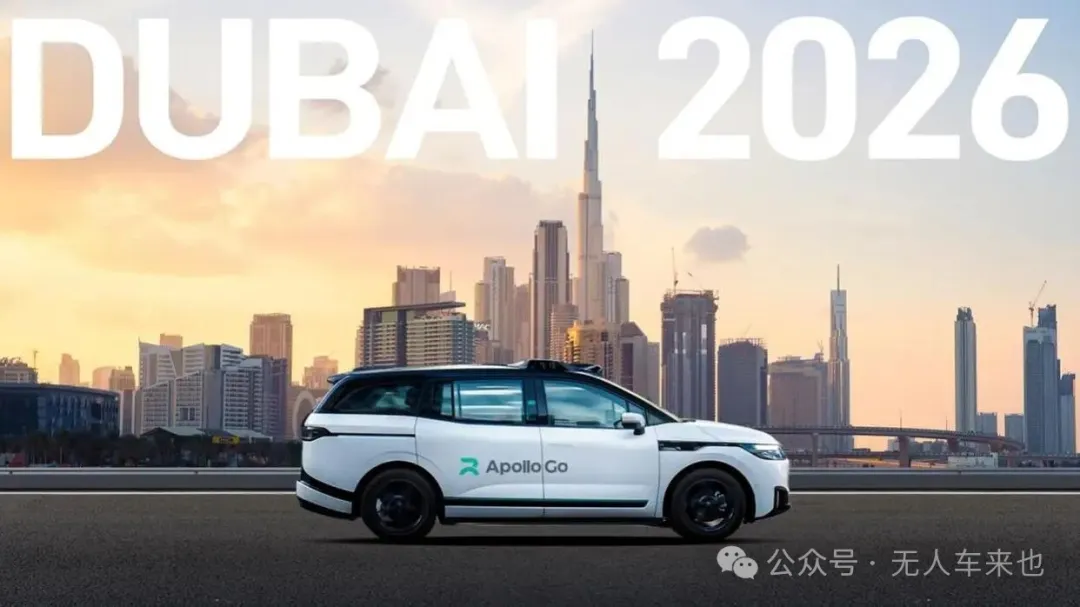
WeRide relocated its Dubai Robotaxi fleet to secure indoor parking facilities, Apollo Go urgently suspended autonomous testing in the UAE, and Pony.ai implemented a temporary halt—only to resume operations gradually!
—This approach mirrors a tactical retreat in gaming: not a sign of defeat, but a strategic pause to regroup, assess, and prepare for a counterattack.
(For further reading, click: Apollo Go Temporarily Suspends Autonomous Services in the UAE...)
Let’s delve into the risk mitigation strategies of these three firms:
WeRide’s Dubai team adopted a dual strategy of remote work and supply stockpiling, even collaborating with local Chinese supermarkets—a testament to 'Chinese ingenuity' in action.
Apollo Go’s suspension announcement, laden with phrases like 'regulatory compliance' and 'safety assurance,' read like a routine office memo—yet concealed a meticulous evaluation of the local situation.
Pony.ai’s 'pause-and-restart' in Doha resembled a rigorous stress test, gauging the resilience of its technology and team under extreme conditions.
Interestingly, not all business lines were disrupted.
WeRide’s fleets in Abu Dhabi and Riyadh continued normal operations, with order volumes remaining relatively stable!
—After all, local demand for ride-hailing and food delivery persisted; reliable transportation services became even more vital amid the uncertainty.
It’s akin to running a restaurant: even if construction noise echoes outside, patrons inside will continue dining as long as the kitchen remains operational.
II. Why the Middle East is a Prime Hub for Robotaxi Expansion
Some may wonder: Why do Chinese autonomous driving companies flock to the Middle East despite its instability?
The answer lies in the region’s unique appeal as a 'golden testing ground' for Robotaxi services.
Cities like Dubai and Abu Dhabi boast infrastructure so advanced that roads resemble airstrips, with 5G coverage surpassing even the most reliable WiFi networks.
Local governments embrace new technologies with the enthusiasm of young fans chasing internet celebrities, offering generous policy incentives to attract companies.
More crucially, Middle Eastern demand for premium transportation resembles a desert traveler craving an icy cola—urgent, insatiable, and unmet by traditional options.
WeRide CEO Tony Han noted that Robotaxi revenue soared in Q2 2025, largely driven by the Middle Eastern market.
(For further reading, click: Chinese Autonomous Vehicles Sweep Abu Dhabi! 7 Giants Deploy 2,500 L4 Robotaxis as Middle East Invests $50 Billion, Launching Global Commercialization)
Consider this: In Dubai, tourists riding Robotaxis to the Burj Khalifa exude sophistication; local tycoons use them as 'mobile meeting rooms,' adding a tech-savvy edge to business deals.
Apollo Go launched commercial operations in Abu Dhabi in January and secured testing permits in Dubai by March—a lightning-fast expansion.
Pony.ai CEO James Peng dubbed Dubai 'autonomous driving heaven,' and for good reason: few places globally treat Robotaxis as daily transportation.
Moreover, the Middle East’s Robotaxi market operates on a 'first-come, first-served' basis.
WeRide has already deployed 150 vehicles and signed a '1,200 to tens of thousands' mega-deal with Uber.
Apollo Go is collaborating with AutoGo while planning a '1,000-vehicle fleet' with Uber.
Pony.ai is testing its services, eager to carve out market share.
This scene mirrors the fierce competition among internet companies for mobile payment dominance years ago—whoever gains a foothold first reaps future rewards.
III. The Pause Isn’t the End—It’s a Strategic Pivot
When news broke of Apollo Go suspending UAE operations, skepticism arose: 'Is autonomous driving unreliable?' 'Are Chinese tech companies struggling overseas?'
Such doubts are misplaced. Pausing testing is akin to a smartphone system update—not a breakdown, but a patch to fix bugs and enhance performance.
As industry experts note, autonomous driving technology thrives on a cycle of 'trial-error-optimization.'
Middle East tensions simply added an 'extreme environment test' to this cycle.
Apollo Go’s pause resembles 'squatting to gather strength': complying with local regulations to ensure full compliance while adjusting teams and technology for future growth.
After all, teams that navigate conflict can compete fiercely in any market.
From a user perspective, this pause fosters more realistic expectations of autonomous driving.
Previously, many assumed autonomous vehicles would 'just work' at the push of a button. Now, they understand the countless technical, regulatory, and safety considerations involved.
It’s like buying a car: acceleration matters, but so do brakes and airbags.
IV. The Future of Autonomous Driving: Navigating Uncertainty with Confidence
The Middle East crisis taught Chinese autonomous driving companies a valuable lesson: global expansion demands not just technical prowess but also political, cultural, and risk management acumen.
The responses of WeRide, Apollo Go, and Pony.ai offer a blueprint for the industry: how to protect core operations at minimal cost when unforeseen challenges arise, and how to find growth amid uncertainty.
WeRide’s 'selective pause + core area operations' exemplifies 'not putting all eggs in one basket.'
Apollo Go’s 'regulatory compliance + team support' reflects 'compliance trumps speed.'
Pony.ai’s 'pause-evaluate-restart' demonstrates 'flexibility beats stubbornness.' These lessons are more valuable than any patent.
As for when autonomous driving will enter households worldwide, the answer may lie in these 'pauses' and 'restarts.'
It won’t be a sudden revolution but a patient evolution.
Much like smartphones replacing feature phones—a process that took a decade from the first iPhone to universal adoption—autonomous driving will require technological iteration, regulatory refinement, user trust, and 'stress tests' like the Middle East crisis to mature.
In short, Autonomous Vehicles Are Coming (WeChat ID: AutonomousVehiclesAreComing) believes:
Middle Eastern gunfire will eventually cease. And these Chinese autonomous vehicles, having endured 'stress tests,' will drive more steadily than ever when they hit the road again.
What do you think?
#AutonomousVehiclesAreComing #AutonomousDriving #SelfDriving #DriverlessCars
-
800 Trillion Won Bet: Samsung and SK Hynix to Build Two Wafer Fabs Each
-
![]()
Musk's Chessboard Gains Another Piece: SpaceX Secures Another Strategic Acquisition!
-
![]()
Why is Hyundai Willing to Acquire Boston Dynamics at a Loss?
-
![]()
Volkswagen to Cut 100,000 Jobs Worldwide Amid EU Trade Barriers to Shield Local Carmakers
-
![]()
Can Leapmotor's New C-Series Take the Lead in Its Family Lineup?
-
![]()
Multimodal AI Model Revolutionizes Audio-Visual Perception in Steelmaking Safety: Hikvision and Nanjing Iron and Steel Forge New Pathways
-
![]()
Can Chinese Automakers Pose Such Fierce Competition? Mercedes-Benz Cancels Year-End Bonuses for 90,000 Staff, Volkswagen to Lay Off 100,000 Employees...
-
![]()
Anhui and Zhejiang Vie for the Crown in New Energy Vehicle Dominance: Who Will Prevail?