Strait of Hormuz Blockade Triggers Global Reassessment of China’s New Energy Vehicle Strategy
 03/04 2026
 683
683
“However, this development casts a shadow over China’s traditional fuel vehicle market and its automotive export prospects.”
Author | Zhen Yao Editor | Li Guozheng Produced by | Bangning Studio (gbngzs)
“We will not permit a single drop of oil to leave this region.”
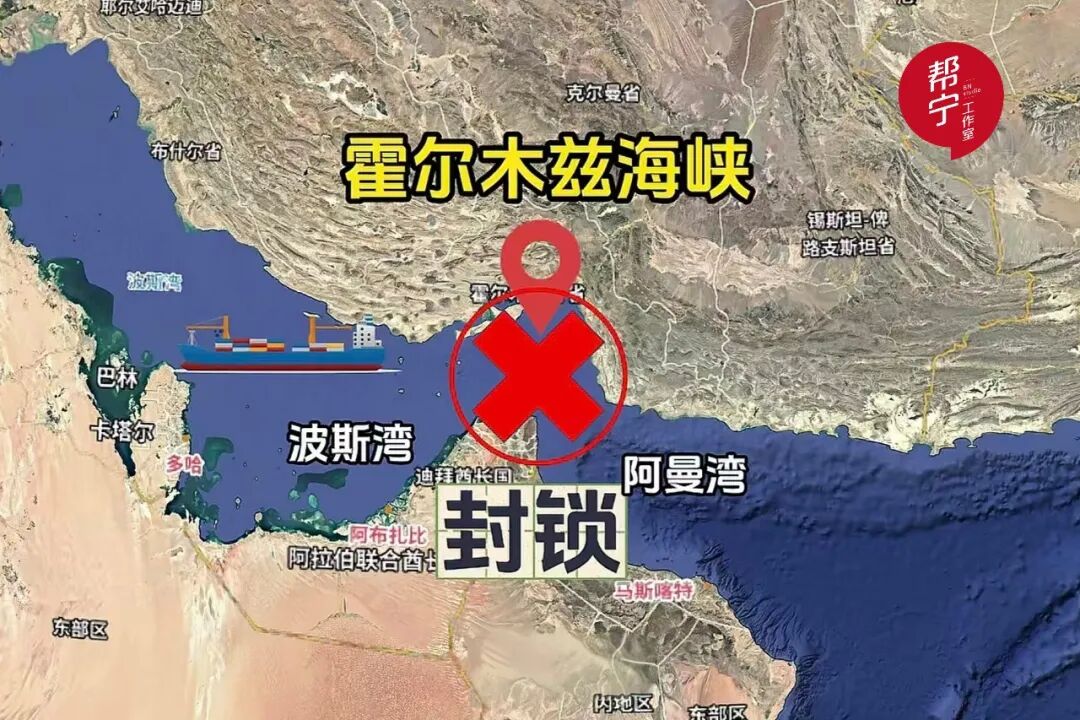
On March 3, according to Xinhua News Agency, Commander Jabari of Iran’s Islamic Revolutionary Guard Corps issued a stern warning during a live television broadcast, stating that any vessel attempting to traverse the Strait of Hormuz would face destruction.
This is not merely a threat—it is a reality unfolding before our eyes.
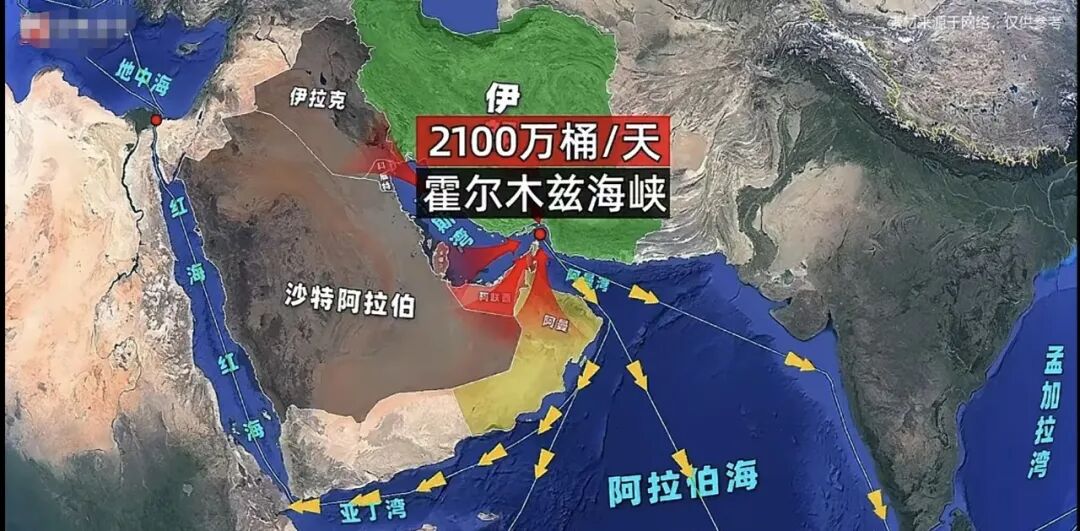
According to Iran’s Fars News Agency, no oil tankers are currently passing through the Strait of Hormuz. Twenty-six tankers are idling nearby, while twenty-seven have come to a complete halt, with a combined transport capacity of 12 million barrels. On Kpler’s real-time maritime traffic map, the sides of this global energy chokepoint are densely packed with stationary vessels, creating a striking visual.
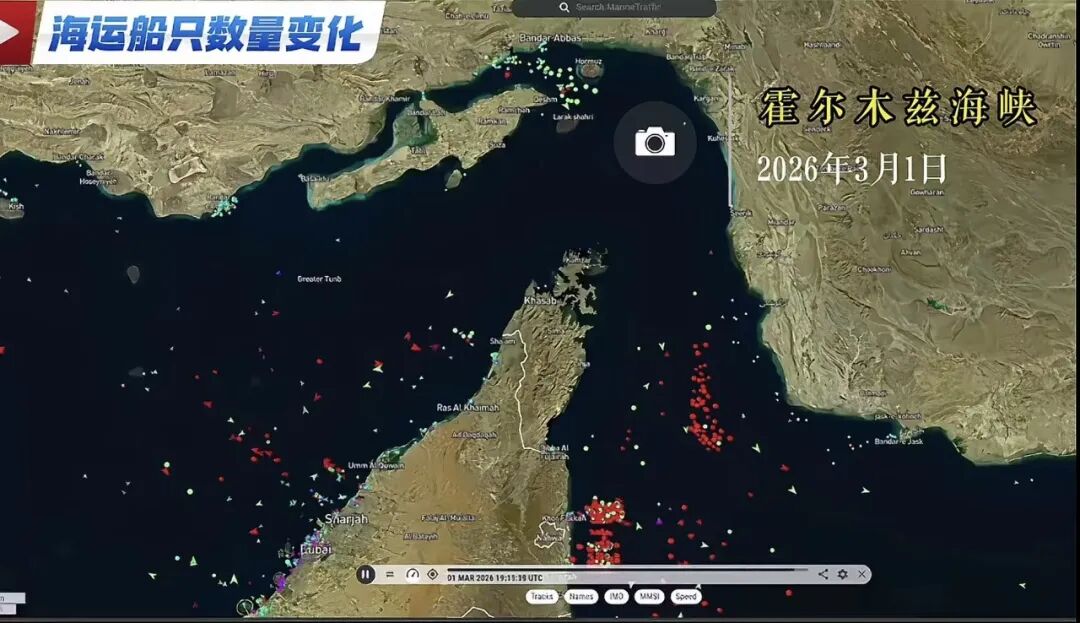
Four days ago, the United States and Israel launched military strikes against Iran, prompting Iran to respond with its most decisive move yet: blocking the Strait of Hormuz.
The black swan event the world feared most has finally materialized.
This “world oil valve,” responsible for transporting over one-third of globally seaborne oil and nearly 20% of liquefied natural gas, has been completely shut. “A global oil shock is reshaping the economic order and industrial patterns,” an observer remarked.
The closure has immediately sent shockwaves through the international oil market, with Brent crude surging to $82.37 per barrel and WTI crude reaching $75.33 per barrel.
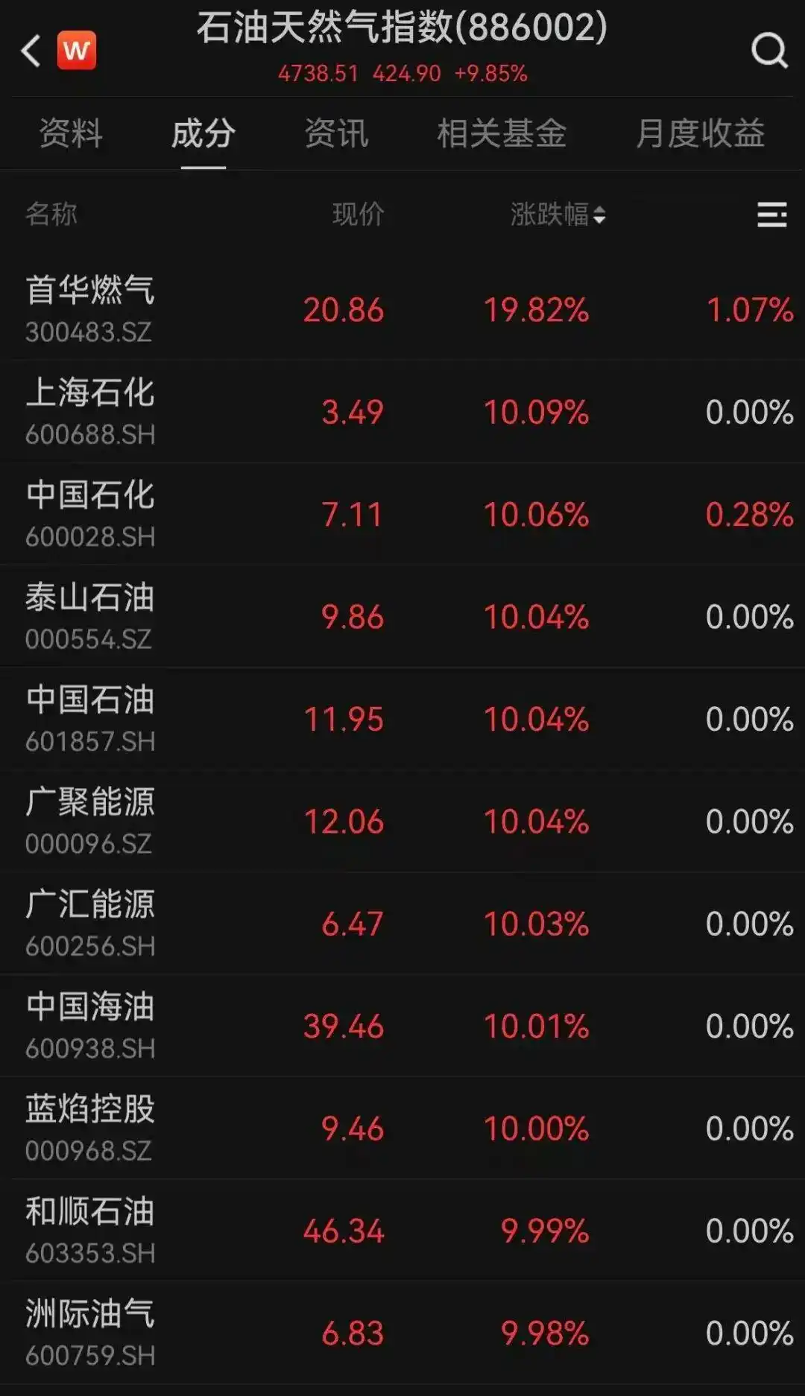
Capital markets reacted most vigorously. On March 2, China’s A-share “three oil giants”—PetroChina, Sinopec, and CNOOC—all hit their daily upper limits at closing for the first time in history. PetroChina’s stock price reached an 11-year high, driving the entire oil and gas sector upward, with the oil and gas index soaring 9.52% in a single day.
Soaring oil prices and widespread energy anxiety represent a dual pressure on traditional fuel vehicles in terms of costs and consumer expectations. However, for China’s new energy vehicles, they serve as a rare strategic catalyst.
“I have to admire the national strategy. Electric vehicles may not necessarily save money, but they definitely save oil,” a new energy vehicle owner posted on WeChat Moments, secretly pleased.
Over the past few years, China has leveraged its national strength to drive electrification transformation, establishing the world’s most complete new energy industrial chain—spanning batteries, motors, electronic controls, and vehicle manufacturing—with penetration rates continuously rising.
This geopolitical shock in the distant Middle East has, in the most convincing way, confirmed the foresight and necessity of China’s new energy vehicle strategy.
▍01 Impact of the Blockade
JPMorgan Chase presents a grim calculation: a prolonged closure of the strait would leave Middle Eastern major oil producers with only 25 days of oil inventories. Beyond this window, oil fields would be forced to halt production, and oil prices would skyrocket to unpredictable levels.
Saudi Arabia, Iraq, the United Arab Emirates, Qatar... Nearly all Gulf oil-producing countries have their export lifelines tightly controlled by this waterway.
Historically, the Strait of Hormuz has rarely been truly closed. Iran’s current action is equivalent to directly pressing the pause button on global energy supply, pushing the global economy to the brink of suffocation.
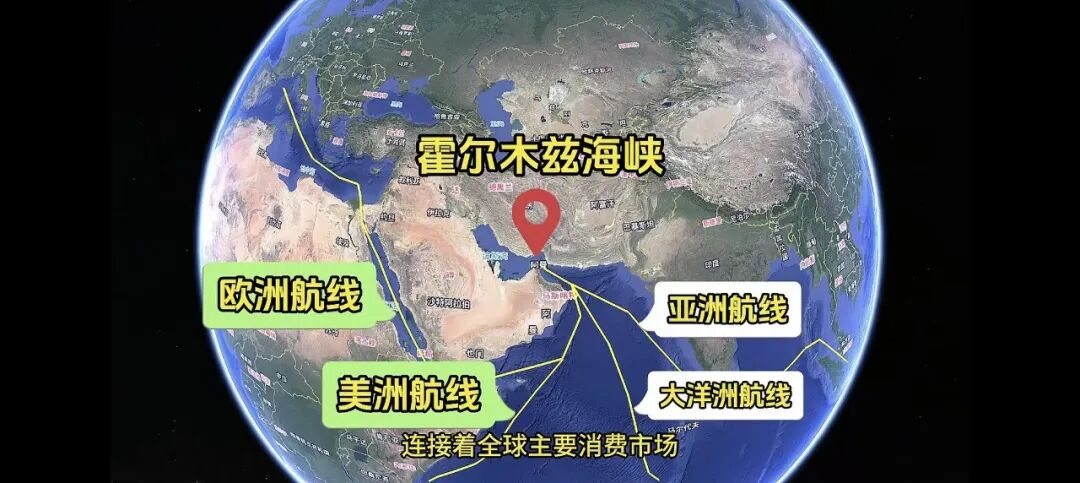
Chain reactions have quickly emerged.
According to China News Service in Bangkok on March 1, given the severe situation of the strait’s closure, Thai Energy Minister Attapon urgently ordered a halt to oil exports on the same day, initiating a regional energy self-preservation mode.
The most directly impacted is Japan, which relies heavily on Middle Eastern oil.
Data from January this year reveals Japan’s energy vulnerability: 95% of its crude oil imports come from the Middle East, with 73.3% having to pass through the Strait of Hormuz.
Simple calculations show that the strait’s blockade would directly halt nearly 70% of Japan’s crude oil imports—a fatal blow to Japan’s highly oil-dependent industries.
Japanese media frankly stated that if the strait remains blocked long-term, Japan’s economy would suffer devastating damage, with GDP shrinking by at least 3%. More alarmingly, every $10 increase in oil prices per barrel would raise Japan’s crude oil import costs by RMB 57 billion, akin to massive hemorrhage.
On March 2, oil prices surged nearly 7%, briefly exceeding $82 per barrel. Some analysts warn that if the conflict persists through March, oil prices could soar above $100 per barrel.
The long-term impact of the blockade extends far beyond minor oil price fluctuations. Global transportation costs are expected to skyrocket, leading to across-the-board price increases in daily necessities. Calculations show that a one-week blockade would directly drive global inflation up by 1 percentage point.
A global oil crisis has transitioned from expectation to reality.
▍02 Beyond Just Price Hikes in the Automotive Industry
Soaring oil prices are just the first layer of impact.
While many are calculating how much more they’ll pay at the pump, they fail to realize that the Strait of Hormuz is not just an oil transport route but also a critical passage for plastic raw materials, ethylene, polyethylene, polypropylene, aluminum, steel—virtually all core automotive raw materials.
With the strait blocked, costs across the entire supply chain—from tires, interiors, and bumpers to electronic components—are forcibly pushed higher, with Asian and European supply chains bearing the brunt.
“The instability in the region will undoubtedly produce unpredictable chain reactions. For automotive companies, this is just another disruption, another thing to worry about,” Dan Hearsch, global co-leader of AlixPartners’ automotive and industrial practice, said in an interview with Automotive News.
This crisis poses the most immediate and severe challenge to Chinese automakers.
The Middle East has long been a key market for Chinese vehicle exports.
Data from the China Passenger Car Association (CPCA) shows that in 2025, China exported 826,000 vehicles to the Middle East, including 128,000 new energy vehicles—a 132% year-on-year increase.
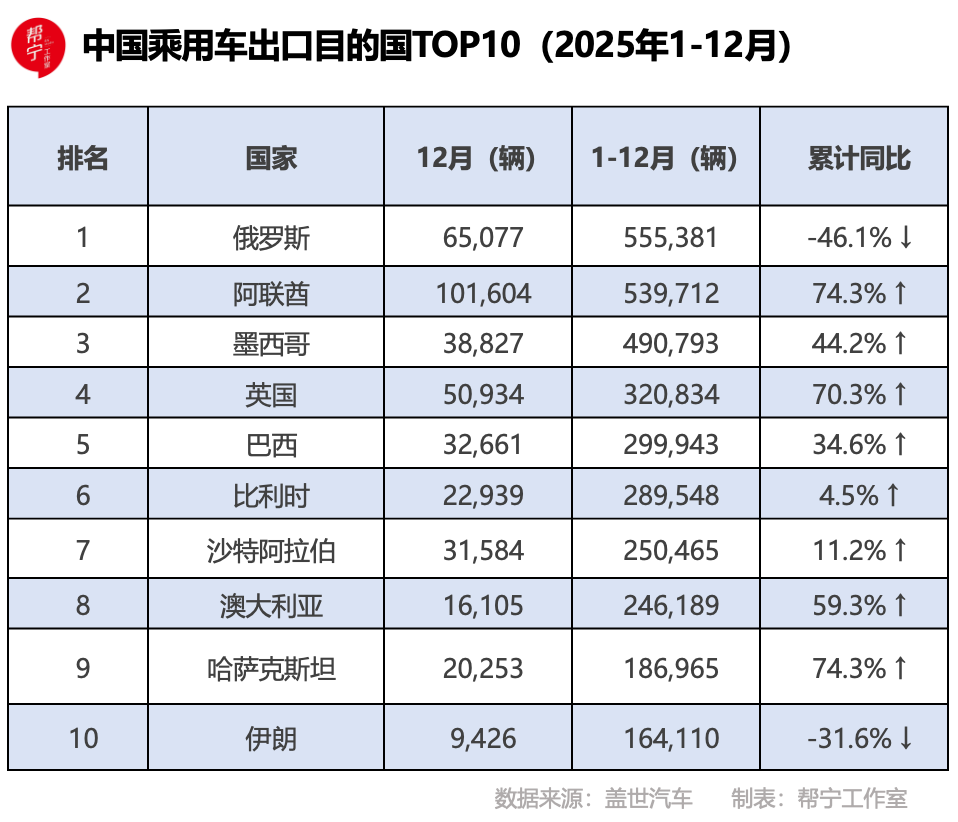
According to Gasgoo Automotive Research Institute, in 2025, China exported 164,000 passenger vehicles to Iran, 250,000 to Saudi Arabia, and a staggering 540,000 to the United Arab Emirates.
The UAE, Saudi Arabia, Iran, and other Middle Eastern countries firmly rank among the top ten export destinations for Chinese passenger vehicles in 2025, with the Middle East market becoming a core destination for Chinese automotive exports.
“China’s new energy vehicle exports to the Middle East and developed markets are showing high-quality development, with Western Europe and Asia becoming core destinations,” Cui Dongshu, secretary-general of the CPCA, once judged.
But now, the escalating conflict in the Strait of Hormuz is rewriting this landscape. On one hand, it will drive up logistics and raw material costs for Chinese automakers exporting to the Middle East, squeezing profit margins; on the other hand, it may trigger local market demand fluctuations, casting a shadow over China’s automotive export ambitions.
To make matters worse, high oil prices will also deal a blow to the traditional fuel vehicle market, which had just shown signs of recovery.
Data from the China Association of Automobile Manufacturers (CAAM) shows that from January to September 2025, wholesale volumes of traditional fuel passenger vehicles reached 8.141 million units, up 1.7% year-on-year. In September alone, sales hit 1 million units, marking four consecutive months of positive growth.
Until March, after market adjustments and policy guidance, China’s traditional fuel vehicle market had finally shown signs of recovery. But now, with oil prices continuing to surge, the consumer appeal of traditional fuel vehicles has been directly weakened, accelerating the market shift toward new energy models.
However, this is not merely a market choice but a forced reselection of energy structures and transportation modes triggered by shifts in the energy landscape.
Now, the whole world is wondering: How long can Iran sustain this blockade?
No one has the answer.
▍03 China’s New Energy Vehicles Step into the Spotlight
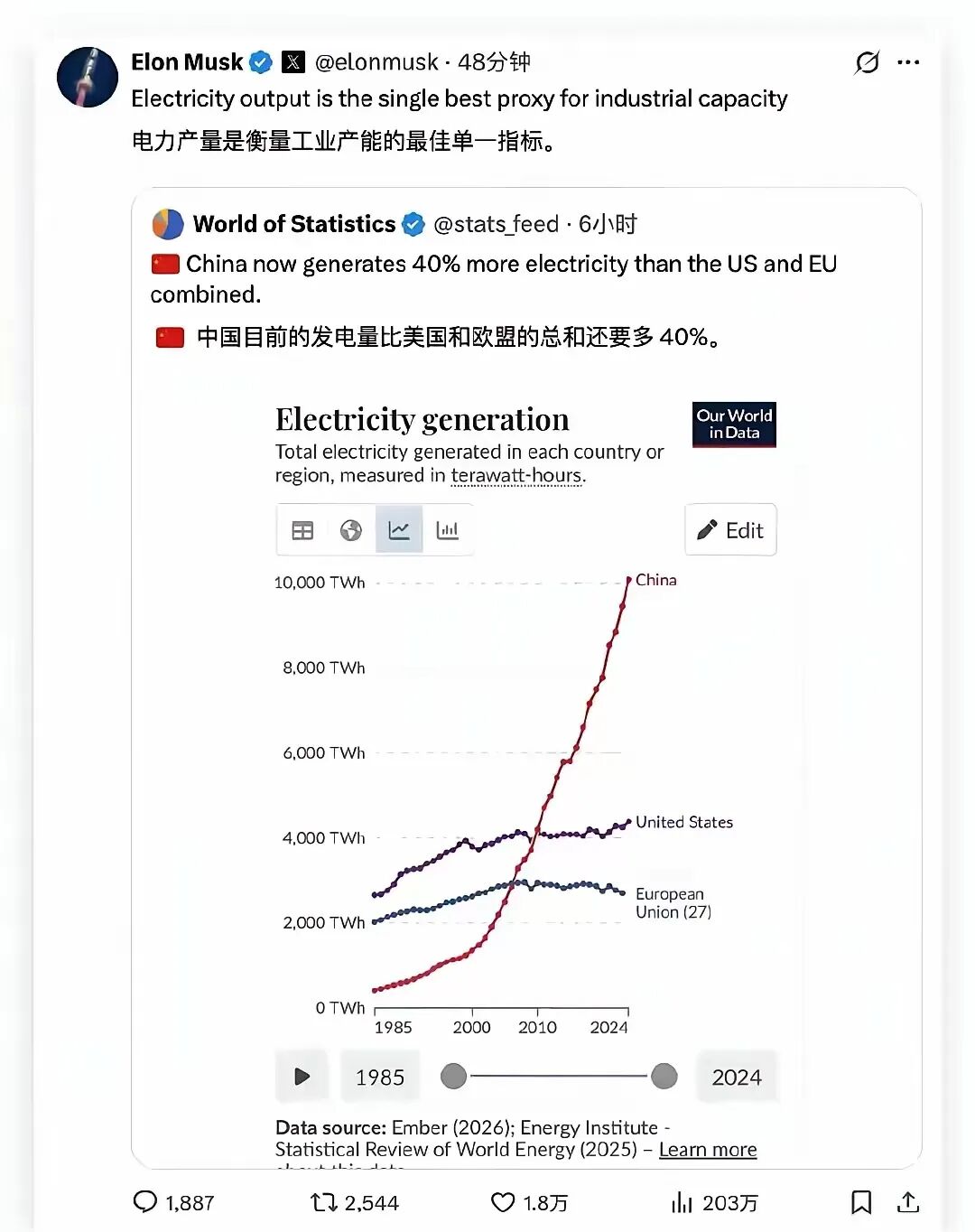
Recently, an image went viral, visually demonstrating changes in the global power landscape.
According to the World Energy Statistics Yearbook 2025, China’s electricity generation reached 10,087 TWh (approximately 10.09 trillion kWh) in 2024, accounting for 32.3% of the global total—40% more than the combined output of the United States and the European Union.
“Electricity production is the best single indicator of industrial capacity,” Elon Musk tweeted in response.
As the Strait of Hormuz faces disruptions and the global energy order shakes again, the strategic foresight of China’s new energy vehicles is validated.
According to CAAM data, in 2025, China produced and sold 16.626 million and 16.49 million new energy vehicles, respectively—up 29% and 28.2% year-on-year—with new energy penetration rising to 47.9%. Domestic sales reached 13.875 million units, with penetration exceeding 50.8%. China has led the world in new energy vehicle production and sales for 11 consecutive years.
The CAAM predicts that in 2026, China’s new energy vehicle sales will surge 15.2% to a record 19 million units.
Based on this forecast, in 2026, more than half (about 54.7%) of new vehicles sold in China will be new energy vehicles, meaning they will become the absolute dominant force in the Chinese automotive market for the first time. An era of electrification has officially arrived.

Amid geopolitical turmoil, soaring oil prices, and supply chain fluctuations, the global automotive industry is reconfiguring its development path. Industry insiders generally believe that China’s success in new energy vehicles will compel Europe and Japan to reevaluate their commitment and pace toward electrification.
First, persistently high oil prices amplify the cost advantages of electric vehicles, while energy security concerns force countries to accelerate de-petrolization.
Second, global inflation and supply chain disruptions make Chinese automakers, with their complete electric vehicle industrial chain and reduced reliance on oil, more resilient to risks and cost fluctuations.
The more turbulent the old energy order becomes, the clearer the path for new energy vehicles.
Oil cannot remain the sole power source for vehicles, as global energy arteries like oil are liable to be disrupted by geopolitics at any moment. The current blockade crisis in the Strait of Hormuz is, in the most practical way, propelling China’s new energy vehicles to the center of the world stage.
(This article received strong support from Ms. Yang Yuke)

-
![]()
The Unstoppable Rise of 'Optical Progress and Copper Decline': Sunny Optical’s Strategic Vision for the Next Decade
-
![]()
AI + Going Global in the Second Half: No Intermission for Robot Vacuum Cleaners
-
![]()
The Suffering Endured in E-commerce, Walmart Doesn't Want to Repeat in AI
-
![]()
What Does the Doubling of New Energy Vehicle Exports Mean?
-
![]()
Ghosn: 'Only I Can Save Nissan'
-
![]()
Volkswagen Lays Off 100,000 Employees, The Elephant Sits Down
-
![]()
Expanding Production Capacity! Yutong Optics Acquires Approximately 1.5 Hectares of Industrial Land in Chang'an, Dongguan
-
![]()
Why Is Nokia Making a Comeback in the AI Era?