What Are the Tricks Behind 7-Year Low-Interest Auto Loans?
 03/04 2026
 598
598
At the start of 2026, China's auto market saw a surge in ultra-long, low-interest loan promotions. So far, at least 20 automakers have rolled out 7-year or longer low-interest financing plans, using "low down payments and low monthly installments" as their core selling points. These have replaced direct price wars as the new competitive focus in the auto market.
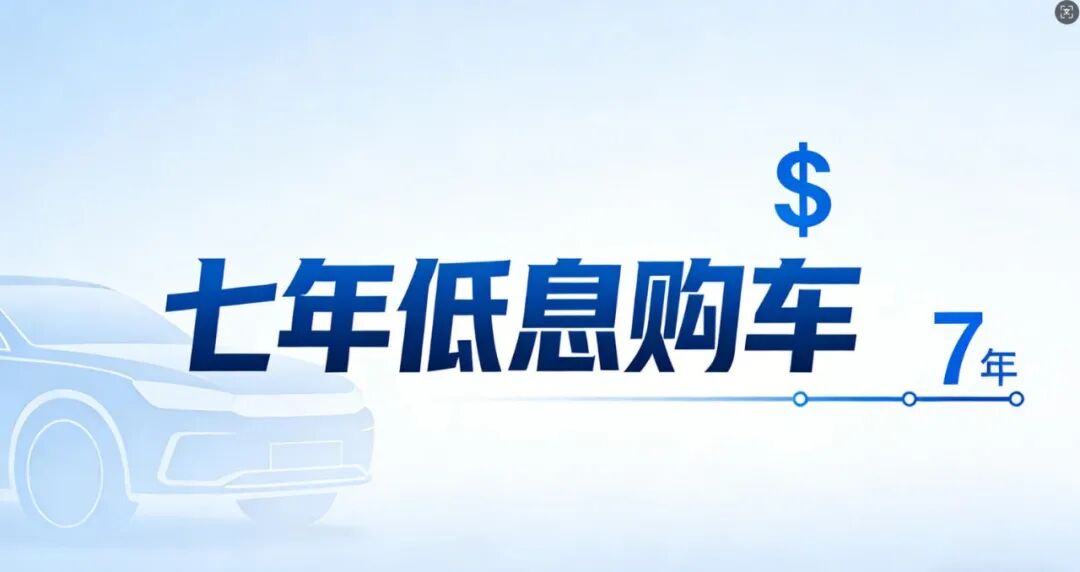
From new forces like Tesla, Xiaomi, and Li Auto to traditional domestic brands like BYD and Great Wall, and even joint ventures like Dongfeng Nissan and GAC Toyota, all have joined the fray. Some brands have even extended loan terms to 8 years and reduced down payments to zero.
In reality, these seemingly ever-lower thresholds for car purchases are not "free lunches" from automakers to consumers. With regulators halting disorderly price wars and automakers facing high inventory pressures, this wave of ultra-long loans is essentially a disguised promotional strategy. Many consumers, lured by "low monthly payments," rush to place orders only to fall into layered traps.
Hidden Complexities in Policy Differences
This round of ultra-long loan promotions was initiated by Tesla in January, followed by rapid industry-wide adoption. By late February, over 20 brands had joined. While all promote "7-year low-interest" financing, core policy differences significantly impact car purchase costs and risks.
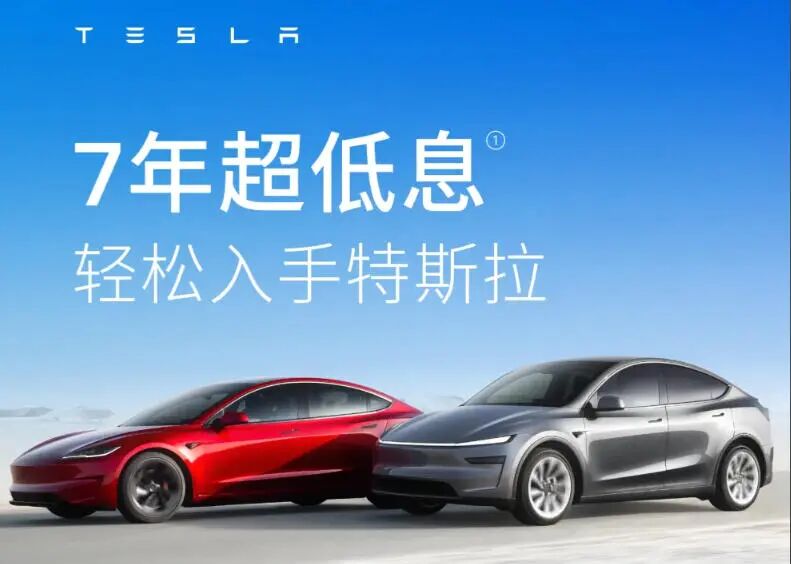
Among new forces, policy differences are stark. Tesla's plan is relatively transparent, using bank mortgage loans with a 15% minimum down payment and an annualized interest rate as low as 0.5% (equivalent to approximately 0.98% APR). Vehicle ownership transfers to consumers upon delivery. NIO offers the industry's lowest rate at 0.49% APR, with zero financial service fees and zero penalties for early repayment. Brands like Xiaomi, XPeng, and Li Auto focus on low thresholds, with minimum down payments starting at 15% and annualized rates of 1%-2.5%, but generally impose additional conditions like credit qualifications and model restrictions.
Traditional domestic brands have responded with flexible schemes. BYD operates through its own financial leasing company, with property rights rules similar to leading new forces. IM Motors launched the industry's most aggressive "7-year zero down payment + interest-free for the first three years" plan but with more restrictive conditions.
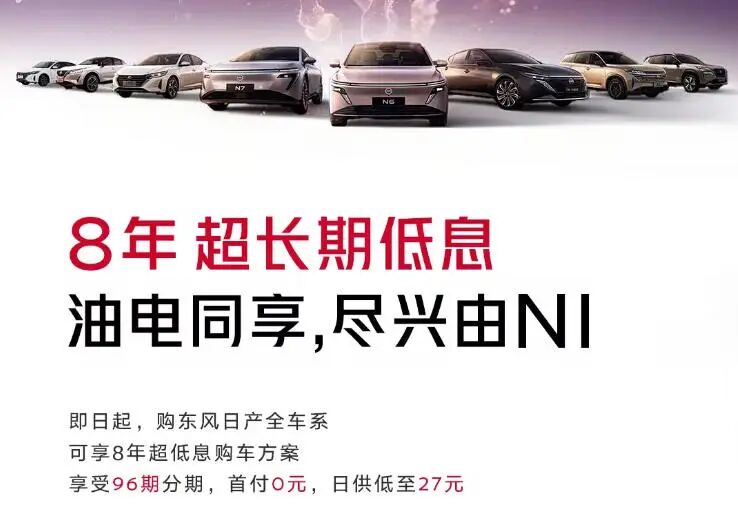
Joint ventures mask high costs with ultra-long terms. Dongfeng Nissan and GAC Toyota extend loan terms to 8 years, support zero down payments, and promote low daily payments, but their APRs reach up to 4.88%, resulting in total interest costs far higher than those of new energy brands.
Beyond brand differences, two core rules directly determine scheme risks and are often overlooked by consumers. The first is the loan model, which falls into two categories: bank mortgage loans and financial leasing (lease-to-own). Currently, over 90% of ultra-long loan schemes use financial leasing, with only a few brands like Tesla opting for bank mortgage loans.
The key difference is that under bank mortgage loans, the vehicle is registered in the consumer's name and merely pledged to the bank, with ownership transferring to the individual upon delivery. Under financial leasing, the leasing company retains ownership during the lease term, with the consumer only having usage rights. Full ownership transfers only after all payments are made and the vehicle is released from pledge.
Additionally, most brands' ultra-long loan schemes are time-limited, with deadlines concentrated in February-March. Automakers use these deadlines to pressure consumers into quick decisions, often leading to hasty signings and overlooked contract details.
Unveiling the Promotional Logic
The launch of 7-year low-interest policies has sparked widespread online debate. Consumers are divided, with some seeing it as a "blessing" and others calling it a "trap." Supporters, mostly those with limited budgets, urgent vehicle needs, and plans for long-term ownership, argue that low down payments and monthly installments significantly lower car purchase thresholds and alleviate immediate cash flow pressures, allowing them to fully enjoy interest benefits over time.
Opponents, seemingly more numerous, raise concerns about hidden costs, property rights risks, and long-term financial pressures. Many consumers report falling into traps, such as discovering only after signing that they are in a financial leasing arrangement, being forced to purchase in-house insurance, or facing hefty penalties for early repayment.
Zhang Xiang, a visiting professor at Huanghe Science and Technology College, notes that amid regulatory crackdowns on disorderly price wars, high inventory levels, and cautious consumer sentiment, ultra-long low-interest loans represent a compliant promotional tactic for automakers to avoid direct price cuts' drawbacks, such as dissatisfaction among existing owners, residual value declines, and dealer pressures. These schemes can quickly boost orders by lowering car purchase thresholds, but automakers' interest subsidies are likely passed on to consumers through hidden fees, reduced configurations, or compromised service quality.
Industry experts also highlight three core risks of ultra-long loans. First, they amplify consumer leverage. With 7-year residual values for new energy vehicles typically falling below 30%, the loan term severely mismatches the vehicle's depreciation cycle, creating a high risk of "negative equity" where the loan balance exceeds the vehicle's residual value. Second, they prematurely exhaust market demand, leading to future sales declines and diminishing returns on financial promotions. Third, they trigger industry-wide financial competition, with rising interest subsidies squeezing automakers' profits, reducing R&D investment, and ultimately harming both the industry and consumers.
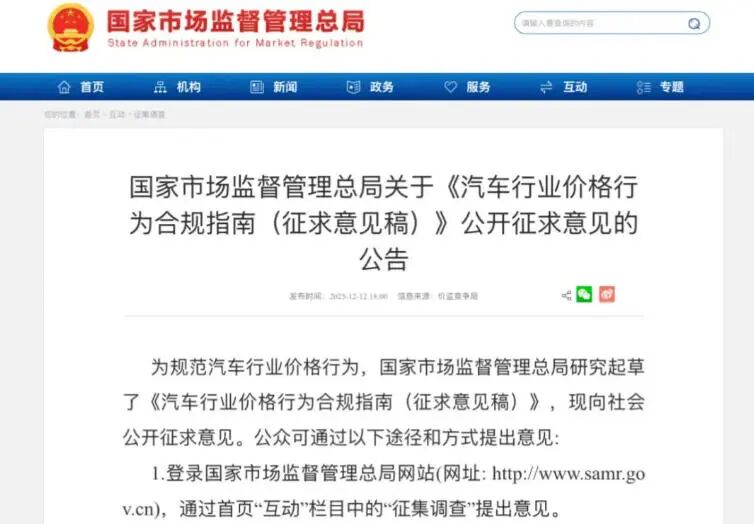
Relevant personnel from the China Passenger Car Association (CPCA) also state that 7-year low-interest loans signal a shift from "price competition" to "financial competition" in the auto market. However, such competition must be compliant and transparent. In December last year, the State Administration for Market Regulation issued the "Compliance Guidelines for Pricing Practices in the Automotive Industry (Draft for Comments)," emphasizing the need to regulate pricing behaviors in car sales and financial services and clarify price labeling rules. This means low-interest subsidies are not regulatory blind spots. Automakers face penalties for unclear terms, concealed conditions, or cost-shifting practices that violate compliance standards.
Appearing Generous but Fraught with Traps
Consumer complaints and expert concerns both point to a core issue: 7-year low-interest loans conceal numerous easily overlooked traps. These often lurk in fine print or are obscured by sales pitches. Failing to identify them in advance may result in consumers saving on interest but losing more overall, or even ending up with a situation where "they've spent the money but don't truly own the car."
First, consumers must clarify property rights. Over 90% of ultra-long loan schemes use financial leasing, but salespeople often downplay the "lease-to-own" nature, focusing only on low interest and monthly payments. Under this model, the leasing company retains ownership during the lease term, leaving consumers vulnerable to usage restrictions, privacy and security risks, and potential operational risks from the leasing company.
Second, automakers' advertised low interest rates are often marketing gimmicks, with actual costs recovered through hidden fees that often exceed conventional auto loans. For example, financial leasing schemes typically impose penalties of 8% of the remaining principal for early repayment within the first year and 5% thereafter. Under equal principal and interest repayment plans, early repayments consist mostly of interest, which is non-refundable, making it impossible for consumers to save through early repayment.
Furthermore, while financial leasing schemes have lax credit requirements, attracting consumers with insufficient qualifications or unstable incomes, they carry higher risks. On one hand, rapid technological iterations in new energy vehicles mean 7-year residual values typically fall below 30%, creating a severe mismatch between the loan term and vehicle depreciation cycle. Consumers are likely to face "negative equity" during repayment, unable to sell the vehicle without first clearing the loan.
On the other hand, under financial leasing, if consumers default on payments, the leasing company, as the owner, can repossess the vehicle without refunding the down payment or monthly installments already paid, leaving consumers with neither the car nor their money. Additionally, vehicles under financial leasing schemes have resale values 5%-10% lower than those under conventional loans, further exacerbating consumers' asset losses.
Conclusion:
The 2026 wave of ultra-long, low-interest auto loans represents a marketing tactic by automakers to cope with market pressures. There is no absolute good or bad; the key lies in whether consumers meet the eligibility criteria and can identify hidden risks. Such schemes are only suitable for consumers with highly stable incomes, plans for long-term vehicle ownership, and who opt for bank mortgage loans. For ordinary consumers with volatile incomes, short-term plans to replace their vehicles, or who choose financial leasing, ultra-long loans resemble "sweet traps" that easily trigger long-term financial risks.
After all, auto market promotions always follow the principle of "there's no such thing as a free lunch." Only by staying rational and understanding the true nature and hidden risks of ultra-long loans can consumers avoid pitfalls and purchase vehicles that truly suit their needs.
-
![]()
Multimodal AI Model Revolutionizes Audio-Visual Perception in Steelmaking Safety: Hikvision and Nanjing Iron and Steel Forge New Pathways
-
![]()
Can Chinese Automakers Pose Such Fierce Competition? Mercedes-Benz Cancels Year-End Bonuses for 90,000 Staff, Volkswagen to Lay Off 100,000 Employees...
-
![]()
Anhui and Zhejiang Vie for the Crown in New Energy Vehicle Dominance: Who Will Prevail?
-
![]()
Tmall 618 Rankings Unveil Trends Transforming the Home Appliance Industry
-
![]()
This Week in Home Appliances: Overseas Boom! Midea, TCL, Dreame Break Through; Casarte, Fotile, Gree, Hisense, Ronshen Lay Foundations
-
![]()
Aiming to Be the Alphard of the Electric Era! After D99's Launch, Leapmotor Will Release All-New Technologies to Pave the Way for a High-End Brand | Mirrormedia Pro
-
![]()
Over 5,200 Orders Placed on First Day: Can the Qijing GT7, Priced from 209,900 Yuan, Compete with the Z7 and SU7? | Mingjing Pro
-
![]()
AI Predicting the World Cup? It’s Time to Stop Insulting AI