A Century-Old Transformation in the Global Auto Market: Imports Decline by 32.4%, Exports Rise by 21.1%
 03/06 2026
 711
711
Author / Zhang Xin
Produced by / Insight Auto
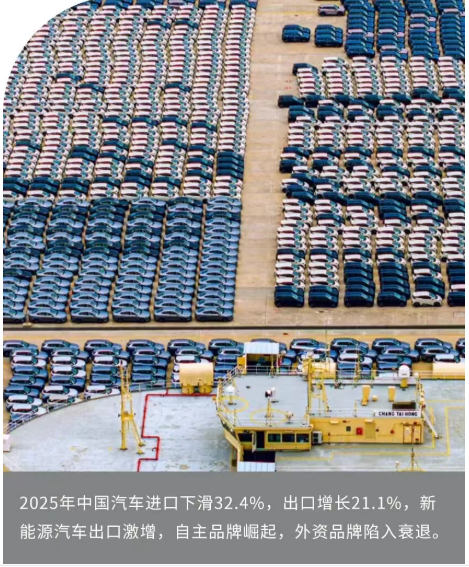
Latest data released by the General Administration of Customs and the China Association of Automobile Manufacturers in March 2026 revealed that China's automobile imports fell to 4.76 million units in 2025, down 32.4% year-on-year, while exports climbed to 7.098 million units, up 21.1% year-on-year, securing the top global export position for the third consecutive year.
NEV exports reached 2.615 million units, surging 103.7% year-on-year, becoming the core engine driving global automotive industry growth.
The stark contrast in market performance between Chinese and foreign automakers reflects not short-term fluctuations but the inevitable outcome of technological route competition and global strategic rivalry. Chinese independent brands have transformed from followers to leaders, while foreign brands face strategic stagnation, triggering a fundamental restructuring of the global automotive power hierarchy.

Foreign Automakers Suffer Waterloo in China
2025 marked the first year of strategic collapse for foreign automakers in China. Traditional market barriers and brand premiums eroded rapidly, with performance declines spreading from mainstream brands to ultra-luxury segments, exposing accumulated strategic weaknesses.
Ford Motor's operational crisis epitomizes the collective downfall of foreign brands, reporting a net loss of $8.182 billion in FY2025—a swing of over $14 billion from the previous year's profitability. Global sales fell 2% to 4.395 million units, surpassed by BYD, dropping to seventh place globally.
Its Chinese joint venture sold only 99,400 units annually, a 90%+ collapse from its 2016 peak.
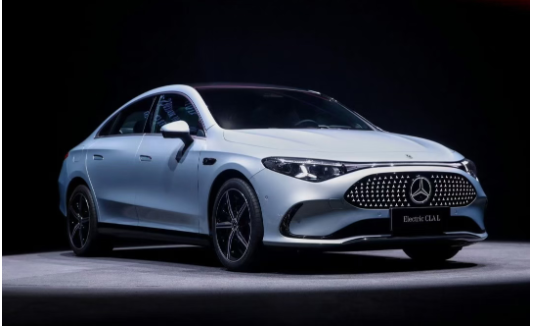
German luxury trio also faltered: BMW's China sales fell 12.5% to 625,500 units, with imported model sales plunging 62% to 64,400 units; Mercedes-Benz sales dropped 19% to 575,000 units, with imports shrinking 37%; Volkswagen maintained its top China sales position with 2.69 million deliveries but still declined 8% year-on-year, reducing German brands' China market share to 12.1%.
Ultra-luxury brands faced sustained contraction: Bentley's annual imports halved to 2,030 units; Rolls-Royce imports shrank by over 60% to 675 units; Maserati, Ferrari, and others languished below 1,000 annual imports.
The root cause of foreign brands' systemic collapse lies in their delayed electrification and intelligent transformation strategies, failing to keep pace with China's market evolution.
Most brands' NEV penetration remained below 10%, with Ford's electrification division accumulating over $10 billion in losses. Their products lagged in core metrics like intelligent driving, range, and fast-charging efficiency. Channel systems faced systemic crises, with nationwide 4S store closures, inventory turnover days rising to 90, and dealer operational losses becoming industry norm.

Technological Breakthroughs and Globalization Build Competitive Barriers
In stark contrast to foreign brands' retreat, Chinese independent brands achieved dual breakthroughs in domestic and international markets through full-industry-chain autonomy and global strategic depth. Leading companies like Chery, BYD, SAIC, and Changan Strong entry (forcefully entered) the core ranks of global automakers.
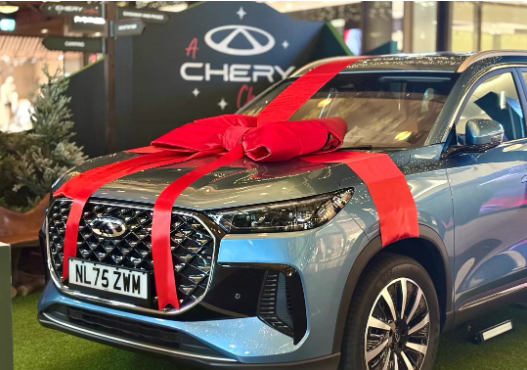
Chery Automobile retained its export crown with 1.344 million units shipped, accounting for 47.9% of its total 2.806 million sales. Its overseas production bases cover Russia, Brazil, the Middle East, and other key markets, with the Brazilian plant achieving over 65% local component sourcing. Customized models for Russia's extreme cold and Brazil's complex road conditions precisely met overseas user needs.
BYD and SAIC joined the million-export club. BYD shipped 1.0496 million units, up 145% year-on-year, covering 119 countries/regions; its Hungarian plant invested €5 billion with 200,000-unit annual capacity.
SAIC's MG brand, after years of European market cultivation, sold over 300,000 units (+30% YoY), topping Chinese brand European sales for 11 consecutive years. Changan Automobile exported 637,000 units (+18.9% YoY), with models priced above $40,000 in Europe, planning eight new model launches and 1,000+ overseas dealerships within three years.
Independent automakers' core competitiveness stems from self-developed technologies and industry-chain control: battery costs 20-30% lower than overseas peers, hybrid technology achieving significant fuel consumption reductions, and rapid popularization of intelligent driving technologies.
Over 30 overseas production bases formed industrial cluster effects, with synergies between vehicle exports and local production. Chinese automakers now firmly grasp the initiative in global automotive competition through full-industry-chain advantages.
END
-
![]()
The Unstoppable Rise of 'Optical Progress and Copper Decline': Sunny Optical’s Strategic Vision for the Next Decade
-
![]()
AI + Going Global in the Second Half: No Intermission for Robot Vacuum Cleaners
-
![]()
The Suffering Endured in E-commerce, Walmart Doesn't Want to Repeat in AI
-
![]()
What Does the Doubling of New Energy Vehicle Exports Mean?
-
![]()
Ghosn: 'Only I Can Save Nissan'
-
![]()
Volkswagen Lays Off 100,000 Employees, The Elephant Sits Down
-
![]()
Expanding Production Capacity! Yutong Optics Acquires Approximately 1.5 Hectares of Industrial Land in Chang'an, Dongguan
-
![]()
Why Is Nokia Making a Comeback in the AI Era?