Ford China's Strategic Contraction and Pivotal Breakthrough Amid Personnel Reshuffle
 03/06 2026
 467
467
Author / Liu Wei
Produced by / Insight Auto
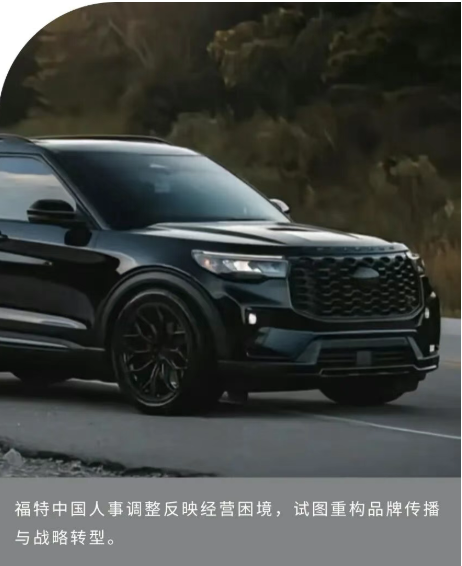
On March 2, 2026, Ford China made a surprising announcement: Yang Meihong, Vice President of Communications and Corporate Social Responsibility, is set to officially retire at the end of March. Li Fangfang, Vice President of Communications and Public Affairs at Lincoln China, will assume her position, effective April 1.
Yang Meihong, a seasoned professional with over three decades in the automotive industry, served Ford China during a period of significant market adjustment. Her five-year tenure saw Ford navigating the complexities of the Chinese market, striving to maintain relevance amidst growing competition.
After rejoining Ford China in 2021, Yang reported directly to Wu Shengbo, President and CEO of Ford China and International Markets Group. Drawing on her extensive industry experience, she championed the brand proposition "Unleash Your Nature, Embrace the Wild," aiming to revitalize Ford's image and overcome growth stagnation.
Her impressive resume spans from Hyundai Motor to Ford China, and from PepsiCo International to Volkswagen China and BMW Brilliance. Her cross-automaker and cross-industry expertise positioned her as a vital bridge connecting Ford with the market, media, and the public. Wu Shengbo's assessment that she "assisted brand promotion with innovative thinking" underscores Ford's reliance on her strategic communication acumen.
The selection of Li Fangfang as Yang's successor reflects Ford's strategic foresight. With a background that includes media experience at China Daily and stints at multinational automakers Jaguar Land Rover China and Lincoln China, Li's outstanding performance since taking charge of Lincoln's communications in 2023 has made her an ideal fit for Ford's current market needs.
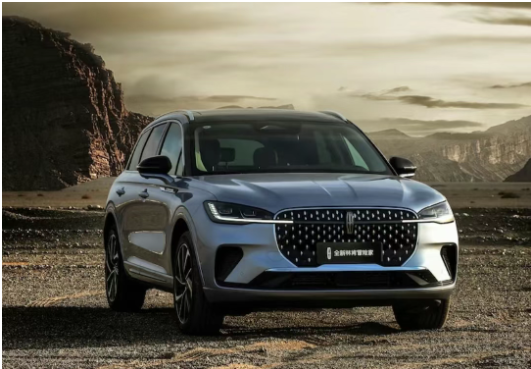
As the penetration of new energy vehicles approaches 50% and brand communication shifts from mere "exposure" to "value delivery," Ford urgently requires a manager with both media insight and luxury brand operational experience. Li Fangfang's appointment represents Ford's strategic gamble to revamp its brand communication system and align with the demands of the Chinese market.
Behind these personnel adjustments lie Ford China's formidable operational challenges, which form the crux of this transformation. Globally, Ford's wholesale sales reached 4.395 million units in 2025, a 2% year-on-year decline. Despite revenue hitting $187.3 billion, marking five consecutive years of growth, the $8.2 billion net loss starkly contrasts with the $5.9 billion net profit in 2024. Profitability pressures have dispelled any illusions of sustained growth, necessitating a shift towards high-return businesses.
China's market performance has been particularly disheartening for Ford. In 2025, Changan Ford's retail sales reached 99,400 units, with wholesale sales at 121,500 units, while Lincoln's sales stood at 36,300 units. Both core brands experienced year-on-year declines, with market share continuously eroded by domestic new energy brands.
More troublingly, the flaws of the previously separate dual-channel strategy have been fully exposed. Resource friction and sluggish decision-making between Changan Ford and Jiangling Ford caused Ford to miss crucial opportunities in the fiercely competitive market. Jiangling Ford Technology incurred losses exceeding RMB 1.667 billion over three years, with Ford Ranger brand models performing poorly. Core models like the Bronco sold fewer than 1,000 units per month, dampening dealer investment sentiment and pushing channel resilience to its limits.
In October 2025, Ford China established a wholly-owned sales service company in Shanghai to merge the two joint venture channels. This move aimed to reduce costs, enhance efficiency through scaled operations, and unify the brand image, marking a pivotal step in Ford China's strategic contraction.
While the integration resolved some internal friction issues and laid the groundwork for new energy product launches, the challenges of channel integration persist. Balancing dealer interests and avoiding a repeat of the failed 2018 channel integration remains a formidable task for Wu Shengbo's team.
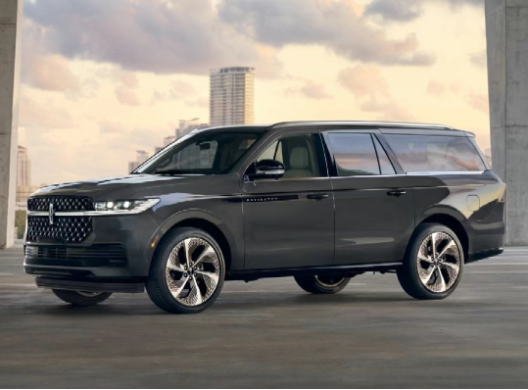
Strategically, Ford globally canceled some large-scale pure electric vehicle plans, focusing instead on hybrid and extended-range electric vehicles. The company aims to achieve 50% sales of new energy and hybrid models by 2030. China, as a core global new energy market, has become a focal point of this strategy.
However, the effectiveness of channel integration has yet to materialize, with new energy products lacking competitiveness and brand awareness on the decline. Li Fangfang has inherited a challenging situation that requires her to defend the brand's core position while driving communication transformation to support strategic implementation.
For Ford China, the personnel reshuffle marks just the beginning of breaking the deadlock. Yang Meihong's retirement signifies the end of an era of industry experience. Li Fangfang's appointment carries Ford's hopes for a breakthrough in China. Yet, in the face of the strong rise of domestic new energy brands and accelerated localization by multinational automakers, a single personnel adjustment is insufficient to reverse the trend.
Whether Ford China can reduce costs through channel integration, find differentiated advantages through diversified powertrain routes, and reconstruct user perception through brand communication remains to be seen. Behind this personnel reshuffle lies Ford China's delicate balancing act between contraction and breakthrough, as well as a true reflection of the survival status of foreign automakers in China.
END
-
![]()
The Unstoppable Rise of 'Optical Progress and Copper Decline': Sunny Optical’s Strategic Vision for the Next Decade
-
![]()
AI + Going Global in the Second Half: No Intermission for Robot Vacuum Cleaners
-
![]()
The Suffering Endured in E-commerce, Walmart Doesn't Want to Repeat in AI
-
![]()
What Does the Doubling of New Energy Vehicle Exports Mean?
-
![]()
Ghosn: 'Only I Can Save Nissan'
-
![]()
Volkswagen Lays Off 100,000 Employees, The Elephant Sits Down
-
![]()
Expanding Production Capacity! Yutong Optics Acquires Approximately 1.5 Hectares of Industrial Land in Chang'an, Dongguan
-
![]()
Why Is Nokia Making a Comeback in the AI Era?