Why Do Lei Jun and He Xiaopeng, Both NPC Deputies, Have Vastly Different Approaches to Intelligent Driving Proposals?
 03/10 2026
 524
524
By Bai Jiajia
As fellow Hubei natives and friends of over 20 years, Lei Jun and He Xiaopeng, both successful internet crossovers into car manufacturing, submitted two seemingly divergent proposals at this year's Two Sessions in their capacities as NPC deputies.
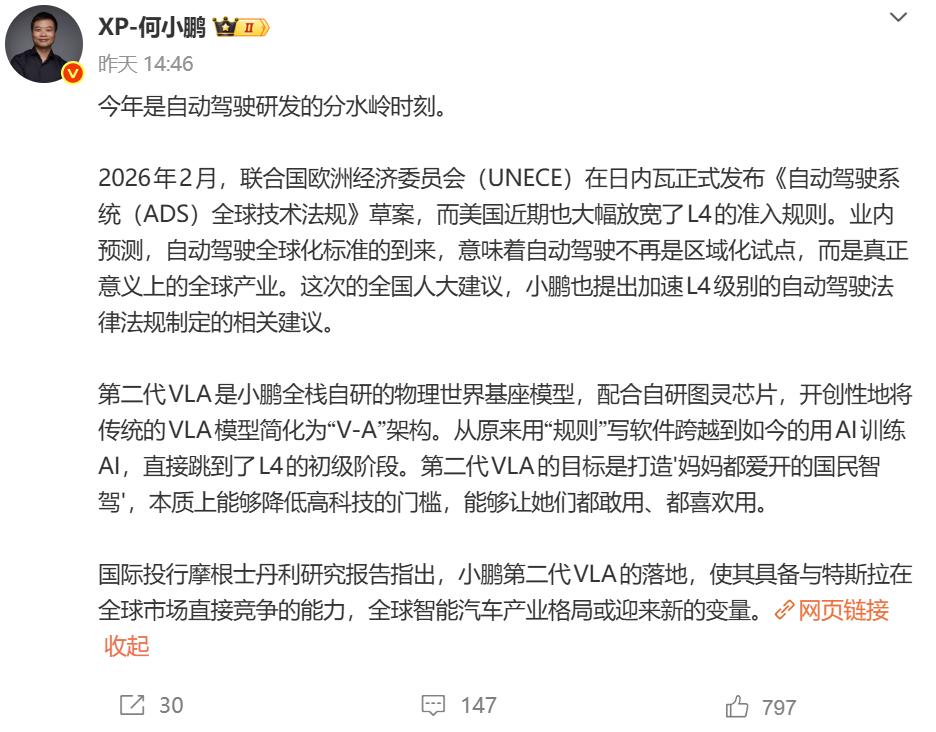
He Xiaopeng's proposal was "Suggestions on Accelerating the Transition of Autonomous Driving Technology from L2 to L4 and Improving Regulations and Management Policies." He called for simplifying the intermediate L3 stage and gradually promoting the compliant nationwide road use of L4 autonomous driving.
The differences between L2, L3, and L4 autonomous driving can be understood as human-dominated assisted driving, machine-dominated autonomous driving, and driverless driving without a driver. L2 and L3 require human-machine co-control of the steering wheel, while L4 does not.
In He Xiaopeng's view, the era of L4 driverless driving will arrive earlier than many people imagine. He claimed on Weibo that "this year is a watershed moment for autonomous driving research and development" and that XPeng's "full-stack self-developed" second-generation VLA "physical world base model" has "directly jumped to the initial stage of L4."
In contrast, Lei Jun's attitude appears more nuanced.
On one hand, Lei Jun predicted that "fully autonomous driving in a true sense could be achieved in some restricted areas within the next five years."
On the other hand, Lei Jun tirelessly emphasized that "for ordinary private cars to 'let go' entirely in all open-road scenarios, more time is needed... Drivers must keep both hands on the steering wheel, look ahead, and stay focused."
More representative is Lei Jun's suggestion to add intelligent driving-related assessment content to the motor vehicle driver's exam, including treating "hands-off and eyes-off" behavior when using L2 assisted driving as a traffic violation subject to penalties.
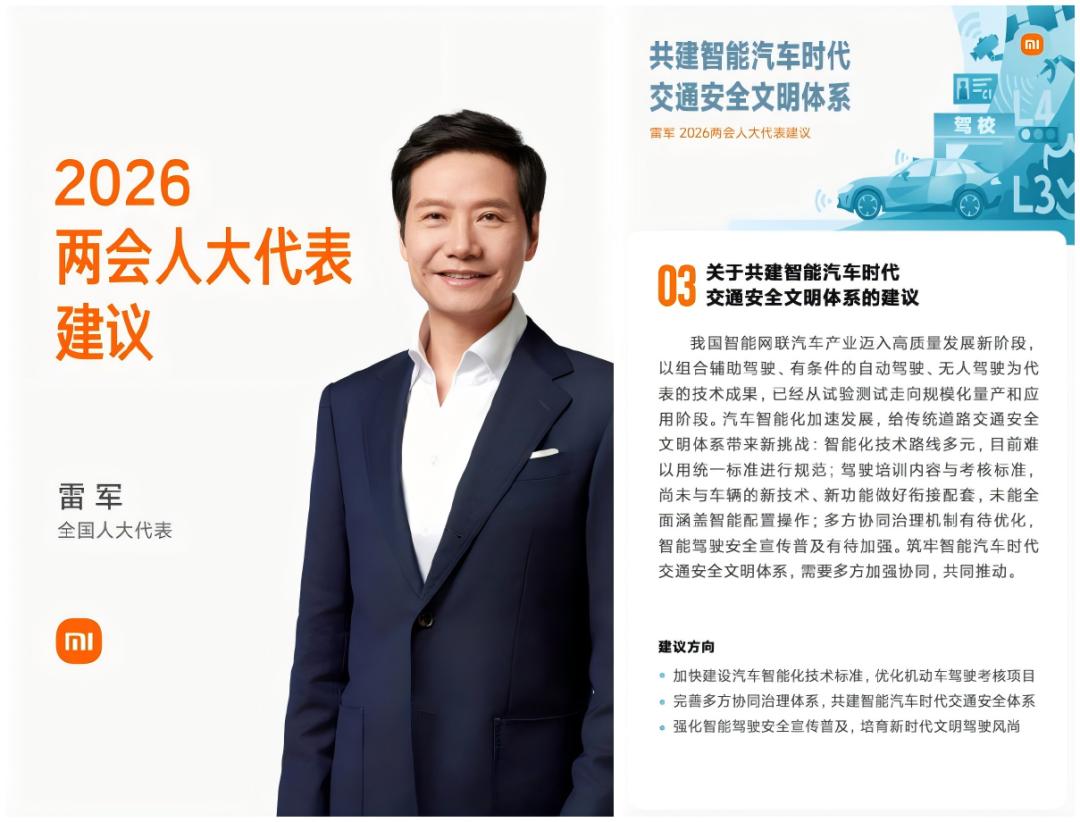
This seems to prove that Lei Jun does not firmly believe the era of driverless driving is imminent. After all, when everyone travels by autonomous vehicles, why spend effort learning to drive or assessing intelligent driving usage norms?
Perhaps only years later will we know which of He Xiaopeng's and Lei Jun's attitudes is closer to reality.
But behind them are not two mutually exclusive paths.
To some extent, only by understanding this debate about "the endgame versus the present," uncovering the underlying cognitive differences between technologists and productivists in the intelligent driving circle, and clarifying the divergent survival logics of Xiaomi and XPeng—two companies with vastly different DNA—can we grasp the intertwined future of our AI era.
1. The Technologist's Obsession with the Endgame
Behind He Xiaopeng's determination to leap straight to L4 lies a year of struggle and breakthrough.
Around March 2025, He Xiaopeng couldn't even convince his own friends to use intelligent driving.
At that time, whether on highways or in urban areas, in China or overseas, achieving assisted driving required massive human effort to write software, rules, and algorithms.
Developers were trapped in an endless cycle of rules and algorithms, yet all this hard work resulted in an L2 "patchwork monster" that couldn't preemptively anticipate, reasonably control speed, politely yield, or understand fear.
"It seemed usable, but obviously jumped and switched between different capabilities. I called L2 a patchwork monster at the time," said He Xiaopeng, who was mired in confusion over the technical route. "I couldn't see how L2 could truly become L4 or even L5 in the future."
Non-technologists may struggle to empathize with He Xiaopeng's pain. As someone aspiring to "change the world with technology," He Xiaopeng's life value is almost bound to XPeng. Even the company's birth and growth stemmed from his wish, when his second child was born, to tell a story "that would make my child think Dad is cool."
The bottleneck of traditional technical routes sent this story "off track" until the VLA model brought it back on course.
VLA is a product of the "end-to-end" model design approach. The three letters stand for Vision, Language, and Action, operating in a way closer to human driving habits—eyes see information, brain judges and decides, hands and feet execute directly.
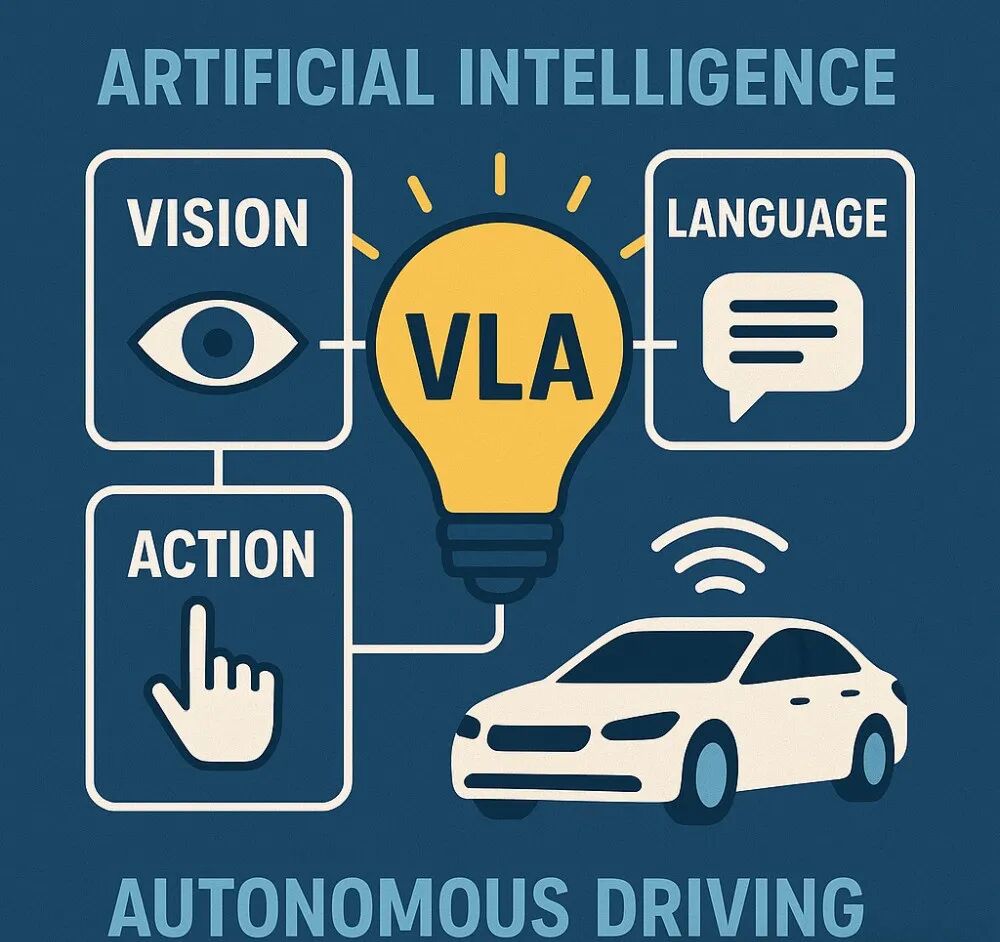
Its allure lies in opening a "brute-force" technical shortcut. Simply feed the model enough data, and performance can rapidly leap. This means autonomous driving shifts from human-driven to data-driven. From this, He Xiaopeng saw that L4 autonomous driving was no longer distant.
But deciding to take this path wasn't easy. Initially, He Xiaopeng dared not go all-in on VLA. After over two months of deliberation, he approved parallel development of two plans within the company:
One was to continue "patching" based on L2 assisted driving, iterating within limited boundaries; the other was to start from scratch, targeting L4 autonomous driving and reconstructing the technical paradigm from the ground up.
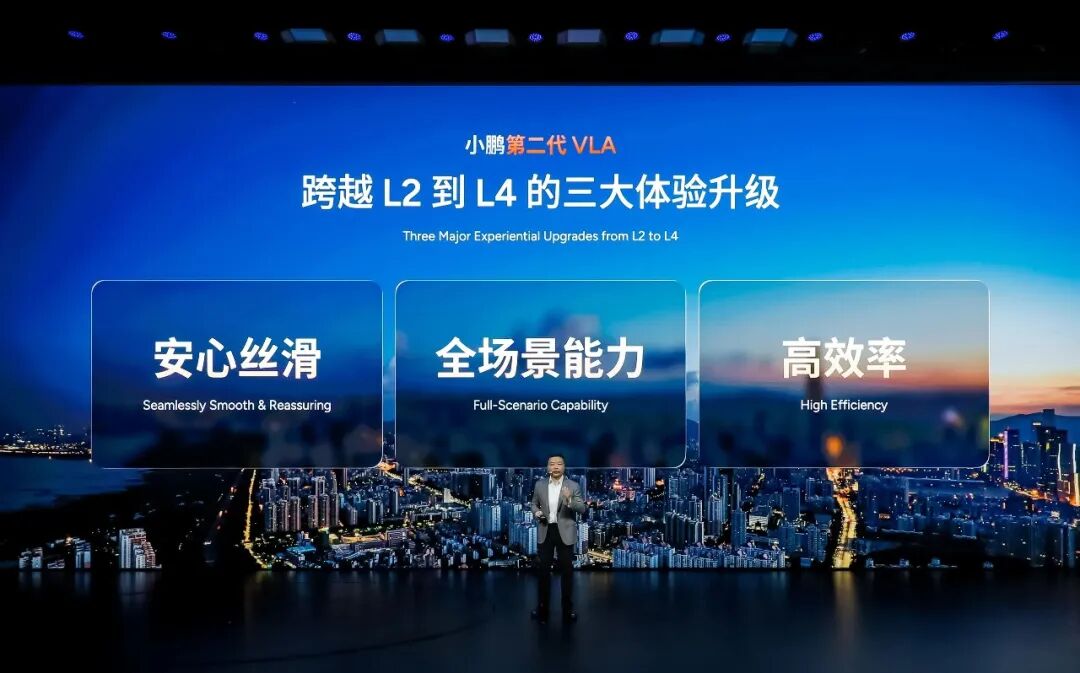
Judging by He Xiaopeng's performance at XPeng's March launch event this year, the second-generation VLA lived up to his expectations. He proudly told the audience that whereas people used to ask, "Can this road be driven?" now the goal is to make them ask, "Can this road actually be driven?" He even boldly declared the second-generation VLA "five times ahead of the industry."
The power of VLA is He Xiaopeng's primary confidence behind his suggestion to "leap from L2 to L4," but the urgency driven by market competition may also play a role.
In a recent interview with Xinhua News Agency, He Xiaopeng first praised VLA, expressing "great confidence that with increased data, [VLA] will far surpass human driving by ten or even a hundred times." He then mentioned the U.S. Senate passing the "Autonomous Vehicles Act" in February, allowing "90,000 vehicles without steering wheels, brakes, or accelerators" to operate on roads.
"Technological competition is also competition in policies and regulations," He Xiaopeng said with a smile, conveying his sense of urgency. By the end of 2026, the United Nations will also introduce regulations on high-level autonomous driving, "meaning autonomous driving will no longer be regional trials but a global industry."
2. The Productivist's Reverence for the Present
Many online users talk with great relish (find joy in discussing) how Lei Jun's early code was "poetically beautiful," but a review of his leadership in Xiaomi's expansion reveals that the secret to his success lies in user-centric productivism.
Rewind to 2010, when Xiaomi was founded. The domestic smartphone market was at an awkward crossroads: consumers complained about "high prices and low quality" from branded phones while being frustrated by the lack of quality control and after-sales support from counterfeit phones.
Xiaomi found its niche between these two complaints. Lei Jun timely proclaimed, "Make the world's best products and sell them at half the price," precisely hitting consumers' pain points. Simultaneously, he used internet thinking to integrate the smartphone supply chain, reducing costs and propelling Xiaomi's smartphone sales from zero to 7.19 million units in 2012, then soaring to 61.12 million units by 2014.
This productivist mindset, deeply ingrained, was later fully replicated by Lei Jun in the automotive sector.
Some may recall how, before the official launch of the Xiaomi SU7, Lei Jun repeatedly emphasized that "the price won't be too cheap," building anticipation before unveiling a price point in the 200,000-yuan range. The result was 248,000 orders in nine months, 2.75 times higher than expected.
But don't reduce Lei Jun's productivism to mere cost-effectiveness. His strength lies in establishing correspondences between products and consumer needs.
One easily understood aspect is identifying unmet consumer demands.
For example, Lei Jun set a goal for the Xiaomi SU7 to "capture as many female users as possible" and emphasized sun protection at the launch event, directly addressing female consumer needs previously obscured by stereotypes like "only men like cars."
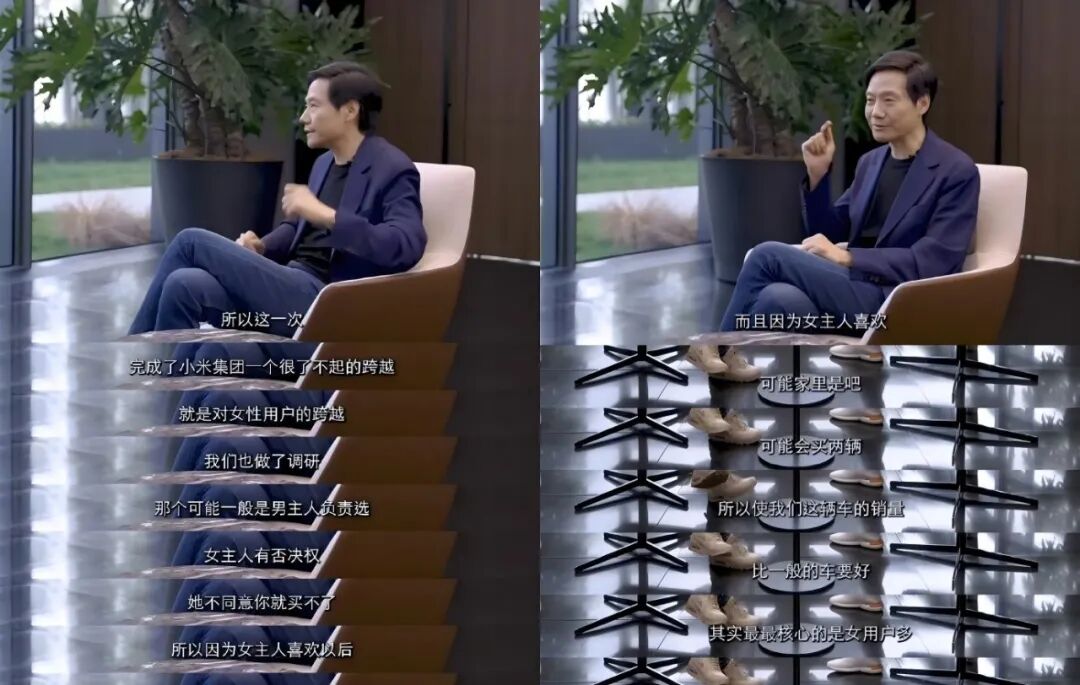
Lei Jun's proposal this time reveals another, often overlooked, side of productivism: caution when consumers have overly high expectations or cognitive biases about products.
If there's any demand in car manufacturing that requires endless satisfaction, it's safety.
Lei Jun understands this well. Before the official release of the Xiaomi SU7, he declared on Weibo that the car's body and battery "adopt the strictest safety standards" and emphasized that "no extreme product experience should override safety itself."
But in the era of autonomous driving, safety isn't solely defined by hardware or the vehicle itself. It also depends on the driver's understanding of the intelligent driving system's capabilities relative to current technological levels.
In other words, when Lei Jun evaluates Xiaomi's safety with a productivist's risk-management mindset, he inevitably realizes that beyond the hardware and software levels he can control, vast gray areas lie entirely outside the company's risk-management scope.
For example, accidents caused by hands-off, eyes-off, or sleeping at the wheel could plunge the involved automaker into a public relations crisis or even erode societal trust in autonomous driving.
From this perspective, Lei Jun's proposals—such as establishing automotive intelligence technology standards, enriching motor vehicle driving assessment items, and building a traffic safety system for the intelligent vehicle era—can be seen as a productivist's warning against the largest risk exposures.
Regarding when autonomous driving will arrive, He Xiaopeng's and Lei Jun's judgments don't actually conflict; they simply differ in identifying the decisive factors.
He Xiaopeng judges the arrival of autonomous driving based on technical routes, while Lei Jun, in a recent interview with The Paper, suggested that the true arrival of autonomous driving depends on preparatory work.
"Only when road infrastructure, laws and regulations, and corresponding support systems catch up will there be a chance to truly achieve pure autonomous driving," he said.
3. Divisions Encoded in Corporate DNA? A Two-Way Convergence
If He Xiaopeng's and Lei Jun's distinct personalities shape their differing views on when autonomous driving will arrive, then the DNA and survival logics of XPeng and Xiaomi further determine their imaginations and attitudes toward the endgame of autonomous driving.
Consider a question: Which company, Xiaomi or XPeng, is more reliant on AI?
The answer is XPeng. It has even written AI into its corporate vision. From this angle, one could say it's a company born for AI.
This shift occurred in November 2025 at XPeng's Tech Day, when the company upgraded its vision from "Future Mobility Explorer" to "Physical AI World Mobility Explorer, a Global Embodied Intelligence Company," conveying two clear messages:
XPeng's emphasis on AI technology has risen to the core of its corporate strategy. Simultaneously, it is moving beyond the traditional automaker positioning (positioning) to explore all global domains where intelligence can be applied.
Objectively speaking, XPeng is no longer just a car company. Its business portfolio now covers new energy vehicles, flying cars, humanoid robots, and Robotaxi, among others.
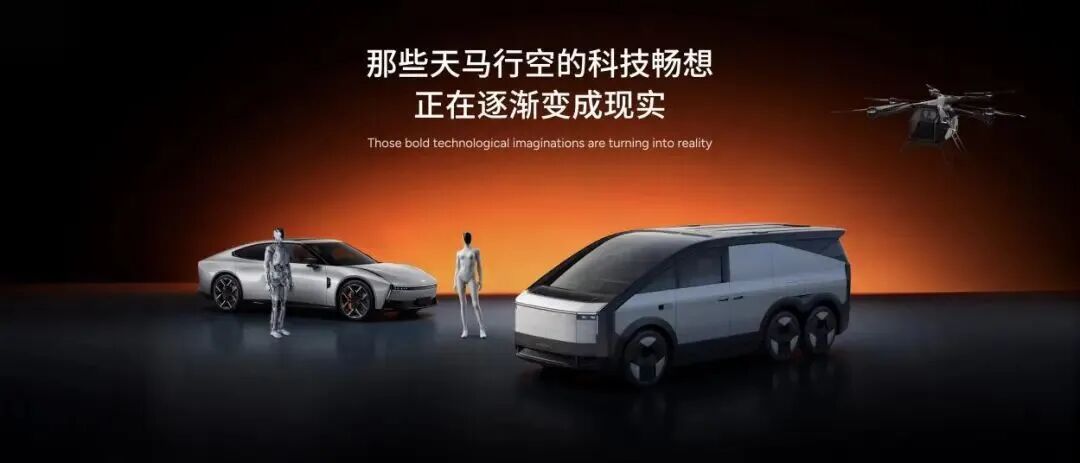
An organizational adjustment by XPeng in February this year revealed how it will "connect" these products. XPeng merged its former Autonomous Driving Center and Intelligent Cockpit Center—two top-tier intelligentization (intelligent) departments—into a General Intelligence Center. Its technical middleware will uniformly support multiple application-layer businesses, including intelligent driving and robots.
In other words, XPeng views these diverse products as having the same core—carriers of intelligence. And L4 autonomous driving represents a sufficiently intelligent AI brain.
Some signs indicate XPeng is already reaping the benefits of its AI transformation.
A few days before the second-generation VLA's release, XPeng announced that Volkswagen had become the first external customer for the second-generation VLA. This marked another case of a global top-tier traditional automaker mass-purchasing core autonomous driving software from a Chinese AI company, following Mercedes-Benz and BMW's embrace of Momenta. It also represented another technological export for XPeng beyond its CEA architecture.
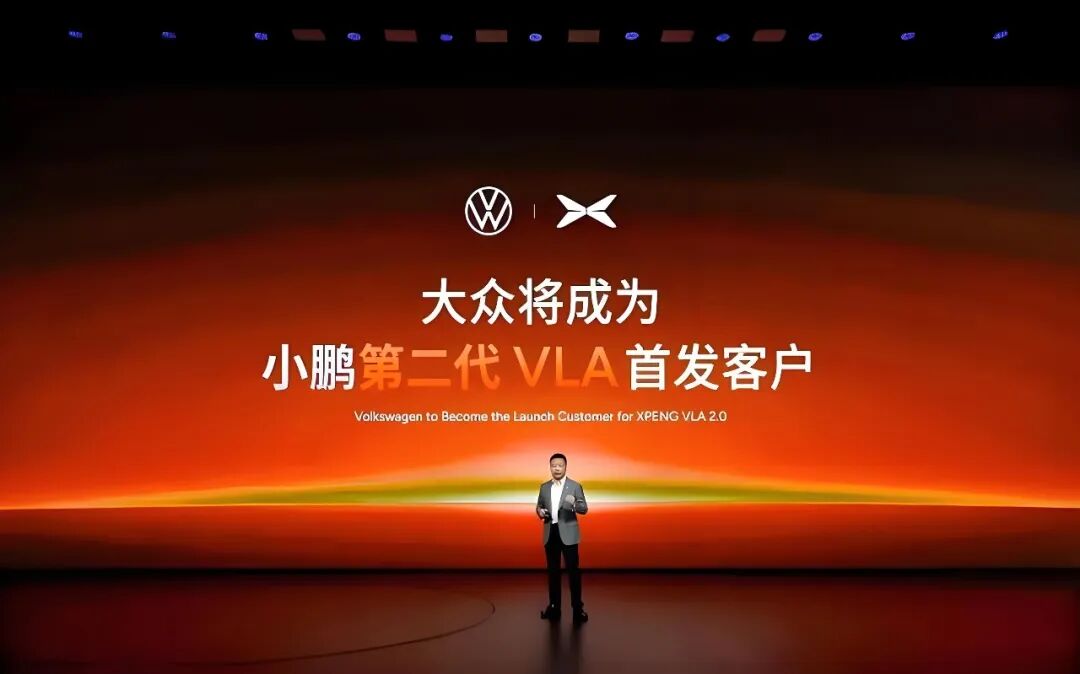
For reference, XPeng earned about 1.7 billion yuan from its collaboration with Volkswagen in the first half of 2025, with a gross margin of 60.1%. The company's overall gross margin in the same period was only 16.51%.
AI technological leadership directly relates to XPeng's survival. In Xiaomi's ecosystem, however, AI is replaced by ecology.
Although Lei Jun also spares no effort in promoting Xiaomi's massive AI investments, a more fundamental premise is that Xiaomi's car is never an isolated product but a piece in Xiaomi's "human-vehicle-home full ecosystem" puzzle.
This DNA determines the survival logic of Xiaomi's cars.
Its core competitive moat lies in Xiaomi's decade-plus accumulation of a user ecosystem with hundreds of millions of users, supply chain management capabilities, and online-offline channel systems—not solely in intelligent driving technology. Even if its intelligent driving capabilities aren't the industry's top, as long as the ecological experience is good enough, a vast number of Xiaomi fans will still buy it.
For the group, brand risk considerations matter more. As a consumer electronics giant with annual revenue exceeding 300 billion yuan, Xiaomi's brand reputation covers dozens of categories, including smartphones, home appliances, and digital products.
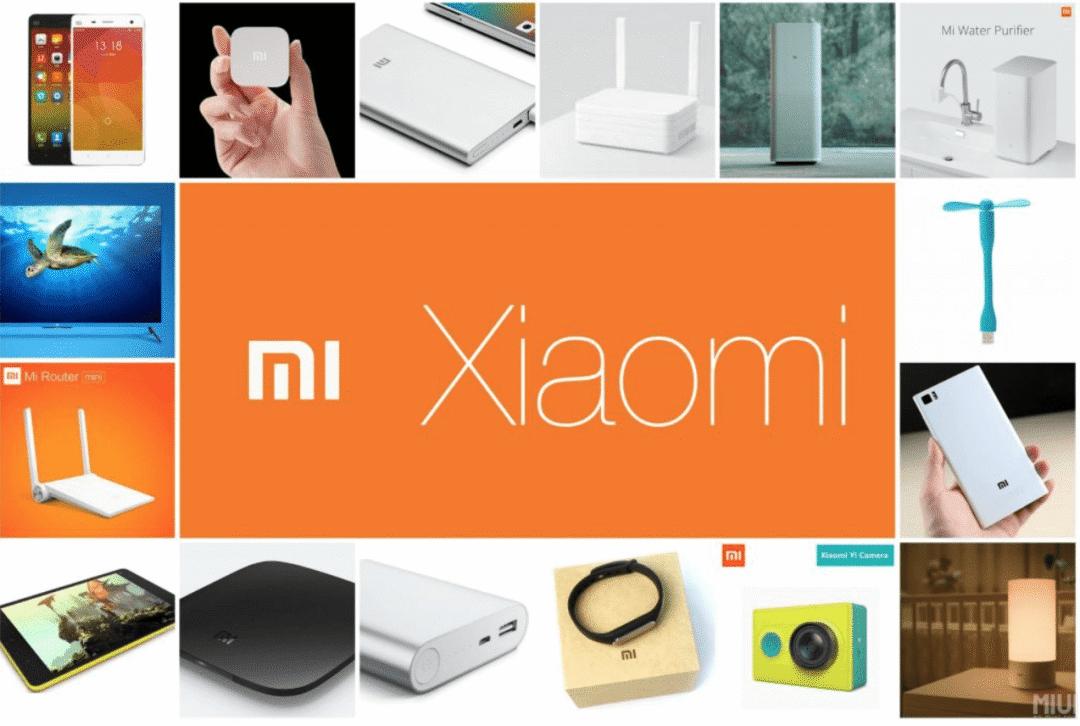
If Xiaomi's cars experience major safety incidents due to user misuse of assisted driving, it won't just affect Xiaomi's car sales but also the brand image of the entire Xiaomi Group, potentially impacting core businesses like smartphones and home appliances.
This is the core reason Lei Jun repeatedly emphasizes "always holding the steering wheel" and pushes for regulating assisted driving usage—he must uphold Xiaomi's brand safety bottom line (bottom line).
The DNA differences between XPeng and Xiaomi also represent two types of automakers in China's car market:
One type is the 'intelligent driving-native auto companies' that take intelligent driving as their core competitiveness. They are the pioneers of the industry and must continuously push the boundaries of technology and policy forward;
The other type is the 'ecosystem/scale-oriented auto companies' with a vast user base and a mature industrial system. They prioritize stability and safety, serving as the ballast of the industry.
During the Two Sessions this time, representatives and members like Lei Jun and He Xiaopeng proposed bills and motions centered around autonomous driving. This can actually be seen as a two-way endeavor on the path of China's autonomous driving development.
One looks towards the endgame, while the other holds onto the present. Only when these two forces advance side by side can we achieve the dual maturity of technology and regulations, as well as the mutual growth of the industry and users, ultimately opening the door to autonomous driving.
-
![]()
The Unstoppable Rise of 'Optical Progress and Copper Decline': Sunny Optical’s Strategic Vision for the Next Decade
-
![]()
AI + Going Global in the Second Half: No Intermission for Robot Vacuum Cleaners
-
![]()
The Suffering Endured in E-commerce, Walmart Doesn't Want to Repeat in AI
-
![]()
What Does the Doubling of New Energy Vehicle Exports Mean?
-
![]()
Ghosn: 'Only I Can Save Nissan'
-
![]()
Volkswagen Lays Off 100,000 Employees, The Elephant Sits Down
-
![]()
Expanding Production Capacity! Yutong Optics Acquires Approximately 1.5 Hectares of Industrial Land in Chang'an, Dongguan
-
![]()
Why Is Nokia Making a Comeback in the AI Era?