The Year’s Largest Oil Price Increase ‘Kicks In’: Will Consumers Still Opt for Fuel-Powered Vehicles?
 03/10 2026
 543
543
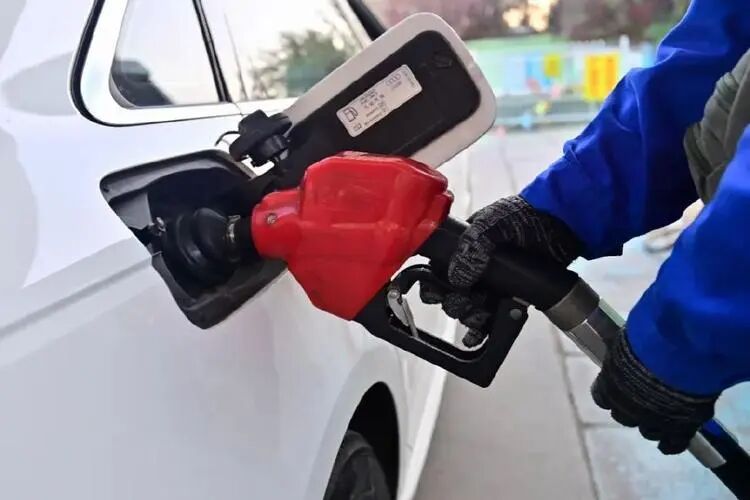
On March 9th, international oil prices surpassed the $110 per barrel threshold, marking their highest level since 2022. Consequently, domestic refined oil products experienced their largest price hike of the year, with prices rising by 695 yuan and 670 yuan per ton, respectively. This translates to a 0.55 yuan/liter increase for 92-octane gasoline and a 0.58 yuan/liter increase for 95-octane gasoline. Filling a 50-liter tank in a compact private car now costs roughly 27.5 yuan more than before.
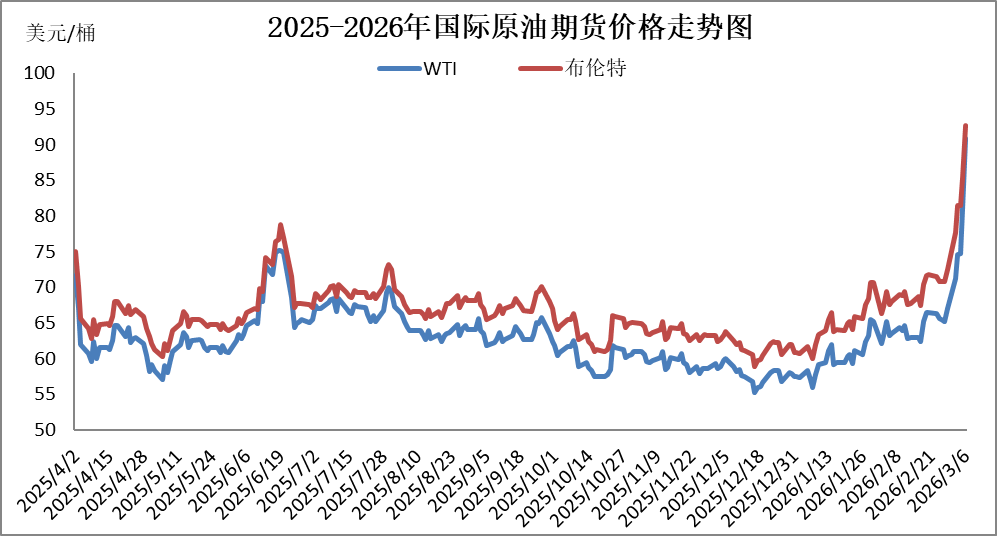
This marks the fourth consecutive oil price increase in China since 2026. As geopolitical tensions in the Middle East continue to intensify, disrupting shipping through the Strait of Hormuz, expectations of a widening global crude oil supply gap are directly affecting the daily vehicle operating costs for Chinese consumers. Meanwhile, on the other end of the automotive spectrum, a significant shift in consumer preferences is quietly underway.
Policy Pulse: Beijing Raises New Energy Vehicle Quotas Again
Earlier this year, Beijing unveiled its 2026 passenger vehicle quota allocation plan. In addition to the standard 100,000 quotas, an extra 80,000 new energy vehicle quotas will be issued this year, with 60,000 earmarked for households and 20,000 for individuals. This means that in 2026, Beijing’s total new energy vehicle quotas will reach 160,000, while only 20,000 quotas will remain for traditional fuel-powered vehicles.
Behind these figures lies a clear policy trajectory. From 100,000 in 2024 to 140,000 in 2025, and now 180,000 in 2026 (including 160,000 for new energy vehicles), Beijing—the city with the most stringent vehicle sales controls—is taking concrete steps to accelerate the adoption of new energy vehicles. Although the ‘easing’ of fuel-powered vehicle quotas has not yet materialized, the policy pendulum has already swung in favor of electrification.
Analysts observe, “The quota allocation shifts in first-tier cities serve as a bellwether for the national automotive market. When megacities allocate the lion’s share of their vehicle purchase quotas to new energy vehicles, consumer expectations undergo a fundamental transformation.”
81.2% of Fuel-Powered Vehicle Owners Favor New Energy Models for Their Next Car
If policy represents an external force, then shifts in consumer sentiment constitute an internal one.
According to the latest “Automobile Trade-In Consumer Insights White Paper,” in the replacement market, a remarkable 81.2% of fuel-powered vehicle users prefer new energy models when upgrading their vehicles. This figure would have been unthinkable just a year ago.
“I’ve driven fuel-powered vehicles for over a decade, switching from a Jetta to an Accord and then to an A6L, but this year I opted for a pure electric vehicle,” shared a consumer at a Beijing new energy vehicle experience store while finalizing the vehicle pickup process. “The primary reason is cost. Although fuel-powered vehicles have become more fuel-efficient, charging an electric vehicle at home costs just over a hundred yuan a month. With the oil price hike, I feel even more confident about my decision.”
While the 0.53 yuan/liter increase in this oil price hike is not the highest on record—in 2022, domestic 95-octane gasoline once exceeded 10 yuan/liter during the international oil price surge—the timing of this increase sets it apart.
“The automotive market has faced significant headwinds since the start of the year,” noted a senior automotive industry analyst. “In January, the new energy vehicle penetration rate dropped from 60.4% at the end of last year to 38.6%, as the market absorbs the demand gap following policy phase-outs. The oil price hike, while not extreme in absolute terms, has a compounding psychological effect on consumers—reinforcing the expectation that fuel costs will only continue to climb.”
Wang Shan, a refined oil products analyst, also pointed out that international crude oil prices are likely to remain elevated in the near term, with supply risks stemming from geopolitical factors unlikely to subside soon. This suggests that high oil prices may not be a fleeting trend but rather the new normal for the foreseeable future.
The Wait-and-See Approach and the ‘观望族’ (Wait-and-See Crowd)
However, rising oil prices will not immediately translate into a surge in new energy vehicle orders.
Survey data from the China Automobile Dealers Association reveals that 76.8% of dealers reported February sales falling short of expectations, with “consumer expectations for discounts at spring auto shows” explicitly cited as a key factor exacerbating the wait-and-see attitude.
“I currently drive a fuel-powered SUV and do want to switch to an electric vehicle, but I’m waiting for better technology,” said a consumer monitoring the electric vehicle market. “Battery range, charging times, and safety are all improving, and these advancements make me think waiting might be more cost-effective.”
This ‘wait-and-see’ mentality is becoming increasingly prevalent in the automotive market. Rapid technological progress leaves consumers torn between eagerness for better products and fear of ‘buying something that will soon become obsolete.’ In response, analysts note, “Technological breakthroughs are a double-edged sword—they attract consumers but also foster a wait-and-see attitude. BYD’s sales fluctuations in the first two months of this year were partly due to the transition period between old and new battery technologies, with consumers holding onto their cash.”
Returning to the original question: Does this oil price hike further influence consumers’ willingness to buy fuel-powered vehicles?
Based on survey data, the answer is yes. However, on a deeper level, the oil price hike serves more as a ‘catalyst’ than a fundamental driver. What truly alters consumer choices are sustained policy guidance, long-term cost comparisons, and the rapid enhancement of new energy vehicle product capabilities.
When 81.2% of fuel-powered vehicle owners no longer consider fuel-powered models when replacing their cars, when first-tier cities allocate over 80% of their vehicle purchase quotas to new energy vehicles, and when charging networks become increasingly improved and battery technologies continue to break new ground—fuel-powered vehicles, while not disappearing, have witnessed an irreversible shift in market capacity and share compared to new energy vehicles.
-
![]()
The Unstoppable Rise of 'Optical Progress and Copper Decline': Sunny Optical’s Strategic Vision for the Next Decade
-
![]()
AI + Going Global in the Second Half: No Intermission for Robot Vacuum Cleaners
-
![]()
The Suffering Endured in E-commerce, Walmart Doesn't Want to Repeat in AI
-
![]()
What Does the Doubling of New Energy Vehicle Exports Mean?
-
![]()
Ghosn: 'Only I Can Save Nissan'
-
![]()
Volkswagen Lays Off 100,000 Employees, The Elephant Sits Down
-
![]()
Expanding Production Capacity! Yutong Optics Acquires Approximately 1.5 Hectares of Industrial Land in Chang'an, Dongguan
-
![]()
Why Is Nokia Making a Comeback in the AI Era?