Guangzhou's Rapidly Progressing Driverless Taxis Put U.S. Competitors on the Defensive
 03/11 2026
 490
490
Source | YuanMedia
When discussing the global hubs for driverless taxis (Robotaxis), China's Guangdong-Hong Kong-Macao Greater Bay Area and the U.S. San Francisco Bay Area emerge as the two most prominent contenders. The rationale is straightforward: both regions host a significant concentration of unicorns in the driverless taxi industry.
Guangzhou, the core city of the Guangdong-Hong Kong-Macao Greater Bay Area, is home to two leading driverless taxi companies—WeRide and Pony.ai—both of which are listed on the U.S. stock market and conduct commercial operations in multiple international locations. Additionally, Xpeng Motors and OnTime, a subsidiary of GAC Group, are quietly expanding their presence in the driverless taxi sector.
Meanwhile, in Mountain View, part of the San Francisco Bay Area, Waymo—a subsidiary of Google's parent company, Alphabet—operates. Other U.S. contenders, such as Amazon's Zoox, also have their headquarters in the San Francisco Bay Area. Notably, this region is one of the first globally where the public can experience Tesla's Cybercab driverless taxis.
While U.S. driverless taxi companies, led by Waymo, had an earlier start, the "Guangzhou contingent" in the driverless taxi sector, led by WeRide and Pony.ai, now possesses the strength to compete head-to-head with their U.S. counterparts. Given that driverless taxis are anticipated to be one of the fastest-growing segments in transportation over the next decade, it is imperative for Chinese companies to stay competitive.
01
The Rapidly Advancing "Guangzhou Contingent" in Driverless Taxis
In the driverless taxi or autonomous driving arena, Waymo stands as the pioneer. As early as 2009, Google initiated its autonomous vehicle project at Google X Lab, which officially became an Alphabet subsidiary—Waymo—in 2016.
Examining China's driverless taxi companies, Pony.ai was established in December 2016, while WeRide was founded in 2017. If we consider companies that initiated autonomous vehicle projects earlier, Baidu, which began its self-driving car project in 2013, may be the earliest Chinese player in this field.
From any vantage point, Chinese driverless taxi companies are perceived as followers to Waymo. However, after nearly a decade of vigorous pursuit, Waymo is likely feeling the heat.
Consider, for instance, the number of cities where fully driverless commercial operations—the ultimate indicator of technological and commercial viability—have been launched. WeRide has already achieved safety-operator-free public operations in Guangzhou, Beijing, and Abu Dhabi, with plans to extend fully driverless commercial services to Dubai, Singapore, and Switzerland within the year. Although WeRide's city count may not yet match Waymo's, it is essential to note that Waymo primarily operates in the U.S.
At the operational level, Pony.ai and WeRide have already discovered "profit formulas" in certain cities.
According to Pony.ai's 2025 earnings forecast, its net loss is projected to narrow significantly, from $275 million in 2024 to a maximum of $86 million in 2025. This improvement is partly attributable to the profitability of its Guangzhou driverless taxi business, which achieved positive per-vehicle monthly profits in November 2025. Beyond Guangzhou, Pony.ai also attained per-vehicle monthly profitability in Shenzhen in February 2026.
As for WeRide, its driverless taxi business in Abu Dhabi achieved operational profitability in 2025, approximately four years ahead of industry expectations.
"Whether it's WeRide or Pony.ai, their ability to generate profits in select cities is primarily due to enhanced operational efficiency. However, their overall business scale—including fleet size and order volume—still lags significantly behind Waymo. By 2025, Waymo had already accumulated 14-15 million paid orders, several million more than Pony.ai and WeRide combined, and its fleet size is also substantially larger," an executive from a leading Chinese driverless taxi company told YuanMedia on March 9, speaking on condition of anonymity.
The executive noted that it is still premature for Waymo or Chinese driverless taxi companies to prioritize profitability, as high costs persist in areas such as R&D and fleet expansion. "However, achieving profitability in a specific region or city is a crucial signal. Only models that succeed commercially are worthy of further investment," they added.
02
The Driverless Taxi Battle Escalates to the Next Level
If we consider 2016—when Waymo was officially established—as the starting point for the driverless taxi sector, the industry is now entering its second decade. The general expectation is that driverless taxis will commence large-scale operations around 2030, with the global market reaching $40-60 billion, of which the Chinese market will constitute approximately one-fourth.
In other words, at the outset of 2026, competition in the driverless taxi sector has escalated to a more intense phase. At this juncture, local cities participating in this technological transformation as "industry cradles" are playing an increasingly pivotal role.
Take Guangzhou, which has nurtured Pony.ai and WeRide, as an example. Its support for the driverless taxi industry is unparalleled.
For instance, in terms of top-tier legislation and institutional safeguards—the bedrock for commercializing driverless taxis—Guangzhou implemented the "Regulations on the Innovative Development of Intelligent Connected Vehicles in Guangzhou" in February 2025. This marked the first local autonomous driving regulation in China, establishing core rules for data security and liability determination in the commercial operation of driverless taxis.
In September of the same year, Guangzhou introduced the "Administrative Measures for Road Testing and Demonstration Activities of Intelligent Connected Vehicles and Autonomous Driving Equipment in Guangzhou," providing the legal basis for driverless taxis to operate without safety operators, truly achieving "driverless" operations.
It is noteworthy that Guangzhou has opened more roads for driverless taxis than any other city in China. To date, it has opened 827 roads, with a one-way distance of 1,666 kilometers, covering six administrative districts: Haizhu, Baiyun, Huangpu, Huadu, Panyu, and Nansha. By 2025, residents could already book driverless taxi services from Haizhu District to Baiyun Airport.
Guangzhou's open and inclusive policy environment has attracted a growing number of companies interested in entering the driverless taxi sector. Combined with Guangzhou's decades-long reputation as an "automobile city," the industry cluster effect is accelerating.
For example, in February 2026, Geely Remote, a commercial vehicle company, signed a strategic cooperation agreement with Guangzhou-based GAC Lingcheng. On March 9, Geely Remote further deepened its strategic partnership with WeRide, agreeing to produce factory-installed, mass-produced Robotaxi GXR vehicles for WeRide.
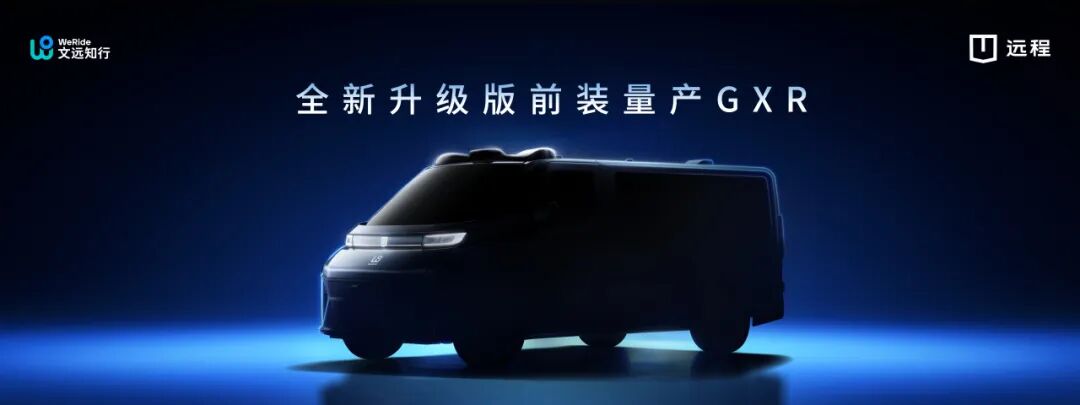
Given industry expectations that Geely Remote's partnership with GAC Lingcheng will revitalize the latter's idle capacity and enable localized production of remote buses and VAN-class products, there is significant potential for WeRide to further reduce the cost of its driverless taxis through this supply chain.
For reference, YuanMedia learned from WeRide on March 9 that the current cost of the newly upgraded Robotaxi GXR has already decreased by 15% compared to its previous version.
To a certain extent, competition in the driverless taxi industry is no longer solely about individual companies but a systemic contest that encompasses urban transportation, regulation, and supporting industrial chains. From this perspective, while the San Francisco Bay Area, centered on San Francisco, is a global leader in driverless taxi experimentation, Guangzhou and the Guangdong-Hong Kong-Macao Greater Bay Area are equally competitive.
It is still too early to determine the final outcome of the driverless taxi race, but the next phase of competition has already commenced.
Some images sourced from the internet. Please notify us for removal if there is any infringement.
-
![]()
The Unstoppable Rise of 'Optical Progress and Copper Decline': Sunny Optical’s Strategic Vision for the Next Decade
-
![]()
AI + Going Global in the Second Half: No Intermission for Robot Vacuum Cleaners
-
![]()
The Suffering Endured in E-commerce, Walmart Doesn't Want to Repeat in AI
-
![]()
What Does the Doubling of New Energy Vehicle Exports Mean?
-
![]()
Ghosn: 'Only I Can Save Nissan'
-
![]()
Volkswagen Lays Off 100,000 Employees, The Elephant Sits Down
-
![]()
Expanding Production Capacity! Yutong Optics Acquires Approximately 1.5 Hectares of Industrial Land in Chang'an, Dongguan
-
![]()
Why Is Nokia Making a Comeback in the AI Era?