Oil Prices Surge: Is the Electric Vehicle Price Hike Wave Imminent?
 03/11 2026
 606
606

Lead-in
Introduction
This year's Chinese auto market is destined to be a landscape of complex emotions, marked by entanglement and conflict.
Recently, as I observe the unfolding events in the Chinese auto market, I can't help but feel a mix of anticipation and concern.
The catalyst for these emotions is undoubtedly the "explosive" financial report released by CATL. In 2025, the company achieved a revenue of 423.7 billion yuan, marking a 17% year-on-year increase; its net profit attributable to shareholders of the listed company reached 72.2 billion yuan, up 42% year-on-year. It must be acknowledged that such profit-making ability is truly impressive.
Especially when most original equipment manufacturers (OEMs) are trapped in the quagmire of price wars, and many brands struggle to maintain self-sufficiency, CATL, as the absolute oligopoly in the power battery sector, is thriving and reaping substantial profits, creating a stark contrast.
Of course, this also underscores, from another perspective, who currently holds the dominant power in China's new energy sector. In the era of traditional fuel vehicles, automakers have always been the masters of the game rules and the apex of the ecosystem. However, entering the realm of intelligent electric vehicles, suppliers led by CATL and Huawei have emerged as the hidden powerhouses behind the scenes.
The situation is indeed ruthless.
The fundamental purpose of revealing these harsh facts at the outset is to pave the way for the following discussion. Initially, it was believed that the global oil price hike triggered by the US-Iran conflict would benefit the new energy sector and potentially break the sales slump caused by policy fluctuations in the first two months of this year.
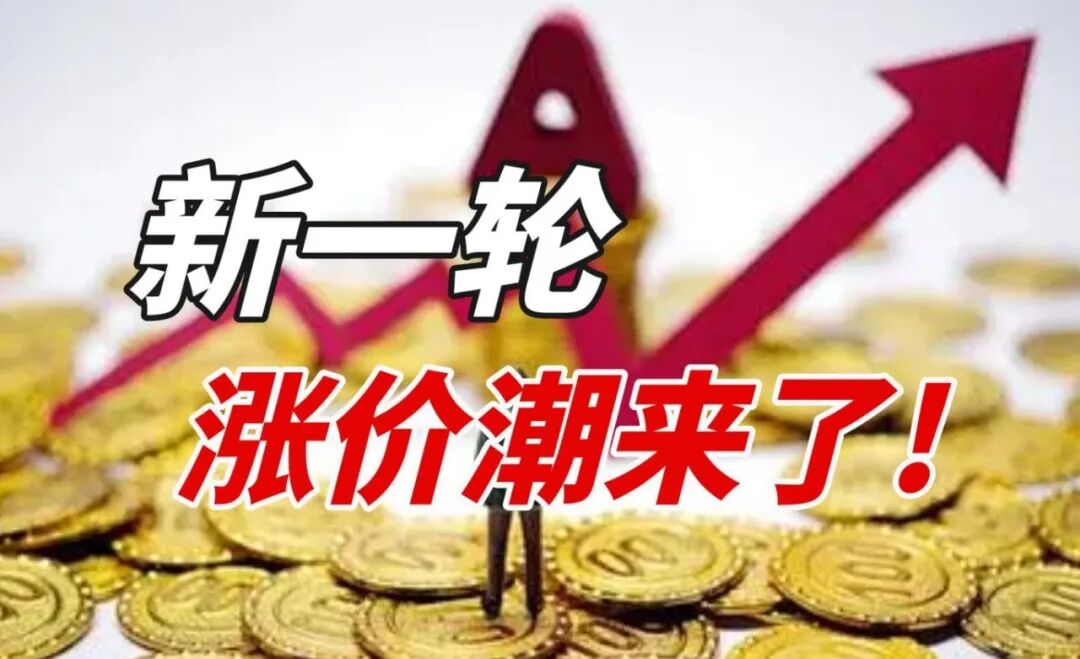
However, the narrative does not seem to be unfolding as anticipated. Because the wave of electric vehicle price hikes may be on the horizon. Yes, you read that correctly; this time, it's a "wave of price hikes."
In fact, as early as March 5th, Chery's EXEED brand announced an increase in the official guide price of the EXEED ET5, with the high-end version, the 210 Lidar Intelligent Supreme model, seeing a 5,000 yuan hike. After the adjustment, the official guide price for this version stands at 164,900 yuan.
This week, there has been continued news that the refreshed ZEEKR 007GT, set to be launched in the second quarter, is expected to adjust its price based on the current model, with an increase ranging from 5,000 to 8,000 yuan.
Regarding the explanations provided by the two automakers, both cite significant increases in the prices of upstream raw materials and core components. Therefore, taking this opportunity, I aim to discuss the magnitude of these increases.
Firstly, let's talk about memory chips.
A deep analysis of the fluctuations since last year reveals that the main issue lies in the global capacity structural imbalance.
With the AI sector booming, several global giants in the memory chip industry have shifted over 80% of their advanced process capacity to HBM high-bandwidth memory and high-end DDR5 products required for AI servers, significantly reducing the production capacity of conventional memory chips such as automotive-grade DDR4.
Automakers' procurement shares and bargaining power pale in comparison to those of tech giants. Faced with chip manufacturers' capacity allocation and price hike strategies, automakers have little ability to resist and can only accept the increased costs.
As for the magnitude of the increase?
Data shows that in recent months, DDR4 memory prices have cumulatively increased by over 150%, while high-end DDR5 prices have surged by 300%. Just the memory chips alone can add 1,000 to 3,000 yuan to the cost of a single electric vehicle. For brands with already thin gross margins, the impact is far greater than imagined.
What's even more concerning is that there are no signs of relief in the current capacity structural imbalance. From the perspective of chip manufacturers, they will undoubtedly continue to pursue lucrative opportunities.
This means that in the short term, automakers can only continue to bear the pressure silently.
In the long run, they must accelerate the process of chip localization substitution and increase their self-research efforts. Otherwise, they will always be at the mercy of external factors in this dimension, and "once others tighten the screws, you'll be in disarray."
Besides, another driving force behind the wave of electric vehicle price hikes is related to lithium carbonate.
As we all know, the industry generally consensus is that power batteries account for 30%-50% of the total vehicle cost. It can be said that they are almost equivalent to the "lifeblood," which also explains why there is a saying: "Except for BYD, the entire auto circle is working for CATL."
Recently, the price of battery-grade lithium carbonate has skyrocketed from around 75,000 yuan per ton at the beginning of last year to 171,900 yuan per ton in March this year. Although it has now fallen back to 155,000 yuan per ton, it has still doubled compared to before July 2025.
Taking lithium iron phosphate batteries as an example, the costs of cells and packs have increased by 21% and 14% respectively this year compared to the fourth quarter of last year. It is estimated that the average battery cost per vehicle has increased by about 3,434 yuan.
Adding the memory chip part, a comprehensive estimate of the inflation amplitude for a mainstream mid-size electric vehicle this year will be as high as 4,000 to 7,000 yuan. More severely, the industry profit margin may face a compression risk of 5%-8%.
In the past, in a relatively benign and healthy market, when faced with significant increases in the prices of raw materials and components, the most common industry practice was for OEMs to reasonably adjust product prices to hedge against the operational pressure caused by rising manufacturing costs.
However, now, due to the increasingly fierce competition at the end market, OEMs have become hesitant. Even though EXEED and ZEEKR, mentioned at the beginning, took the lead in making adjustments, most players currently still choose to wait and see.
For the leading runners, they can alleviate the pressure through economies of scale and supply chain cost reductions. For the chasers with weaker risk resistance, the impact of this "wave of price hikes" may be devastating. The soaring costs of chips and batteries are enough to completely erode their already thin profits.
Some time ago, Cui Dongshu, Secretary-General of the China Passenger Car Association, also shared a set of data: last year, the sales profit margin of the automotive industry continued to decline to 4.1%, hitting a historical low. In December, which was supposed to see a year-end rally effect, the profit margin even dropped to an ice-cold 1.8%, a month-on-month decrease of 2.6% and a year-on-year decrease of 2.3%.
Undoubtedly, this is a dangerous signal. If the situation does not improve this year, many OEMs will inevitably be dragged into the abyss of "chronic blood loss."
Of course, the potential "wave of electric vehicle price hikes" also indirectly proves that the competition model relying solely on price wars and marketing wars is no longer sustainable. Future competition among OEMs will escalate into a competition of supply chain resilience, technological self-research capabilities, and industrial chain integration capabilities.
This also requires everyone to keep up with the pace of refinement and transformation. Choosing to continue to slack off will likely result in being tossed around by the fluctuations of the supply chain. After all, the truth remains that in this new track, the voice is no longer in the hands of most OEMs.
From the consumer's perspective, the widespread arrival of the "wave of electric vehicle price hikes" is definitely not a good thing. It will likely spawn another batch of "wait-and-see" consumers. However, the current market is just so opposed and entangled. Without price hikes, automakers can't survive; with price hikes, consumers won't buy.
Car manufacturing is truly not an easy business. Seizing the moment, I'm reminded of CATL's financial report again...
-
![]()
The Unstoppable Rise of 'Optical Progress and Copper Decline': Sunny Optical’s Strategic Vision for the Next Decade
-
![]()
AI + Going Global in the Second Half: No Intermission for Robot Vacuum Cleaners
-
![]()
The Suffering Endured in E-commerce, Walmart Doesn't Want to Repeat in AI
-
![]()
What Does the Doubling of New Energy Vehicle Exports Mean?
-
![]()
Ghosn: 'Only I Can Save Nissan'
-
![]()
Volkswagen Lays Off 100,000 Employees, The Elephant Sits Down
-
![]()
Expanding Production Capacity! Yutong Optics Acquires Approximately 1.5 Hectares of Industrial Land in Chang'an, Dongguan
-
![]()
Why Is Nokia Making a Comeback in the AI Era?