In-depth Analysis | NIO's 2026: Balancing Sales Volume and Profitability
 03/11 2026
 483
483
Let's talk about NIO today.
On March 10, NIO released its financial results for the fourth quarter and full year of 2025.
This financial report is arguably one of NIO's most closely watched performances in recent years. After all, amid ongoing industry skepticism over persistent losses, NIO finally achieved profitability in the fourth quarter of 2025.
This marks not only a critical turning point for the company itself but also influences the trajectory of the entire premium new energy vehicle sector.
Without further ado, let's cut to the chase.
This will be another in-depth, long-read article. Hit 'like' and keep reading—make it a habit.
Now, let's enjoy it.
01 Profitability Finally Achieved
First and foremost, let's talk about profitability.
For NIO, which has long been mired in losses, achieving profitability in the fourth quarter of 2025 is undoubtedly a key victory that boosts morale across the brand.
This profitability is essentially a concentrated result of NIO's comprehensive cost reduction and efficiency improvement efforts.
Let's start with efficiency gains. In the fourth quarter of 2025, NIO sold 124,807 vehicles, a new all-time high.
With this scale, supply chain bargaining power and overall cost control capabilities improved simultaneously, fully unleashing economies of scale.
More critical than total sales volume is the scaled-up production of the high-margin ES8 model, which directly raised the brand's overall gross margin and self-sufficiency—the core driver of NIO's significant gross margin improvement.
Looking at specific gross margin data, NIO's vehicle gross margin reached 18.1% in the fourth quarter of 2025, compared to 13.1% in Q4 2024 and 14.7% in Q3 2025.
The overall gross margin stood at 17.5%, also well above 11.7% in Q4 2024 and 13.9% in Q3 2025, indicating a sustained improvement in profitability fundamentals.
Now, let's examine total revenue and gross profit. In Q4 2025, NIO's total revenue was RMB 34.6502 billion (USD 4.9549 billion), with a gross profit of RMB 6.0741 billion (USD 868.6 million). The dual improvement in revenue scale and profit margins laid a solid foundation for achieving quarterly profitability.

Beyond front-end sales efficiency gains, NIO also made significant strides in back-end cost reduction, sharply cutting operating expenses through internal management reforms. The company advanced its CBU mechanism, implemented cost-side Cost Mining and "millionfold thinking," while refining its goal evaluation and incentive system to ensure cost control was effectively put into practice. The resulting changes in expense data are quite intuitive (zhíguān, meaning "visible" or "apparent").
In terms of selling, general, and administrative expenses, Q4 2025 saw RMB 3.5374 billion (USD 505.8 million) in spending, a sharp 27.5% decline from Q4 2024 and a 15.5% drop from Q3 2025.
Regarding R&D expenditure, NIO moved away from its previous norm of over RMB 3 billion per quarter. In Q4 2025, R&D spending was RMB 2.026 billion (USD 289.7 million), down 44.3% from Q4 2024 and 15.3% from Q3 2025.
It should be noted that NIO will not indefinitely compress R&D spending. In 2026, it plans to stabilize quarterly R&D expenses at around RMB 2 billion, balancing R&D investment with cost control.
Under the dual strategy of cost reduction and efficiency improvement, NIO finally achieved profitability in the fourth quarter of 2025, reporting a quarterly net profit of RMB 282.7 million (USD 40.4 million) and an operating profit of RMB 807.3 million (USD 115.4 million).
While single-quarter profitability is commendable, reality must set in after the celebration.
By 2026, the new energy vehicle industry will have entered a brutal elimination phase, where corporate cash flow reserves and risk resilience matter far more than single-quarter profitability for survival.

As of December 31, 2025, NIO's cash and cash equivalents, restricted cash, short-term investments, and long-term time deposits totaled RMB 45.9 billion (USD 6.6 billion). While this appears ample on paper, pressure remains when viewed alongside full-year losses.
In 2025, NIO reported a full-year net loss of RMB 14.9426 billion (USD 2.1368 billion). Although this was a significant narrowing from the RMB 22.4017 billion loss in 2024, a full-year loss in the tens of billions is still far from optimistic.
In response to market concerns about going concern and liquidity, NIO provided a clear statement: Based on its assessment of going concern and liquidity, combined with its business plan (revenue growth from existing and new model sales, improved operating cash flow from operational efficiency gains, working capital management, and bank credit and other financing channels), even considering uncertainties in business plan execution, NIO's existing financial resources—including cash assets, operating cash flow, credit, and other financing—are sufficient to support normal business operations over the next twelve months.
02 Playing with Cards on the Table
Single-quarter profitability is just the starting point. NIO has set four ambitious goals for 2026:
Achieve full-year overall profitability;
Increase overall gross margin to 20%, further strengthening profitability quality; Achieve a core sales target of 50,000 monthly units in the first half of the year; Achieve 40-50% annual sales growth.
The timeline is tight, and the tasks are heavy. To meet these annual goals, the core strategy remains expanding revenue sources + cutting costs.
Let's start with revenue expansion.
Front-end vehicle sales growth remains central. In 2026, NIO will launch three new models to improve (wánshàn, meaning "complete" or "enhance") its product lineup and capture market share in the premium large SUV segment.
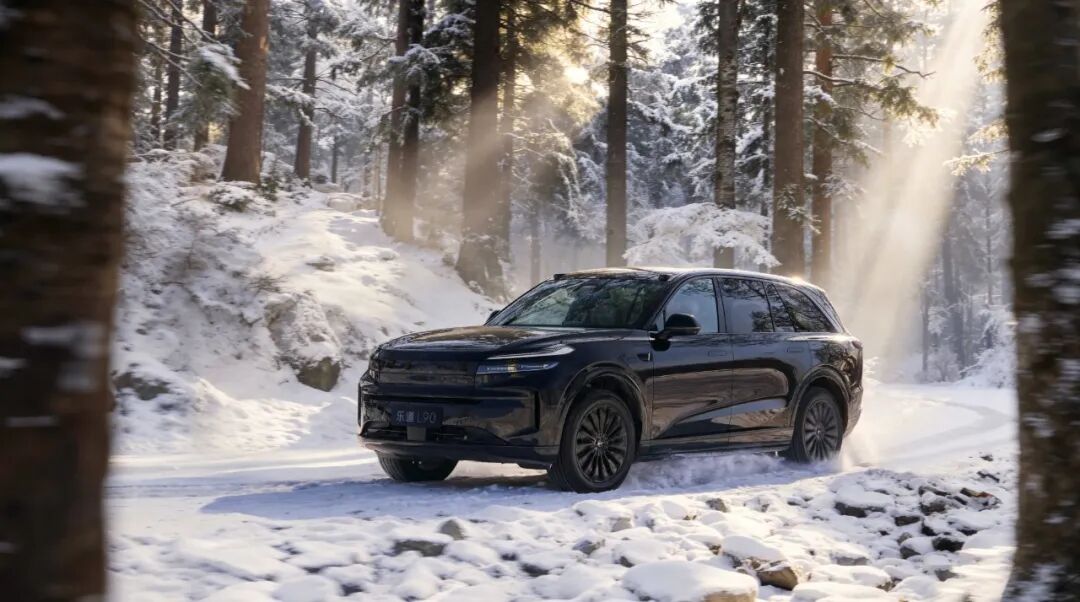
The specific model lineup includes: the NIO ES9 and Ledo L80, planned for launch in Q2 2026, and the NIO ES7, scheduled for Q3 2026.
By then, NIO will have five large/mid-size SUVs, fully covering the premium large SUV market and serving as the core driver of annual sales growth.
NIO's bet on the large SUV segment aligns with industry market trends: In 2026, China's passenger vehicle market is expected to decline slightly, but new energy vehicle penetration will continue to rise, with battery electric vehicle (BEV) models growing strongly. In 2025, BEVs' share of new vehicle sales rose from 26% to 33%; in the premium market above RMB 300,000, BEV penetration reached 27% in Q4 2025, doubling from 14% in Q4 2024, with BEV models in this segment growing 58% year-on-year in 2025.
In particular, the BEV market for large three-row and large five-seat SUVs is entering a golden growth period. Since September 2025, sales in this category have led all energy formats for five consecutive months, surging over 350% year-on-year in the second half of the year. In contrast, extended-range EVs declined 6% year-on-year. NIO's product rollout is highly synchronized with these industry trends.
However, risks persist. The premium large SUV segment has become a battleground, with XPeng, Xiaomi, Zeekr, IM Motors, and others set to launch major products in 2026, significantly intensifying market competition and sales challenges.
Despite this, Li Bin remains confident in achieving 40-50% sales growth and meeting annual profitability targets.
In response to raw material price hikes, NIO has a plan: The impact of rising prices for lithium carbonate, chips, and copper in 2026 only began to show in Q1 and can be kept within a reasonable range. NIO will work with suppliers to improve efficiency and offset cost impacts on gross margins. With five large SUVs on sale, the high-margin nature of these vehicles will strengthen the brand's risk resilience, giving NIO confidence in stabilizing vehicle gross margins.
Regarding model refreshes, the 2025 variants of the 5566 series are now being cleared out, with new ET5/ET5T/ES6/EC6 models ready to launch. These are minor refreshes based on the 2.5 platform, with 3.0 platform versions not arriving until 2027.
To be honest, this arrangement is regrettable, but given NIO's current financial constraints—where every penny must be stretched—prioritizing funding for core profit-generating models is understandable.
That said, I still believe the ES6 should have switched to the 3rd-gen platform this year, given its strong sales performance.
Additionally, the Ledo L60 will receive a minor refresh, while the Ledo L90 will introduce a LiDAR version. NIO's full product offensive will kick off in Q2 2026.
Immediately after, in Q2, NIO will face the major test of breaking 50,000 monthly deliveries—one challenge after another.

Beyond traditional vehicle sales, NIO has opened up a new profit growth area: external chip supply.
On February 26, NIO's chip subsidiary, Anhui Shenji Technology Co., Ltd., completed its first round of equity financing, raising over RMB 2.2 billion with a post-money valuation nearing RMB 10 billion.
The subsidiary is currently developing next-generation high-end chips while also laying out mid-range chips for mass-market customers, expanding into the autonomous driving and embodied AI markets. Several external automakers have already expressed interest in collaboration, marking initial breakthroughs in external business.
Among these, the second chip adopts an automotive-grade 5nm process, offering exceptional cost-effectiveness. Its performance is equivalent to three Orin X chips, while its cost is significantly lower than the initial 9031 chip. The chip has successfully taped out and entered mass production, with broad applications across autonomous driving and embodied AI scenarios.
Let's hope for more progress announcements soon.
On the cost-cutting side, NIO will continue to deepen organizational reforms, refining its core business unit mechanism centered on user value creation to build a more efficient company-wide operating system and strengthen cost control and ROI awareness. While selling and administrative expenses will rise in absolute terms with sales growth, the target is to keep them below 10% of sales revenue.
Regarding R&D expenses, NIO will continue to make resolute and sustained investments in full-stack core technologies for smart electric vehicles to ensure its products and technologies remain leading. Quarterly R&D spending will be maintained at RMB 2-2.5 billion, keeping full-year R&D in line with 2025 levels. Meanwhile, R&D rhythm and investment will be dynamically adjusted based on an ROI mechanism to improve efficiency and avoid wasteful spending. 
Additionally, NIO remains committed to investing in battery swap infrastructure, continuing to deploy swap stations at a pace of about 1,000 per year and steadily enhancing the energy commercial operation capabilities of its battery swap network.
Notably, fifth-generation swap stations will begin large-scale deployment in Q2 2026, enabling battery swapping for NIO, Ledo, and Firefly brands. Speaking of battery swapping, a major point of criticism is that despite having an integrated swapping system, the three brands use different battery sizes.
Even Qin Shi Huang knew to unify currency after unifying the six states, yet NIO's three brands have multiple battery specifications, calling it "brand and positioning differentiation."
Following this logic, should the three brands build separate swap stations? (Initially, Firefly was set to have standalone stations, but this plan was scrapped after criticism.) From a supply chain perspective, a multi-battery specification system significantly increases R&D, production, inventory, and maintenance costs across the board—especially given NIO's current financial constraints. This self-defeating design is entirely unnecessary.
I sincerely recommend that NIO prioritize streamlining its supply chain management. You'll find it saves far more money than layoffs ever could. In terms of channels, NIO currently operates 171 NIO Houses, 395 NIO Spaces, and 420 Ledo stores. On the service network side, it has 406 service centers and 75 delivery centers.
In 2026, NIO will further strengthen the optimization and upgrading of its sales and service network to ensure greater resilience in the face of fierce market competition.
03 2026: The True Litmus Test
Let's also touch on content related to Q1 performance.
NIO expects Q1 vehicle deliveries to range between 80,000 and 83,000 units. Based on January's 27,182 deliveries and February's 20,797 deliveries, March deliveries would need to reach 32,000-35,000 units—a respectable overall sales performance.
Even though Q1 is affected by seasonal and policy factors, the ES8 has a sufficient backlog of orders, and order recovery has been strong post-Chinese New Year. The proportion of high-margin models will support overall gross margins. NIO expects vehicle gross margins in Q1 2026 to remain at Q4 2025 levels, maintaining a range of 17-18%.
In terms of long-term gross margin targets, the three brands have clear plans: NIO brand at 20-25%, Ledo brand above 15%, and Firefly brand above 10%. NIO will steadily progress toward these targets in 2026.
Looking at NIO's full-year and Q4 2025 financial results, single-quarter profitability is indeed a milestone breakthrough in NIO's transformation. By achieving cost reduction and efficiency gains to escape the loss-making quagmire, NIO has shown the market more possibilities.
However, we must remain sober: Q4 2025 profitability is only a phased (jiēduànxìng, meaning "phased" or "interim") victory, not the final outcome.",
The next core highlights are clear: whether it can maintain its single-quarter profitability to achieve a full-year positive turnaround, whether it can successfully break through the threshold of 50,000 monthly sales, and whether it can achieve a sales growth of over 40%. These three major issues will directly determine NIO's final position in this round of industry eliminations.
For NIO, every hurdle is tough but must be overcome. Having navigated through the profitability challenge in 2025, 2026 will be a make-or-break year to test its true strength. Let's see if this high-end brand, which adheres to the battery swap route, can withstand the pressure and truly achieve a transformation from 'surviving' to 'thriving'.
The end.
-
![]()
The Unstoppable Rise of 'Optical Progress and Copper Decline': Sunny Optical’s Strategic Vision for the Next Decade
-
![]()
AI + Going Global in the Second Half: No Intermission for Robot Vacuum Cleaners
-
![]()
The Suffering Endured in E-commerce, Walmart Doesn't Want to Repeat in AI
-
![]()
What Does the Doubling of New Energy Vehicle Exports Mean?
-
![]()
Ghosn: 'Only I Can Save Nissan'
-
![]()
Volkswagen Lays Off 100,000 Employees, The Elephant Sits Down
-
![]()
Expanding Production Capacity! Yutong Optics Acquires Approximately 1.5 Hectares of Industrial Land in Chang'an, Dongguan
-
![]()
Why Is Nokia Making a Comeback in the AI Era?