NIO Sees曙光, Li Bin Signs a 'Bet'
 03/12 2026
 691
691
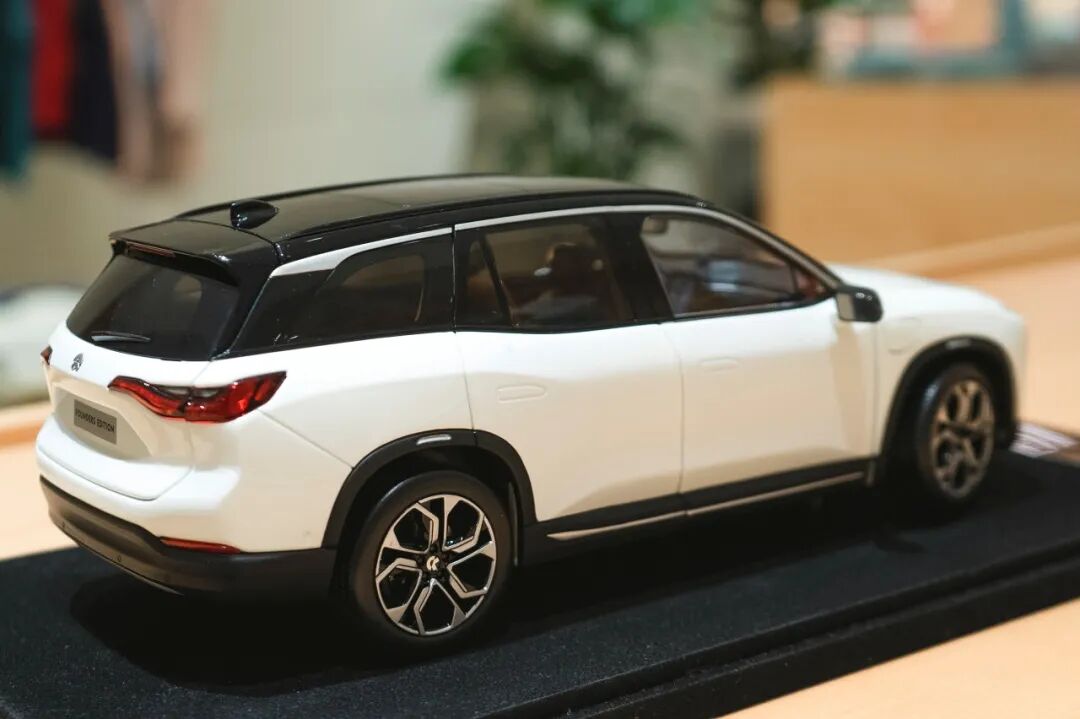
After 11 years, NIO finally tastes a hint of profitability.
On March 10, NIO released its Q4 and full-year 2025 financial results, delivering its first profitable single-quarter performance and becoming another new energy vehicle company to achieve quarterly profitability, bringing a glimmer of hope to NIO.
However, it should be noted that NIO still did not escape annual losses, with cumulative losses exceeding 100 billion yuan.
Against the backdrop of industry growth driven by pure electric models, Li Bin set a target for NIO to achieve 40%-50% sales growth and adjusted annual profitability in 2026.
The 248 million restricted stock incentive plan approved by NIO's board deeply ties Li Bin's personal interests to the company's market value and profits, officially initiating a long-term 'bet.'

Profitability dawn Emerges
NIO's Q4 2025 financial data showed an adjusted net profit of 727 million yuan, a significant reversal from both year-over-year (6.622 billion yuan loss in Q4 2024) and quarter-over-quarter (2.735 billion yuan loss in Q3 2025) comparisons. This marked the first profitable quarter since the company's founding in 2014, a historic milestone.
Spurred by this positive news, NIO (NIO.US) surged over 15% on the day of the earnings release. The following day, NIO-SW (09866.HK) continued to rise, with intraday gains exceeding 16%, reaching a new high for 2026.
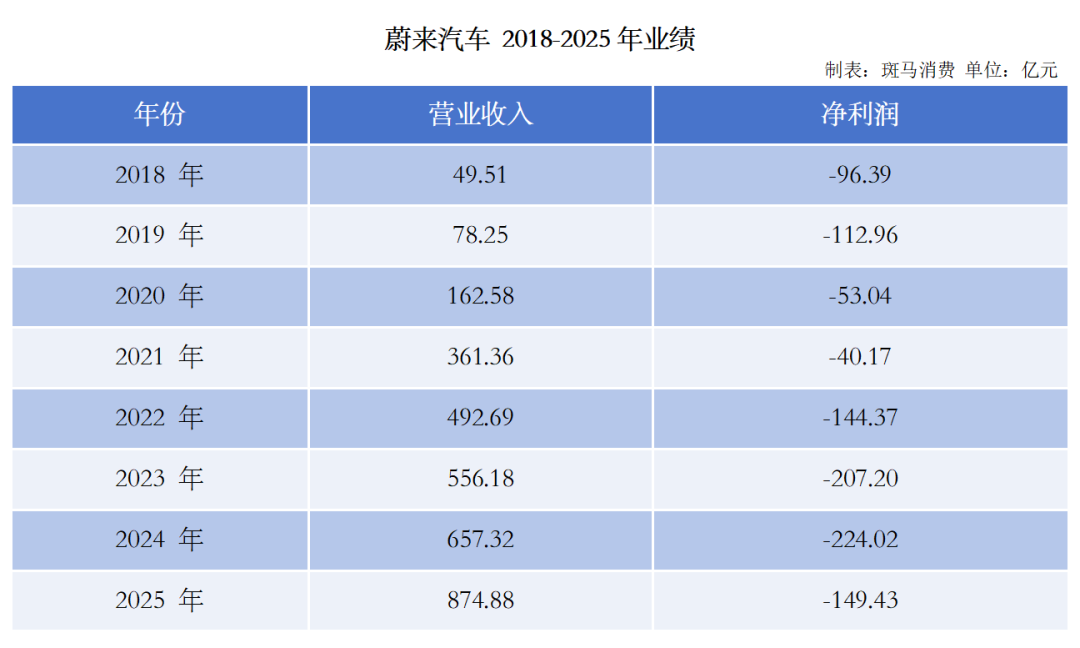
However, NIO's full-year performance remained mired in losses. Despite a significant 33.3% year-over-year reduction in annual losses, the 2025 net loss still reached 14.943 billion yuan. Since its IPO in 2018, cumulative losses have exceeded 100 billion yuan.
The notable improvement in NIO's 2025 performance resulted from the synergistic efforts of three strategies: 'scaling up, improving gross margins, and controlling expenses.' The three brands—NIO, LeDao, and Firefly—completed differentiated layouts, covering premium, mainstream family, and boutique compact car segments across multiple price ranges. In 2025, 326,000 vehicles were delivered, up 46.9% year-over-year, with Q4 single-quarter deliveries reaching 124,000 units, up 71.7% year-over-year and 43.3% quarter-over-quarter, setting a quarterly delivery record. Rapid sales growth effectively diluted costs.
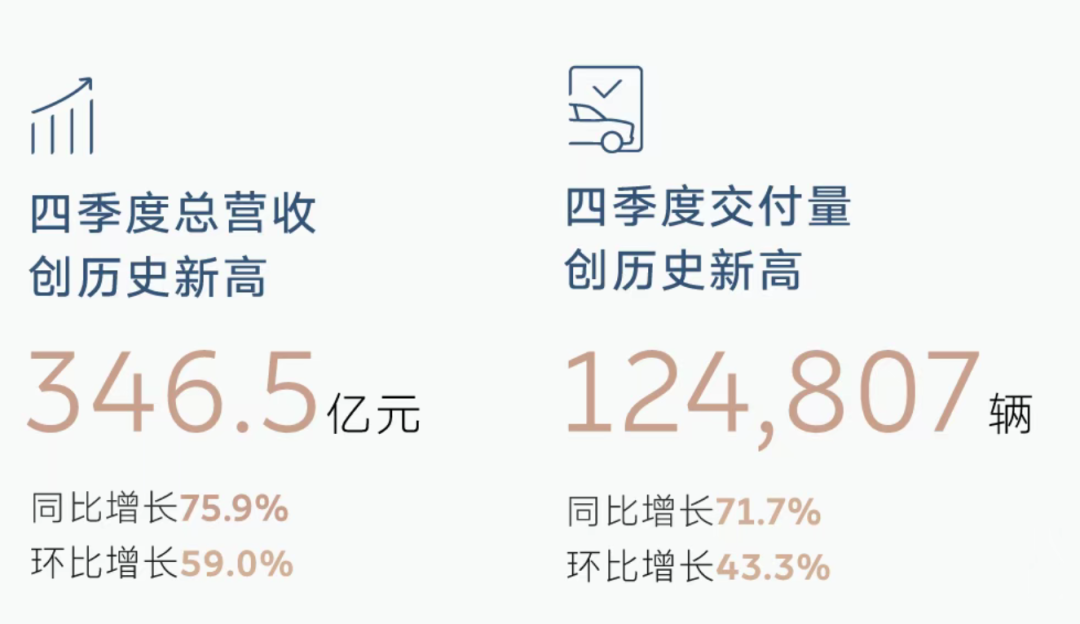
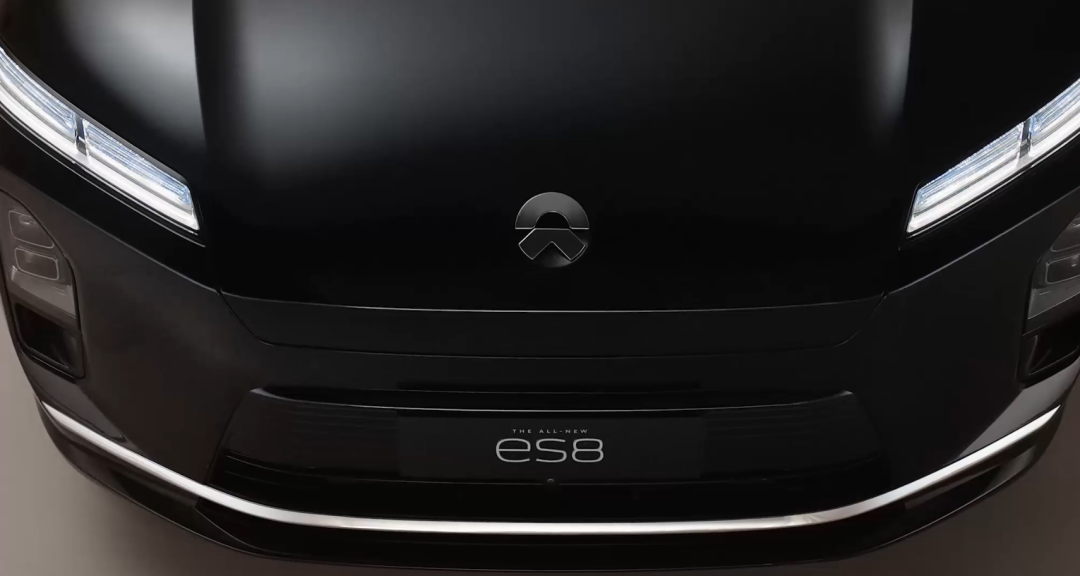
Product structure optimization and self-developed cost reductions drove gross margin improvements. In Q4, NIO's vehicle gross margin reached 18.1%, and its comprehensive gross margin hit 17.5%, both reaching new highs since 2022. The high-margin new ES8 became a core contributor, while the self-developed Shenji NX9031 chip reduced per-unit costs by 20,000 yuan compared to outsourcing, with platform technologies further spreading R&D costs.
Refined management squeezed out inefficiencies. Against a backdrop of 87.488 billion yuan in annual revenue (up 33.1% year-over-year), NIO's Q4 R&D expenses plummeted 44.3% year-over-year, while sales and administrative expenses fell 27.5%. Internal cost-control mechanisms eliminated inefficient investments, significantly boosting operational efficiency.
Tackling 2026
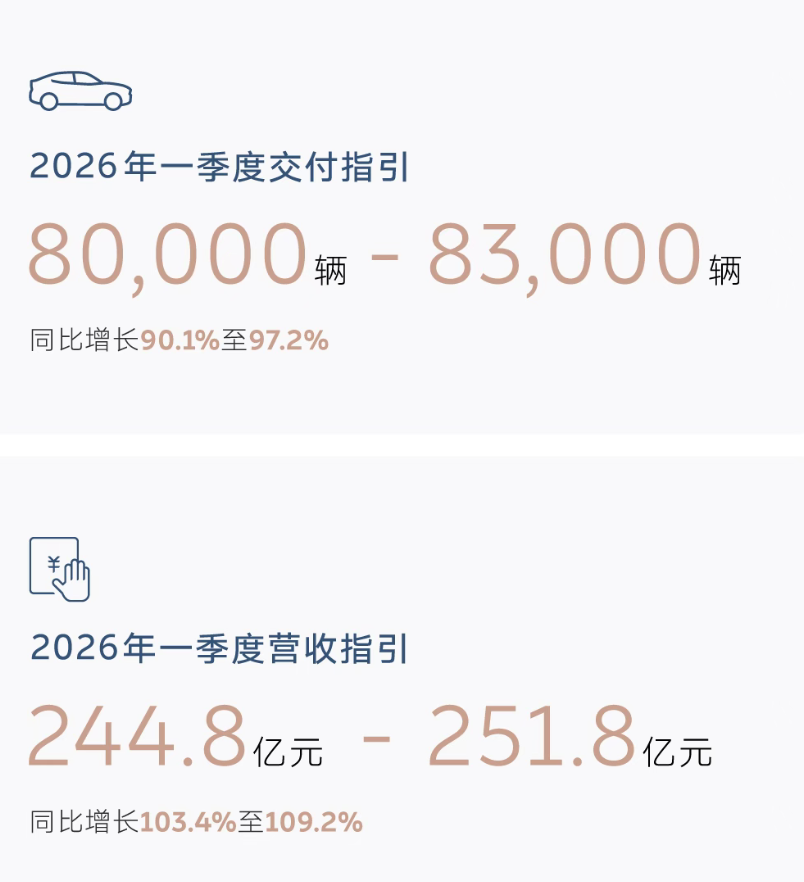
During the 2025 earnings call, Li Bin expressed confidence in NIO's 2026 growth, explicitly setting a full-year sales growth target of 40%-50%. Based on this, NIO needs to deliver 450,000-490,000 vehicles this year.
Li Bin's confidence stems not only from NIO's internal strengths but also from China's new energy vehicle market, which is experiencing growth driven by pure electric models.
CAAM data showed that in 2025, China's new energy vehicle production and sales reached 16.626 million and 16.49 million units, up 29% and 28.2% year-over-year, respectively, with pure electric models serving as the core growth driver. Benefiting from policy support and improved infrastructure, the market penetration rate of pure electric models continues to rise, and NIO remains a steadfast player in this segment.
To support its 2026 sales growth target, NIO adopted an offensive strategy, formulating comprehensive development plans across product, infrastructure, and channel dimensions.
On the product front, the three brands—NIO, LeDao, and Firefly—will launch a total of 10 new or refreshed models this year, with nearly monthly releases, breaking away from the previous slow-iteration approach.
Infrastructure-wise, NIO plans to build 1,000 new battery swap stations in 2026, expanding the total to 4,700. The first fifth-generation swap station compatible with all three brands launched a pilot in March, with scaling deployment scheduled for Q2, connecting the swap networks of the three brands.
Channel-wise, NIO implemented a 'three-in-one' sales model, integrating the three brands into SKY stores to address high construction and staffing costs while accelerating sales network expansion into lower-tier markets.
However, NIO's sales growth target still faces significant challenges. In the first two months of 2026, NIO delivered nearly 48,000 new vehicles, falling short of the monthly average target of 40,000 units. While seasonal fluctuations from the Lunar New Year holiday played a role, core issues include imbalanced sales across models and slow production ramp-up at supplementary factories F3 and F4, which hindered delivery efficiency and became obstacles to achieving sales targets.
Currently, the ES8 accounts for over half of NIO's total deliveries, while volume models like the ES6 and ET5 underperformed. Slow production ramp-up at F3 and F4 factories further impacted delivery efficiency, posing hurdles for NIO to meet its sales targets.
Li Bin's Long-Term Bet
On March 6, just before NIO released its 2025 financial results, the board approved a 2026 stock incentive plan, granting founder, chairman, and CEO Li Bin 248 million restricted shares. The 12-year plan ties share vesting to two core metrics—market value and net profit—making it a long-term 'bet' between Li Bin and NIO.
Under the incentive plan, the 248 million restricted shares are divided into ten equal batches, with unlocking conditions tied to dual-threshold targets for market value and net profit.
When NIO's U.S. market value sequentially exceeds $30 billion, $50 billion, $80 billion, $100 billion, and $120 billion, Li Bin will receive 1/10 of the shares for each threshold. Similarly, when the company's net profit sequentially exceeds $1.5 billion, $2.5 billion, $4 billion, $5 billion, and $6 billion, Li Bin will unlock 1/10 of the shares for each threshold. Full vesting of all 248 million shares requires NIO's market value to surpass $120 billion and net profit to exceed $6 billion.
Based on current data, Li Bin faces significant challenges in unlocking these shares.
NIO's current U.S. market value stands at approximately $14 billion, less than half of the first market value threshold and far from the ultimate $120 billion target.
In terms of net profit, NIO achieved only single-quarter profitability in 2025 and remained deeply unprofitable for the full year. While NIO set an adjusted annual profitability target for 2026, meeting the minimum $1.5 billion unlocking threshold will be extremely difficult.
To fulfill this 'bet,' Li Bin must lead NIO to excel in multiple areas. First, he must continue boosting sales, with achieving the 2026 delivery target as the initial step.
In the new year, competition in China's new energy passenger vehicle market will intensify. Balancing profitability and scale growth will severely test the wisdom of Li Bin and NIO's management team.
While pursuing growth, the company must also maintain financial stability. As of the end of 2025, NIO's current liabilities of 78.58 billion yuan slightly exceeded current assets of 76.63 billion yuan, with a current ratio below 1, indicating short-term debt repayment pressures. NIO needs to optimize operating cash flow to mitigate liquidity risks.
2026 is a critical year for NIO to transition from 'single-quarter profitability' to 'sustained profitability.' The 248 million restricted stock incentive plan not only deeply aligns Li Bin's personal interests with the company's growth but also sends a long-term signal to the market.
This is not just a bet between Li Bin and NIO but a severe test for NIO to escape its The Game of Life and Death .
-
![]()
The Unstoppable Rise of 'Optical Progress and Copper Decline': Sunny Optical’s Strategic Vision for the Next Decade
-
![]()
AI + Going Global in the Second Half: No Intermission for Robot Vacuum Cleaners
-
![]()
The Suffering Endured in E-commerce, Walmart Doesn't Want to Repeat in AI
-
![]()
What Does the Doubling of New Energy Vehicle Exports Mean?
-
![]()
Ghosn: 'Only I Can Save Nissan'
-
![]()
Volkswagen Lays Off 100,000 Employees, The Elephant Sits Down
-
![]()
Expanding Production Capacity! Yutong Optics Acquires Approximately 1.5 Hectares of Industrial Land in Chang'an, Dongguan
-
![]()
Why Is Nokia Making a Comeback in the AI Era?