Automotive Industry's 'Money-Printing Machine' Porsche Struggles to Keep Pace
 03/13 2026
 664
664
Source 丨 Shenlan Finance
Porsche, once the dream car brand for countless boys and girls, is now facing significant challenges to maintain its position.
On March 11, Porsche released its financial results for 2025. Despite a still-high revenue of €36.27 billion, it marked a 9.5% decline year-on-year. The operating profit was even more concerning, standing at just €413 million for the year, a staggering 92.7% drop.
This means that while Porsche still raked in €5.64 billion in 2024, the previous year saw a drastic reduction in earnings. In 2023, Porsche boasted a record-high operating profit of €7.3 billion, earning it the moniker 'money-printing machine.' However, in a matter of years, its profitability has crumbled.
As an ultra-luxury brand with a 95-year legacy that once dominated the global market for decades, has Porsche lost its allure?
1
North America Holds Steady Amidst Global Sales Decline for Porsche
Let's delve into the sales data first.
In 2024, Porsche sold 310,000 vehicles worldwide. By 2025, global deliveries had dropped to 279,000 units, a 10.1% year-on-year decrease. Notably, pure electric vehicles accounted for 22.2% of new car deliveries, up 9.5 percentage points from 2024.
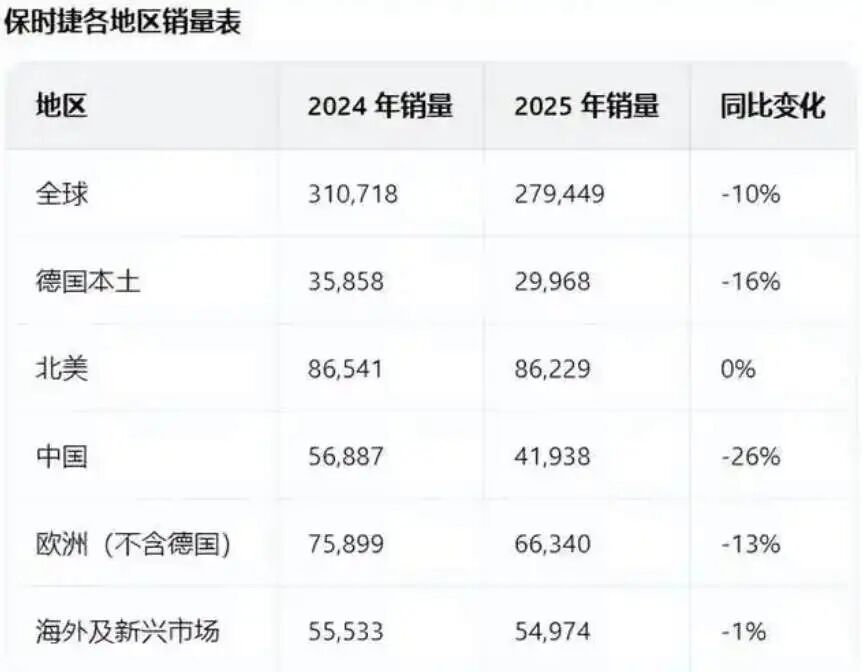
Regionally, except for North America, where sales remained relatively stable, all other global markets experienced declines.
In its home market of Germany, sales plummeted by 16% year-on-year in 2025. In Europe, excluding Germany, sales dropped by 13%.
China was once Porsche's largest single market. In 2021, Porsche delivered 95,671 new vehicles in China, accounting for over one-third of its global sales. However, since then, Porsche's sales in China have been on a downward trajectory for years.
In 2025, Porsche sold only 42,000 units in China, a sharp 26% year-on-year decline. In just four years, Porsche's deliveries in China have halved, equivalent to only 44% of its peak.
The North American market remained stable for Porsche, as it was less impacted by competition from Chinese high-end electric vehicles. In Europe, policy changes led to the discontinuation of classic fuel-powered models like the 718 series and Cayman, affecting sales. In China, the market was naturally influenced by domestic brands. Meanwhile, in emerging markets, Porsche also faces fierce competition.
2
Porsche: Anxious and Indecisive
In fact, Porsche's 2025 financial report is quite revealing. While revenue fell by less than 10%, operating profit plummeted by 92.7%, indicating that cars are still being sold, but significant funds are being diverted elsewhere.
Specifically, Porsche incurred €3.9 billion in special expenses. This includes costs related to product strategy adjustments and corporate scale optimization (approximately €2.4 billion), additional expenses from battery-related businesses (around €700 million), and the impact of U.S. tariffs (about €700 million).
Behind these figures lies Porsche's internal strategic anxiety.
As early as 2022, Porsche ambitiously set a goal for pure electric models to account for over 80% of sales by 2030, leading to substantial R&D investments. By 2024, the proportion of R&D spending on electric models had surged from 15% in 2021 to 37%, causing the overall profit margin to drop from 18.3% to 14.5%. However, the contradiction between the high costs of electric transformation and sluggish sales remained unresolved.
Faced with financial difficulties, Porsche opted for a more 'pragmatic' approach—it can't abandon internal combustion engine vehicles!
In September 2025, Porsche announced the delay of some pure electric model launches, refocusing on internal combustion engine and hybrid models. For example, the new all-electric SUV series, positioned above the Cayenne, will initially launch with internal combustion engine and plug-in hybrid variants... This 'indecisive strategy' resulted in significant additional depreciation and provisions, the root cause of the aforementioned €2.4 billion loss.
Additionally, in August 2025, Porsche abruptly announced the abandonment of its in-house battery production plans. Then-CEO Oliver Blume stated that due to tariff impacts in the North American market and the 'immature' luxury electric vehicle market in China, developing batteries in-house 'lacked economies of scale,' leading to the decision to halt production. This resulted in nearly €700 million in write-downs for battery-related businesses.
So, after much deliberation, Porsche seems to want to return to its 'comfort zone' of internal combustion engine vehicles. However, the global trend toward electrification is unstoppable, and this retreat is only a temporary measure. Moreover, Porsche's own internal combustion engine vehicle sales are also declining...
Porsche has learned its lesson and appointed a new CEO in January this year. At the organizational level, it aims to streamline management structures, reduce reporting layers, and eliminate bureaucracy. To cut costs and improve efficiency, Porsche announced a new round of layoffs on March 11, planning to reduce approximately 3,900 positions by 2029...
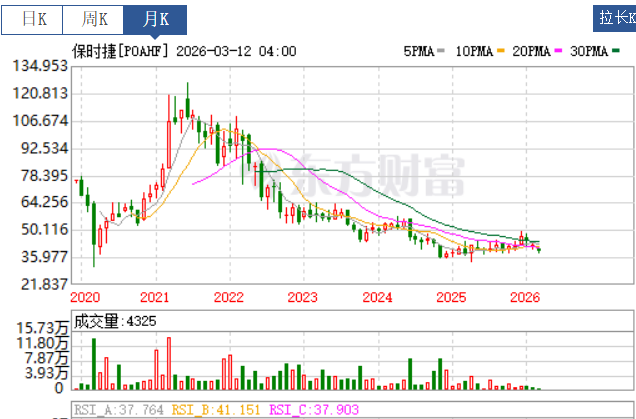
The capital markets reacted swiftly. Today, JPMorgan quickly lowered Porsche's target price from €58 to €50. Since 2021, Porsche's stock price has fallen by more than 60%.
3
Is Porsche China's Future Bleak?
In fact, Porsche is well aware that it's not that the global high-end luxury electric vehicle market is 'immature,' but rather that Porsche's high-end electric vehicles are losing their technological edge, and prices cannot be lowered, or the collapse would happen even faster.
Take the Chinese market as an example. In 2025, Porsche's sales in China were still dominated by the Cayenne and Panamera, with 16,800 and 12,173 units delivered, respectively—both internal combustion engine models. Porsche's pure electric model, the Taycan, sold only 992 units in China, while the pure electric Macan sold 1,313 units. Despite selling fewer than a thousand units, the Taycan still won't see price reductions.
Analysts point out that the main reasons for Porsche's sluggish electric vehicle sales include: first, outdated platforms, which some consumers view as 'converted from internal combustion engines'; second, low intelligence levels in the infotainment system and insufficient localization; third, Porsche is gradually shutting down its self-built charging stations, integrating charging services under the Volkswagen Group... Once this unique 'premium' experience disappears, consumers willing to pay high prices may follow suit.
To address declining sales, Porsche China closed numerous dealerships in 2025. Data shows that the number of dealers shrank from 150 to 114 in 2025, with plans to further reduce to 80 in 2026. During this process, several incidents of dealers 'absconding' also occurred.
In December 2025, two Porsche centers in Zhengzhou Zhongyuan and Guiyang Mengguan under the Dong'an Group abruptly closed, with staff unreachable, showroom vehicles cleared, and some owners unable to take delivery of their cars. After the incident escalated, Porsche had to act swiftly to 'extinguish the fire' and appease consumers. However, the negative impact of such incidents may persist...

Michael Leiters, the newly appointed global CEO in January this year, clearly stated that Porsche will not localize production in China and refuses to engage in price wars. This stance means consumers are unlikely to see Porsches sold at 50% or 70% discounts. Porsche still hopes to maintain its 'high-end brand' image. He also mentioned that this year, the focus in China will be on tapping into remaining demand for internal combustion engine vehicles and advancing mass production of the pure electric Cayenne.
Admittedly, this is a move born out of necessity. Internal combustion engine vehicles can still be sold for a few more years, given the existing customer base; the pure electric Cayenne can also meet the demands of some younger consumers.
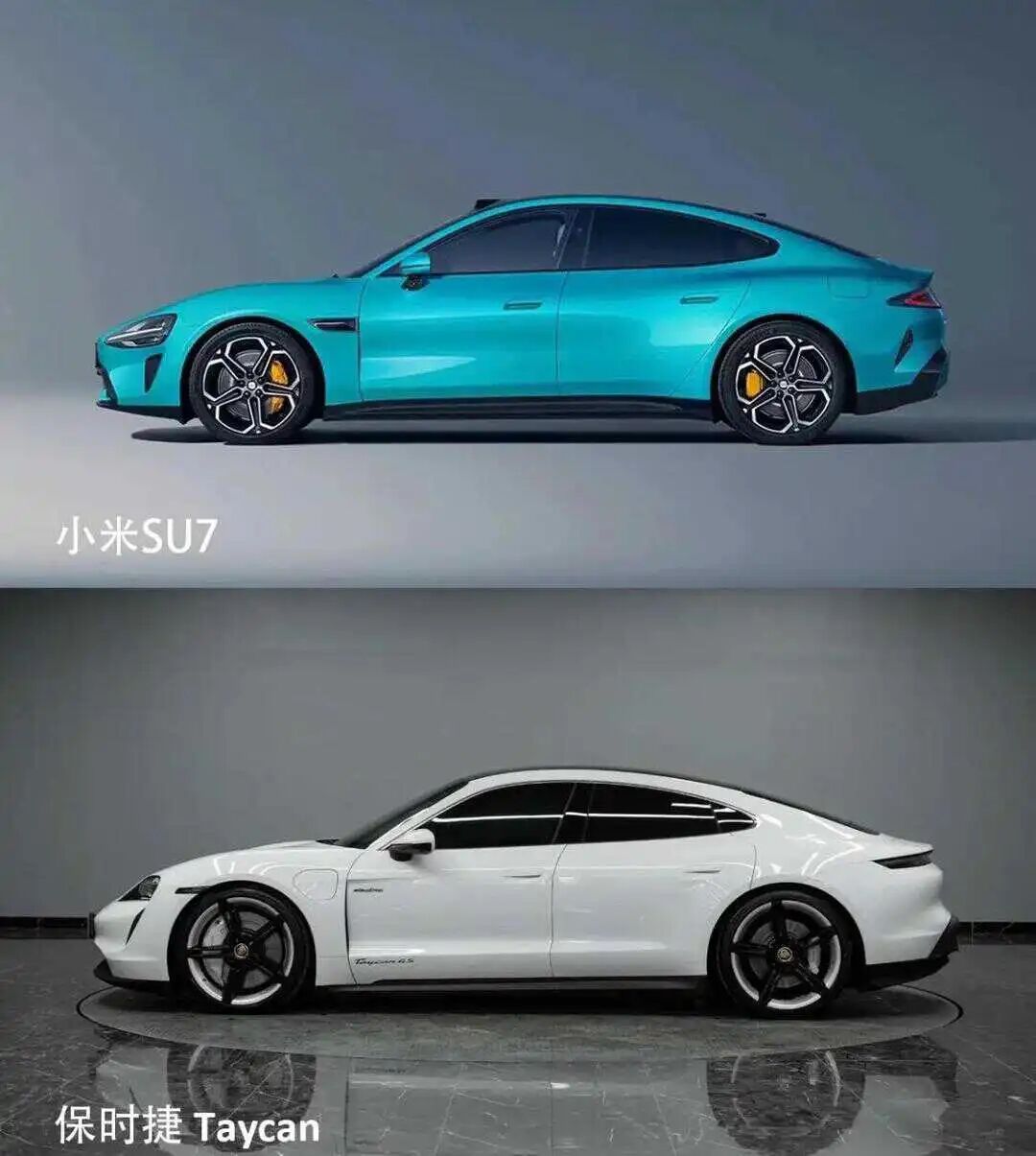
Why aren't Porsche's electric vehicles selling? There are many opinions among netizens. Some say domestic high-end electric vehicles 'completely outperform' Porsche, comparing the Xiaomi SU7 to the Porsche Taycan (Xiaomi SU7 sold 250,000 units in 2025) and the Xiaomi YU7 to the pure electric Cayenne, though these claims are controversial.
Other netizens summarize that Porsche is now like a 'cornered beast': its electric vehicle technology is inadequate, and the market doesn't recognize it; returning to internal combustion engines means it must hold firm on prices without reducing them; this back-and-forth approach has resulted in financial losses and a shrinking market...
Is Porsche really doomed? What do you think?
Shenlan Finance New Media Cluster originated from the Shenlan Finance Journalist Community and has a 15-year history. As a well-known domestic financial new media outlet, its accounts focus on China's most valuable companies, cutting-edge industry developments, and emerging regional economies, providing valuable content for investors, corporate executives, and the middle class. Welcome to follow us.
-
![]()
The Unstoppable Rise of 'Optical Progress and Copper Decline': Sunny Optical’s Strategic Vision for the Next Decade
-
![]()
AI + Going Global in the Second Half: No Intermission for Robot Vacuum Cleaners
-
![]()
The Suffering Endured in E-commerce, Walmart Doesn't Want to Repeat in AI
-
![]()
What Does the Doubling of New Energy Vehicle Exports Mean?
-
![]()
Ghosn: 'Only I Can Save Nissan'
-
![]()
Volkswagen Lays Off 100,000 Employees, The Elephant Sits Down
-
![]()
Expanding Production Capacity! Yutong Optics Acquires Approximately 1.5 Hectares of Industrial Land in Chang'an, Dongguan
-
![]()
Why Is Nokia Making a Comeback in the AI Era?