Honda Reports First 10 Billion Yen Deficit, Attributing Losses to Electrification
 03/13 2026
 668
668
Following a full-scale strategic pivot, we anticipate that Honda will move forward with greater resolve.
On March 12, Japan's Honda Motor Co., Ltd. released its preliminary financial report, revealing that factors such as U.S. tariff policies and diminishing product competitiveness in the Asian market have recently led to a decline in the company's automotive business profitability. It is projected that the 2025 fiscal year (spanning from April 2025 to March 2026) may witness Honda's first annual net loss since going public.
The 2025 fiscal year is expected to mark the first net loss since Honda's public listing, with losses potentially reaching up to 690 billion yen (approximately RMB 24.7 billion).
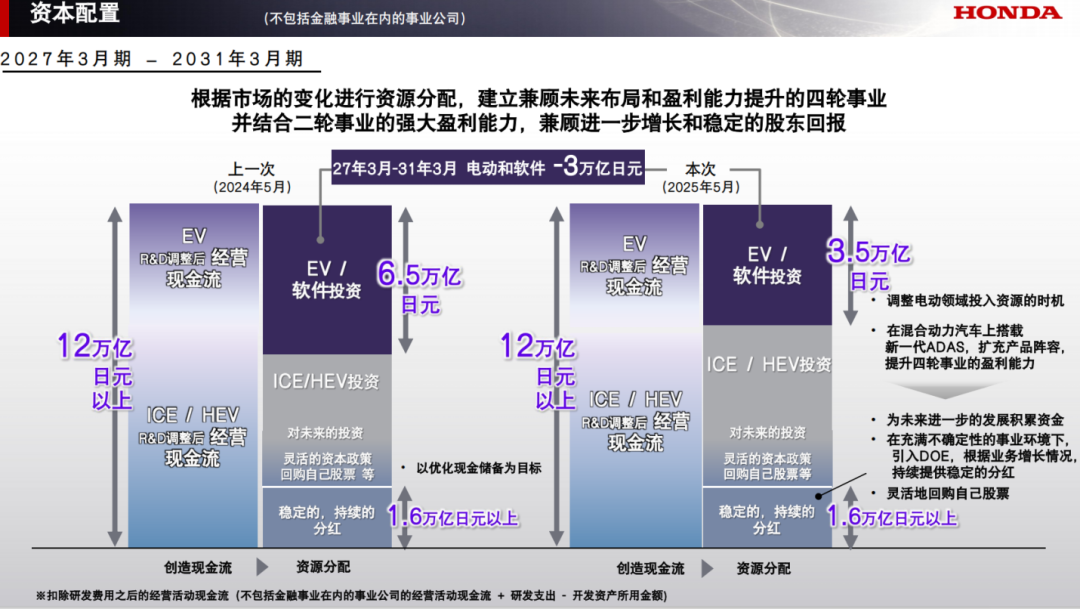
The primary driver behind this fiscal year's substantial losses is Honda's reassessment of its electrification strategy. On the same day, Honda announced the cancellation of R&D and launch plans for certain electric vehicles intended for the U.S. market, with total anticipated costs and losses amounting to up to 2.5 trillion yen (approximately RMB 108.2 billion).
The significant losses have caused Honda's stock price to plummet in pre-market U.S. trading, at one point dropping over 8%. It ultimately closed at $26.09, down 5.27%.
In response to the financial reassessment and strategic missteps, Honda's senior executives have voluntarily reduced their compensation.
The President and Executive Vice President will forgo 30% of their monthly salaries for three months and waive short-term performance bonuses for the 2026 fiscal year. Meanwhile, executives on the automotive business-related executive committee and management executives will forgo 20% of their monthly salaries for three months.
Honda has been indecisive in its electrification and intelligence strategies, finally making a decision but backing the wrong initiative. A few years ago, it not only collaborated with General Motors to develop an electric vehicle platform but also invested billions of dollars in GM's autonomous driving subsidiary, Cruise.
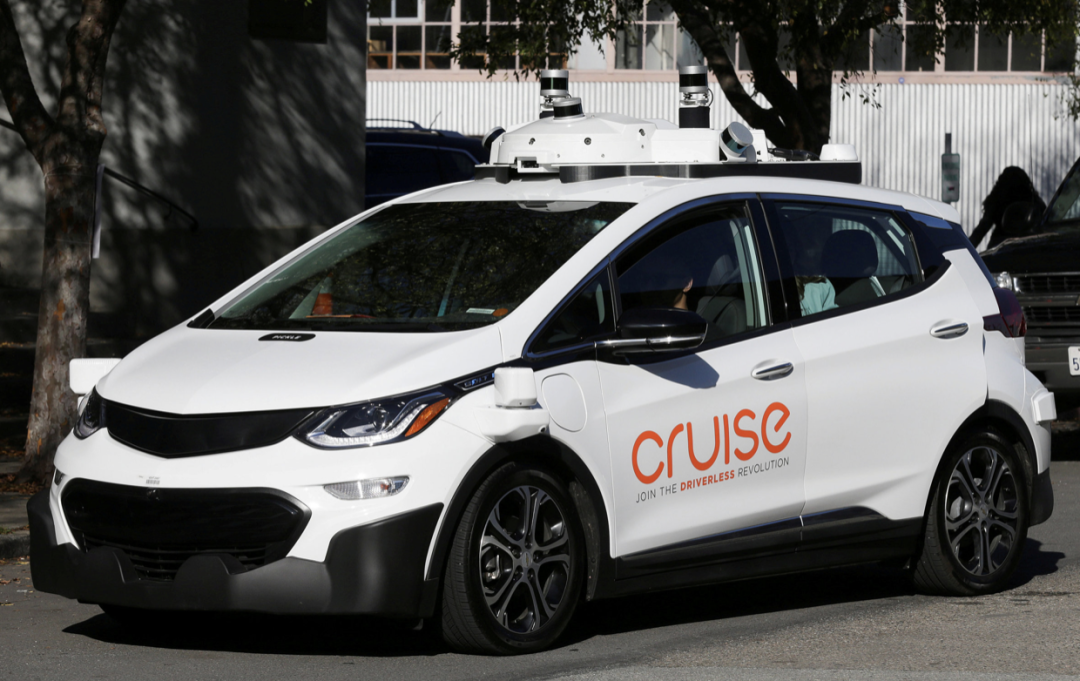
General Motors' electric vehicle business is struggling, and Cruise has collapsed, halting operations and implementing massive layoffs. Honda has incurred losses exceeding 100 billion yen from this investment alone.
On the other hand, despite the yen's continued depreciation since last year, which should have benefited Japanese automakers' exports, Honda has failed to capitalize on this advantage. Instead, due to global supply chain fluctuations, raw material prices remain high, and profits in North America, the world's largest market, have further declined due to tariff impacts.
In Asia, Honda recently announced its global production and sales data for the 2025 calendar year, reporting approximately 3.52 million vehicles sold annually, with the Chinese market listed separately, having sold only 647,000 units last year.
This indicates that since reaching a sales peak of 1.627 million units in 2020, Honda's sales in China have declined for five consecutive years, dropping to 852,000 units in 2024 and then selling over 200,000 fewer units this year, a year-on-year decrease of 24.28%.
More significantly, Southeast Asia, where Honda once held a near-monopoly, is now facing intense competition.
In the first three quarters of this year, Honda's sales in Indonesia plummeted nearly 30%, dropped 18% in Malaysia, and fell 12% in Thailand.
Additionally, Honda has significantly reduced its sales target for Asia (including China) this fiscal year from 1.09 million units to 925,000 units, a decrease of over 10%.
Facing fierce competition from Chinese automakers, Honda has almost no new models planned for the Southeast Asian market until the next fiscal year. This means that for at least the next year, it can only watch as competitors seize market share.
Honda Executive Vice President Kiyoya Umihara admitted at a press conference, "In markets like Thailand, the competitive landscape is fierce. Overall, we have lost our competitive edge in pricing."
Chinese automakers are replicating their domestically successful technologies and pricing strategies in Southeast Asia. As more cost-effective, cutting-edge, and intelligent Chinese electric vehicles flood the market, the "reliability" and "brand halo" that Japanese cars rely on for survival are rapidly fading.
The profit fortress of Japanese cars is being reduced to ruins by the electric offensive launched by Chinese brands.
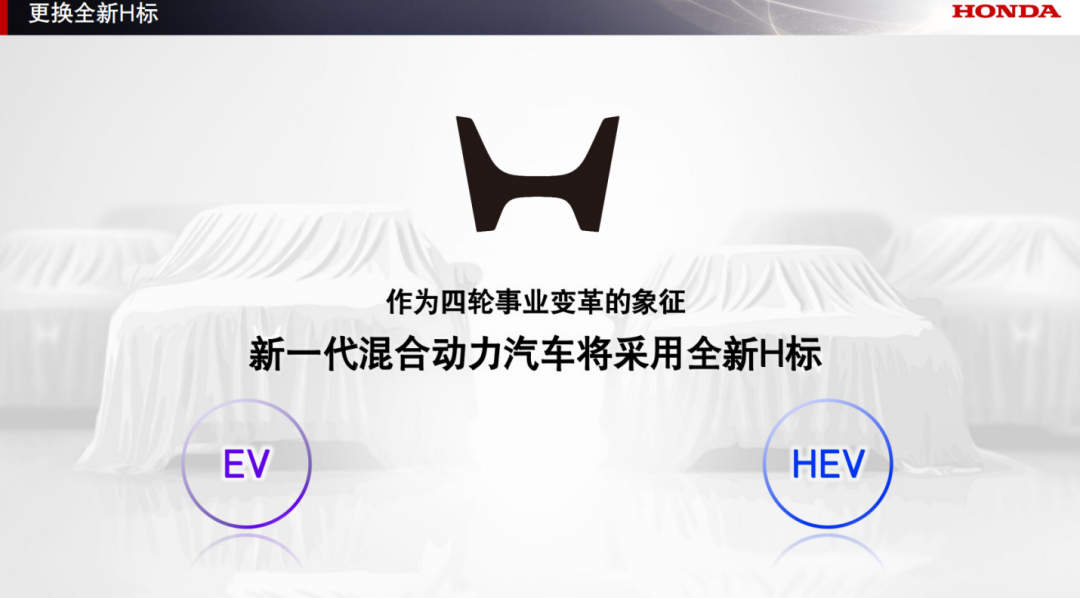
Interestingly, after excluding one-time electric vehicle-related expenses and tariff impacts, Honda's operating profit was even stronger than in the same period last fiscal year.
Honda has essentially attributed its losses to electrification investments and tariffs.
In April 2025, the U.S. imposed a 25% tariff on Japanese automobiles, raising the rate from 2.5% to 27.5%. Although it was later reduced to 15% on September 4, it still represented a significant increase from the original 2.5%, with tariff impacts exceeding RMB 10 billion for the entire fiscal year.
In fact, not just Honda, but several other Japanese automakers have also mentioned the impact of U.S. tariff policies in their financial reports, which is a key external factor weighing down on their profits. After all, the U.S. remains Honda's largest consumer market.
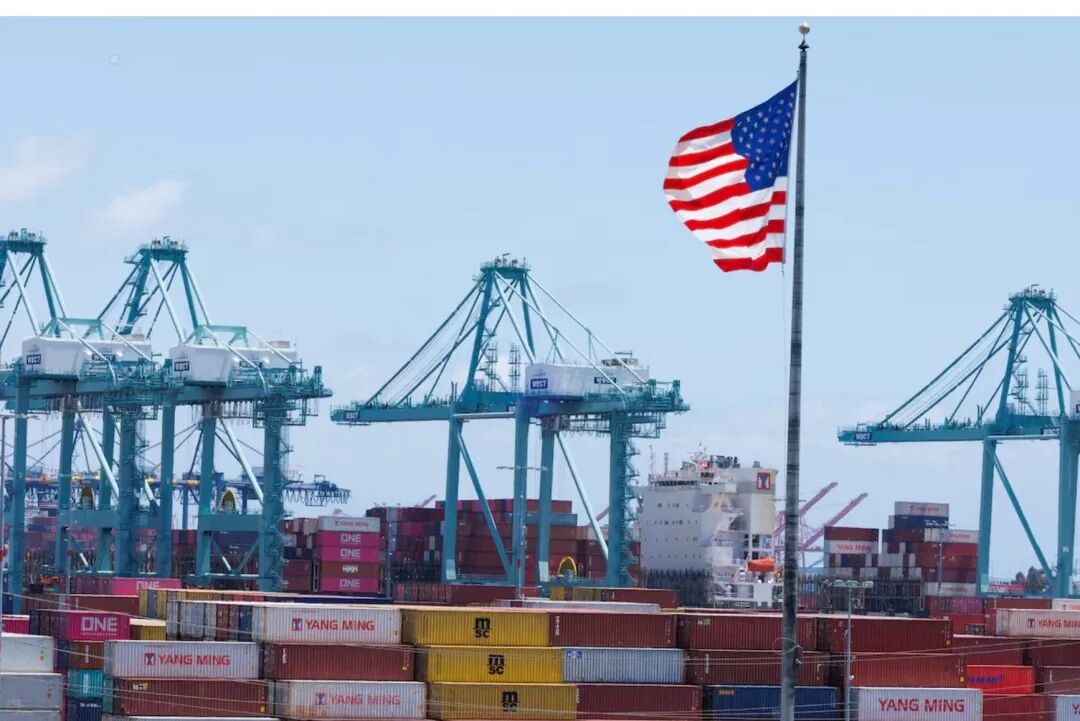
According to previous estimates by Nihon Keizai Shimbun, the total impact of U.S. tariffs on Japanese automakers for the entire 2026 fiscal year (ending March 2026) will reach approximately 2.5 trillion yen.
On one hand, there is heavy tariff pressure; on the other hand, electric vehicle development has failed to captivate the Chinese market. Honda admits that by allocating more resources to electric vehicle development, the competitiveness of its traditional product lineup in the Asian market has simultaneously declined, creating a dilemma of neglecting one for the other.
In the current business environment, proceeding with the production of the aforementioned three electric vehicle models "could lead to further long-term losses."
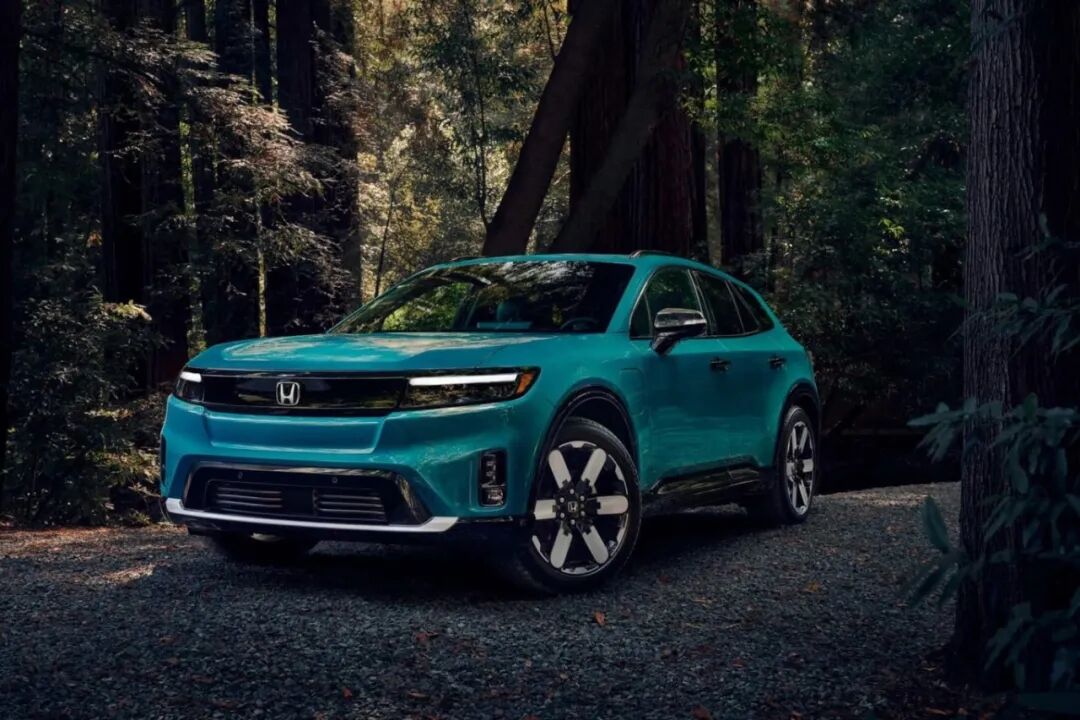
After paying compensation and halting cooperation with General Motors, Honda also canceled the R&D and market launch of three planned pure electric models for North American production.
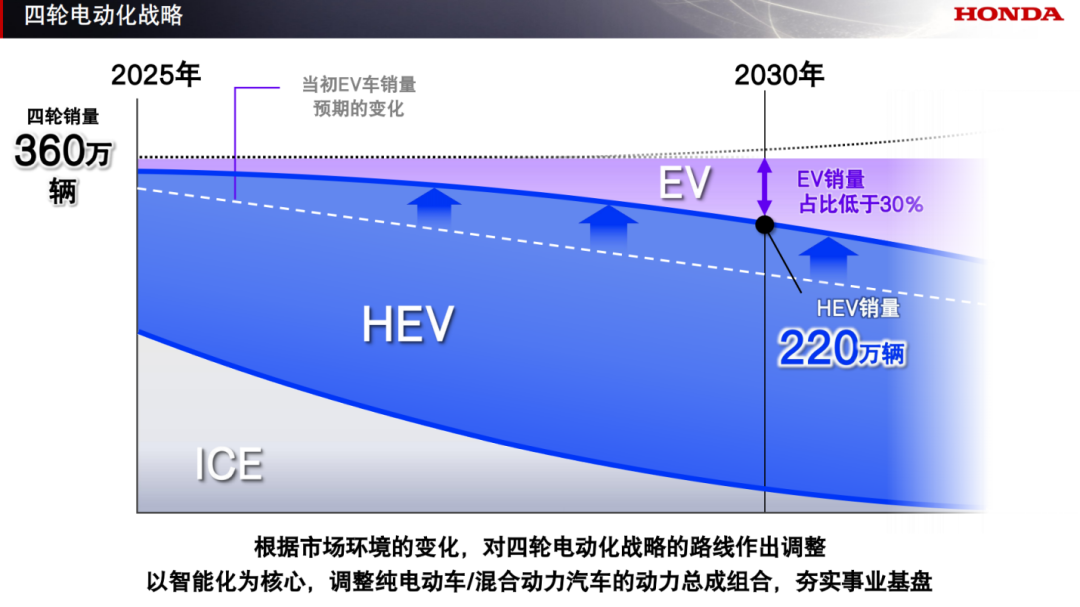
The adjusted strategy will place greater emphasis on hybrid model R&D and production, with plans to release 13 next-generation HEV models between 2027 and 2030, simultaneously improving fuel efficiency by 10% and reducing hybrid system costs by 30%, aiming to increase hybrid vehicle sales to 2.2 million units.
In the end market, India has emerged as the third key market after Japan and the U.S.
Previously reported by The Times of India, Honda Motor Co., Ltd. plans to establish India as a global manufacturing hub for its upcoming electric vehicles. These models will be produced at Honda's factory in Alwar, Rajasthan, and will make their debut in the Indian market during the 2026-2027 fiscal year.
The CEO of Honda India stated, "In terms of corporate attention and investment, India is one of Honda's top three global priority markets. Our senior management team has decided to rank India alongside the U.S. and Japan as one of Honda's three key markets for future growth. Although Honda's business scale in India is still small compared to the U.S. or Japan, its future development goals are ambitious."
Following a complete strategic shift, we hope Honda will move forward with greater resolve.
Note: Some images are sourced from the internet. If there is any infringement, please contact us for removal.
-END-
-
![]()
The Unstoppable Rise of 'Optical Progress and Copper Decline': Sunny Optical’s Strategic Vision for the Next Decade
-
![]()
AI + Going Global in the Second Half: No Intermission for Robot Vacuum Cleaners
-
![]()
The Suffering Endured in E-commerce, Walmart Doesn't Want to Repeat in AI
-
![]()
What Does the Doubling of New Energy Vehicle Exports Mean?
-
![]()
Ghosn: 'Only I Can Save Nissan'
-
![]()
Volkswagen Lays Off 100,000 Employees, The Elephant Sits Down
-
![]()
Expanding Production Capacity! Yutong Optics Acquires Approximately 1.5 Hectares of Industrial Land in Chang'an, Dongguan
-
![]()
Why Is Nokia Making a Comeback in the AI Era?