Tonight's 315 Gala Exposes Three Major Chaos in the Auto Industry, These Automakers Face High Risks
 03/16 2026
 598
598
Editor | Hu Tongtong
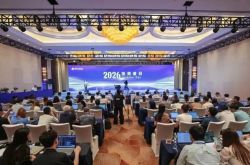
The clock ticks toward 8 PM tonight—the much-anticipated 2026 315 Gala is about to begin.
As a media professional deeply rooted in the auto industry for years, I've reviewed owner complaint data from 2025 to 2026. With over a 30% year-on-year increase in complaints, my heart is heavy. Combined with accident reports from the Ministry of Public Security's Road Traffic Safety Research Center, consumer warnings issued by the China Consumers Association, and real-world rights protection cases from across the country, I've formed a clear prediction about this year's auto industry focus at the gala. Three major issues are destined to be thrust into the spotlight, and these automakers are highly likely to make the exposure blacklist.


Exaggerated Range Claims: Northern Owners Bear the Brunt, Becoming the Top 315 Hotspot
If there's one thing frustrating auto owners most this year, exaggerated range claims take the crown. This is no longer a minor flaw of a single brand but an unavoidable credibility crisis for the entire new energy sector. Looking at the China Automotive Technology & Research Center's 2025 winter range test report, new energy vehicles priced above 150,000 yuan average only 58% of their claimed range. In northern cold environments, this figure plummets to around 40%—a staggering gap. Take a popular new energy model: its official CLTC range is 620 km, but a Beijing owner driving at -15°C with heating on the highway managed just 250 km—less than 42% of the claimed range. Who wouldn't be furious?
Automakers' tactics for exaggerating range follow familiar patterns. They use ideal conditions (25°C, no A/C) as promotional gimmicks, ignoring real-world driving scenarios. Range decay at high speeds goes unmentioned—a plug-in hybrid may meet claims in city driving but loses 180 km of range at 120 km/h. The pitfalls of low-temperature fast charging are even better hidden: at -10°C, charging speed drops by three times compared to normal temperatures, with many models requiring 20 minutes of battery preheating before normal charging.
Complaint data tells the story: 53.3% of new energy vehicle buyers in 2025 complained about sudden range drops within a month of purchase—a five-year high. With paper promises far exceeding real-world performance, it's no surprise range issues dominate new energy vehicle complaints.

Intelligent Driving Chaos: Misleading Promotions Sow Disaster, Blurred Accountability Hinders Rights Protection
"Autonomous driving," "worry-free journeys," "hands-free driving"—automakers' intelligent driving hype grows more exaggerated, but what's the reality? All mass-produced intelligent driving systems on the market today are merely Level 2 assisted driving. According to China's national standard for driving automation levels, the driver must always remain in control—the system is merely an assistant, not fully autonomous. This deliberate confusion of concepts has led to one shocking accident after another.
In December 2024, a Nanjing owner activated so-called "assisted driving" while drunk and fell asleep, crashing directly into a toll booth safety island and catching fire. In March 2025, a new energy vehicle on the Wushen Expressway drifted out of its lane after activating NOA, flipping over when the distracted driver failed to take over. On the Dezhou-Shanghai Expressway, a vehicle's intelligent driving system detected road abnormalities just four seconds before impact, leaving no time to react before crashing into the median barrier and catching fire. Are these bloodstained cases not warning enough?
More dangerous than false advertising are the "intelligent driving cheats" flooding the market. These devices use physical weights to deceive vehicles' DMS monitoring systems, encouraging owners to drive hands-free and eyes-off for extended periods—completely nullifying the system's safety designs. The Ministry of Public Security's Road Traffic Safety Research Center has warned that those causing serious consequences through false autonomous driving claims may face up to two years in prison. Yet when accidents occur, responsibility becomes murky: automakers blame owners for failing to take over, while owners claim they were misled by promotions. This blurred accountability has made intelligent driving disputes the fastest-growing complaint area.

Dealership Closures: Luxury Brands' After-Sales Void Leaves Owners Without Recourse
As 2026 unfolds, after-sales chaos in the auto industry intensifies. Over 20 authorized FAW-Audi dealerships nationwide suddenly closed, stranding owners in Guangxi, Jiangsu, Zhejiang, Tianjin, and other regions without after-sales support.
An owner in Changzhou, Jiangsu, who purchased a "buy three get three free" maintenance package for 3,000 yuan found the new dealer demanding half-price payments per service after the original store closed. A Lu'an, Anhui, owner was forced to buy new car insurance to continue using previous maintenance benefits. Owners in Hohhot faced even greater frustration—maintenance records couldn't be entered into Audi's official system, leaving after-sales parts and repair standards without brand oversight, making repairs a nightmare.
What chills owners most is the brand's attitude. FAW-Audi customer service dismissively stated, "For non-official maintenance benefits, resolve with the store or take legal action if unreachable," shirking all responsibility. This after-sales vacuum isn't unique to Audi—China Consumers Association data shows service complaints against luxury brands like Mercedes-Benz and Lexus are also surging, with common issues including unfulfilled prepaid packages, delayed replacement subsidies, and substandard repair parts. Dealers and manufacturers pass the buck, leaving consumers—who've paid real money—to suffer.

Top 4 Complained-About Automakers on 315 High-Risk List
Based on complaint volume, resolution rates, and issue severity, these four brands firmly occupy the 315 high-risk zone. Owners should stay vigilant.
One new energy brand leads autonomous brand complaints for exaggerated range claims for six consecutive months. Coupled with excessive battery voltage differences and frequent system freezes, its complaint resolution rate remains below 50%, with painfully slow after-sales responses. Another new energy brand faces dual top-10 complaints for battery faults and electrical issues, with winter range achievement below 45%. Some owners even experienced sudden power loss while driving—a serious safety hazard. Mercedes-Benz's new energy vehicles have particularly prominent battery safety issues, with over 30,000 recalls in 2025 due to thermal runaway risks in battery packs. Add opaque after-sales repair pricing and common 10-15 day waits for parts, and owners are miserable. FAW-Audi, dragged down by dealership closures, sees over 70% of complaints stem from after-sales disputes, with core issues including diminished maintenance package benefits and unrecoverable deposits. The brand's handling efficiency has been widely criticized.

315 Aims to Restore Industry Integrity, Not Destroy Companies
The 315 Gala's purpose has never been to topple specific automakers but to force the entire industry to confront its problems. Auto-related complaints surpassed 240,000 in 2025, with new energy vehicle complaints accounting for 44.8%. Behind each number lies an owner's disappointment and helplessness.
Rapid technological advancement is no excuse for losing integrity. Automakers should include real-world data for low-temperature and highway driving when labeling range. Intelligent driving promotions must clearly state driving automation levels and usage boundaries. When dealerships close, robust mechanisms must protect owner rights—consumers shouldn't pay the price.
In 2025, the Ministry of Industry and Information Technology and the State Administration for Market Regulation jointly issued documents requiring automakers to truthfully and fully disclose product information, prohibiting false or exaggerated claims. But for regulations to take effect, public oversight is essential. Tonight's 315 Gala, we hope, will tear away the industry's fig leaf, compelling automakers to rediscover their original commitment to "safety first, integrity-based" principles. After all, cars are ultimately transportation tools—no matter how advanced the technology or flashy the marketing, safety and integrity must never be compromised. This is the foundation of the auto industry.
Welcome to Share, Like, and Comment
This work's copyright belongs to Xin Zuojia or related copyright holders. No third party may reproduce it without authorization; otherwise, it constitutes infringement.
"Respect Originality, Respect Attitude"
China's New Mainstream Auto Media
-
![]()
The Unstoppable Rise of 'Optical Progress and Copper Decline': Sunny Optical’s Strategic Vision for the Next Decade
-
![]()
AI + Going Global in the Second Half: No Intermission for Robot Vacuum Cleaners
-
![]()
The Suffering Endured in E-commerce, Walmart Doesn't Want to Repeat in AI
-
![]()
What Does the Doubling of New Energy Vehicle Exports Mean?
-
![]()
Ghosn: 'Only I Can Save Nissan'
-
![]()
Volkswagen Lays Off 100,000 Employees, The Elephant Sits Down
-
![]()
Expanding Production Capacity! Yutong Optics Acquires Approximately 1.5 Hectares of Industrial Land in Chang'an, Dongguan
-
![]()
Why Is Nokia Making a Comeback in the AI Era?