How Should the Off-road Market for Boxy SUVs Move Forward?
 03/16 2026
 521
521

Introduction
Introduction
The Blue Ocean Turns Red.
The Fangchengbao Titan 3 Flash Charge Edition and iCAR V27, two boxy off-road vehicles, were launched in one night. Just two days prior, the all-new Tank 700Hi4-Z made its debut, and the JETOUR Traveler Steed Edition & Freelancer Steed Edition were also launched.
Undoubtedly, China's pan-off-road market has now completely shifted from a blue ocean to a red ocean. In just a few short years, this once-niche segment, initially dominated by a small group of imported vehicle enthusiasts, has expanded to include nearly all mainstream players—domestic brands, joint ventures, and new forces—becoming a truly nationwide participation (all-inclusive) phenomenon.
This niche market was initially led by a few professional brands, such as Great Wall Motors' Tank and BAIC's Off-Road division. Today, BYD's Fangchengbao and Yangwang have made a strong impact with their new energy technologies. Chery has achieved Scale coverage (mass-market coverage) of boxy products through JETOUR and iCAR. Subsequently, large automotive groups like Geely, GAC, and FAW have also launched heavyweight models in an attempt to gain a foothold.
Even joint venture brands like the Ford Bronco are maintaining their position by adhering to mechanical excellence and offering accessible configurations. Even Toyota's new RAV4 has adopted a more rugged design language. A few days ago, BMW was also reported to be entering the luxury hardcore off-road SUV market, challenging the position of the Mercedes-Benz G-Class.
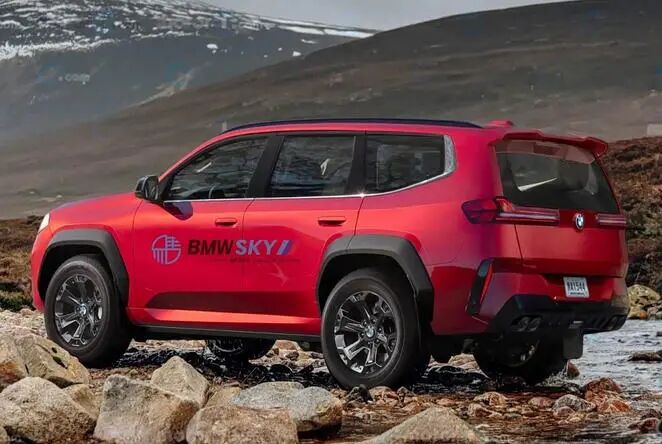
Of course, the changes are not limited to an increase in models but also include more segmented technology routes. Fuel, hybrid, extended-range, and pure electric powertrains, along with consumer indifference toward body-on-frame versus unibody constructions, have propelled the pan-off-road market to new heights.
The result is predictable: the price and configuration wars have intensified. From high-end luxury to entry-level light off-road vehicles, every price segment is crowded with boxy models that look similar but differ significantly in their core offerings. As a once-niche market, facing this massive offensive, a highly competitive ecosystem is inevitable. So, how should the boxy off-road SUV market move forward?
01 The Boxy Off-Road Market Makes a Big Noise
In reality, boxy SUV models come with many labels, such as "hardcore," "light off-road," or simply "boxy," covering price ranges from the entry-level 100,000 yuan market to the luxury million-yuan market. However, despite the surge in model launches, the entire market's capacity was only around 1 million units last year.
Upon closer inspection, the number of single brands that truly consider boxy off-road as their sole or absolute core segment remains limited. The vast majority of automotive brands involved in this field actually use it as a supplement and extension of their product matrix rather than betting their entire fortune on it.
Therefore, these models can ultimately be classified into three types. The first type consists of dedicated brands with hardcore off-road or boxy designs as their core DNA. A typical example is Great Wall Motors' Tank brand. Since becoming an independent brand in 2021, all Tank models—300, 400, 500, and 700—feature body-on-frame construction or a rugged boxy design, clearly targeting the hardcore off-road market.
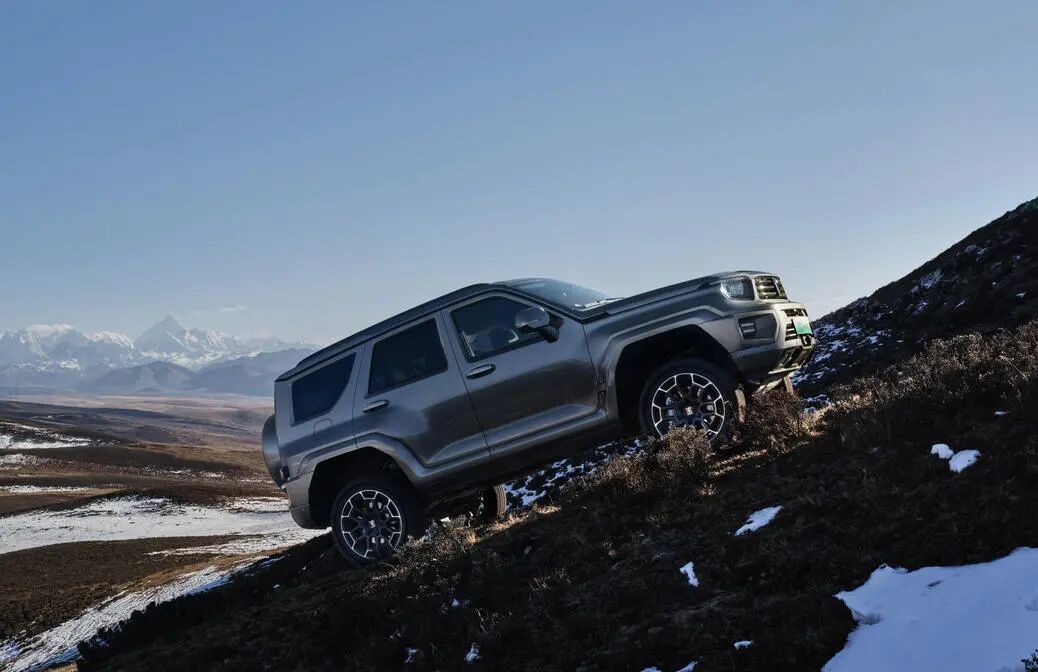
Similarly, BAIC Group's Beijing Off-Road, a veteran in China's off-road vehicle sector, has long cultivated this market with its BJ series—BJ40, BJ60, and BJ80—and its brand history is closely tied to off-roading. Additionally, the 212 brand under Weiqiao Group, which shares a strong connection with BAIC, is also a new brand focused on the off-road market.
Furthermore, Dongfeng's Mengshi, a high-end new energy off-road brand born in the past two years, also falls into this category. Its mission is to create hardcore off-road vehicles for the electric era. Many would also mention BYD's Fangchengbao and Yangwang, but since these brands include or will include sedan models, they are no longer purely off-road-focused.
The second type achieves focus through sub-brands or product lines. These automakers have independent sub-brands or clear product sequences dedicated to boxy off-road vehicles, but their parent companies are large automotive groups spanning multiple fields, with off-roading being just one piece of their grand puzzle.
For example, JETOUR, a sub-brand under Chery Holdings, has derived a "home and away" product spectrum based on its "travel+" positioning, launching models like the Traveler, Freelancer, and Shanhai T5—all boxy designs. Similarly, iCAR, another brand under the Chery Group, has labeled itself with "boxy" and "electric off-road" since its inception, with models like the V23 and V27 continuing this style.
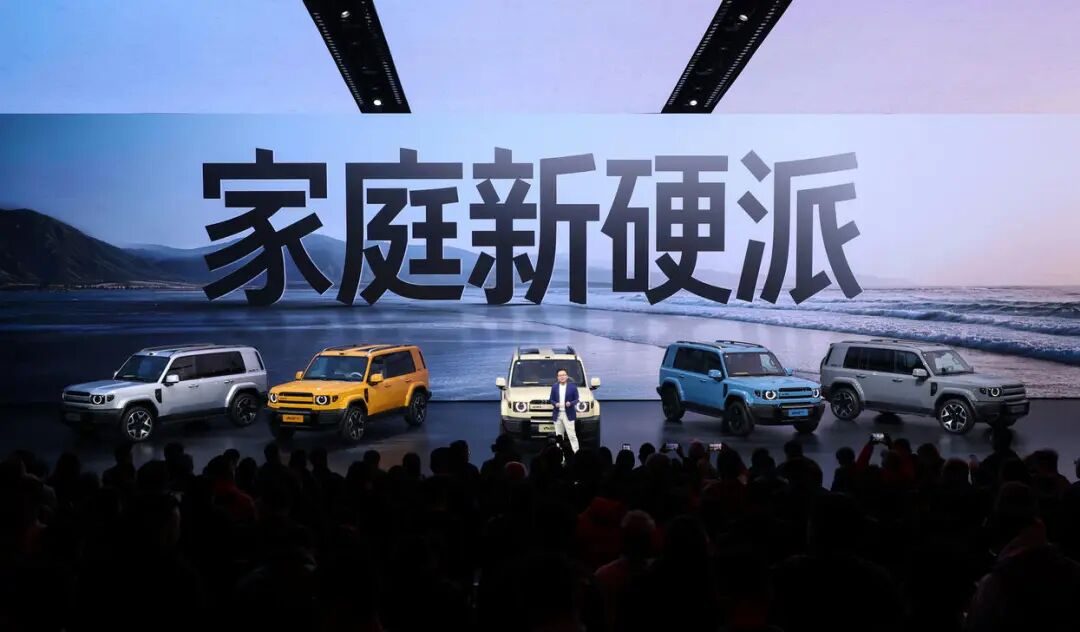
On March 13, the V27 was officially launched, priced between 169,800 and 196,800 yuan. iCAR has labeled this model as a "new family hardcore" and a "new benchmark for pan-off-roading," even organizing a pre-launch event where the vehicle traversed the N39 gateway to the Taklimakan Desert. It is evident that while iCAR's offerings are boxy, models like the V23 and V27 are still geared toward family travel.
The third and final type, which is also the most conventional approach, involves using boxy off-road vehicles as a product line expansion for diversified brands. These brands are main or sub-brands under mainstream automotive groups, with their core businesses originally focused on sedans or Home City SUV (family urban SUVs).
However, facing the hype around off-roading and boxy vehicles, they choose to launch 1-2 related models to test the market, complete their lineup, or seek incremental growth. For example, Geely Auto's Geely Galaxy plans to launch its first hardcore SUV, the "Galaxy Warship." Similarly, GAC Trumpchi and FAW Hongqi are following suit, with Trumpchi planning its first hardcore off-roader and Hongqi planning the "1927" luxury off-road vehicle.
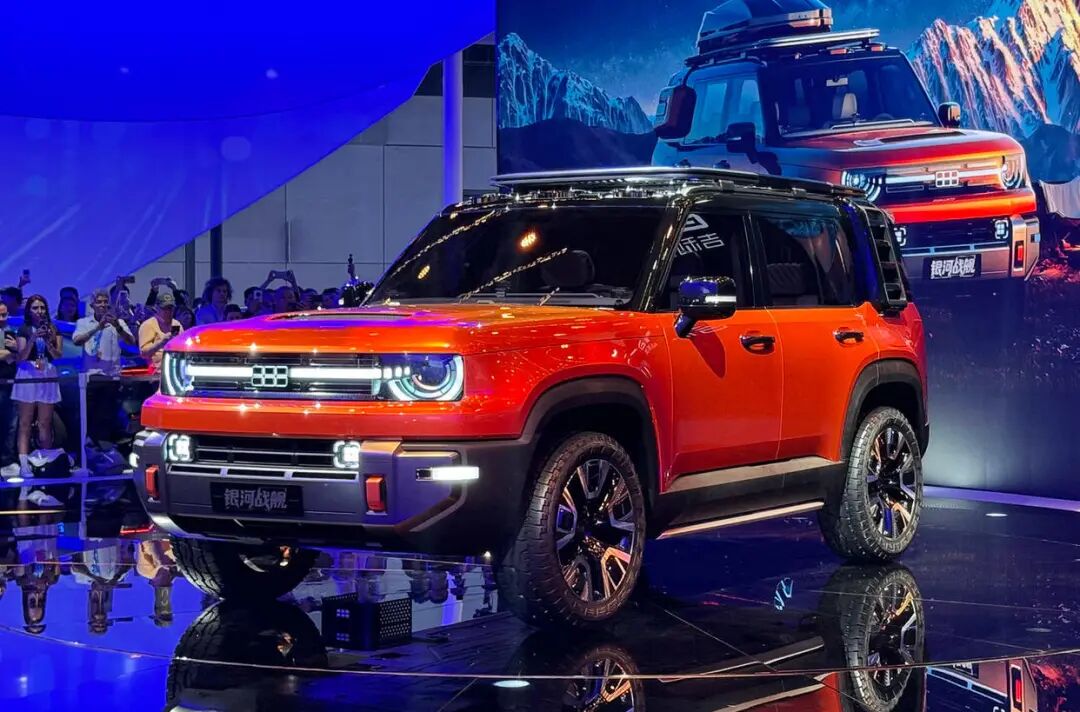
For these brands, launching boxy off-road models is just one part of their vast product lineup, aimed at meeting specific user needs. The same applies to joint venture brands like Ford. Although it has introduced the classic hardcore off-roader, the Bronco, in China and launched the Intelligent Bronco Extended-Range Edition, Ford's Chinese product lineup still primarily consists of mainstream sedans and SUVs like the Mondeo and Explorer.
Thus, it is clear that fewer than five independent brands truly consider boxy off-roading as their sole business, with their entire product lineup consisting of boxy off-road vehicles. More than 80% of boxy models come from brands that originally focused on sedans or urban SUVs. They are simply chasing market trends, completing their product spectrum, or even enhancing their brand image.
02 How Should the Future Path Be Taken?
It is evident that these automakers are also very strategic. As mentioned earlier, the total volume of the boxy off-road market was only 1 million units last year. Among them, hardcore off-road SUVs with body-on-frame construction account for a small proportion due to their high prices and professional nature. Therefore, the highest sales come from products that merely adopt a boxy design under the guise of "light off-roading."
In fact, another data point can serve as a reference for the boxy off-road market: sales of models in this category across various price segments. To cut to the chase, the 100,000-200,000 yuan price range is currently the primary market with the most concentrated sales of boxy SUVs. Several blockbuster models in this segment consistently achieve monthly sales exceeding 10,000 units.
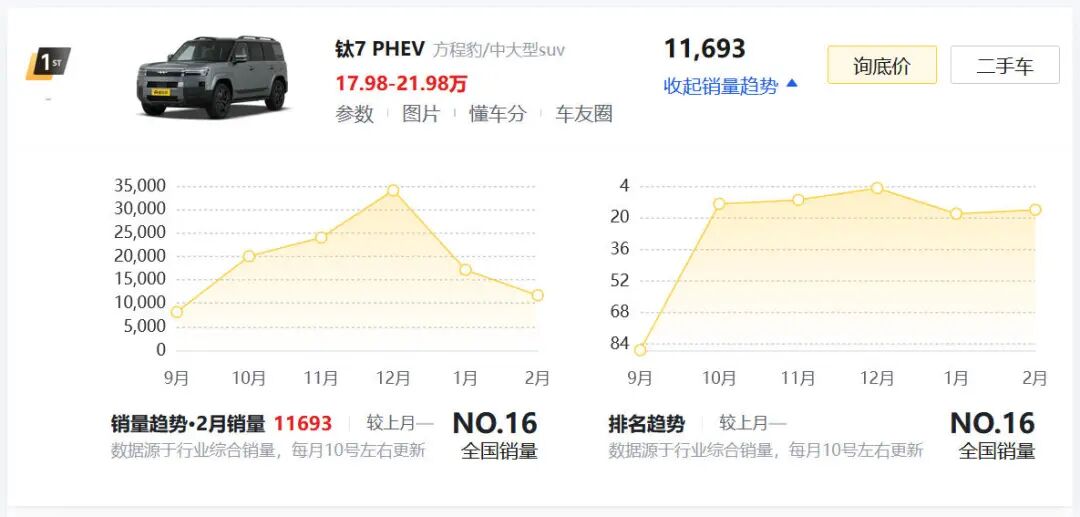
Taking relevant best-selling models as examples, the Fangchengbao Titan 7 saw rapid sales growth after its launch in September 2025, with a suggested price (guide price) of 179,800-219,800 yuan and an average transaction price of approximately 209,700 yuan. It delivered over 50,000 units within 80 days of launch, with December monthly sales exceeding 34,000 units, contributing over 60% of Fangchengbao's brand sales for that month.
The Haval Big Dog, representing the 100,000-150,000 yuan segment, sold a cumulative 182,287 units in 2025, with sales exceeding 10,000 units for 19 consecutive months and 41 cumulative months. It also recently achieved three consecutive months of sales exceeding 20,000 units. The model has held the sales crown in the pan-off-road and boxy categories for 43 consecutive months.
Before these two models, there was also a dark horse: the JETOUR Traveler. Representing the 130,000-180,000 yuan segment, the Traveler once achieved monthly sales of nearly 17,000 units. However, in the second half of 2025, its sales declined to the 6,000-7,000 unit range due to competition and internal model cannibalization.
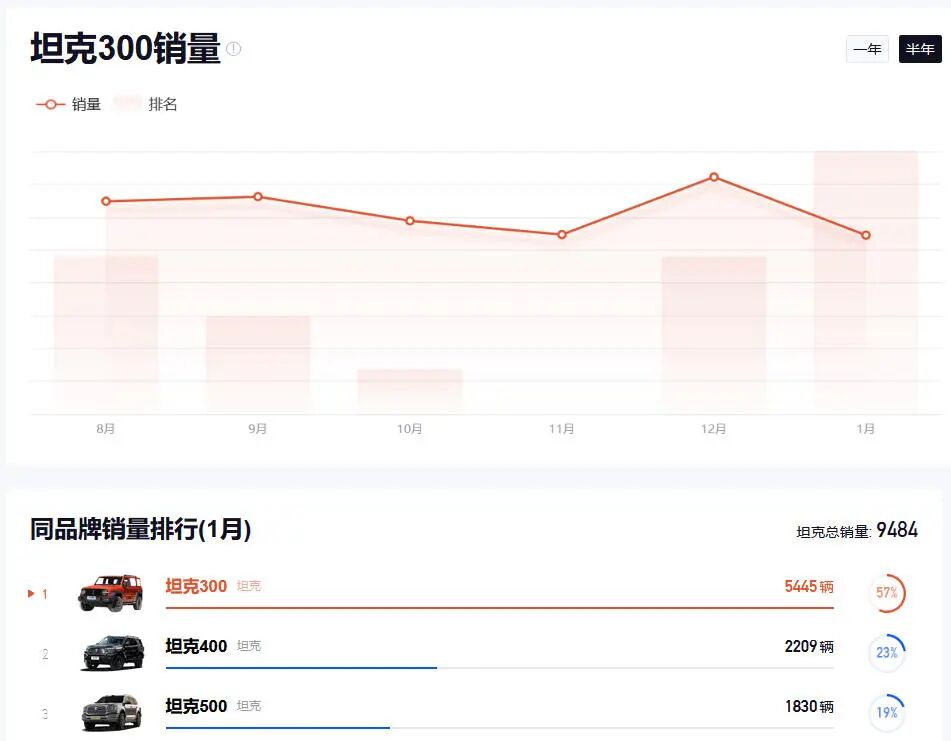
Additionally, models like the iCAR V23 and Titan 3 also achieved monthly sales exceeding 6,500 units, further bolstering the overall scale of the 100,000-200,000 yuan price band. In contrast, higher-priced models like the Tank 400, Tank 500, and even the Leopard 5 and Leopard 8, have average monthly sales below 3,000 units. Even the Tank 300, priced just above 200,000 yuan, had average monthly sales of 6,000 units last year.
These data points provide insights for the industry. Boxy models priced below 100,000 yuan, such as the Baojun Yue also, serve as references, but brand influence seems less significant in this segment. The mainstream aesthetic in this price range still favors fashionable and young (stylish and youthful) and Trendy and dynamic (trendy and agile) designs, which are more relatable than boxy shapes.
In the market above 200,000 yuan, it enters the comfort zone of high-end products. Without unique selling points, it is difficult to attract consumers. However, without volume support, substantial profits are unattainable. This creates a closed loop (closed loop), which is why many brands hesitate to move forward.
In other words, many factors limit the sales expansion of boxy off-road models. Ultimately, their competition points toward capturing market share from mainstream models. Once vehicles are made larger, they inevitably need to cater to family users. Hence, labels like "capable in the city and off-road" and "new family hardcore" are becoming increasingly common.
In the future, the key to the success of boxy models will likely involve not just hardcore parameters (hardcore parameters) like approach and departure angles but also, more often, fitting more considerations for daily comfort, intelligent convenience, and family travel within their boxy frames. Regardless of the market's size, it is the result of market selection.
Editor-in-Chief: Yang Jing Editor: Chen Xinnan
THE END
-
![]()
The Unstoppable Rise of 'Optical Progress and Copper Decline': Sunny Optical’s Strategic Vision for the Next Decade
-
![]()
AI + Going Global in the Second Half: No Intermission for Robot Vacuum Cleaners
-
![]()
The Suffering Endured in E-commerce, Walmart Doesn't Want to Repeat in AI
-
![]()
What Does the Doubling of New Energy Vehicle Exports Mean?
-
![]()
Ghosn: 'Only I Can Save Nissan'
-
![]()
Volkswagen Lays Off 100,000 Employees, The Elephant Sits Down
-
![]()
Expanding Production Capacity! Yutong Optics Acquires Approximately 1.5 Hectares of Industrial Land in Chang'an, Dongguan
-
![]()
Why Is Nokia Making a Comeback in the AI Era?