Joint Venture Titans Unleash Price War: Who Will Reign Supreme in the 2026 Auto Market?
 03/16 2026
 676
676
Lead
Since the dawn of 2026, a pricing tempest, orchestrated by joint venture automakers, has engulfed the automotive landscape. On the sixth day of the Lunar New Year celebrations, Honda unveiled the Accord e:PHEV at an unprecedented low price of RMB 138,800 for loyal customers. Not to be outdone, the Toyota RAV4 plummeted to RMB 137,800, the Honda Odyssey dipped below the RMB 180,000 mark, and BMW's flagship models slashed prices by over RMB 300,000 in a single swoop. Meanwhile, the Nissan Altima embraces the HarmonyOS cockpit, and Mercedes-Benz forges a partnership with Momenta, as joint venture brands leverage localized intelligence to fortify their positions. As traditional fuel-powered vehicles begin to integrate seamlessly with intelligent experiences, can this calculated strategic counteroffensive truly disrupt the market dominance of independent brands?
Produced by | Heyan Yueche Studio
Written by | Cai Yan
Edited by | He Zi
Full text: 1,954 characters
Reading time: 3 minutes
Faced with relentless erosion of their market share, joint venture brands have unleashed an unprecedented counteroffensive. Behind this wave of price reductions lies a strategic maneuver by joint venture titans, fueled by global profits, wielding price blades to carve up the market and harnessing localized intelligence to address vulnerabilities. As the profit margins of traditional fuel-powered vehicles converge with intelligent experiences for the first time, the power struggle in China's auto market intensifies to unprecedented levels.
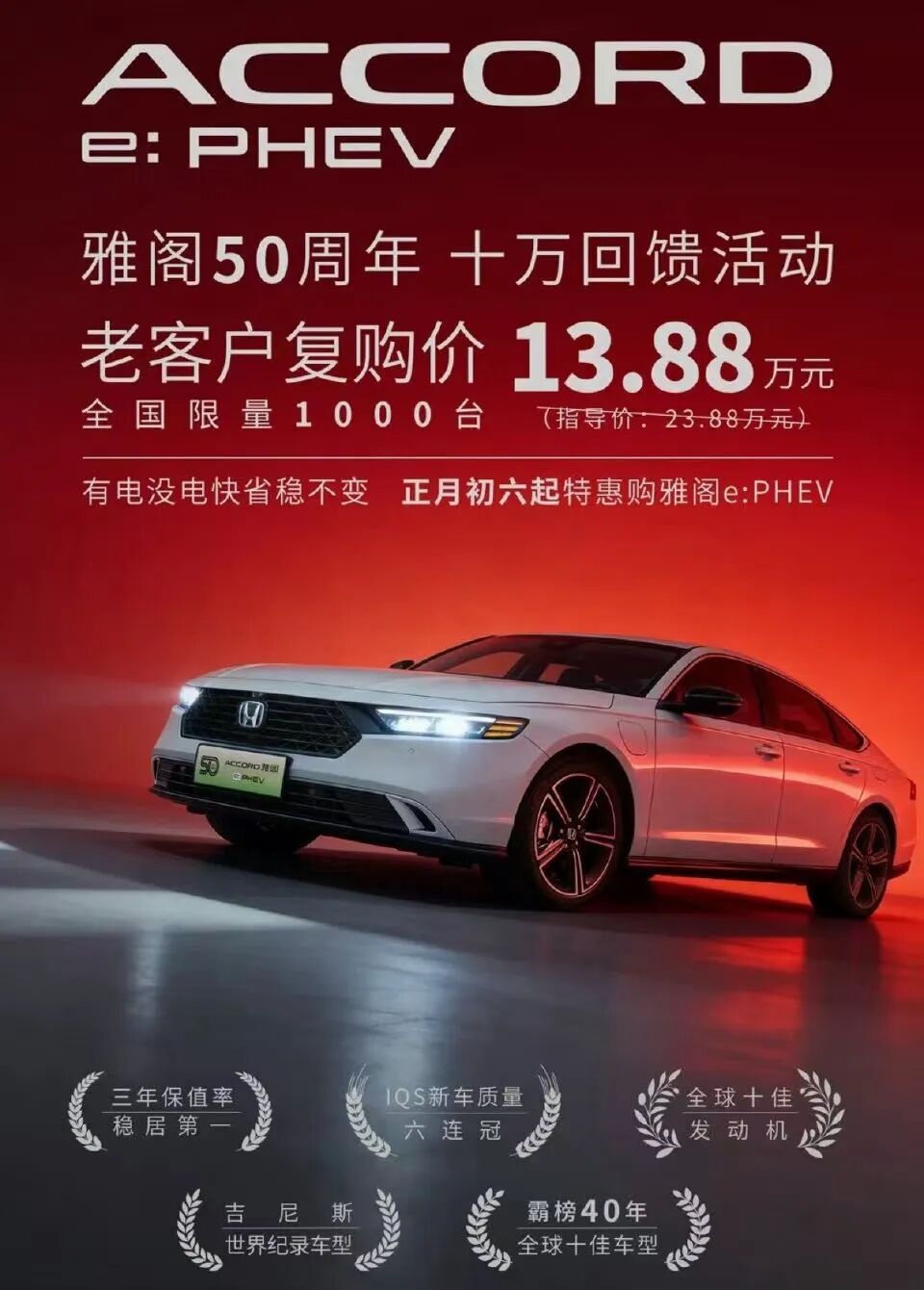
△Joint venture vehicles ignite the 2026 price war
Joint Venture Brands Sound the Counteroffensive Horn
The Chinese auto market in 2026 has eschewed the traditional "strong start," instead witnessing market turbulence stirred up by joint venture brands through aggressive pricing strategies. Data released by CPCA Secretary-General Cui Dongshu reveals that by the end of January 2026, the national passenger vehicle industry inventory surged to 3.57 million units, a 580,000-unit increase compared to the same period in 2025, with an estimated inventory cycle of 57 days. The high inventory pressure looms as a formidable challenge for all automakers. Intriguingly, it was not the independent brands, already accustomed to the relentless pace of "involution," that first broke the deadlock, but rather the joint venture giants who had long held sway over pricing power.
The prospect of purchasing a plug-in hybrid B-class sedan like the Accord e:PHEV for less than RMB 140,000 is astonishing, yet it merely serves as a prelude to the fierce competition among joint venture vehicles in the domestic auto market. GAC Toyota has introduced the all-new RAV4 AIR edition, with the 2.0L gasoline version priced as low as RMB 137,800 and the hybrid version at a mere RMB 147,800. Three years ago, such a budget might have only sufficed for a small SUV from a joint venture brand, but now it can secure a compact SUV. Although the RAV4 AIR edition has shed the 8155 chip and some comfort features to rein in costs, it still boasts 10 airbags, the TSS 4.0 intelligent driving system, and a rear double-wishbone independent suspension, while also offering a rare policy among joint venture brands—a "lifetime warranty on the three major components."
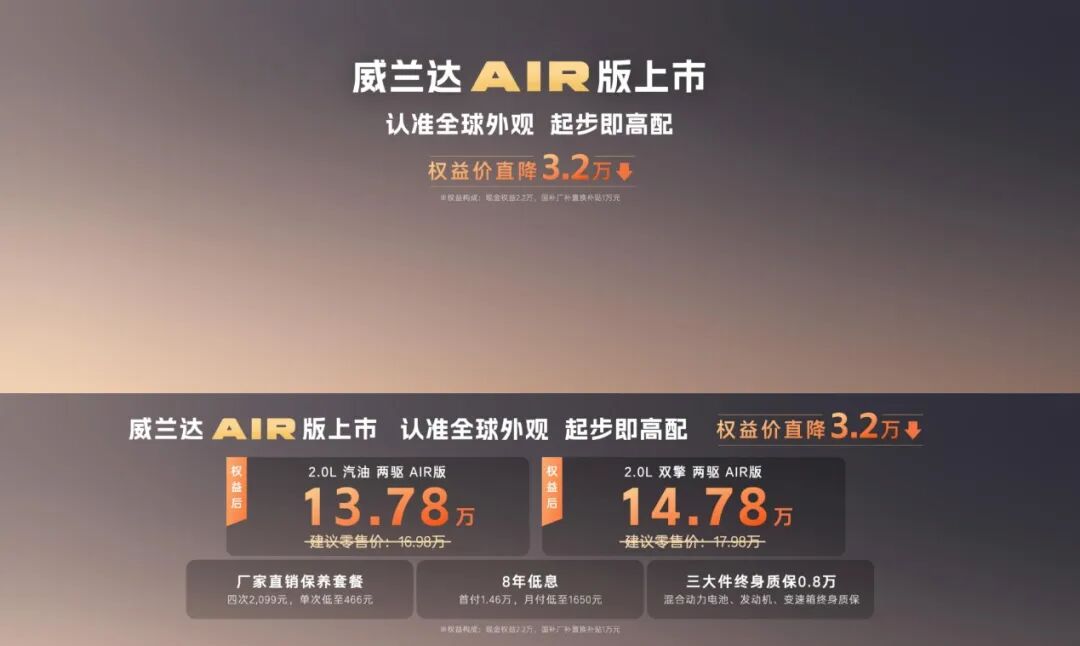
△The RAV4 AIR edition 2.0L gasoline version is priced as low as RMB 137,800
GAC Honda swiftly followed suit. On March 1, GAC Honda announced a fixed price of RMB 175,800 for the 2026 Odyssey e:HEV and RMB 169,000 for the Avancier. Compared to their respective entry-level model MSRPs, the Avancier witnessed a direct price slash of RMB 70,000, while the Odyssey's reduction reached RMB 60,000. Although the entry-level models feature relatively simplified configurations, the Odyssey, a benchmark in the family MPV market, has long maintained firm pricing thanks to its i-MMD hybrid system, space utilization, and low-floor convenience. This descent into the RMB 170,000 range signifies the Odyssey's adoption of a pricing strategy once deemed unimaginable, intercepting the ascent of domestic MPVs. The luxury vehicle segment is also experiencing upheaval: On New Year's Day, BMW China announced price reductions for 31 models, with the pure electric flagship i7 M70L plummeting from RMB 1.899 million to RMB 1.598 million, a reduction of RMB 301,000; the Mercedes-Benz C-Class witnessed a maximum price cut of RMB 38,500, while the GLC's reduction reached RMB 62,500.
Price reductions are not merely a struggle but a strategic recalibration: In 2025, General Motors achieved profitability in the Chinese market for five consecutive quarters, while SAIC Volkswagen and FAW-Volkswagen maintained annual sales volumes at the million-unit level. Relying on the profitability of the global market as a strategic backdrop, joint venture giants have proactively corrected their inflated pricing systems in the Chinese market. Consumers, once compelled to pay exorbitant brand premiums, now witness joint venture brands opting to "squeeze out the froth," allowing prices to mirror product strength itself. This undoubtedly represents an optimization of the counteroffensive strategy against independent brands.
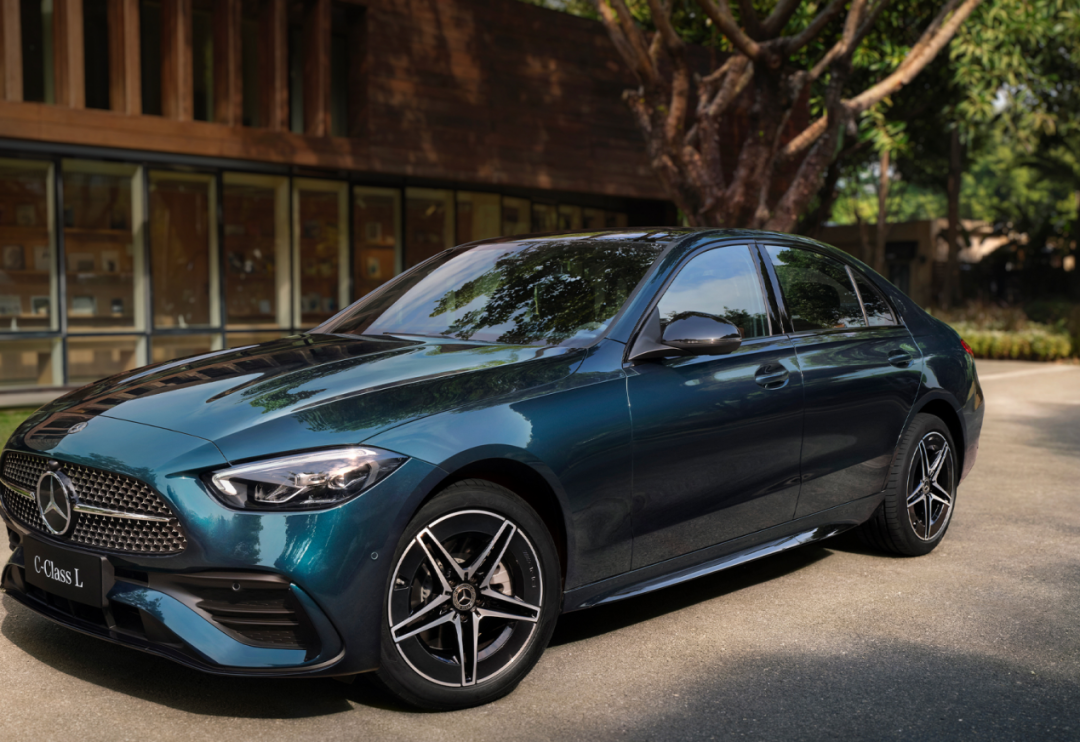
△The price reductions by joint venture vehicles are a meticulously prepared strategic recalibration
Do Independent Brands Still Possess a Moat?
As joint venture brands wield their price-cutting sword, independent brands undoubtedly feel the heat, as the moats they have constructed around new energy and intelligence begin to crumble.
In the first two months of this year, Chinese auto production and sales declined, particularly impacted by factors such as the Lunar New Year holiday. In February, Chinese auto production and sales reached 1.672 million and 1.805 million units, respectively, down 20.5% and 15.2% year-on-year. Passenger vehicle production and sales completed 1.4 million and 1.536 million units, respectively, down 21.6% and 15.4% year-on-year. BYD and other automakers witnessed significant sales declines in the domestic market.
Notably, fuel-powered vehicles accounted for more than half of the top ten sedan sales in January, sending a resounding signal: As subsidies dwindle and purchase tax incentives are halved, consumer purchasing decisions are shifting, with fuel-powered vehicles re-entering the limelight. The joint venture brands' counteroffensive coincides with this market turning point, and their strategy is no longer merely "selling existing inventory" but rather attempting to regain market dominance through a combination of "price adjustments + intelligence catch-up." Additionally, in the crucial realm of intelligence, once considered a weakness, joint venture brands are accelerating their actions: Toyota has forged a partnership with Huawei, Nissan has embraced HarmonyOS, Volkswagen has allied with XPENG, and Buick has joined forces with Momenta. This integration exerts a profound impact on domestic vehicles. Over the past few years, independent brands have achieved a "lane change and overtake" against joint venture brands by leveraging their early advantages in electrification and intelligence. However, as joint venture brands swiftly address their intelligence weaknesses through localized partnerships, their decades-long accumulated manufacturing expertise, supply chain stability, residual value, and global brand endorsements once again constitute formidable competitive advantages.
Independent brands no longer confront sluggish adversaries but competitors who have recalibrated themselves and launched strategic counteroffensives. In this context, domestic vehicles must extricate themselves from the quagmire of "trading price for volume" and redirect the competition back to core trajectories: firstly, by deepening technological expertise and establishing generational leads in hardcore areas such as electric drive efficiency, high-voltage platforms, and electronic electrical architectures; secondly, by accelerating brand elevation and utilizing premium pricing to bolster the mainstream market.
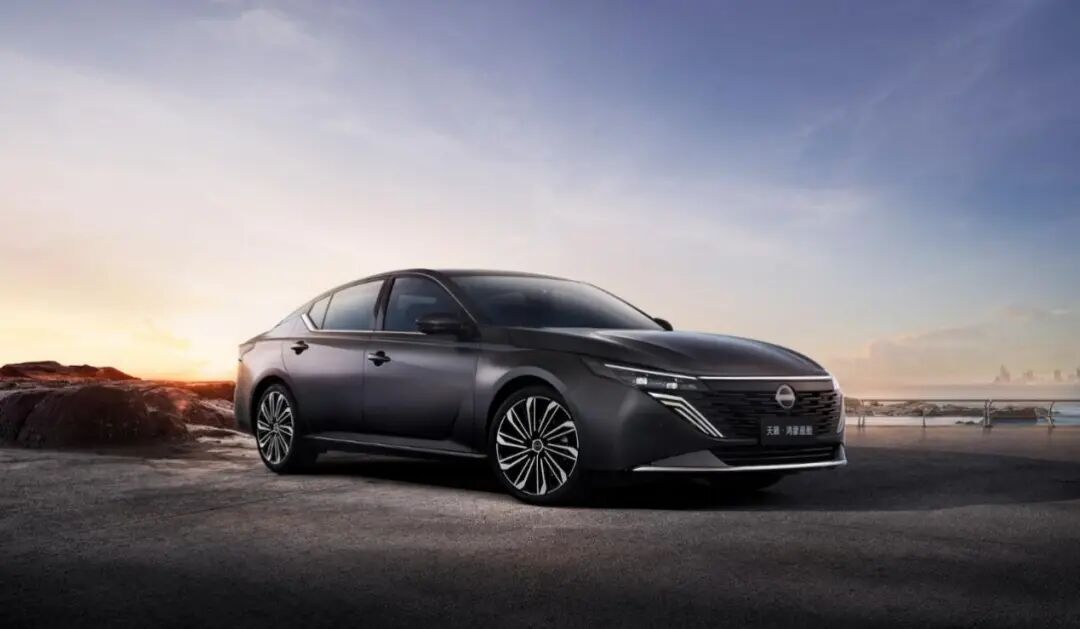
△Nissan Altima equipped with HarmonyOS cockpit
Commentary
The Chinese auto market in 2026 will bid adieu to the "chaotic phase" of unilateral leadership by independent brands and usher in a new era of "duel between joint ventures and independents." The ultimate objective of joint venture brands' current counteroffensive is not merely to drive prices to their nadir but to shift the competition back to the core dimension of "value." When prices revert to rationality and intelligence ceases to be a稀缺 (translated as "scarce") commodity, the ultimate competition still hinges on comprehensive strengths such as manufacturing heritage, service systems, and user trust.
(This article is original to Heyan Yueche and may not be reproduced without authorization.)
-
![]()
The Unstoppable Rise of 'Optical Progress and Copper Decline': Sunny Optical’s Strategic Vision for the Next Decade
-
![]()
AI + Going Global in the Second Half: No Intermission for Robot Vacuum Cleaners
-
![]()
The Suffering Endured in E-commerce, Walmart Doesn't Want to Repeat in AI
-
![]()
What Does the Doubling of New Energy Vehicle Exports Mean?
-
![]()
Ghosn: 'Only I Can Save Nissan'
-
![]()
Volkswagen Lays Off 100,000 Employees, The Elephant Sits Down
-
![]()
Expanding Production Capacity! Yutong Optics Acquires Approximately 1.5 Hectares of Industrial Land in Chang'an, Dongguan
-
![]()
Why Is Nokia Making a Comeback in the AI Era?