Competing Against Chinese Automakers: Global Auto Giants Unite in F1
 03/16 2026
 586
586
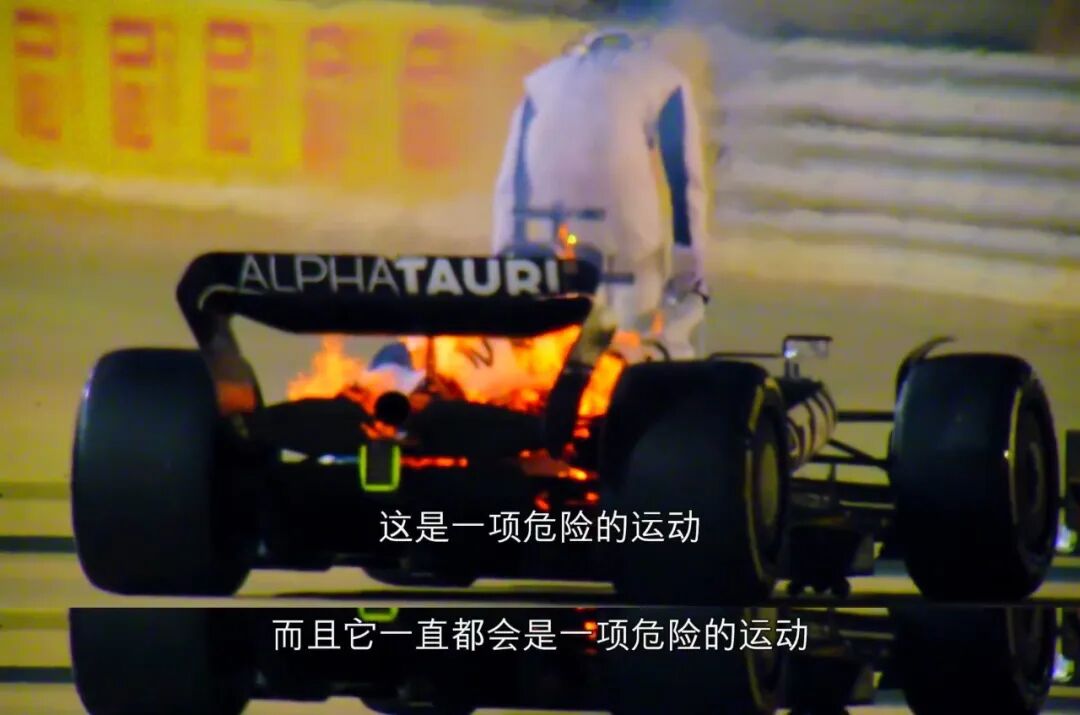
This weekend’s F1 Chinese Grand Prix sees the Shanghai International Circuit’s grid fully occupied by 11 teams for the first time.
The new addition is Cadillac. Next to it, the Audi R26 dons a silver-and-black livery, while Red Bull’s engine cover sports the Ford logo.
This year’s grid even sees Honda and Toyota, which exited years ago, return in new roles. Outside the track, Chinese automaker BYD is heavily investing to secure an entry ticket.
The last time F1 saw such excitement was in the early 2000s, during the era of automotive giants burning money for supremacy.
Though no Chinese automakers are on the track, much of this activity is driven by them.
Edited by|Mao Shiyang
Original content from AutoPix (ID: autopix)
01
Automotive Giants Exit F1
In 2017, U.S.-based Liberty Media acquired F1’s commercial rights for $8 billion in stages. The new majority shareholder promptly removed Bernie Ecclestone as CEO.
Bernie, then 86, had overseen F1 for nearly 40 years. Almost every iconic moment in F1 history occurred under his leadership.
From Michael Schumacher’s four-stop victory to Ferrari’s five-year dynasty, from McLaren and Ferrari’s thrilling espionage saga to sky-high TV broadcasting rights—Bernie transformed F1 from a loose club into the world’s top automotive event.
This legacy lasted nearly three decades, but by the time of its sale, F1 had declined into an aging IP.
In 2016, the Malaysian Grand Prix announced its discontinuation. As Asia’s second-longest-running race, the official explanation was blunt—audiences had lost interest.
The Sepang Circuit, built for F1 in 1999 with a 120,000-seat capacity, once saw tickets sell out instantly. By 2016, attendance dropped to 45,000, with TV ratings hitting rock bottom.
Official statistics show F1’s TV audience shrank by roughly 200 million in 2017 compared to its 2008 peak.
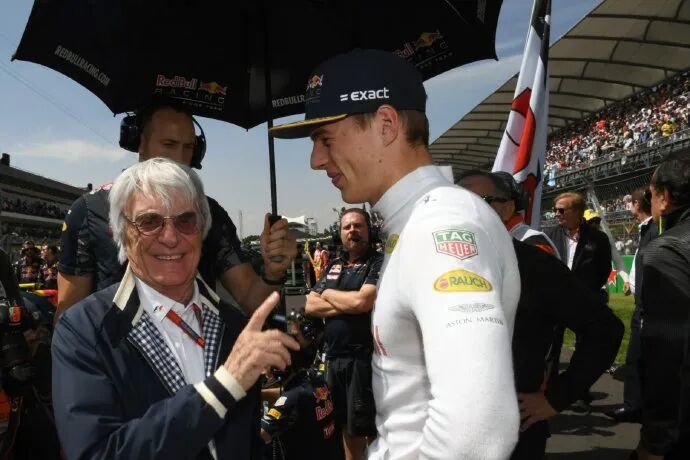 ▍Bernie with Red Bull’s Verstappen
With stadiums idle and audiences gone, business across the board suffered. How did Bernie respond? He dismissed social media like Twitter and Facebook, stating in a 2014 European media interview, “I’d rather target 70-year-olds with plenty of cash.”
“I'd rather get to the 70-year-old guy who's got plenty of cash.”
Whether sincere or stubborn, by this stage, F1’s IP value had declined, team valuations shrank, and costs soared, turning teams into financial black holes for sponsors.
In 2008, Toyota set an F1 spending record of $445 million, yielding zero wins across eight seasons and 140 Grands Prix. The following year, the financial crisis hit, and Toyota exited, abandoning its Fuji Circuit as an F1 venue.
During this period, Honda, BMW, and Bridgestone withdrew, leaving only Mercedes, Ferrari, and Red Bull.
Why did automakers leave F1? Burning money without fanfare was just the surface—after all, automakers never relied on F1 for profit. The real deterrent was technological irrelevance.
Historically, F1 served as a proving ground for automotive innovation. Turbocharging, for instance, debuted in F1 via Renault in 1977, albeit unstable, with frequent engine failures.
Embarrassingly, each explosion sent plumes of white smoke, making Renault’s yellow cars resemble teapots spewing steam while racing.
Despite ridicule as the “yellow teapot,” the technology evolved over decades and eventually became standard in global fuel-powered vehicle s (internal combustion engine vehicles).
Other innovations like disc brakes, active suspensions, paddle shifters, and carbon-fiber chassis might have vanished in early stages without F1.
But by the 2010s, F1’s role in showcasing cutting-edge technology diminished.
The most symbolic example is the 2014 introduction of the MGU-H (Motor Generator Unit-Heat), which recovers thermal energy from exhaust gases into electricity.
Advanced in concept, it was prohibitively expensive. The MGU-H had to operate stably at exhaust temperatures exceeding 900°C without deformation, all while being compact enough to fit on the turbocharger shaft.
Like a micro-generator spinning atop a volcanic vent, it demanded immense R&D, manufacturing precision, and materials. Development costs reached hundreds of millions, with engineering expenses in the millions and lifespans of just a few thousand kilometers.
For over a decade, F1 focused on such technologies—peak engineering but increasingly divorced from consumer vehicles.
Examples include 3D-printed “dynamic compression ratio” pistons, carbon-fiber monocoques, and $100,000 steering wheels. Even launch procedures became tech battlegrounds, with engineers calculating turbo preheating and battery management to gain thousandths-of-a-second advantages at green lights.
Automakers aim to sell cars. If F1 technologies remain lab-bound extravagances and brand prestige fades, manufacturers lose both substance and image.
From this point, F1 and its primary sponsors began diverging in value.
02
Countering Chinese Automakers: An Offer F1’s Europe, America, and Japan Automakers Can’t Refuse
F1’s turning point arrived this year.
In 2025, China exported over 2 million new energy vehicles (NEVs), capturing global markets. In Europe, where entry is hardest, Chinese automakers sold roughly 810,000 units last year (6.1% market share), doubling from 2024. Without U.S. tariffs, they’d likely gain ground there too—domestically, Chinese brands already hold nearly 70% market share.
Europe, America, and Japan automakers fear Europe next year or the year after could resemble China last year.
Technological anxiety gave F1 an opening: it offered automakers an irresistible reason to embrace new energy.
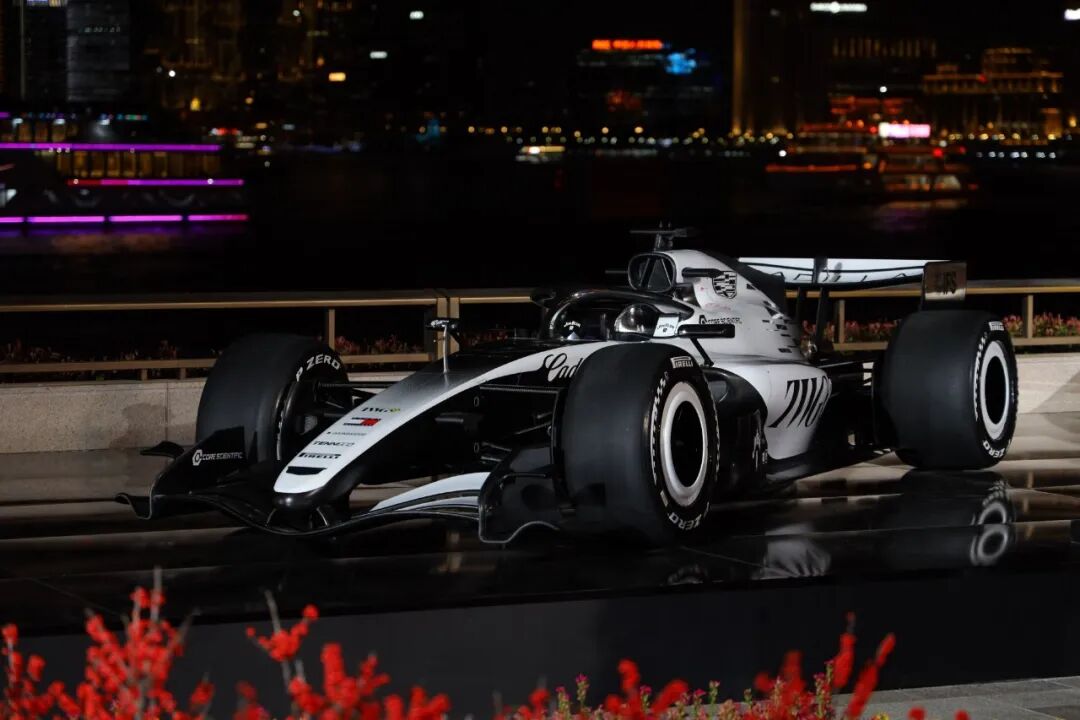 ▍Cadillac’s MAC-26 race car
F1 imposes strict technical rules on power units. From 2014–2025, hybrid tech was introduced, but electric output was limited to 120kW, accounting for <20% of total power.
Starting in 2026, F1 triples the electric motor’s output to 350kW and reduces the internal combustion engine’s power from 560kW to 400kW, creating a near-50:50 hybrid split.
F1 has effectively positioned itself as a “training ground” for NEV technologies. Many participating automakers view Chinese NEVs as their hypothetical rivals when adapting F1 tech for consumer markets.
Ford, returning to F1 after 22 years, openly states its goal: to absorb technological capabilities from F1 to compete globally against Chinese automakers.
After Ford CEO Jim Farley visited China in 2024, he shipped a Xiaomi SU7 from Shanghai to Chicago and drove it for six months.
In a January 2026 Bloomberg interview, he emphasized learning from Chinese automakers to overcome software challenges, particularly in “hybrid control systems”: “Designing better software is key to defeating Chinese automakers.”
To refine its software, Ford partnered deeply with Red Bull—not just as a sponsor. Ford engineers co-developed Red Bull’s new “DM01” power unit and plan to integrate F1-tested hybrid control algorithms into Ford’s best-selling Transit van.
Audi, which acquired Sauber to rejoin F1, established a dedicated R&D base in Neuburg, Germany, to develop a full power unit suite—internal combustion engines, hybrids, and energy recovery systems.
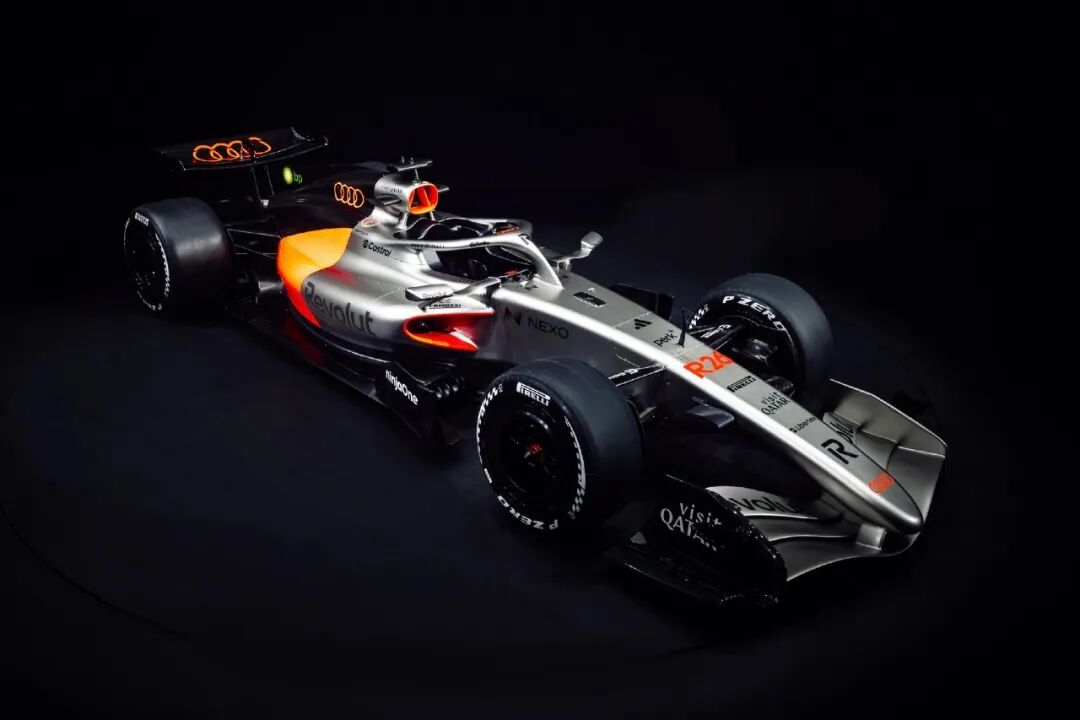 ▍Audi’s R26 livery
Audi F1 project lead Adam Baker noted, “Neuburg isn’t just a racing project—it’s a tech hub that feeds track experience back into Audi’s production vehicle development.”
GM’s Cadillac took the costliest, most challenging but potentially most sustainable path: forming F1’s first entirely new team since 2016.
To compensate existing teams for diluting the commercial value, GM paid $450 million in “entry fees” to the 10 current F1 teams.
From scratch, they established dual headquarters in North America and Europe, hired over 400 staff, and founded a dedicated tech firm to develop F1 power units, aiming for full in-house production by 2029.
Japanese automakers returned more lightly.
In 2026, Honda partnered with Aston Martin, introducing the new RA626H power unit. Notably, F1 scrapped the MGU-H (the costly, non-civilian tech mentioned earlier) in its 2026 rules.
With this change, Honda rebuilt Aston Martin’s energy recovery system, tripling electric output. These innovations directly fed into Honda’s new Civic TYPE R HRC Concept.
Toyota, avoiding a factory team return, sponsored Haas F1 Team (rebranded as “TGR Haas F1 Team” in 2026), providing engineers, testing resources, and hybrid tech support.
Symbolically, Haas now has its own driver simulator, previously reliant on Ferrari’s facilities.
03
F1’s Comeback: Chinese Automakers Poised to Strike
The 2026 F1 technical rules have won over automakers but drawn criticism within the paddock. Some argue F1 now prioritizes algorithms over pure engineering and driving skill.
Red Bull’s Max Verstappen sharply criticized his car, likening it to a “doped Formula E vehicle” rather than a true F1 machine.
Bernie, F1’s 95-year-old former chief, predicted chaos in the 2026 season.
Yet debates over “purity” haven’t dampened capital enthusiasm.
In 2025, LVMH invested €1 billion to become an F1 global partner; Apple secured exclusive U.S. broadcasting rights for $750 million, a 70% price hike.
How did F1 pull this off? The answer lies on screens and social media.
The 2025 film *F1: Unleashed* grossed $600 million globally. From 2019 to now, Netflix’s *Drive to Survive* has released eight seasons, transforming F1 from a “macho sport” into a drama-filled reality show replete with rivalries, betrayals, passion, and absurd truths.
By mid-2024, F1’s social media following exceeded 100 million, quintupling since 2018. Its global fanbase reached 827 million, up 300+ million from 2018. The average fan age dropped from 44 to 32, with female fans jumping from single digits to nearly 40%.
Capital and audiences flooded in, boosting team valuations. In 2025, the average F1 team was worth $3.6 billion, up 89% from 2023. Building a new team finally became financially viable.
F1 had fully rebounded.
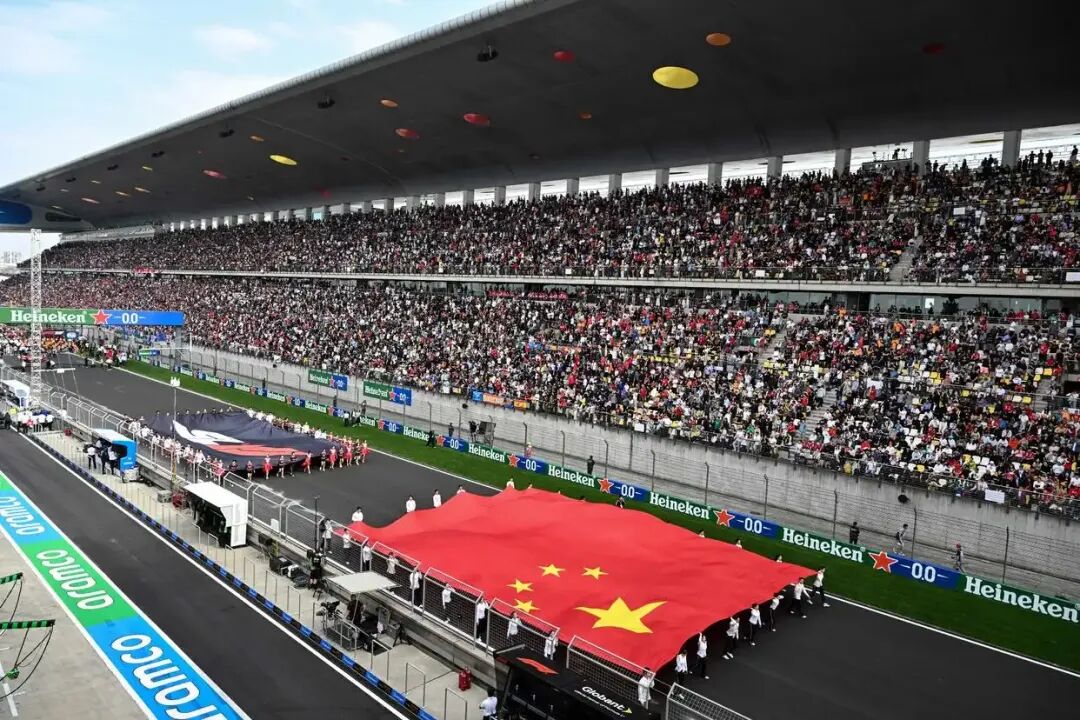 ▍2026 F1 Chinese Grand Prix
With optimized business models, technological alignment, and access to overseas markets like Europe, have Chinese automakers noticed the opportunity? Absolutely.
In March 2026, rumors swirled that BYD was evaluating an F1 entry, eyeing Alpine for a $1.2 billion acquisition. Despite Renault’s insistence that the team is “not for sale,” negotiations continue.
The 2026 F1 rules align perfectly with BYD’s strengths in “three electric” technologies (batteries, electric motors, electronics). Their Yangwang U9 Xtreme, tested at Germany’s Nürburgring, exceeded 495 km/h.
Geely is even closer, already a veteran in global motorsport.
Lynk & Co Cyan Racing has dominated the TCR World Tour for seven years, securing 9 annual championships, 43 race wins, and 132 podiums. In 2025, they defended their title with a staggering 1,052 points. From 2026, Geely’s China Star team will compete with the Xingrui TCR.
From BYD’s tentative steps to Geely’s long-term commitment, Chinese automakers are one breakthrough away from F1.
In 2025, FIA President stated bluntly: “Major nations can’t be absent from F1. Next, we’ll welcome a Chinese manufacturer.”
Only when the “countered” enter the global stage does F1’s drama truly begin.
Original content from AutoPix (autopix). Unauthorized reproduction prohibited.
-
![]()
The Unstoppable Rise of 'Optical Progress and Copper Decline': Sunny Optical’s Strategic Vision for the Next Decade
-
![]()
AI + Going Global in the Second Half: No Intermission for Robot Vacuum Cleaners
-
![]()
The Suffering Endured in E-commerce, Walmart Doesn't Want to Repeat in AI
-
![]()
What Does the Doubling of New Energy Vehicle Exports Mean?
-
![]()
Ghosn: 'Only I Can Save Nissan'
-
![]()
Volkswagen Lays Off 100,000 Employees, The Elephant Sits Down
-
![]()
Expanding Production Capacity! Yutong Optics Acquires Approximately 1.5 Hectares of Industrial Land in Chang'an, Dongguan
-
![]()
Why Is Nokia Making a Comeback in the AI Era?