BMW’s Global Net Profit Reaches €55.49 Billion, While Revenue in China Falls 21.9%! European iX3 Orders Are Backlogged for Half a Year | MIRROR Pro
 03/16 2026
 527
527
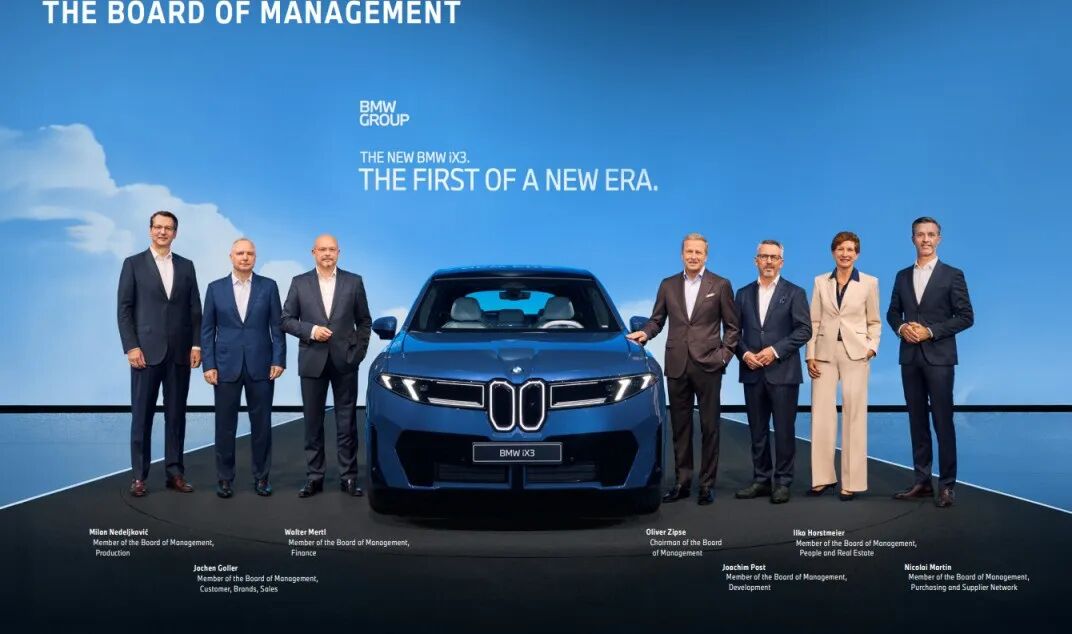
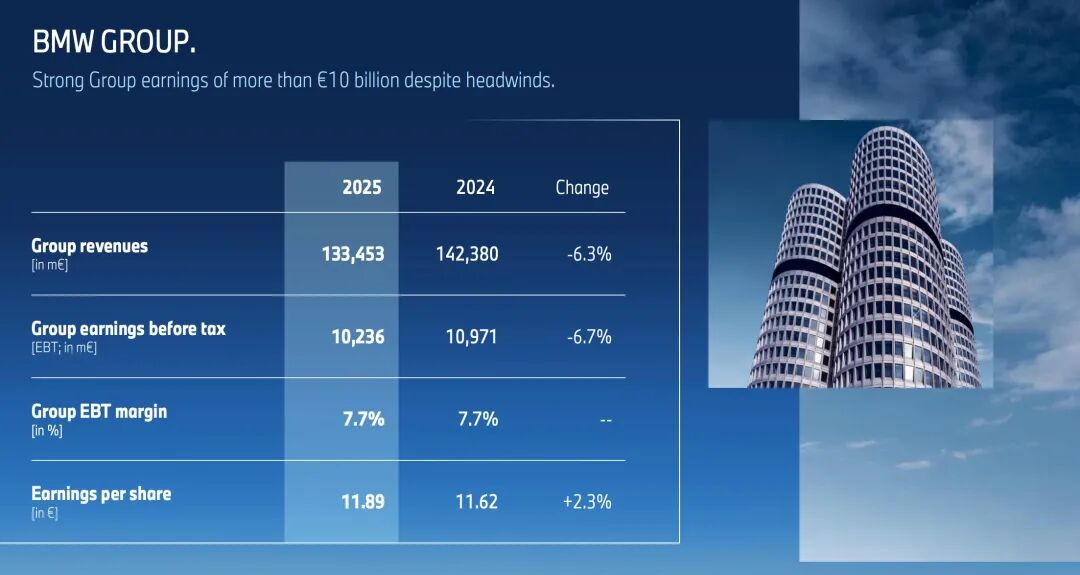
Despite notable fluctuations in the Chinese market, BMW, which pursues a balanced development strategy, delivered solid results in 2025. On March 12, BMW released its 2025 financial report, revealing that the BMW Group achieved €133.453 billion in revenue, a 6.3% year-on-year decrease. The group's pre-tax profit exceeded €10 billion, maintaining a pre-tax profit margin of 7.7%. Net profit surpassed €7 billion, remaining relatively stable compared to the previous year, albeit with a slight decline. Meanwhile, through ongoing operational and supply chain optimizations, BMW achieved approximately €2.5 billion in cost savings within the year.
However, BMW’s revenue in the Chinese market saw a significant downturn. In 2025, BMW’s revenue in China was €24.81 billion, down over 21% from 2024. This decline was primarily attributed to falling sales, price reductions in China, and increased discount rates.
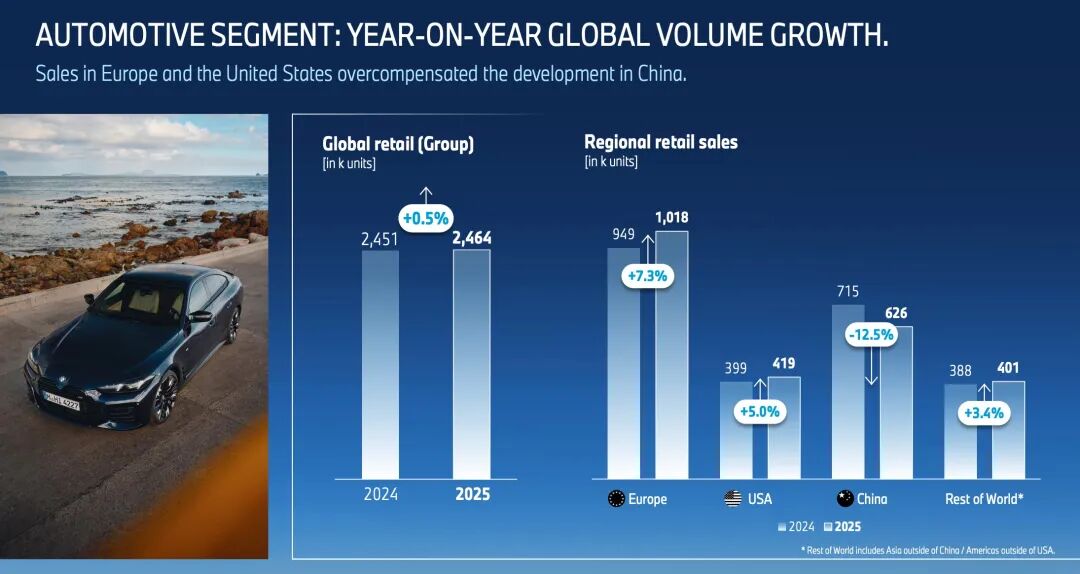
In terms of sales volume, the BMW Group delivered approximately 2.46 million vehicles globally in 2025, a 0.5% increase from the previous year. In Europe, sales grew by over 7%, and for the first time since before the COVID-19 pandemic, the company delivered over 1 million vehicles to European customers. In the saturated U.S. market, BMW also achieved notable growth, with a 5% increase. However, in the Chinese market, a total of 626,000 units were delivered, representing a 12.5% decline. BMW CEO Oliver Zipse acknowledged, "Affected by intense market competition, our annual sales fell short of expectations."
In markets outside the three core sales regions—Europe, the United States, and China—BMW still managed a 3.4% year-on-year increase, despite an overall market downturn. In 2025, China remained BMW’s largest single market. Despite the decline there, BMW achieved slight overall growth thanks to strong performances in three of its four sales regions.
From a brand perspective, BMW M performed strongly, continuing its high growth trajectory with annual sales exceeding 213,000 units, marking its 14th consecutive year of growth. Meanwhile, MINI, driven by new product launches, also saw a 17.7% year-on-year increase in sales. The main growth driver for MINI was its most versatile model, the MINI Countryman+, which accounted for over 32% of the brand’s total sales.
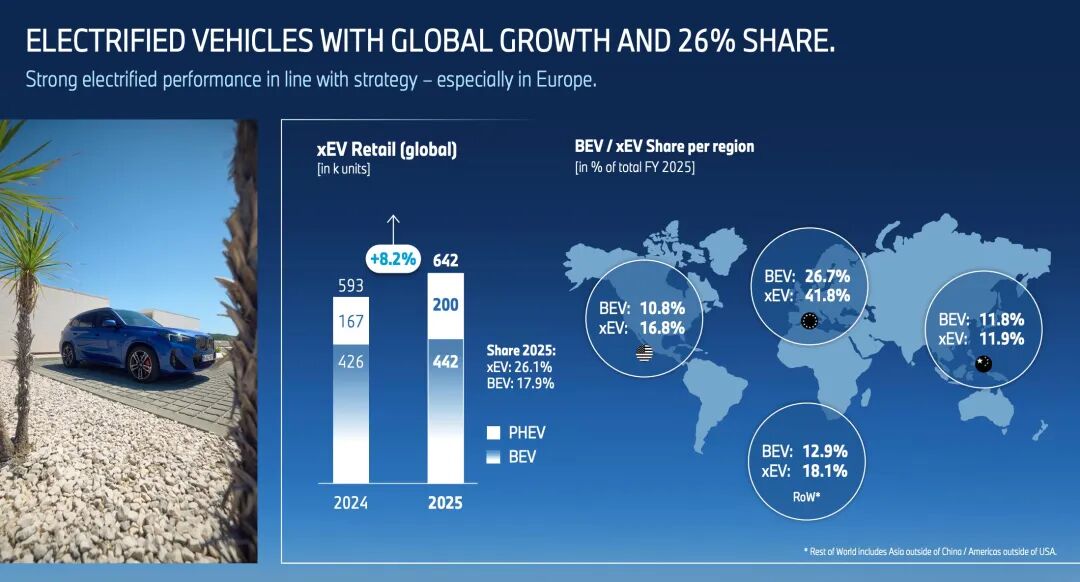
In terms of powertrain types, BMW delivered over 640,000 electrified models to customers worldwide in 2025, accounting for approximately 26% of total sales—with fully electric models making up about 18%. Performance in the European market was particularly outstanding, with electrified models accounting for over 40% of sales. Demand for plug-in hybrid models was also robust in 2025, with PHEV sales reaching 200,000 units and fully electric models reaching 442,000 units, representing an overall growth of 8.2%.
However, when examining electrification penetration by region, the Chinese market currently has the lowest rate for BMW, which is somewhat surprising. Among the three major markets, electrified models accounted for 41.8% of total sales in Europe, 16.8% in the United States, but only 11.9% in China. In other markets outside these three, BMW’s electrification share was 18.1%. These figures indicate that BMW’s electrification progress in China not only lags behind local automakers but is also the weakest among its sales regions.
In terms of electrification transformation, BMW continues to make strides. According to the plan, BMW will offer 20 fully electric models by the end of 2026. At the product level, BMW’s next-generation platform, the "Neue Klasse" models, is also accelerating its rollout. The first mass-produced model, the BMW iX3, has already launched in Europe. Zipse stated that demand for the iX3 in the European market has far exceeded expectations, with strong orders from both individual and fleet customers, while also attracting many new customers who have never driven a BMW before. He noted that orders for the BMW iX3 are already backlogged until later this year.
"We are fully leveraging the flexibility of our production and supplier network to expand capacity according to demand," Zipse said. At the same time, he believes that the iX3’s advantages cannot be surpassed by competitors in the short term. He argues that the Neue Klasse represents a massive investment, and only companies like the BMW Group that can achieve long-term economic success have the capability to make such large-scale future investments.
Surprisingly, BMW has shifted its stance on plug-in hybrids. Zipse said that plug-in hybrid models remain highly significant. They are not just a "transitional technology"—for many people in all regions of the world, they are the only way to integrate electric, locally zero-emission mobility into daily life. BMW will subsequently combine its efficient internal combustion engine lineup to produce more plug-in hybrid vehicles. Zipse said this ensures that BMW can continue to tap into regional market opportunities and will lay a core foundation for BMW’s business success in 2026 and beyond. Elevating plug-in hybrid products to this level is unprecedented.
Regarding the Chinese market, Zipse said that despite the decline, BMW’s core goal remains to achieve stable profitability there. Moreover, Zipse believes that based on the first two months of 2026, BMW’s performance in China is actually superior to that of Chinese brands and other traditional competitors.
In the Chinese market, 2026 will be a "major product year" for the BMW Group, with BMW, MINI, and motorcycle brands expected to launch around 20 new products. Among them, the long-wheelbase version of the BMW iX3, specifically designed for the Chinese market, will make its global debut at the Beijing Auto Show and is planned to launch within the year. Additionally, the all-new 7 Series will also make its appearance, a product that incorporates Neue Klasse technology. Zipse said this car can be considered a nearly brand-new model, as BMW has fully utilized the new possibilities brought by Neue Klasse technology to elevate this luxury sedan to a whole new level in terms of appearance and technology.
So, can the iX3, which is selling well in Europe, gain traction in the Chinese market? Mercedes-Benz's CLA electric was launched in China last year, a product that also performed strongly in Europe, but its performance in the Chinese market has not met the goal of defeating competitors. Can BMW achieve what Mercedes-Benz has not with the iX3?
-
![]()
The Unstoppable Rise of 'Optical Progress and Copper Decline': Sunny Optical’s Strategic Vision for the Next Decade
-
![]()
AI + Going Global in the Second Half: No Intermission for Robot Vacuum Cleaners
-
![]()
The Suffering Endured in E-commerce, Walmart Doesn't Want to Repeat in AI
-
![]()
What Does the Doubling of New Energy Vehicle Exports Mean?
-
![]()
Ghosn: 'Only I Can Save Nissan'
-
![]()
Volkswagen Lays Off 100,000 Employees, The Elephant Sits Down
-
![]()
Expanding Production Capacity! Yutong Optics Acquires Approximately 1.5 Hectares of Industrial Land in Chang'an, Dongguan
-
![]()
Why Is Nokia Making a Comeback in the AI Era?