The Auto Market Goes Wild, Targeting the Leaders First
 03/17 2026
 592
592
Lead
Introduction
Successful leaders balance future-oriented innovation with traditional cash-flow-generating businesses.
According to incomplete statistics, nine global automakers have replaced their CEOs in just over a year.
This clearly indicates that the automotive industry is undergoing an extraordinary wave of leadership changes, driven by global tariffs, competition from Chinese automakers, and the rapid shift toward electric and software-defined vehicles.
For instance, Toyota and BMW will replace their CEOs this spring, while Porsche’s new CEO took office on January 1. Meanwhile, Nissan, Stellantis, Volvo, Renault, Jaguar Land Rover, and Hyundai have also welcomed new leaders since early 2025.
Industry insiders believe that established automakers are particularly vulnerable to these pressures due to their global presence, slow digital adaptation, and influx of new Chinese competitors. “Today, all large automakers are scrutinizing CEOs who are executing their strategies,” said Andreas Ries, global automotive leader at consulting firm KPMG.
“As risk areas expand, leadership turnover will accelerate.” As the automotive industry enters a period of unprecedented change, with AI-driven autonomous vehicles and low-cost, high-tech EVs from China and Silicon Valley disrupting the market, the next generation of automotive CEOs needs different skills, including expertise in software and AI.
Industry observers say today’s CEOs must look beyond cars, sales, and national borders to seek new synergies and revenue streams. Above all, they must be agile enough to shift strategies at any moment, analysts say.
According to a study released this month by executive search firm Spencer Stuart, U.S. companies in the S&P 1500 index (covering large, mid, and small-cap firms) appointed 168 new CEOs last year—the highest number since 2010. The study found that CEO tenures are shortening, while average ages are trending younger.
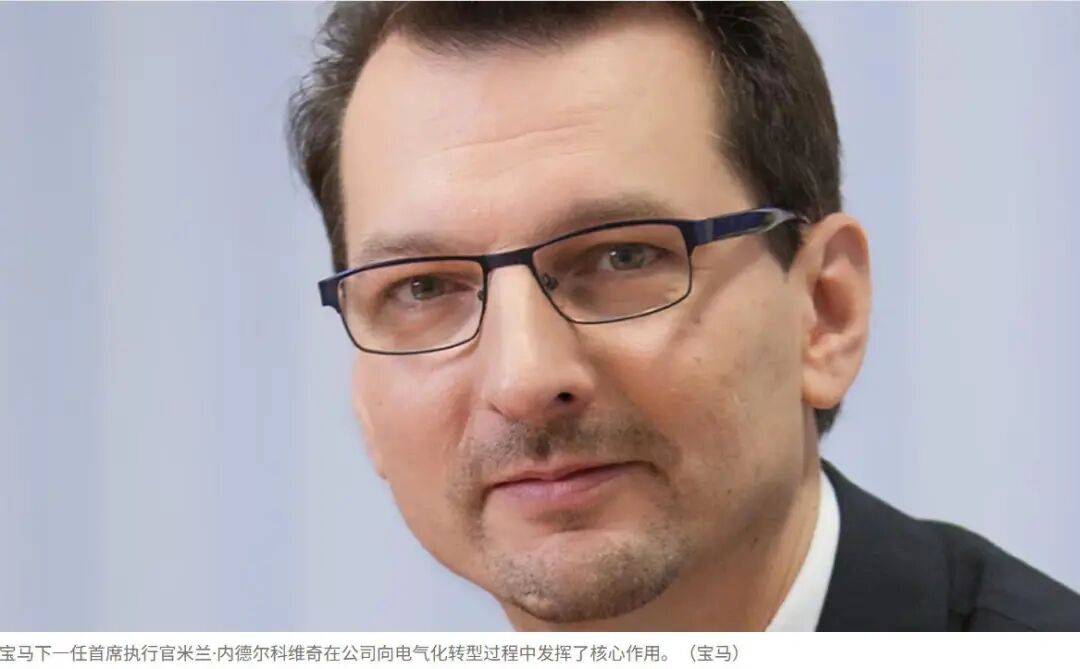
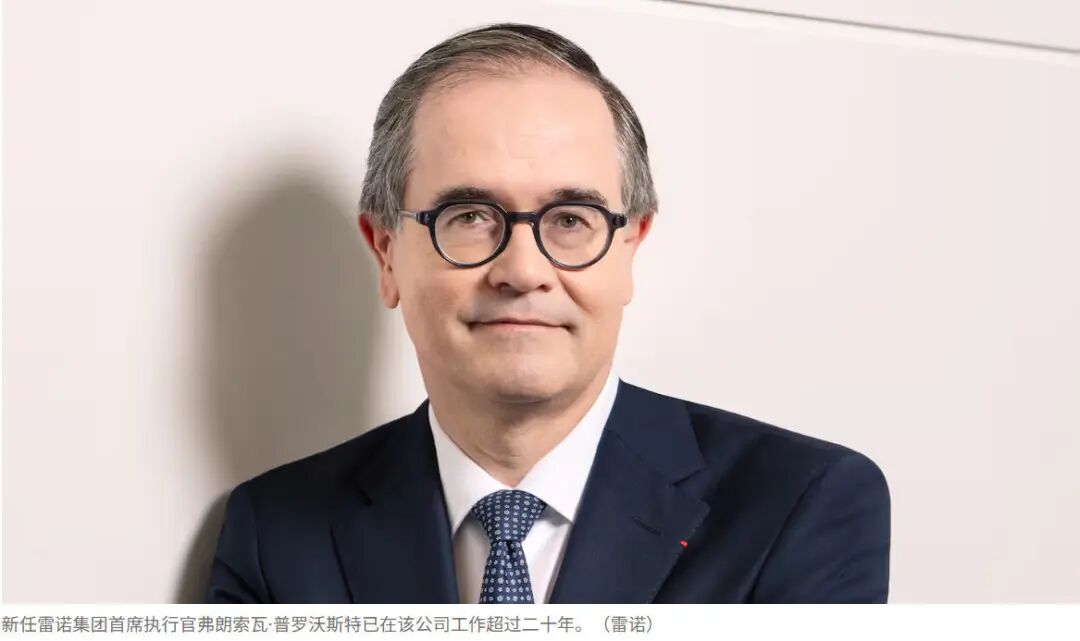
In the global automotive industry, the list of CEO transitions is rapidly expanding: Milan Nedeljković at BMW; Chika Kondo at Toyota; Michael Leitner at Porsche; P.B. Balaji at Jaguar Land Rover; François Provost at Renault; Antonio Filosa at Stellantis; Ivan Espinosa at Nissan; Håkan Samuelsson at Volvo; and José Muñoz at Hyundai.
Business crises have triggered some CEO changes, with some automakers promoting leaders from within and others hiring externally for fresh perspectives. The new CEOs share a common mission: finding new solutions to unprecedented challenges.
Of course, the task is absolutely daunting. “In this environment, it’s not hard to make mistakes,” said Christopher Richter, head of Asia automotive research at CLSA in Tokyo. “And once you do, the company will consider replacing you.”
01 CEO Tenures Begin to Shorten
Against the backdrop of rapid industry transformation, CEO tenures are noticeably shrinking. In fact, according to a recent survey, automotive executives fear job loss more than leaders in any other industry.
AlixPartners’ 2026 Disruption Index reveals that the automotive sector, for the second consecutive year, is the most disrupted industry globally. In the February 19 study, over 40% of automotive leaders expressed job insecurity. Koji Sato’s brief tenure as Toyota CEO exemplifies the trend of shorter tenures and higher pressure.
Toyota unexpectedly decided to replace 56-year-old Koji Sato with 57-year-old CFO Chika Kondo, effective April 1. When asked if a three-year CEO tenure was too short—compared to his predecessor Akio Toyoda’s 2009–2023 leadership—Sato said, “Honestly, I think it’s too short.”
“Given the speed of industry change, past timeframes are entirely different from today’s three years.” During the announcement, Sato emphasized he had “done nothing wrong.” He said the reshuffle allows him to focus on roles such as chairman of the Japan Automobile Manufacturers Association and vice chairman of Keidanren, Japan’s largest business group.
Analysts agree that even Toyota, with its record 2025 sales and strong profits, needs to rethink. Sato’s multiple roles made it hard to manage a manufacturer selling 11 million vehicles annually.
“We view these changes positively, as they reflect an awareness of the rapidly evolving competitive landscape in the global automotive industry and the need to focus the board’s (of which Sato is a member) attention on how Toyota must adapt,” wrote Todd DuVic, managing director and automotive sector lead at CreditSights, in a report after the transition.
This case clearly shows that even industry giants cannot remain untouched by transformation waves and must adjust leadership to confront new competitive landscapes.
The sudden exits of Stellantis and Renault CEOs further illustrate the depth of industry turmoil. At Stellantis, Antonio Filosa faces challenges highlighting the era of rapid China expansion and efficiency demands. Filosa must manage a sprawling portfolio of 14 brands, each with unique regional strengths and weaknesses.

He must also defend his home European market against aggressive Chinese automakers and emission regulation changes disrupting powertrain plans. Add tense U.S.-Europe labor relations, and Filosa’s predecessor, Carlos Tavares, abruptly resigned in December 2024 over disagreements with the board on reversing Stellantis’ sales declines, cash losses, and deepening North American woes.
Filosa, then North America COO, retained that title as CEO. The new boss is pushing reforms in nearly every area. “We’re significantly reshaping our stakeholder relationships, improving all of them—with employees, partners, dealers, suppliers, governments, and unions,” Filosa said during a February 6 investor earnings call.
Renault’s situation is equally dire, forced to seek a new CEO after Luca de Meo’s surprise June 2025 resignation to lead Kering, Gucci’s parent company. Provost, in charge of procurement, partnerships, and public affairs, took over as the French automaker reported a €11.2 billion first-half net loss.
These sudden leadership changes fully demonstrate that when strategic missteps or external pressures reach a tipping point, leadership turnover becomes an inevitable choice for companies seeking breakthroughs.
02 The Mission and Challenges Facing New CEOs
Facing such severe industry conditions, successful CEOs must possess vision and capabilities beyond traditional frameworks. Analysts say successful CEOs think beyond the automotive industry to find opportunities in non-auto businesses. Sectors like defense and robotics offer diversification potential.
For example, Renault plans to manufacture drones for the French military. Hyundai’s Muñoz unveiled a scalable production system in January capable of building 30,000 robots annually. Hyundai will also deploy humanoid robots at its Georgia factory hub starting in 2028.
These cross-industry attempts show that future automotive leaders can no longer confine themselves to traditional manufacturing thinking but must look to broader tech and industrial applications for new growth.
Meanwhile, today’s CEOs need a new skill set combining technical proficiency and agile thinking. “New CEOs must become more flexible thinkers. The automotive industry’s old hierarchy is collapsing,” said Mitsushiro Fukao, executive research fellow and auto analyst at Itochu Research Institute in Tokyo.
“This is a new world order. They can’t just be car people. They need to understand AI, software, and digitization.” Some automakers are also appointing CEOs closer in age to their digital-native customers.
Ivan Espinosa became Nissan’s youngest CEO at 46 when he took the helm in April 2025. Legendary auto tycoon Carlos Ghosn was 47 when he became Nissan CEO. Espinosa was Nissan’s chief planning officer before his promotion.
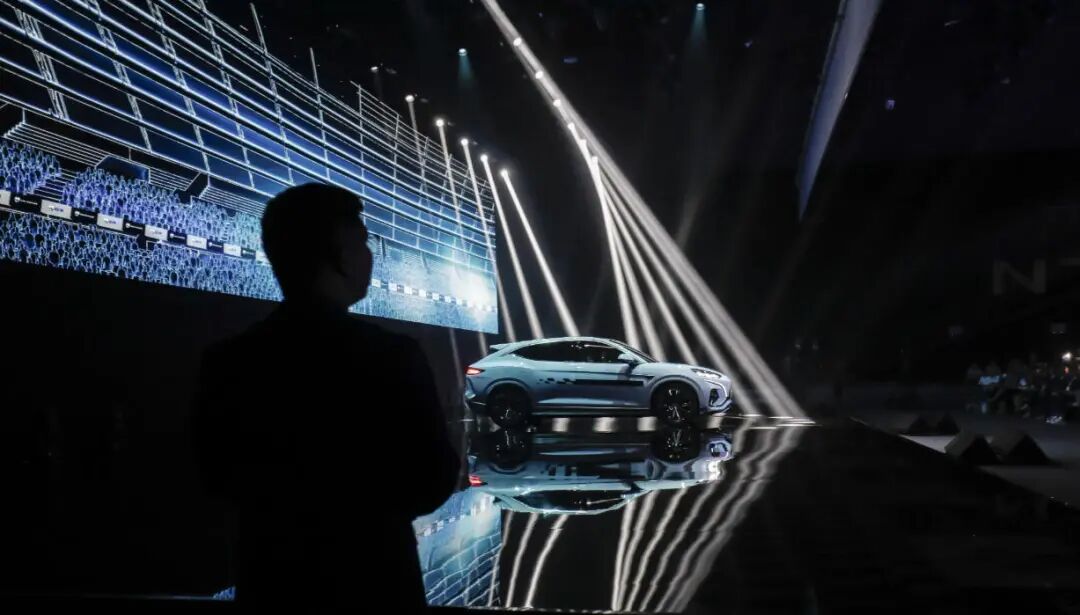
Fukao said boards should look beyond the auto industry to attract talent from semiconductors and high-tech fields. Ford’s decision to hire Boeing’s Alan Mulally proved this approach works. Hiring 54-year-old German engineer Michael Leitner—who had stints at McLaren Automotive and Ferrari—to lead Porsche is a recent example of seeking fresh perspectives externally.
Like Toyota, Porsche said the appointment allows Leitner’s predecessor, Oliver Blume, to focus on broader responsibilities. Blume had previously served as CEO of both Porsche and its parent company, Volkswagen Group. Now, he leads the group exclusively.
These cases point to a trend: traditional automotive leadership models are being upended, with cross-industry experience, youth, and technical backgrounds becoming key labels for the new generation of CEOs.
However, analysts say automakers seeking leapfrog development must also honor their history. Over-betting on the next big “breakthrough” can backfire. For example, General Motors, Ford, Stellantis, and Honda took roughly $50 billion in asset write-downs in recent months from investments in EV factory capacity, vehicle programs, and battery plants, hammering their balance sheets.
Stellantis fell to its first annual operating and net loss since its 2021 formation due to a surprise €22 billion write-down linked to Tavares’ overly ambitious EV plans. “You must balance future focus with honoring the past,” said CLSA’s Richter.
“You can’t abandon old businesses, as they fund new growth.” This warning is crucial, reminding all newly appointed CEOs that while chasing future trends, they must properly manage existing core businesses to avoid shaking the company’s foundations through aggressive transformation.
Thus, today’s CEOs must invest in the future while protecting old revenue streams—a balancing act testing every leader’s wisdom. Volvo looked to the past to shape its future when rehiring 74-year-old Samuelsson. He led the Swedish automaker from 2012–2022 before stepping down to become Polestar chairman.
During that tenure, Volvo took bold steps like ditching diesel engines long before competitors. It also hired Jim Rowan, former CEO of vacuum maker Dyson. Li Shufu, chairman of Volvo’s parent company, Zhejiang Geely Holding, said he brought Samuelsson back for his knowledge of the group and industry.
Jaguar Land Rover promoted from within, with Balaji, former CFO of Indian parent Tata Motors, strengthening Tata’s control over JLR, which contributes about two-thirds of Tata’s revenue. Similarly, BMW’s smooth succession with Milan Nedeljković, the 56-year-old production board member, contrasted with the turmoil at Stellantis, Renault, Nissan, and Porsche.
Analysts say this rapid leadership reshuffle will likely continue and may impact U.S. executives. Jim Farley has led Ford for over five years, while Mary Barra has headed General Motors for over a decade. As Toyota’s Sato noted, that’s a long time in today’s storms.
Some predict Tesla’s Elon Musk might even hand over the auto business as he focuses on robots and AI. Still, analysts warn that even star CEOs will find turning around traditional automakers difficult.
These giants, with histories dating back to the last century, have global workforces and factories, with cultures and practices that change slowly—while the duties demanded of their leaders are constantly being redefined. “New times demand new CEOs,” said CLSA’s Richter. “It’s a different skill set, sometimes sounding like a job almost no one can fill.”
Editor in Charge: Cui Liwen Editor: He Zengrong
THE END
-
![]()
The Unstoppable Rise of 'Optical Progress and Copper Decline': Sunny Optical’s Strategic Vision for the Next Decade
-
![]()
AI + Going Global in the Second Half: No Intermission for Robot Vacuum Cleaners
-
![]()
The Suffering Endured in E-commerce, Walmart Doesn't Want to Repeat in AI
-
![]()
What Does the Doubling of New Energy Vehicle Exports Mean?
-
![]()
Ghosn: 'Only I Can Save Nissan'
-
![]()
Volkswagen Lays Off 100,000 Employees, The Elephant Sits Down
-
![]()
Expanding Production Capacity! Yutong Optics Acquires Approximately 1.5 Hectares of Industrial Land in Chang'an, Dongguan
-
![]()
Why Is Nokia Making a Comeback in the AI Era?