Li Auto's Market Value Evaporates by 60%: Can a Turnaround Still Happen?
 03/17 2026
 603
603
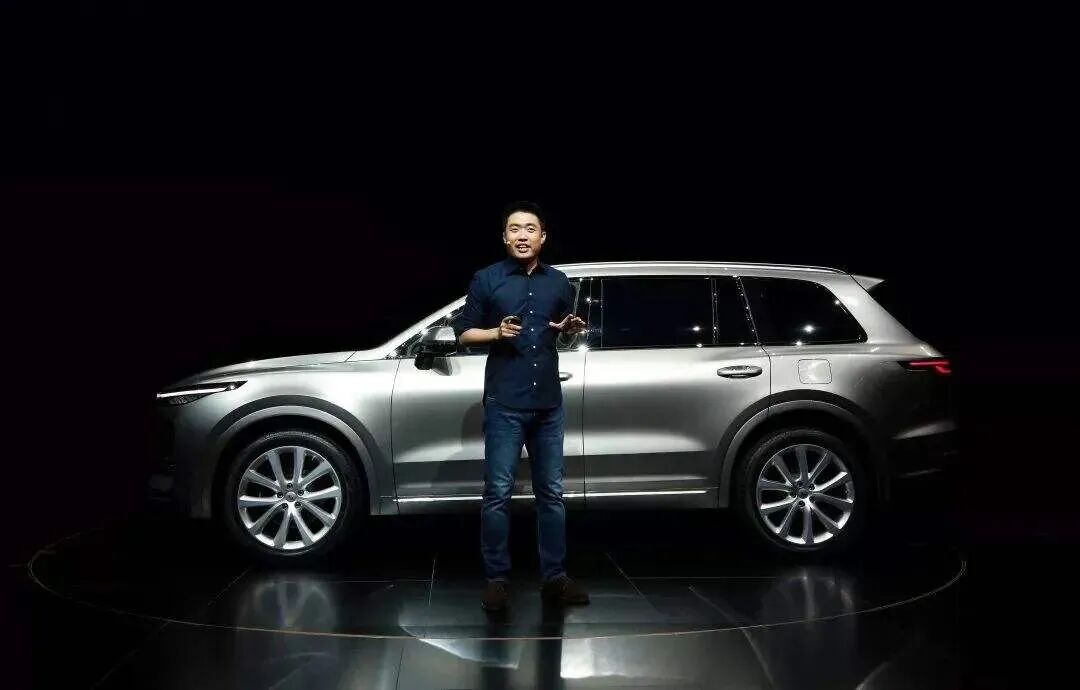
Li Auto Begins a Do-or-Die Battle
From Capital Darling to Hot Potato
Two years ago, Li Auto was the most profitable player among the new forces, with Li Xiang confidently declaring his ambition to build the 'best SUV under 5 million.' Now, its U.S. market value has tumbled from $46 billion to $18 billion, a 60% evaporation.
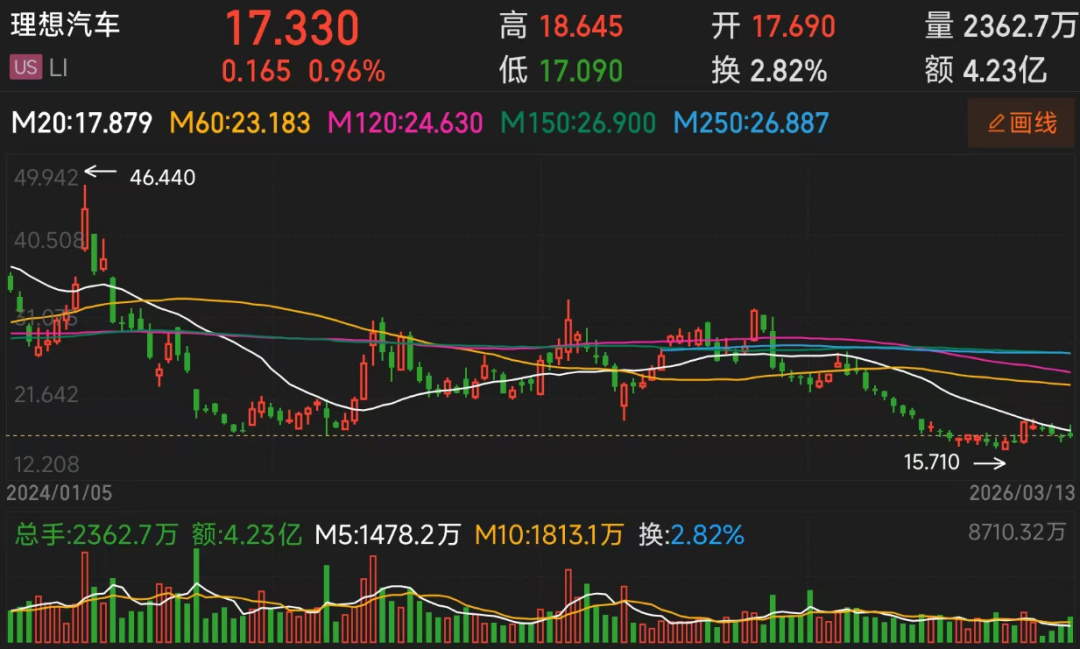
Source: Hithink RoyalFlush
In 2025, Li Auto's revenue reached 112.3 billion yuan, a sharp 22.3% year-on-year decline; net profit stood at 1.14 billion yuan, an 85.8% drop from 8.05 billion yuan the previous year. Annual deliveries shrank from 500,500 units in 2024 to 406,300 units, a decline exceeding 18%. Even more concerning is the Q1 guidance: revenue is expected to range from 20.4 billion to 21.6 billion yuan, well below market expectations of 24 billion yuan. This implies a possible year-on-year decline of 16.7% to 21.3% in Q1.
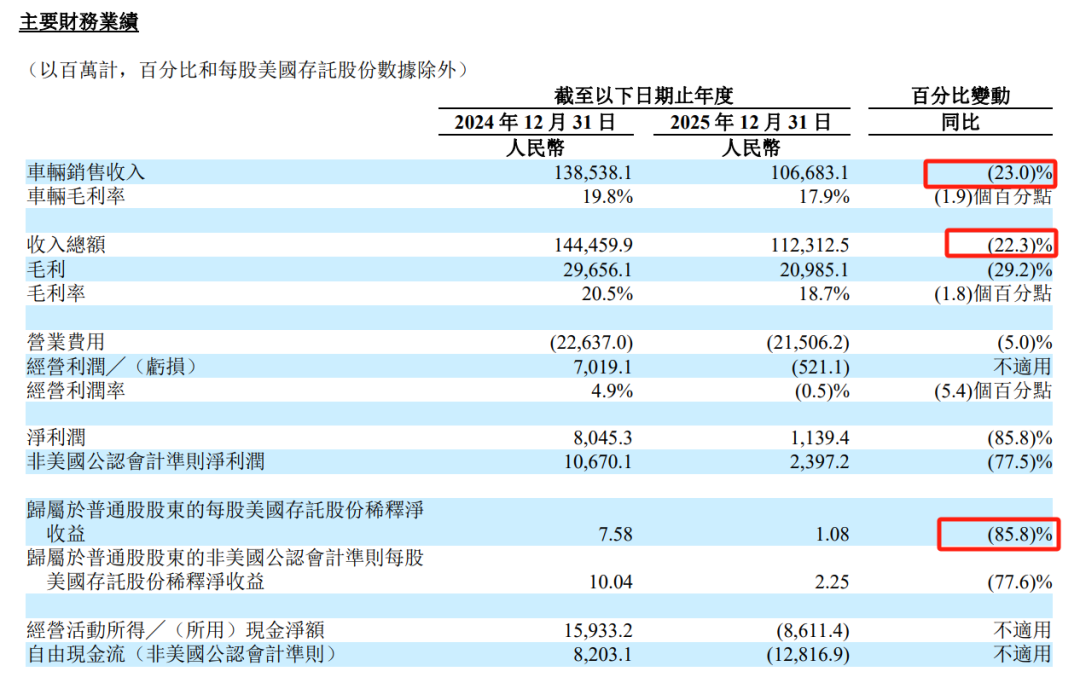
Source: Li Auto Announcement
More dangerously, among new EV makers, Li Auto is the only one with negative annual sales growth. During the same period, Xpeng achieved 122.7% of its target, while Leapmotor reached 119.3%. Even Xpeng, once lagging, has turned things around, doubling its revenue and reducing losses by 80%. Although, amid fierce competition in the NEV industry, Li Auto remains the only new force in China to achieve over 100 billion yuan in revenue and profitability for three consecutive years, its profit margins have significantly narrowed.
Thus, all eyes in the market are focused on the same question: Can this former top performer still stage a comeback? Will the path to reversal involve navigating through the industry's downturn cycle, or must it make a do-or-die decision in its own business?
Behind the Continuous Decline: The Market Logic Has Changed
Li Auto's three-year glory was built on a specific era's narrative. Back then, the 'dual carbon' goals were not just industrial policies but key benchmarks for capital markets to understand the future. Driven by decades of expected growth, the valuation of NEVs transformed perfectly from 'cyclical auto manufacturing' to 'tech growth stocks supported by national strategy.' Coupled with global central banks' massive liquidity injections in response to the pandemic, abundant capital flowed into this strongest main storyline (main theme), propelling Li Auto to a $46 billion valuation.
However, the shift in wind direction (wind direction) caught most industry insiders off guard. After 2024, several pillars supporting this narrative collapsed one by one. First was the exposure of the industry's true nature. Product homogenization under the trend of technological democratization made 'differentiation' a luxury, ultimately leading to a fierce price war.
In 2024, over 200 models in the domestic auto market participated in price cuts. By 2025, the battle intensified, with 106 new models reducing prices in just the first seven months. Some models saw price reductions exceeding 30%—for example, certain NEV models officially dropped prices three times within a year, from over 200,000 yuan to around 120,000-130,000 yuan.
Second, upstream 'profiteering' began to backfire on the mid- and downstream sectors. Starting in 2021, raw material prices for lithium mines and silicon materials soared. Initially, this was absorbed by the euphoric market sentiment, but when terminal demand growth slowed marginally, high costs became a direct killer eroding profits for mid- and downstream companies. Finally, the 'time bombs' planted by earlier frenzied capacity expansions began to explode collectively. The peak capacity releases from 2024-2026 caused the supply curve to steeply rise, leading to an imbalance between supply and demand. 'Valuation kills' became the market's only rational choice.
Objectively, Li Auto's product definition capabilities and product strength are excellent, something its founder Li Xiang is quite confident about. Whether it's the early L series' extended-range models or the current i series' pure electric models, they have brought fresh ideas to the highly homogenized NEV industry.
The 'fridge, TV, big sofa' strategy—which precisely targeted family users' needs through 'differentiated experience'—was Li Auto's core moat in the early stages. However, in the era of technological democratization, 'experience' is precisely the easiest area to replicate and surpass. Competitors like AITO and Leapmotor not only offer similar extended-range technology and comfortable configurations but even present more aggressive solutions in intelligence and design. When the differentiation dividends disappeared, Li Auto's carefully cultivated 'comfort zone' turned into a 'red ocean' of homogenized competition among multiple players.
According to data disclosed by Li Auto's top executives, pure electric driving accounts for over 65% of mileage for Li Auto users, with nearly 90% pure electric usage on weekdays in first-tier cities like Beijing, Shanghai, Guangzhou, and Shenzhen. This official data originally implied 'using electric for city driving and switching to fuel for highways,' indicating that most users still treat their vehicles as electric cars.
Thus, Li Auto is abandoning the old route of 'small battery + large fuel tank' and fully shifting to 'large battery + small fuel tank + fast charging.' It is reported that the new-generation L9 may launch in Q2 2026, equipped with a 72.7-kWh large battery and achieving over 420 km of CLTC pure electric range. For fast charging, Li Auto has also extended MEGA's 800V 5C ultra-fast charging technology to extended-range models, allowing owners to enjoy '10 minutes of charging for 400 km of range.'
Why Hasn't the i Series Pure Electric War Ignited?
In 2025, Li Auto's L series—its former profit cow—began hemorrhaging across the board. L6 sales reached 166,500 units, down about 13.4% year-on-year. L7 sold 80,700 units, a 39.8% decline. L9 sales dropped 47.2%, while L8 fell 44.3%.
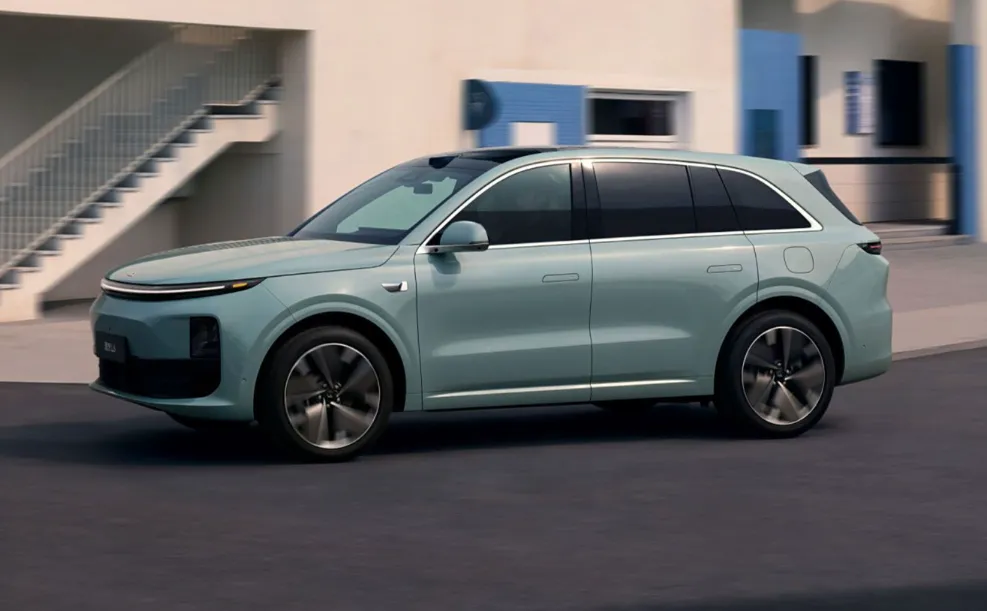
Li Auto L6 Source: Li Auto Official Website
Meanwhile, Li Auto's pure electric product line, expected to become a second growth engine, has failed to gain traction. The i8 launched with overly complex SKUs—the Pro version lacked a fridge and screen, while the Ultra version was overpriced. Within a week, two versions were discontinued, leaving only the Max version, which was uniformly priced at around 339,800 yuan. Although the i6 received over 23,000 orders, severe supply chain bottlenecks resulted in only 18% of Q3 deliveries being pure electric models.
The i8 adopted a 'parity pricing for electric and hybrid' strategy, offering three models: the 321,800-yuan Pro, 349,800-yuan Max, and 369,800-yuan Ultra. All models featured a six-seat layout and standard hardware like dual motors, 5C ultra-fast charging batteries, and dual-chamber air suspension. However, consumers felt it was 'not enough.' The Pro version lacked signature configurations like the 'fridge and TV,' while the rear entertainment screen remained optional in the Max version, sparking a wave of criticism. Some consumers who abandoned the i8 even said, 'Li Auto still doesn't understand how to sell pure electrics.'
Li Auto's pure electric models main (focus on) '5C ultra-fast charging' (10-12 minutes of charging for 500 km of range), but this technology demands extremely high infrastructure requirements. Previously, due to the insufficient number of ultra-fast charging stations, which were not as widespread as gas stations, some users still worried about 'not finding a station' or 'broken stations' during long-distance trips.
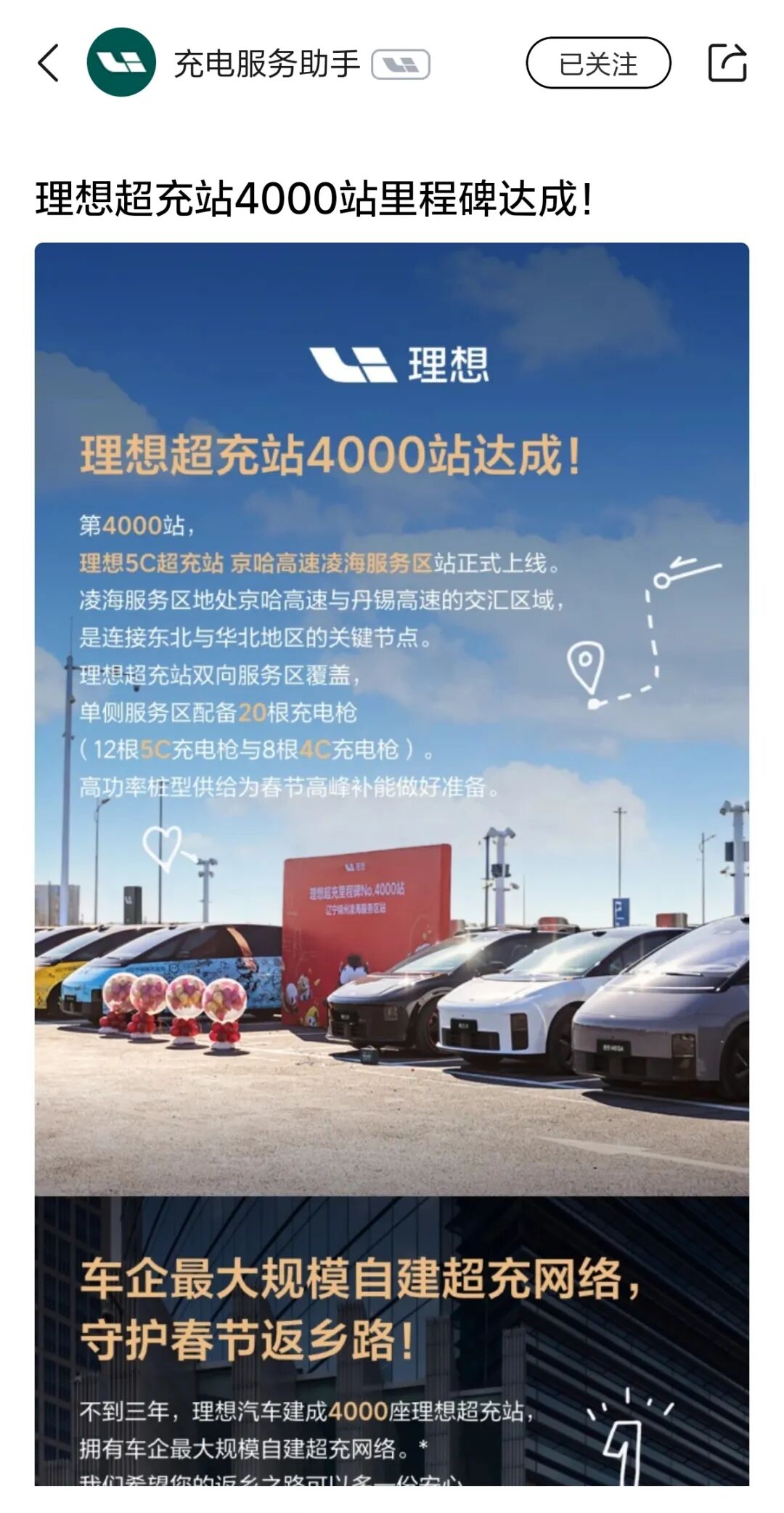
By 2026, according to Li Auto's data, the number of self-built ultra-fast charging stations (over 4,000) plus 3,400+ preferred ultra-fast charging stations is still growing. During this year's Spring Festival, we saw many vehicles from other brands charging at Li Auto's ultra-fast stations, indicating initial market recognition of the charging network. With Li Auto continuing to expand its ultra-fast stations and the proliferation of third-party charging stations, range anxiety will no longer be a topic.
During the latest earnings call, Li Xiang acknowledged the issues with pure electrics and explicitly stated that Li Auto will launch the all-new Li L9 series in Q2. From a configuration standpoint, the new L9 will come standard with an 800V platform and 5C ultra-fast charging technology, while also featuring Li Auto's new-generation full-stack self-developed extended-range 3.0 system, EGR cold start technology, and AI-powered intelligent oil maintenance system.
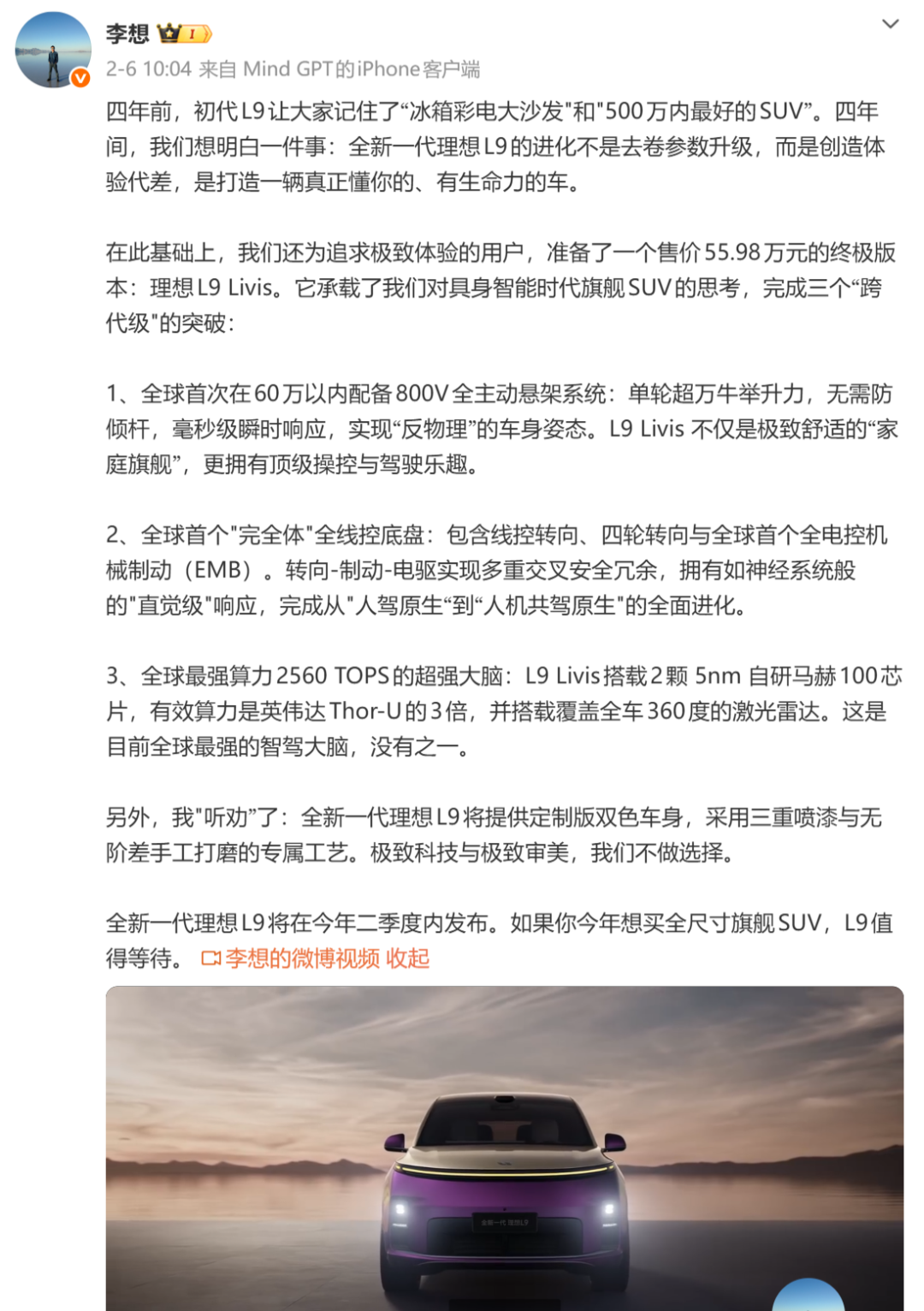
Source: Weibo
However, the bigger challenge lies in the changed competitive landscape, where rivals are all elite survivors of fierce bloodbaths.
Above, Tesla continues to exert dimensional strikes. The refreshed Model Y is priced in the 250,000-yuan range, directly cutting into the core price band of the Li L7. Its FSD driving system's high user penetration and brand appeal exert both psychological and pricing pressure on Li Auto.
Below, BYD and Xiaomi are initiating structural intensification through stronger cost control and scale effects. BYD's DM-i technology has established a price barrier, while Xiaomi's SU7 and YU7 have brought high-end intelligent driving hardware down to the 210,000-yuan range with aggressive pricing. This 'technological democratization' compresses the survival space where Li Auto once relied on configuration premiums for high margins.
The most direct close-quarters combat comes from old rival AITO's comprehensive surge. Powered by Huawei, the AITO M9 surpassed the Li L9 in 2024 to become the best-selling domestic high-end SUV priced over 400,000 yuan, with sales reaching 194,000 units last year—four times that of the L9. The once-exclusive blue ocean of family SUVs for Li Auto now has at least 10 similarly positioned competitors, from GAC Aion to Lynk & Co and Seres. Li Auto's 'dad car' niche market has become a bloodbath.
Li Auto's Solutions
Starting in March 2025, Li Auto has undergone at least six major organizational adjustments, including implementing a 'theater command system' for sales, merging R&D and sales into an 'intelligent vehicle group,' dissolving theaters into a 'sales department,' and splitting the autonomous driving division.
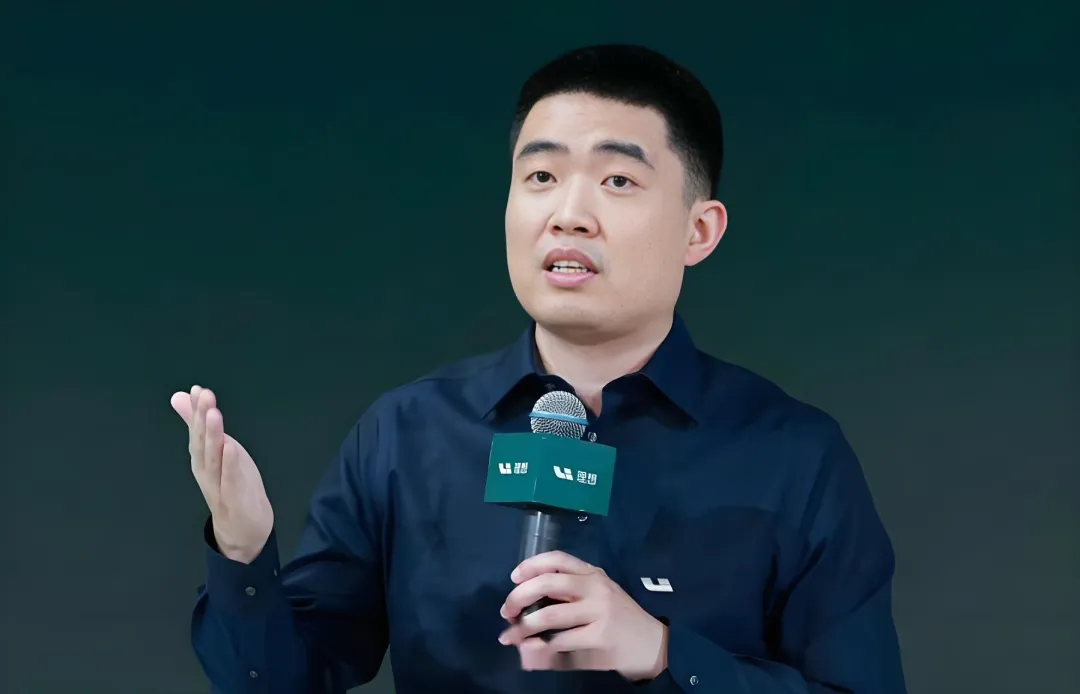
Looking back from March 2026, Li Auto's story resembles a recurring scene in Chinese business history: a founder conquers the market with intuition, then traps themselves with 'scientific management,' only to have to restart from the original point. On November 26, 2025, during the Q3 earnings call, Li Xiang said something to the effect of: Learning professional managerial systems over the past three years was a mistake. 'We became a worse version of ourselves.'
Source: Internet
He redefined Li Auto as a new identity: not an electric vehicle company, nor a smart device company, but an 'embodied AI robot company in automotive form.' The self-developed M100 inference chip will enter mass production in 2026 and be applied to vehicles. By 2025, AI investment will reach over 6 billion yuan, accounting for about half of total R&D spending.
But can redefining itself as an AI company lead to success?
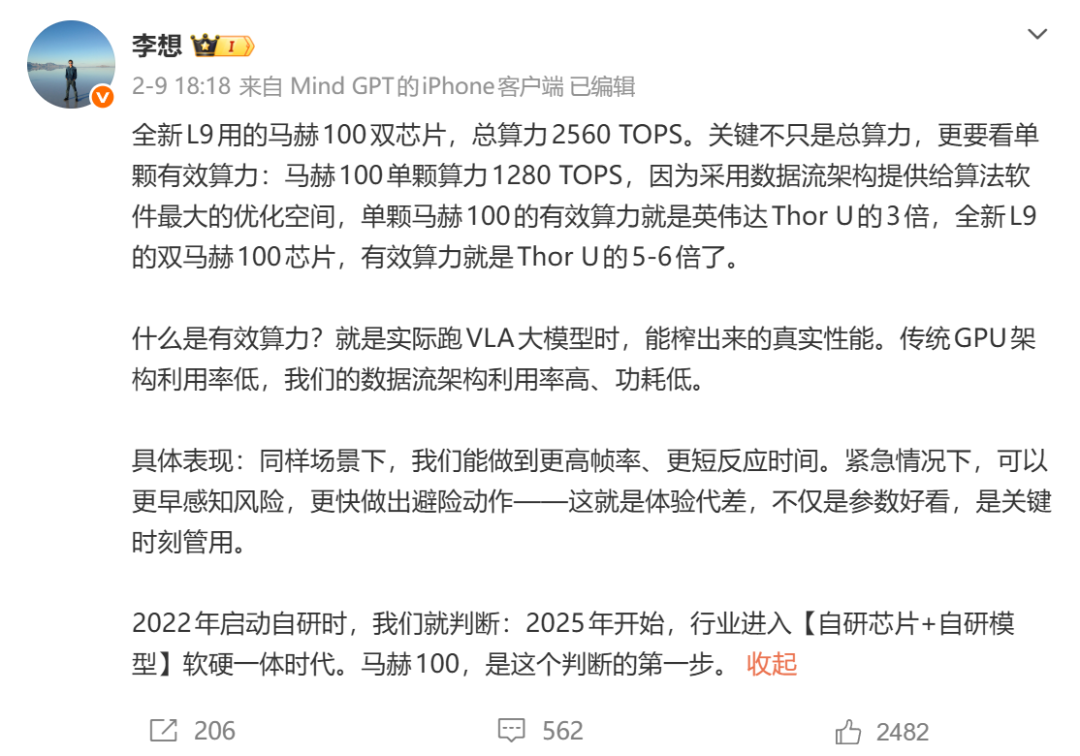
Investing 6 billion yuan in AI directly seems substantial, but it pales in comparison to the over 10 billion yuan investments by large model companies. So, what makes Li Auto's AI different? Essentially, it's about adding value around the automobile itself—full-stack self-developed Mach 100 chips, StarRing OS, self-developed foundation models, full-line-control chassis, etc. Li Auto's strategy is to combine self-developed algorithms with self-developed computing power, integrating software and hardware to create an ultimate user experience, much like the paths taken by Apple and Tesla before.
Source: Weibo
Li Auto CTO Xie Yan used an analogy to explain the strategic intent behind this layout: 'When we initiated chip self-development in 2022, we judged that starting in 2025, the industry would enter an era where vertical integration of models, chips, and operating systems would be key to gaining competitive advantage. We believe the gaps in chips, operating systems, and software-hardware ecosystems will ultimately resemble the gap between Apple and Android.'
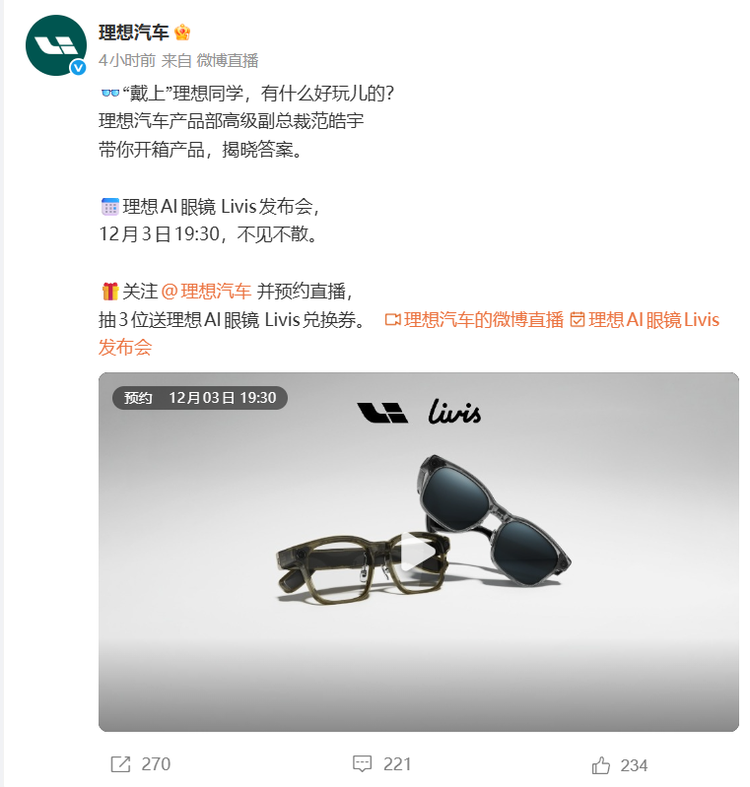
The value of this technological foundation has begun to spill over externally. The Li Auto AI Glasses Livis, released in December 2025, represent the first validation of this AI technology migrating to consumer terminals. It proves that the technological foundation built by Li Auto for embodied intelligent vehicles has cross-product reusability.
Source: Weibo
However, the AI strategy itself is a difficult path.
Li Auto exposed shortcomings in its VLA large model during last year's intelligent driving competitions. Although continuously iterated and upgraded, it has not shown significantly superior performance compared to peers, failing to form a unique selling point for intelligent driving. Compared to Huawei's 'HarmonyOS cockpit + intelligent driving + phone ecosystem' and Xiaomi's 'human-vehicle-home full ecosystem,' Li Auto's AI strategy remains primarily focused on the 'vehicle' itself. Without entry points like phones or IoT devices, it struggles to build a cross-scenario AI closed loop (closed loop), facing challenges in user stickiness.
According to media reports, since the second half of 2025, 12 vice presidents and above-level executives or core business leaders have resigned, with the intelligent driving team being the 'hardest hit.' In March 2026, market rumors emerged that the head of the chip division had also left.
Regarding this, Li Xiang stated at the earnings call on March 12, 2026, that the departure of several core executives was primarily due to their pursuit of entrepreneurial ventures outside the company. This move was also an active choice for the company's organizational evolution, aimed at creating development space for internal young managers.
From the perspective of Chief Business Review, the effectiveness of these adjustments remains to be tested by the market. However, Li Auto's AI strategy's 'long-term solutions' (embodied intelligence, robotics) cannot temporarily address the market's 'immediate needs' (car sales, intelligent driving experience). Before technical maturity and organizational stability are firmly established, overly rapid strategic transformation may lead to 'neglecting one thing for another'.
In Conclusion
In the ruthless elimination race of new energy vehicles, there are no eternal champions. Li Auto's reversal has become an ultimate test of its survivability. Navigating through cycles requires patience and resilience, while decisive action demands resolve and courage.
In the latest sales figures for February, Li Auto has returned to the second position among new energy vehicle startups, which is a good sign.
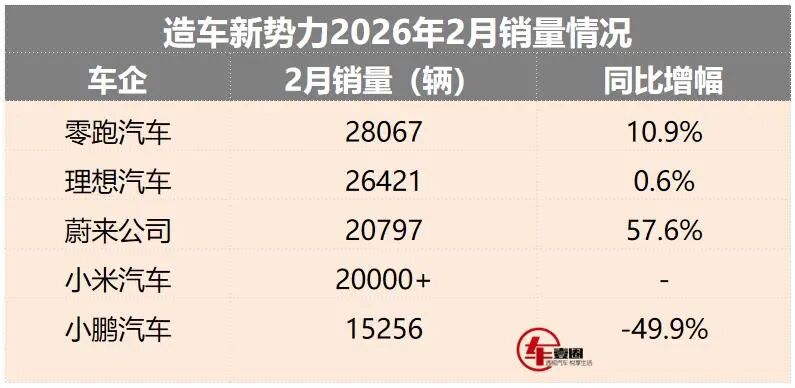
Image Source: CheYiQuan
In 2026, this company, which once defined the concept of a 'mobile home,' must prove to the market that it is equally capable of navigating through a storm of self-revolution.
References:
Li Auto's Sales Drop by 32.1 Billion in a Year, High Dive Source: Caijing Tianxia
Li Auto's Direction of Transformation is Severely Misunderstood Source: TimelineTimelines
Behind Li Auto's First AI Company Earnings Report Are Five Questions Source: Economic Observer Report
Li Auto's 'Executive Reshuffle' Continues to Unfold, with 12 Core Leaders Departing Within Six Months Source: Consumer Daily
-
![]()
The Unstoppable Rise of 'Optical Progress and Copper Decline': Sunny Optical’s Strategic Vision for the Next Decade
-
![]()
AI + Going Global in the Second Half: No Intermission for Robot Vacuum Cleaners
-
![]()
The Suffering Endured in E-commerce, Walmart Doesn't Want to Repeat in AI
-
![]()
What Does the Doubling of New Energy Vehicle Exports Mean?
-
![]()
Ghosn: 'Only I Can Save Nissan'
-
![]()
Volkswagen Lays Off 100,000 Employees, The Elephant Sits Down
-
![]()
Expanding Production Capacity! Yutong Optics Acquires Approximately 1.5 Hectares of Industrial Land in Chang'an, Dongguan
-
![]()
Why Is Nokia Making a Comeback in the AI Era?